Beyond the Export Boom: What Shifting Agricultural Trade Means for the Filipino Kitchen
When the country buys less food from abroad and sells more of its own, the numbers look great on paper. But what does it change at home?
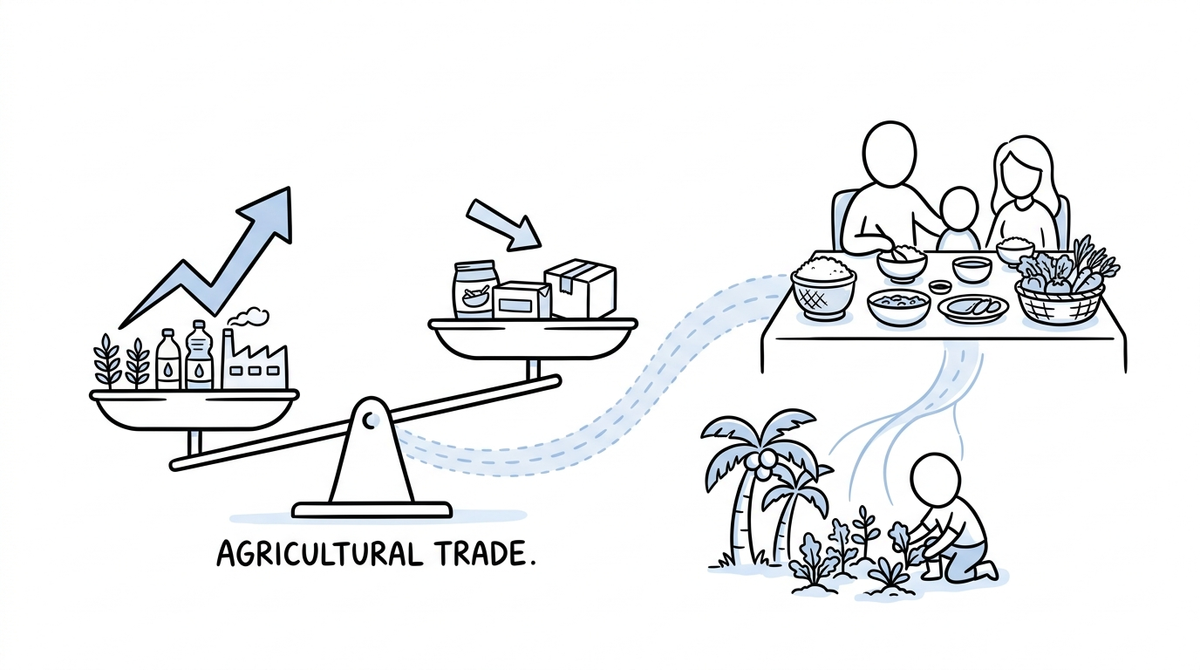
While economic figures report a five-year low in the agricultural trade deficit, the true measure of success lies in whether this shifting balance translates into stable livelihoods for local farmers and more affordable food for Filipino households.
Every morning, millions of Filipino families gather around the breakfast table, navigating the silent calculations of daily living. The price of cooking oil, the cost of a kilo of rice, the availability of fresh vegetables—these are the real-world metrics that dictate the rhythm of household budgets. While economists debate percentages and trade balances in distant boardrooms, ordinary citizens experience the economy through the weight of their market baskets and the thickness of their wallets.
Recently, the Philippine Statistics Authority released a report that caught the attention of financial analysts: the country’s agricultural trade deficit narrowed to a five-year low. On paper, this sounds like an unmitigated triumph. The data shows a significant 33% surge in agricultural exports, alongside a modest contraction in food imports. For a country long plagued by a heavy reliance on foreign goods to feed its population, a shrinking deficit suggests a step toward self-sufficiency.
Yet, for the average Filipino, such announcements often feel detached from reality. When a family sits down to a meal, they do not see trade deficits or export receipts; they see the immediate reality of what they can afford. To bridge this gap, we must look beyond the macroeconomic celebrations and ask a fundamental question: How does a shifting trade balance actually change life on the ground for our farmers, our laborers, and our families?
Understanding the Numbers in Plain Language
To grasp what a narrowing trade deficit means, it helps to look at how international trade functions. For years, the Philippines has operated at a deficit, meaning we buy far more food and agricultural products from other countries than we sell to them. When the trade deficit narrows, it means the gap between what we sell (exports) and what we buy (imports) is shrinking.
In this specific instances, two things happened at the same time: our agricultural exports jumped by a third, driven heavily by commodities like animal, vegetable, and microbial fats and oils, while our overall agricultural imports dipped by nearly four percent.
For economists, this is a sign of resilience. It suggests that local producers are finding lucrative markets abroad and that our domestic reliance on foreign goods is slowing down. In an ideal economic model, this shift retains more money within the local economy, stabilizes the national currency, and creates an environment where local industries can thrive.
What This Really Means for Everyday Livelihoods
While a surge in exports looks impressive on a national ledger, the practical effects depend entirely on who reaps the benefits of that growth. The largest contributor to the export spike was the sector producing fats and oils, an industry deeply tied to local coconut farming and processing.
For the millions of smallholder farmers across the archipelago, a booming export market should mean higher demand for their crops, better mill gate prices for their copra, and more secure livelihoods. When international buyers demand more Philippine agricultural products, that money theoretically trickles down to the countryside, stimulating rural economies, creating seasonal employment, and giving farming communities more purchasing power.
However, the barrier between a booming export sector and a prosperous farmer is often thick with systemic challenges. Small farmers rarely export their goods directly. Instead, they navigate a complex web of traders, middlemen, transport costs, and processing facilities. If the financial gains from increased exports remain trapped in the upper tiers of the supply chain—benefiting only large-scale agri-conglomerates and exporters—then the narrowing trade deficit remains a victory existing only on paper for the people clearing the fields.
On the flip side, the slight contraction in imports carries its own set of implications. Buying less from abroad can mean that domestic production is successfully stepping up to fill the void. However, if imports decrease because global shipping costs are too high or because inflation has suppressed local purchasing power, a drop in imports might simply mean that fewer goods are available, which can drive up domestic prices.
The Human Impact: Families, Food Security, and the Market Basket
The true measure of any agricultural policy or economic trend is food security. A nation cannot truly celebrate its export capacity if its own citizens struggle to put food on the table.
Consider a typical urban household where a parent works for a daily wage. For this family, the cost of food eats up more than half of their daily income. If the narrowing trade deficit is driven by exporting high-value goods while domestic food production for local consumption remains stagnant, the family at the market experiences no relief. They still face high prices for basic commodities like onions, rice, and vegetables.
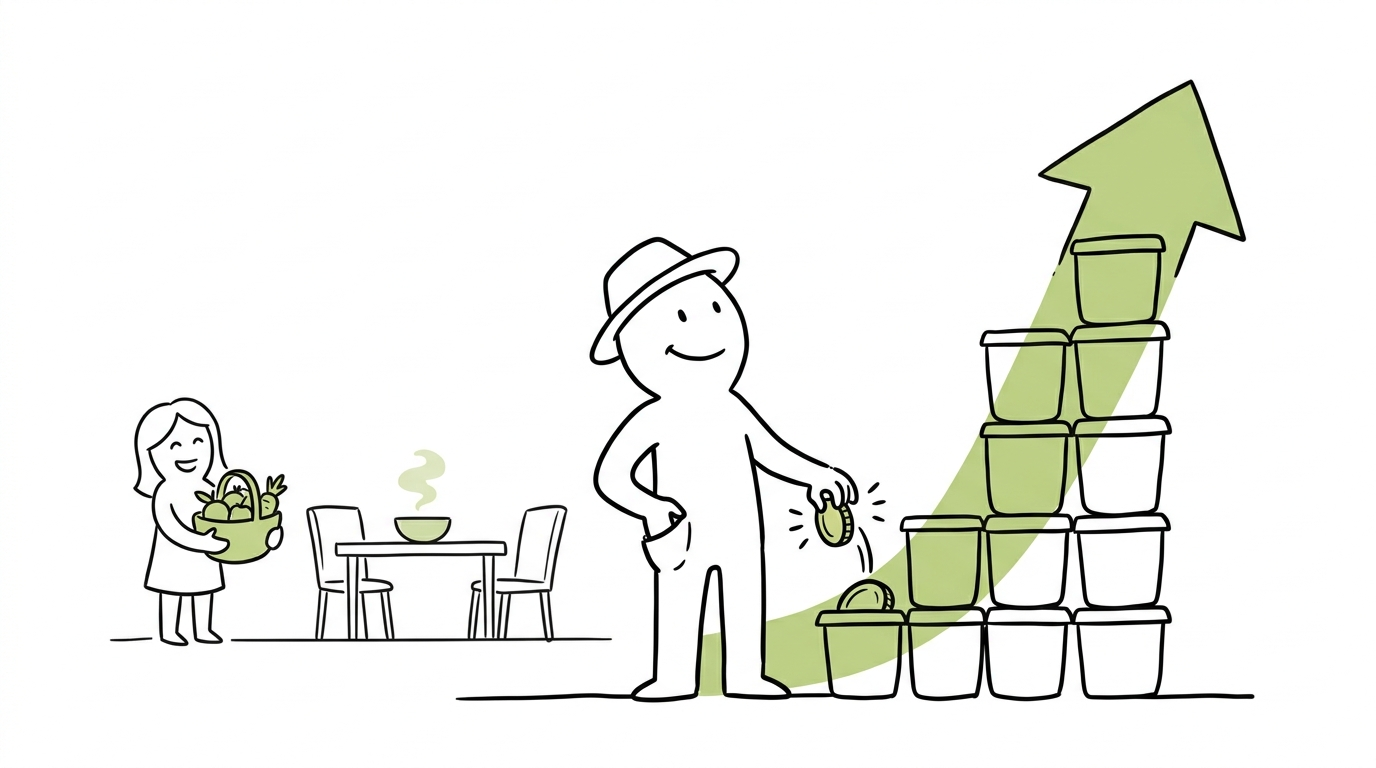
True agricultural health occurs when a country balances robust export growth with an equally strong domestic food supply. When local markets are flooded with affordable, locally grown produce, families can eat healthily without relying on expensive imported goods that fluctuate wildly based on global crises, fuel price hikes, or international supply chain bottlenecks.
For our student youth, stable agricultural trade impacts their nutrition and focus. For our senior citizens on fixed pensions, it determines whether they have to choose between buying medicine or buying fresh fish. The numbers must serve the kitchen table, not the other way around.
The Community Perspective
This tension between shifting macroeconomic data and the lived realities of rural communities highlights why grassroots, community-based efforts matter so much. National trade statistics cannot accurately reflect the day-to-day struggles of a farming village dealing with unpredictable weather patterns, high fertilizer costs, or poor farm-to-market roads.
When we observe improvements in trade balances, it emphasizes the critical need for localized support structures that ensure small-scale producers can actually participate in these economic gains. Initiatives focused on sustainable farming practices, local cooperative strengthening, and climate-resilient livelihoods are what transform abstract trade data into tangible food security. Without these grounded, community-level interventions, the benefits of a changing economy will continue to bypass the very people who feed the nation.
Looking Forward with Thoughtful Insight
A five-year low in the agricultural trade deficit is an encouraging sign that the structural components of our economy are moving in a dynamic direction. It proves that Philippine agricultural products possess immense value on the global stage and that our dependency on foreign markets is not permanent.
But as the headlines fade and the statistics are archived, the real work remains. A healthy economy is not one that merely boasts impressive balance sheets; it is one where the farmer who harvested the crop can afford to feed his own children the very food he grew. As we move forward, the focus must shift from simply tracking the billions of pesos moving across oceans to ensuring that the wealth generated from our soil finds its way back into the communities that nurture it.
Lahat tayo masaya kapag naririnig na gumaganda ang ekonomiya at bumababa ang "trade deficit" sa agrikultura ng bansa. Pero habang lumalaki ang kita sa mga iniluluwas nating produkto, bakit parang hindi pa rin ito nararamdaman ng mga ordinaryong pamilya sa presyo ng bilihin sa palengke? Ano nga ba ang totoong epekto nito sa ating mga magsasaka at sa hapag-kainan ng bawat Pilipino?

Power Our Mission, Shape the Future
We empower single parents, PWDs, youths, seniors, and stay-at-home parents through digital livelihood.
Help us build resilient communities.
BUKLURAN remains open to partnerships, sponsorships, and collaborative initiatives that create meaningful community impact.
Whether through funding, in-kind support, volunteerism, or shared services, your organization can help strengthen programs that serve underserved communities.
Do you want to take part in our free livelihood programs, scholarship assistance, and community resource pooling initiatives? Membership is completely free.
Join BUKLURAN!
Register, volunteer, and become a member today.