Beyond the Grant Cycle: Building Financial Resilience Through Mission-Aligned Social Enterprise
Explore how nonprofits can shift from survival-mode fundraising to sustainable, mission-driven social enterprise models.
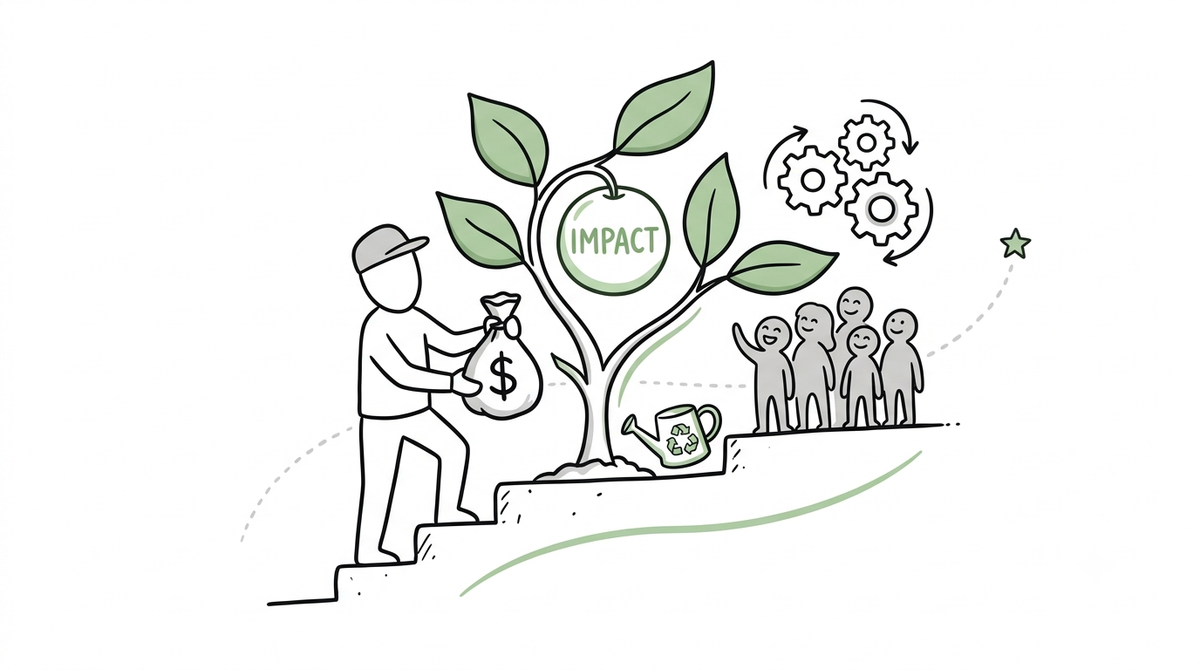
Mission-driven organizations often struggle with unpredictable funding cycles that limit long-term strategic growth. This article explores how adopting social enterprise models and earned-income strategies can build lasting financial resilience without compromising core values. By shifting from reactive fundraising to deliberate revenue generation, nonprofits can secure the stability needed to serve their communities effectively.
Across the civil society sector, an all-too-familiar narrative unfolds every fiscal year. Dedicated non-profit teams spend countless hours drafting grant proposals, courting individual donors, and piecing together short-term funding streams just to keep essential programs running. While philanthropy and public grants remain indispensable pillars of community work, an over-reliance on traditional fundraising creates structural vulnerability. When funding priorities shift or economic downturns occur, organizations are often forced to scale back vital services, leaving the communities they serve in precarious positions.
True organizational resilience requires a fundamental shift in perspective. To deliver consistent, long-term community value, mission-driven organizations must begin treating financial sustainability not merely as an annual goal, but as an core operational strategy. Moving beyond survival-mode funding allows non-profits to build durable frameworks that safeguard their independence and expand their capacity for long-term impact.
Why This Topic Matters
The reliance on short-term, project-restricted funding creates systemic friction within non-profit management. When dollars are strictly tied to specific deliverables, organizations struggle to invest in overhead, staff retention, technology, and strategic development—the very infrastructure required to run effective public service programs. This dynamic often leaves leadership trapped in a constant cycle of short-term planning, where strategic decisions are driven by immediate funding opportunities rather than actual community needs.
Furthermore, economic shifts and changing philanthropic mandates mean that grant availability can fluctuate dramatically from year to year. For grassroots organizations and established charities alike, this unpredictability hinders long-term community investments. By diversifying funding models and generating mission-aligned earned income, organizations can create a reliable financial buffer. This stability allows leadership to plan years ahead, innovate without fear of sudden budget shortfalls, and respond dynamically to emerging community challenges.
Event Objectives
To address these pressing challenges, sector leaders gathered to discuss practical mechanisms for rethinking non-profit revenue models. The learning session was designed to equip non-profit executives, board members, and community leaders with actionable frameworks for structural financial sustainability.
The primary objectives of the session included:
- Reframing Financial Sustainability: Establishing a clear, shared organizational definition of what financial resilience means beyond basic fundraising metrics.
- Evaluating Social Enterprise Models: Assessing how earned-income strategies, fee-for-service opportunities, and mission-driven business lines can fit an organization's unique operational capabilities.
- Fostering Organizational Alignment: Guiding board members and executive teams through the cultural and strategic shifts required to adopt new revenue-generating frameworks seamlessly.
- Developing Actionable Roadmaps: Moving leadership teams from theoretical interest to concrete execution through practical operational frameworks.
Key Insights and Takeaways
Building a self-sustaining organization does not mean abandoning non-profit values; rather, it means applying entrepreneurial discipline to advance a social purpose. One of the central insights from the discussion was the necessity of defining what financial sustainability actually looks like for a specific institution. For some, it may mean creating a commercial arm whose profits directly subsidize free community programs. For others, it involves transitioning a grant-funded service into a fee-for-service model paid for by institutional partners or public agencies.
1. Mission Alignment First
A critical lesson highlighted during the session is that revenue generation must never distract from core mission objectives. Pursuing earned income simply because an opportunity exists can lead to "mission drift," diluting an organization's impact and straining its internal resources. A successful social enterprise model sits precisely at the intersection of three factors: genuine community need, organizational capability, and market demand. If an initiative generates revenue but fails to advance the organization's primary purpose, it risks compromising the trust built with the community.
2. Operational Discipline and Testing
Shifting to a social enterprise model requires a cultural and operational adjustment. Non-profit leaders were encouraged to adopt the discipline of seasoned operators when evaluating new concepts. Rather than committing significant capital upfront, organizations should validate their social enterprise concepts through small-scale testing, market analysis, and cost-benefit assessments. Understanding unit economics, pricing structures, and audience needs ensures that a new revenue line contributes positively to the bottom line rather than becoming an additional operational burden.
3. Educating Boards and Building Internal Consensus
One of the most significant barriers to financial innovation within non-profits is internal resistance. Board members and staff may express concern that generating revenue feels "too commercial" or risks compromising non-profit status. Overcoming this hurdle requires thoughtful internal engagement. Leadership must foster open dialogue around the fact that generating surplus revenue directly enables higher quality, uninterrupted community service. Establishing a shared vocabulary around social enterprise helps boards view financial sustainability as a risk-mitigation strategy rather than a ideological compromise.
Event Snapshot
The virtual learning session, titled "Driving Financial Sustainability: Building a Social Enterprise Framework," took place on July 15, 2026. Hosted via a digital platform for public service and non-profit leaders, the workshop was presented by TechSoup in collaboration with experts in organizational development.
The masterclass was led by Colin Knoll, founder and fractional executive at The Build Better Business Company. Drawing from his extensive experience as a strategy executive, board director, and business instructor, Knoll provided actionable frameworks designed to help non-profits navigate complex strategic transitions and build durable, future-ready organizations.
From Learning to Community Impact
Knowledge gained from strategic capacity-building activities must ultimately translate into stronger community support systems. When non-profits achieve financial stability, the real beneficiaries are the individuals and families who rely on their programs every day. Reliable funding streams ensure that vital community services—whether in public health, educational support, environmental stewardship, or social welfare—remain available regardless of grant cycles or donor shifts.
Within capacity-building ecosystems like BUKLURAN, continuous learning and organizational development are recognized as vital tools for community empowerment. Strengthening internal systems, refining financial strategies, and adopting modern management practices allow civil society organizations to maximize their resources. When organizations reduce their administrative vulnerability through balanced financial portfolios, they can direct more energy, talent, and capital toward long-term community development, advocate more effectively for public interest policies, and build deeper, more resilient partnerships across sectors.
Looking Ahead
The landscape of public service and non-profit management is rapidly evolving. Social challenges are becoming increasingly complex, and the frameworks used to address them must evolve in tandem. Organizations that commit to continuous learning, structural innovation, and strategic adaptation are far better positioned to serve as dependable anchors for their communities.
Building a social enterprise framework or establishing earned-income streams is not an overnight task. It requires patience, careful planning, and a willingness to learn from both successes and setbacks. However, the path toward financial independence offers non-profits a transformative opportunity: the freedom to chart their own course, innovate in response to real-world needs, and deliver lasting, sustainable impact.
Join the Conversation
Every meaningful change begins with learning, reflection, and open dialogue. As communities and mission-driven organizations continue to navigate new economic landscapes, sharing knowledge and practical strategies remains one of our most effective collective tools.
We invite non-profit leaders, board members, public servants, and community advocates to reflect on their own organizational strategies. How is your institution preparing for long-term financial resilience? What innovative frameworks have helped your team maintain impact amid changing circumstances? Let us continue the conversation, learn from one another's experiences, and work together to build strong, sustainable organizations that empower our communities for years to come.
Driving Financial Sustainability: Building a Social Enterprise Framework
July 15, 2026
Virtual
Organizational Development

This initiative was independently funded by the BUKLURAN Officers through personal contributions.
We gratefully acknowledge the groups and individuals who shared resources, services, venues, supplies, and other forms of community support.
• TechSoup
BUKLURAN remains open to partnerships, sponsorships, and collaborative initiatives that create meaningful community impact.
Whether through funding, in-kind support, volunteerism, or shared services, your organization can help strengthen programs that serve underserved communities.