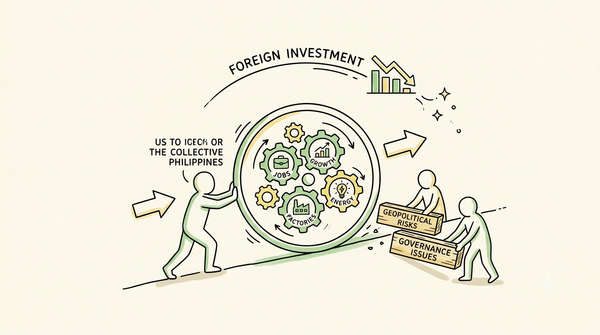
Beyond the Numbers: What the $3.4 Billion Balance of Payments Surplus Means for Your Household
National economic news often sounds distant. Here is what the latest balance of payments report actually means for your daily life.
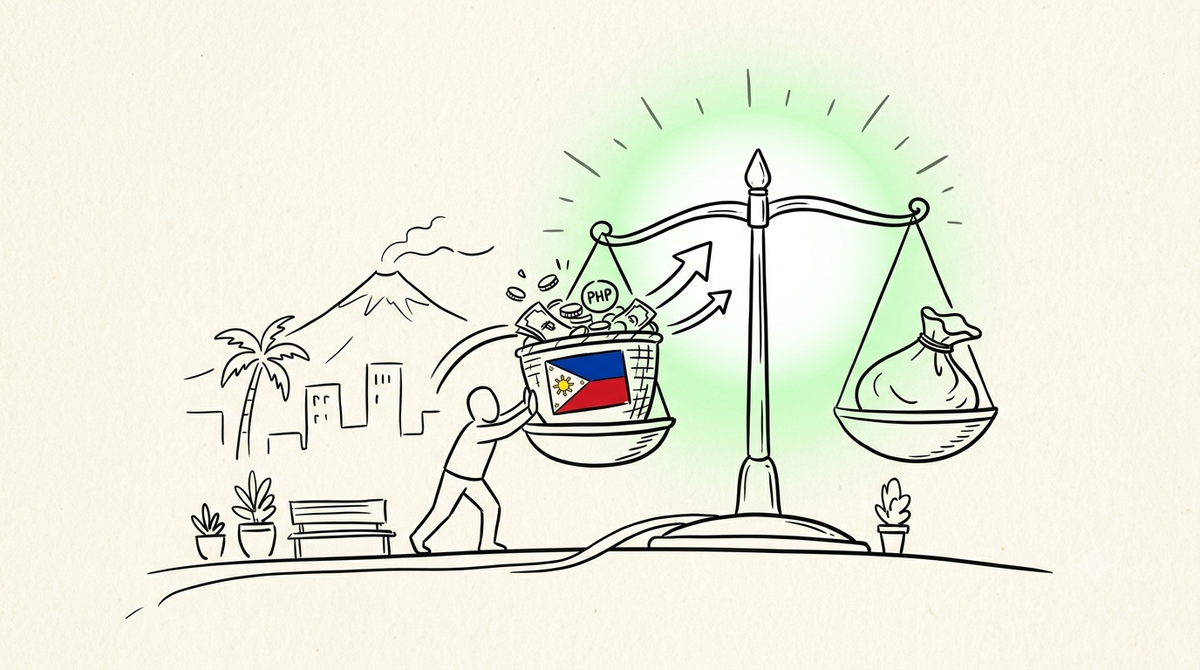
This article breaks down the Philippines' recent $3.4 billion Balance of Payments surplus and explains its real-world impact on everyday household expenses, inflation, and financial stability.
Introduction
When headlines announce that the country’s Balance of Payments (BoP) recorded a $3.4 billion surplus in June, it is easy to feel disconnected from the news. For a parent budgeting daily meals, a jeepney driver filling up fuel, or a small sari-sari store owner buying stock, broad economic jargon often feels far removed from the actual cost of living.
However, understanding national economic terms like the Balance of Payments does not require an economics degree. Looking past the headline figures reveals how national currency flows quietly shape the prices, stability, and financial choices of ordinary Filipino families.
What Happened
In simple terms, the Philippines recorded a Balance of Payments (BoP) surplus of $3.4 billion for the month of June.
The Balance of Payments tracks all financial transactions between the Philippines and the rest of the world over a specific period. This includes:
- Money coming in: Exports, foreign investments, tourism, and remittances from Overseas Filipino Workers (OFWs).
- Money going out: Payments for imported goods (such as petroleum, food, and machinery), foreign debt payments, and outward investments.
A surplus means that during June, more foreign currency entered the country than left it.
Why This Matters
Foreign currency—primarily the US Dollar—is what the country uses to buy essential goods from abroad, such as crude oil, wheat for bread, raw manufacturing materials, and medicines.
When the Philippines has a BoP surplus, it adds to our Gross International Reserves (GIR). Think of these reserves as the country's collective emergency savings account. A healthy reserve fund ensures that the country can continue importing vital resources and paying foreign obligations even during global market shifts or unforeseen crises.
What the Headlines Don't Explain
While a $3.4 billion surplus for June is positive news, it is only one piece of a larger picture.
- A Single Month vs. The Full Year: Despite the strong performance in June, the overall BoP position for the first half of the year remains in a deficit of $3.877 billion. This is largely because the Philippines consistently imports significantly more physical goods than it exports—a gap known as the trade deficit.
- Surplus Does Not Equal Immediate Wealth: A national BoP surplus does not mean the government has extra cash to distribute directly, nor does it guarantee an immediate drop in grocery prices.
- Foreign Capital Movement: Part of the money flowing in and out consists of short-term foreign investments (often called "hot money"). This type of capital can enter quickly during good months and leave just as fast when global market conditions change.
How This Could Affect Ordinary Filipinos
1. Price Stability for Imported Goods
Because the Philippines relies on imported fuel and raw agricultural commodities, currency swings heavily influence local prices. Strong foreign exchange reserves help prevent drastic devaluations of the Philippine Peso. A stable peso keeps imported fuel and food prices from spiking abruptly, bringing a level of predictability to market prices.
2. OFW Remittances and Family Planning
For households supported by family members working abroad, exchange rates dictate monthly purchasing power. While a weaker peso yields more pesos per dollar, it often comes hand-in-hand with higher domestic inflation. A stable foreign exchange environment supported by healthy reserves helps families plan long-term household expenses without constant rate swings.
3. Borrowing and Business Confidence
Stable reserves signal to international lenders and businesses that the Philippines is financially sound. This stability helps keep national interest rates from jumping drastically, which indirectly impacts the interest rates ordinary citizens pay on small business loans, home mortgages, or personal credit.
Impact on Vulnerable Communities
For low-income households, single parents, seniors, and PWDs on fixed incomes, economic volatility is a constant concern. A sudden jump in fuel or food prices hits low-budget households hardest.
Macroeconomic cushions like a BoP surplus act as a buffer against external global shocks. However, national reserves alone cannot solve daily financial struggles. True household resilience relies on translating national stability into practical, community-level support—such as building local financial awareness, supporting livelihood readiness, and encouraging practical budgeting tools for families navigating tight budgets.
Nonprofit initiatives like BUKLURAN’s Financial Awareness Programs and Bagong Simula Learning Program emphasize these exact connections: helping community members build practical money-management skills so they can navigate broader economic shifts with confidence.
Practical Takeaways
While national economists manage macro-level flows, everyday consumers can take actionable steps to protect their own household balance sheets:
- Distinguish Between Temporary Trends and Long-Term Trends: Just as a single month’s surplus doesn't solve a multi-month deficit for the country, a temporary financial boost at home shouldn't replace long-term budgeting.
- Build a Household Buffer: Follow the country's example by maintaining a small personal emergency fund. Saving even small, consistent amounts helps absorb sudden expenses like medical emergencies or price fluctuations.
- Focus on Essential Spending: Keep track of imported vs. local household goods. Supporting local produce and community markets can often offer more stable pricing during global trade shifts.
Looking Ahead
The central bank anticipates ongoing balance of payments challenges toward the end of the year due to persistent trade gaps and global market uncertainty. While the June surplus provided a welcome buffer, long-term national economic health depends on reducing the gap between imports and exports.
For ordinary citizens, watching these trends offers valuable context on where fuel and food prices may head, helping families make informed decisions about spending, saving, and managing local resources.
A $3.4 billion Balance of Payments surplus is a encouraging indicator for national financial reserves, but its true value lies in providing short-term stability against global economic volatility. By looking beyond the headlines and understanding how foreign currency reserves interact with everyday prices, Filipino families can better prepare their own households for whatever economic conditions lie ahead.

Power Our Mission, Shape the Future
We empower single parents, PWDs, youths, seniors, and stay-at-home parents through digital livelihood.
Help us build resilient communities.
BUKLURAN remains open to partnerships, sponsorships, and collaborative initiatives that create meaningful community impact.
Whether through funding, in-kind support, volunteerism, or shared services, your organization can help strengthen programs that serve underserved communities.
Do you want to take part in our free livelihood programs, scholarship assistance, and community resource pooling initiatives? Membership is completely free.
Join BUKLURAN!
Register, volunteer, and become a member today.