Beyond the Pump: Why Global Oil Shocks Hit Home and What a National Reserve Changes
Plans for a multi-billion peso national oil reserve are underway. Here is what it actually means for your daily commute and household budget.
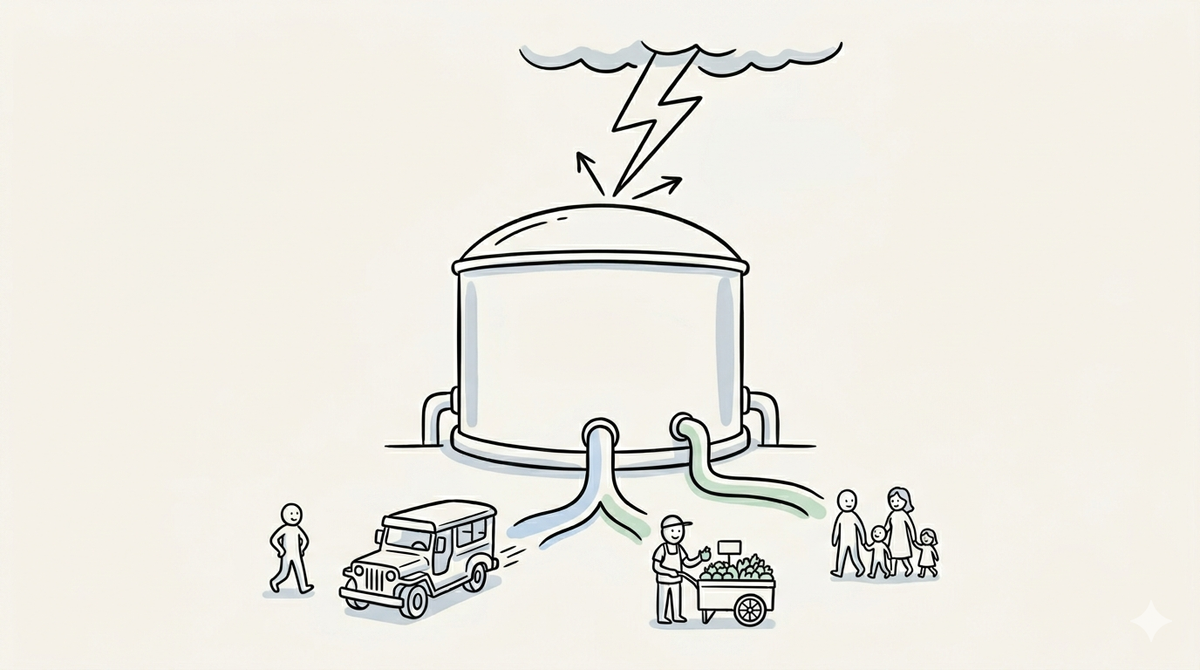
While the proposed national oil reserve aims to stabilize energy security amid global conflicts, its true success lies in whether it can protect ordinary Filipino families from the immediate shock of rising pump prices.
Every Tuesday morning, millions of Filipinos watch the news with a familiar sense of anxiety. A few centavos’ increase in the price of diesel or gasoline might seem insignificant on paper, but at the kitchen table, it changes everything. For a jeepney driver, it means fewer pesos brought home for dinner. For a market vendor, it means adjusting the price of vegetables to cover transport costs. For a regular commuter, it means stretching an already thin budget just to get to work.
When conflicts erupt thousands of miles away in the Middle East, the shockwaves travel directly to our local gas stations. Our vulnerability stems from a simple reality: the Philippines relies heavily on imported oil. We are at the mercy of global currents we cannot control.
Recently, the government announced a major shift in how the country plans to handle these unpredictable price surges. Following severe geopolitical tensions between the United States and Iran that threatened global petroleum supplies, energy officials revived a long-dormant idea: establishing a strategic national oil reserve.
Financed through the Maharlika Investment Corporation (MIC) and managed by the Philippine National Oil Company (PNOC), the project aims to build a domestic stockpile of petroleum. Initial estimates suggest that creating a starter reserve of 500,000 barrels will cost around P5 billion, covering the construction of specialized tanks, pipes, ports, and monitoring infrastructure.
To the average citizen, phrases like "sovereign wealth funds," "procurement mandates," and "strategic stockpiles" sound like high-level governance talk that belongs in a boardroom, not a living room. But understanding this development is crucial because energy security is, at its core, household security.
To comprehend what a national oil reserve can—and cannot—do, we have to look at how oil currently moves through our society. Right now, the country relies on private oil companies to maintain their own commercial inventories. When global prices spike due to war or supply disruptions, these companies pass the costs down almost immediately to consumers to protect their supply chains.
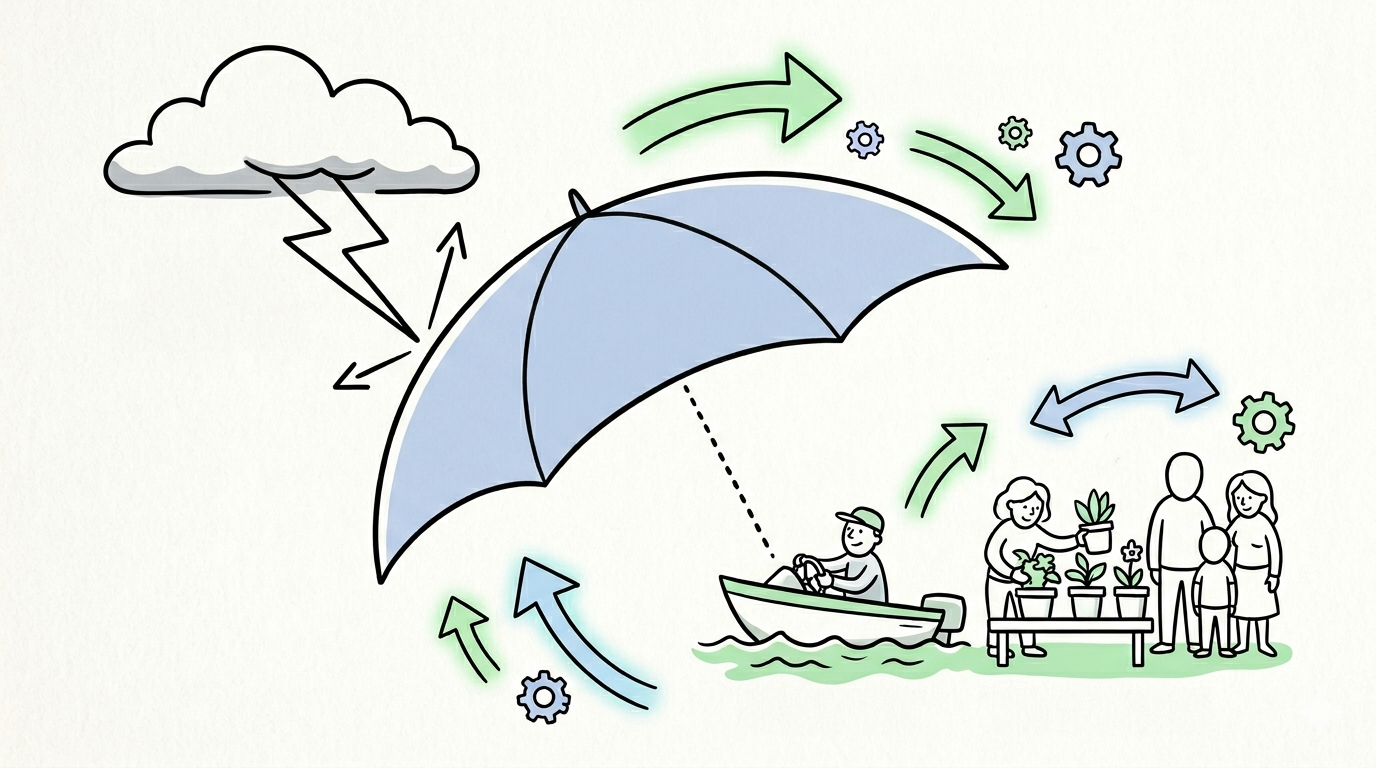
A national oil reserve functions like an emergency savings account, but for fuel instead of money. In theory, if global supplies are choked by foreign conflicts, the government can release its own stored petroleum into the local market. This temporary buffer is intended to keep transport wheels turning and electricity flowing without forcing a sudden, catastrophic spike in retail prices.
However, building a safety net of this scale requires looking past the grand announcements and focusing on the practical challenges. A stockpile of 500,000 barrels sounds massive, but in a country of over 110 million people with bustling metropolitan centers and constant shipping needs, such a reserve would only cover a fraction of national consumption for a limited time. The initial P5 billion investment is just the foundation for physical infrastructure—tanks, ports, and secure facilities. This means the project is a long-term insurance policy rather than an immediate cure for next week’s oil hike.
The choice of funding also invites careful observation. Utilizing the Maharlika Investment Fund means public resources are being channeled into concrete, tangible infrastructure. For ordinary citizens, the true metric of success for this sovereign investment won't be measured in corporate dividends or financial portfolios, but in the stability of everyday prices. Did the jeepney fare stay the same during a global crisis? Did the price of a kilo of rice remain steady because transport costs were shielded? These are the real-world benchmarks.
When energy prices spiral out of control, the hardest hit are always the families living in vulnerable and underserved communities. High fuel costs quickly trigger a domino effect across the economy. Transport costs rise, causing food prices to climb at the local market. Electricity bills grow heavier, forcing households to make difficult choices between keeping the lights on or paying for health and education needs.
When a community struggles with basic inflation, its capacity to grow, educate its youth, and build sustainable livelihoods is severely restricted. Economic shocks do not just drain wallets; they erode the peace of mind of parents trying to secure a stable future for their children.
This deep connection between national energy policies and grassroots stability highlights why localized, community-based efforts matter so much. True resilience cannot rely entirely on large-scale infrastructure projects managed from capital cities. While a national oil reserve works to safeguard the macroeconomy from global shocks, communities must simultaneously be supported in building local self-reliance—whether through sustainable agriculture that reduces dependence on long-distance food transport, or community-led livelihood programs that diversify family income. Protecting the Filipino family requires both a macro-level shield and a micro-level foundation.
As feasibility studies and evaluations for the national oil reserve move forward, public discussion must remain centered on actual human impact. A national reserve should not just be an administrative achievement or an asset on a corporate balance sheet. It must serve as a genuine shield for the working class.
We cannot stop wars from happening across the globe, nor can we dictate the movement of international oil markets. But we can choose how we protect our own people from the fallout. The true value of this multi-billion peso venture will not be found in the complexity of its pipes or the size of its storage tanks, but in the quiet relief of a worker knowing that tomorrow’s commute will not cost them their family's next meal.
Lahat tayo nababahala tuwing may balita tungkol sa gulo sa ibang bansa, lalo na kapag nagbabadya na naman ang taas-presyo sa mga gasoline station. May plano ngayon ang pamahalaan na magtayo ng sariling "oil reserve" gamit ang pondong bilyon-bilyon. Pero paano nga ba nito mapoprotektahan ang bulsa ng ordinaryong pamilyang Pilipino mula sa pabago-bagong presyo ng bilihin at pamasahe?

Power Our Mission, Shape the Future
We empower single parents, PWDs, youths, seniors, and stay-at-home parents through digital livelihood.
Help us build resilient communities.
BUKLURAN remains open to partnerships, sponsorships, and collaborative initiatives that create meaningful community impact.
Whether through funding, in-kind support, volunteerism, or shared services, your organization can help strengthen programs that serve underserved communities.
Do you want to take part in our free livelihood programs, scholarship assistance, and community resource pooling initiatives? Membership is completely free.
Join BUKLURAN!
Register, volunteer, and become a member today.