Beyond the Quick Cash: What the Return of Lending Apps Means for Our Pockets
New lending apps are coming back after a long ban. But will stricter government rules finally put an end to predatory text messages and endless debt?
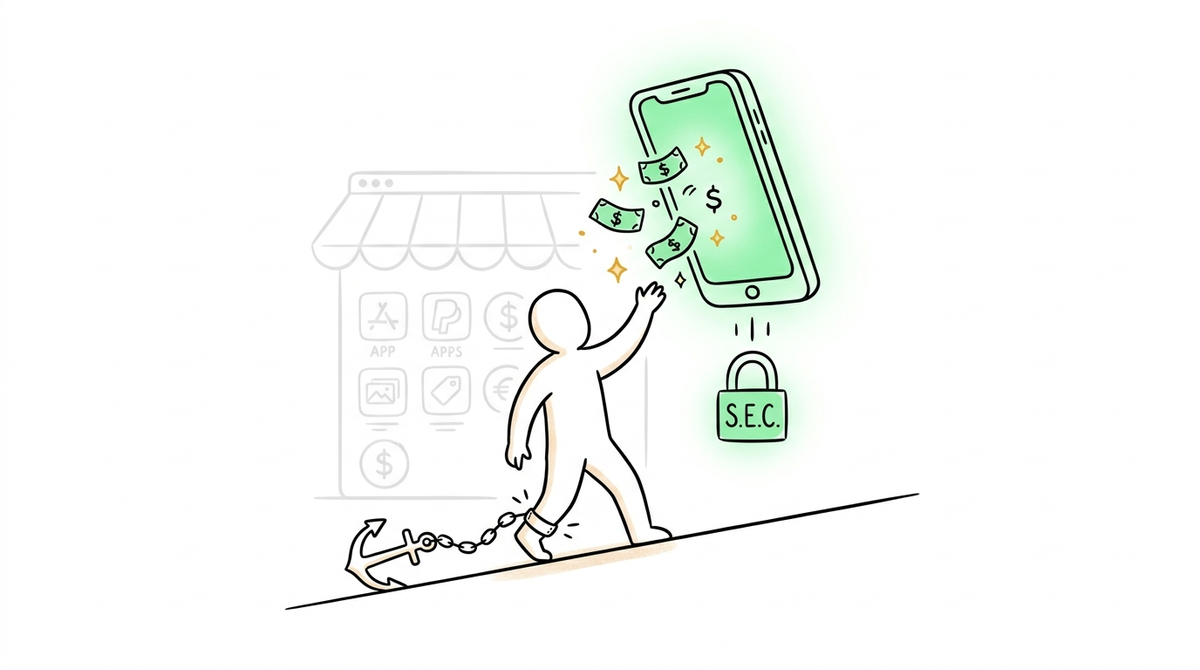
While the SEC's new regulations aim to clean up the predatory online lending market by raising capital requirements, the true test lies in whether these rules can genuinely protect vulnerable Filipino borrowers from falling into endless debt traps.
It happens in the quiet moments of the afternoon, or late at night when the bills stack up on the kitchen table. A text message buzzes on your phone: "Need quick cash? Approved in 5 minutes. No requirements." For a parent wondering where to get next week’s tuition, or a sari-sari store owner trying to restock empty shelves, that text message feels less like an advertisement and more like a lifeline.
In the Philippines, utang (borrowing) is not just a financial transaction; it is a deeply personal, often stressful survival mechanism. When traditional banks demand a mountain of paperwork, valid IDs that take months to secure, and proof of a steady corporate salary, ordinary Filipinos turn to their smartphones. The download takes seconds. The approval takes minutes. But as thousands of borrowers have discovered over the last few years, the escape from a temporary financial squeeze can quickly turn into a long, agonizing entrapment.
Recently, the Securities and Exchange Commission (SEC) announced that it is revising its rules to lift the years-long moratorium, or temporary ban, on new Online Lending Platforms (OLPs). For a long time, the government stopped issuing licenses to new lending apps because of rampant consumer abuse—ranging from astronomical interest rates to digital harassment, where apps would access a borrower's phone contacts and text their friends and family to shame them into paying. Now, the gates are opening again, but with a new set of rules. The SEC is introducing stricter financial checks, requiring these tech companies to hold a much higher amount of starting capital, capping the number of apps a single company can own, and demanding tighter compliance with consumer protection laws.
To the business community and financial analysts, this is a sign of a maturing digital economy. It is framed as an effort to improve regulatory oversight and streamline compliance. But for the ordinary Filipino commuter reading this news on a crowded jeepney, the corporate jargon needs to be translated into everyday realities. Why should a family care about a lending company’s "paid-up capital"?
When a regulatory agency raises the financial barrier for companies to operate, it is trying to weed out the "fly-by-night" operations—the shadowy, unregulated apps that change names overnight to evade the law. By requiring a uniform, higher minimum capital, the government is essentially saying that only serious, stable institutions should be allowed to handle the money and data of the public. Limiting the number of apps a single company can run also stops predatory lenders from creating ten different digital masks to trap the same desperate borrower who is borrowing from App B just to pay off App A.
Yet, a larger and more profound question remains: Will stricter corporate rules truly solve the everyday vulnerabilities of the Filipino borrower?
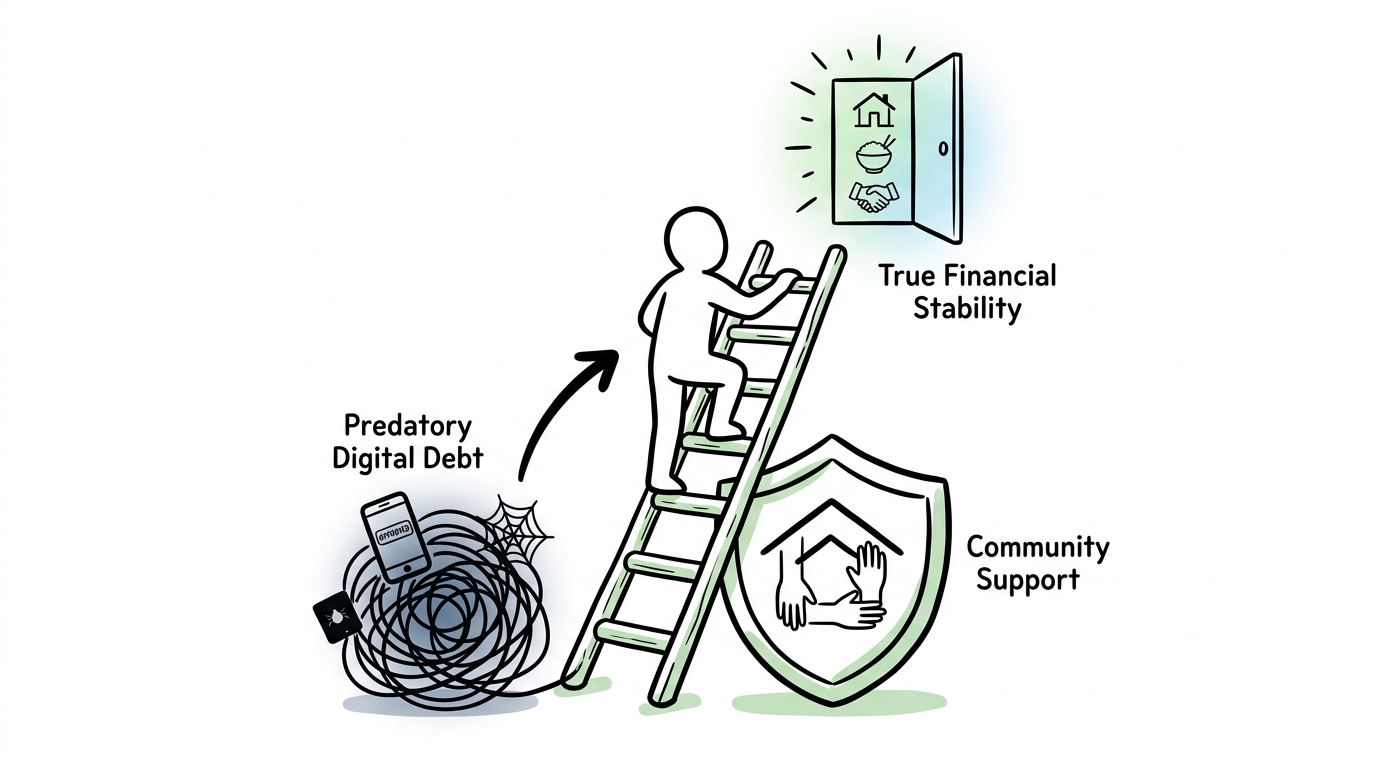
The reality of digital lending in our communities is that people rarely use these apps because they want to invest or buy luxury goods. They use them because our social safety nets are frayed. When a child falls ill, when the harvest fails, or when a daily wage earner loses a week of work due to a passing typhoon, there is no institutional cushion. The immediate need for a few thousand pesos completely eclipses any long-term worry about high interest rates or hidden processing fees. In that moment of crisis, emergency survival triumphs over financial calculations.
This is where the human cost of the digital lending boom becomes visible. Stricter corporate guidelines look good on paper, but they do not automatically erase the desperation that drives a person to accept a loan with a 30% weekly interest rate. Furthermore, digital literacy in our communities remains uneven. A borrower might see the clear text saying "Approved," but they might not fully comprehend the complicated formulas hidden in the "Terms and Conditions" checkbox that they hastily clicked. When the due date arrives, the financial pressure can strain families, dissolve trust among neighbors, and cause immense emotional distress.
This complex landscape reflects why community-based efforts around basic economic literacy and localized financial solidarity matter. True financial protection cannot happen solely from a regulatory office in Metro Manila; it must be built where people live and work. When neighborhoods establish their own informal credit cooperatives, or when local community associations provide small, interest-free emergency funds for their members, they create a human alternative to the cold, algorithmic calculations of a mobile app. These grassroots efforts prove that when a community looks out for its own, the reliance on predatory digital lifelines naturally begins to fade.
The return of new online lending apps will undoubtedly flood our phones with more choices and shinier advertisements. Competition might drive some interest rates down, and more robust government monitoring might reduce the worst instances of digital harassment. These are welcome developments.
However, as we navigate this expanding digital marketplace, we must remember that a healthier financial system is not measured by how easily a person can borrow money through their phone. It is measured by how rarely they need to do so out of desperation. True financial inclusion is not just about access to credit; it is about building a society where an ordinary family has enough stability, fair wages, and community support to face an unexpected emergency without a smartphone screen becoming their only hope—and their potential trap.
As these new apps begin to appear on our app stores, it is worth asking ourselves: Are we creating a digital economy that serves our people, or are we simply making it easier for our people to become dependent on the digital economy?
Lahat tayo masaya kapag may madaling matakbuhan tuwing gipit ang pamilya. Balita sa media na magpapasok muli ang gobyerno ng mga bagong online lending apps sa bansa, kasabay ng mas mahigpit na mga panuntunan para sa mga kumpanya. Pero sapat nga ba ang mas mahigpit na batas para protektahan ang ordinaryong Pilipino sa patung-patong na interes at banta sa privacy? O mas lalo lang tayong mababaon sa utang?

Power Our Mission, Shape the Future
We empower single parents, PWDs, youths, seniors, and stay-at-home parents through digital livelihood.
Help us build resilient communities.
BUKLURAN remains open to partnerships, sponsorships, and collaborative initiatives that create meaningful community impact.
Whether through funding, in-kind support, volunteerism, or shared services, your organization can help strengthen programs that serve underserved communities.
Do you want to take part in our free livelihood programs, scholarship assistance, and community resource pooling initiatives? Membership is completely free.
Join BUKLURAN!
Register, volunteer, and become a member today.