The Billions Behind the Switch: What Big Energy Deals Mean for Your Monthly Power Bill
When energy giants debate billions of pesos behind closed doors, the real impact ripples all the way to your family's monthly power bill.
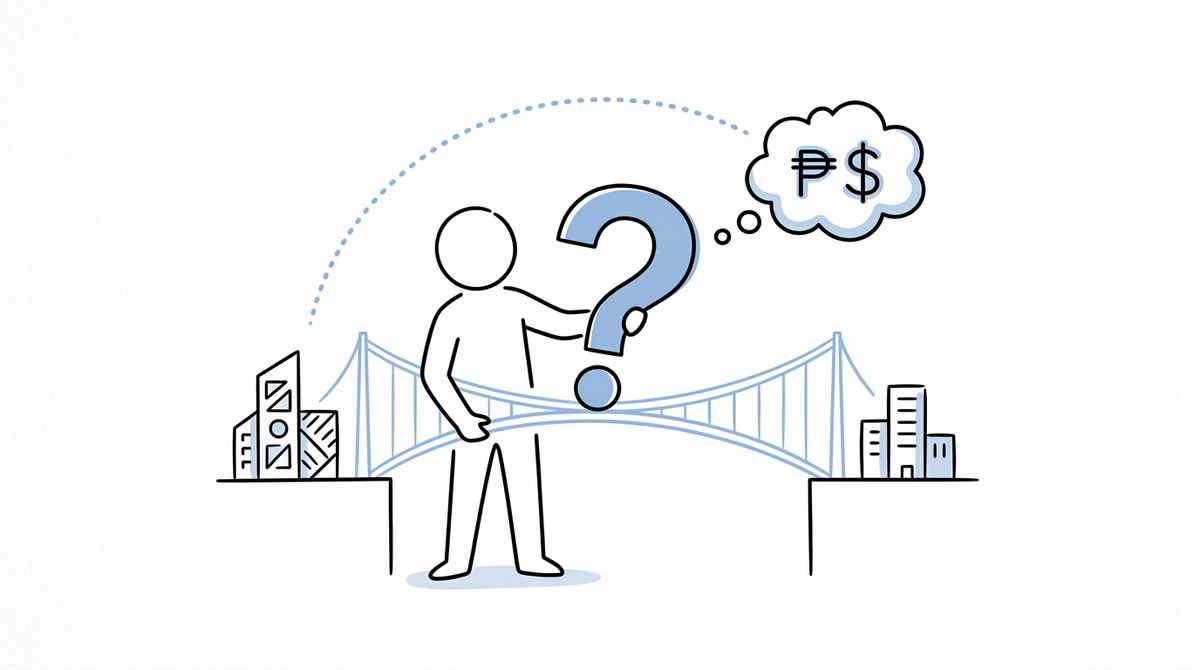
The corporate dispute over a ₱42-billion premium in a major hydropower partnership highlights the hidden dynamics of the energy sector and its ultimate impact on the electricity bills of ordinary Filipino consumers.
It is a quiet ritual in millions of Filipino households. Every month, a small slip of paper arrives at the doorstep, carrying a number that determines how much a family will have to stretch their budget. Parents sit at the dining table, smoothing out the electric bill, calculating whether they need to cut down on nighttime fan use or delay buying groceries just to keep the lights on. In a country that experiences some of the highest electricity rates in Asia, power is not just a utility—it is a constant, shifting monthly anxiety.
Far away from these quiet family discussions, in air-conditioned boardrooms, entirely different numbers are thrown around. Recently, headlines reported a massive corporate disagreement: a majority within the prominent Lopez family raised serious questions over a ₱42-billion premium involved in First Gen Corp.’s hydropower partnership with Prime Infrastructure Capital Inc. To the average citizen, a figure like ₱42 billion sounds abstract, almost fictional. It belongs to the world of high finance, stock markets, and corporate mergers.
But these two worlds—the boardroom where billions are debated and the kitchen table where centavos are counted—are deeply connected. When the giants of the energy sector make multi-billion-peso deals, create partnerships, or dispute financial terms, the ripples eventually travel down the grid and find their way into the everyday lives of ordinary Filipinos.
Breaking Down the Boardroom Battle
To understand why this matters, we have to look past the dense financial jargon. At the heart of the issue is a partnership meant to develop hydropower—a clean, renewable source of energy generated by using the natural flow of moving water to spin turbines and produce electricity. Hydropower is crucial for the Philippines because it offers a way to generate power without relying heavily on imported coal or gas, which constantly fluctuate in price based on global markets.
However, the friction arose when questions were asked about a ₱42-billion "premium." In business terms, a premium is an extra amount paid above the actual estimated value of an asset or a deal. The majority of the family behind the company questioned why such a massive extra sum was being committed, raising concerns about risks, lack of protections, and whether the transaction was entirely fair to the company's stability and its shareholders.
When an ordinary person buys a piece of land or a second-hand jeepney for a livelihood, they carefully inspect it to ensure they are not overpaying. If they pay too much, they will have less money for maintenance, fuel, and daily necessities. In the corporate world, the scale is vastly larger, but the logic remains identical. When a major energy company engages in an incredibly expensive transaction with an unjustified premium, it alters the financial health of the institution responsible for powering our communities.
What This Really Means for Everyday Life
Why should an ordinary Filipino worker, student, or market vendor care about corporate premiums and boardroom disagreements? They should care because infrastructure development is never free, and the costs incurred at the top have a historical habit of trickling down to the bottom.
When energy companies build new power plants or form partnerships, they look at these projects as long-term investments. They expect to recover every peso spent—including the premiums, the interest on loans, and the operational costs—over the next twenty to thirty years. How do they recover these costs? They do it through the generation charges embedded in our monthly electricity bills.
If an energy company overpays for a project or takes on unnecessary financial risks, that burden can manifest in several ways that directly affect the public:
- Passing the Burden: Higher project costs mean the electricity generated needs to be sold at a higher price to ensure profitability. Ultimately, the consumer absorbs these choices through higher generation charges on their bills.
- Delayed Progress: When major corporate partners get tied up in internal disputes and legal scrutiny, projects slow down. In a country prone to rotational brownouts during the hot summer months, a delay in bringing new power sources online means a prolonged risk of unstable power supply for local businesses and households.
- Market Vulnerability: If a major energy producer faces financial instability due to poor transaction terms, its ability to maintain existing plants efficiently can be compromised, leading to unexpected outages that force the grid to rely on more expensive, emergency power sources.
Clean energy is supposed to be the answer to our country's power woes. Hydropower and solar energy promise cheaper, self-reliant electricity in the long run. But if the transition to clean energy is marred by overpriced agreements and questionable financial structures, the promise of cheaper power slips further away from the reach of the ordinary citizen.
The Human Impact: Beyond the Grid
When we talk about energy, we are talking about the lifeblood of modern Filipino communities. Unstable or expensive electricity does not just mean dim lights; it changes human behavior and limits opportunities.
Consider a small sari-sari store owner who relies on a single refrigerator to sell cold drinks and ice candy to neighbors. A sudden spike in the electricity bill can wipe out her entire profit margin for the month, forcing her to decide whether to turn off the refrigerator at night—risking spoiled goods—or raise her prices, driving away loyal customers.
Think of a public school student trying to review for an exam in a crowded neighborhood during a warm evening. When electricity is expensive, families minimize the use of electric fans, making it difficult for children to concentrate in suffocating heat. For workers navigating the growing digital economy from home, a reliable and affordable power supply is the literal foundation of their employment.
Every single peso added to a generation charge because of inefficient corporate spending is a peso taken away from a family’s health, education, and nutrition. This is why transparency and fairness in large corporate energy deals are not just matters of law or accounting; they are matters of basic public welfare.
The Importance of Watchfulness
This complex issue reflects why community-based efforts around energy literacy and consumer advocacy matter. It reminds us that ordinary citizens cannot afford to ignore the business pages of newspapers. We must understand that corporate governance—how large companies are managed, monitored, and held accountable—directly affects our standard of living.
When internal stakeholders challenge a deal and ask for justification, it serves as a reminder that transparency protects everyone, from the highest shareholder to the consumer paying for a single lightbulb in a rural barangay. Healthy scrutiny prevents reckless financial commitments that the public might eventually have to pay for.
As our nation pushes forward into a future that requires more power, better infrastructure, and a transition toward renewable energy, the rules of fairness must apply at every level. The systems that keep our country running must be handled with the utmost care, ensuring that progress is built on solid, transparent ground, rather than on the fragile backs of everyday consumers.
The next time we look at our monthly electricity bill, we should remember that the number on that paper is the final destination of a very long journey. It is a journey that begins in boardrooms, flows through massive infrastructure deals, and ends in our homes. Ensuring that those boardroom decisions are fair, prudent, and thoroughly scrutinized is the first step toward a future where keeping the lights on no longer feels like a burden.
Bakit nga ba dapat nating pakialaman ang mga multi-billion peso deal ng mga dambuhalang kumpanya ng kuryente? Akala natin, usapang mayayaman lang ito sa boardroom. Pero kapag nag-overprice o nagka-problema ang mga kontrata sa renewable energy tulad ng hydropower, ang dulo niyan ay pwedeng pumalo sa dagdag-singil sa buwanang bill ng pamilyang Pilipino. Alamin kung paano nakakaapekto ang malalaking pirmahan sa liwanag ng ating mga tahanan.

Power Our Mission, Shape the Future
We empower single parents, PWDs, youths, seniors, and stay-at-home parents through digital livelihood.
Help us build resilient communities.
BUKLURAN remains open to partnerships, sponsorships, and collaborative initiatives that create meaningful community impact.
Whether through funding, in-kind support, volunteerism, or shared services, your organization can help strengthen programs that serve underserved communities.
Do you want to take part in our free livelihood programs, scholarship assistance, and community resource pooling initiatives? Membership is completely free.
Join BUKLURAN!
Register, volunteer, and become a member today.