The Digital Reserve: Why High-Tech Financial News Matters at the Dinner Table
Beyond the headlines of digital gold and national assets, how does a strategic Bitcoin reserve affect an ordinary Filipino's budget?
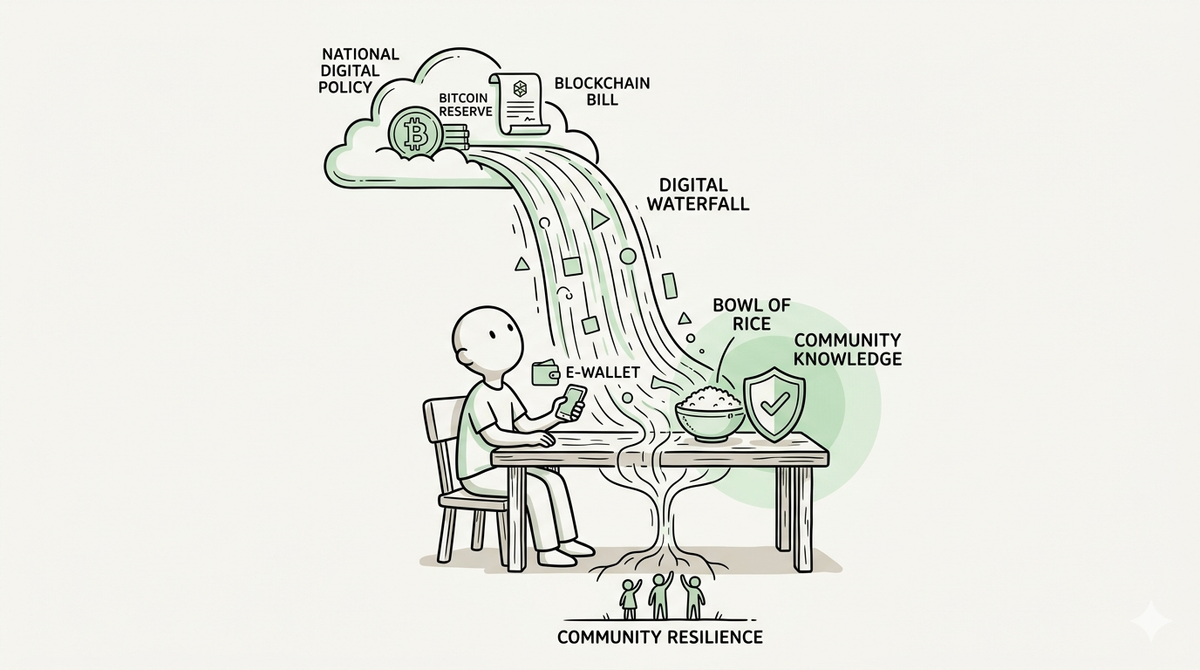
The article analyzes the economic and everyday implications of proposed blockchain bills and a strategic Bitcoin reserve in the Philippines, highlighting the balance between high-tech fiscal policies and grassroots financial realities.
Imagine sitting at the dining table after a long day of work, balancing the household budget. Between the rising cost of rice, upcoming school expenses for the kids, and the monthly electricity bill, every single peso is carefully accounted for. In the middle of this daily routine, a news flash pops up on your phone screen: legislators are discussing blockchain frameworks and the possibility of creating a national strategic Bitcoin reserve. For most ordinary citizens, the immediate reaction is a mix of confusion and detachment. It sounds like a script from a science fiction movie or an exclusive conversation reserved for tech executives and high-flying financial analysts.
It is easy to dismiss these developments as irrelevant to the daily struggle of making ends meet. When a family is focused on ensuring there is enough food on the plate tomorrow, abstract discussions about decentralized ledgers, sovereign crypto holdings, and digital asset policies feel light-years away. Yet, history has shown that when national frameworks regarding money, technology, and financial systems shift, the ripples eventually reach the shore of every local community. Understanding these developments is not about learning how to trade volatile digital currencies; it is about recognizing how large-scale economic changes alter the landscape of consumer safety, local commerce, and the future opportunities available to the next generation of workers.
To demystify the recent discussions, we must look at what is currently happening on a policy level. Lawmakers and financial strategists are exploring legislative avenues to formalize blockchain technology and assess the viability of digital assets within the state's broader fiscal strategy. One of the most talked-about concepts is a strategic Bitcoin reserve—a policy where a government holds a portion of its national sovereign reserves in Bitcoin, similar to how central banks hold physical gold or foreign fiat currencies like the US dollar. The argument put forward by proponents is that digital assets can act as a modern hedge against inflation and position the country as an early adopter in a rapidly evolving global digital economy.
However, looking past the complex jargon and enthusiastic tech promises reveals a deeper, more practical set of implications for the average consumer. Money, at its core, relies on stability and trust. When a country begins incorporating highly volatile assets into its national discourse, it changes how international markets perceive its economic stability. If these initiatives succeed in building a robust regulatory framework, it could mean better protections against cross-border fraud and clearer guidelines for digital remittances, which millions of overseas Filipino workers rely on to support their families back home. On the other hand, if digital frameworks are rushed without addressing underlying structural vulnerabilities, it creates an environment ripe for predatory financial schemes that target those who can least afford to lose their savings.
The real challenge of high-tech economic shifts is not the technology itself, but the widening gap it creates between different segments of society. This issue directly affects families, workers, and small-scale business owners in profound ways. Consider a local micro-retailer or a tricycle driver trying to navigate a world that is moving rapidly toward cashless transactions and digital platforms. When financial systems become increasingly complex, individuals who lack access to stable internet, modern devices, or technical training are inadvertently pushed to the margins. They face barriers not just in participating in new economic opportunities, but in basic consumer activities, making them more vulnerable to bad actors exploiting the hype surrounding digital assets.
Moreover, the human impact is felt heavily by parents and young adults. For a parent, ensuring that a young person entering the workforce is equipped with relevant skills is a top priority. As institutional frameworks shift toward digital transformation, the definition of basic literacy changes. It is no longer enough to know how to read and write; the modern economy demands an understanding of digital safety, electronic payments, and the mechanisms of online platforms. Without a deliberate effort to ground these high-tech concepts into accessible, everyday education, the talk of national digital reserves will remain a luxury of the affluent, while ordinary communities bear the brunt of an inaccessible financial system.
This widening digital divide reflects exactly why community-based efforts around knowledge and digital readiness matter so much. Large-scale national conversations about digital assets demonstrate that technology is reshaping our economic environment, but the actual resilience of a community is built from the ground up. Before a society can safely navigate complex international financial trends, its members must first possess the fundamental tools to manage everyday digital interactions securely. Grounded initiatives that focus on practical learning—such as teaching community members the safe use of everyday e-wallets, online banking security, and basic scam awareness—serve as the crucial bridge between high-level policy and everyday reality.
When ordinary citizens understand how to verify transactions, protect their digital identities, and spot predatory online schemes, they build a collective shield that guards their household income from the risks of an increasingly digital world. This localized approach ensures that as the country’s financial frameworks evolve, local families are not left behind or exposed to preventable digital harms. True financial empowerment does not come from speculating on volatile digital assets; it comes from having the practical knowledge and confidence to utilize modern tools to protect and manage hard-earned resources.
Ultimately, the discussion surrounding a strategic Bitcoin reserve or national blockchain bills is a reminder that the future of money is changing, whether we are ready or not. But the true measure of our nation’s economic progress will never be found in the fluctuating value of a digital asset reserve or the complexity of our legal frameworks. It will be found in the stability of our neighborhoods, the financial security of our households, and the capacity of our people to participate safely and confidently in the modern economy. As the country navigates these high-tech fiscal conversations, the focus must remain squarely on ensuring that progress serves the interest of the public—turning abstract digital concepts into meaningful, real-world protections for every Filipino family at the dinner table.
Bakit nga ba pinag-uusapan ang pagkakaroon ng national Bitcoin reserve sa bansa, at ano ang kinalaman nito sa badyet ng pamilyang Pilipino? Habang abala ang marami sa presyo ng bigas at mga bayarin, may malalaking pagbabago sa sistema ng pananalapi na maaaring makaapekto sa ating seguridad bilang mga mamimili.

Power Our Mission, Shape the Future
We empower single parents, PWDs, youths, seniors, and stay-at-home parents through digital livelihood.
Help us build resilient communities.
BUKLURAN remains open to partnerships, sponsorships, and collaborative initiatives that create meaningful community impact.
Whether through funding, in-kind support, volunteerism, or shared services, your organization can help strengthen programs that serve underserved communities.
Do you want to take part in our free livelihood programs, scholarship assistance, and community resource pooling initiatives? Membership is completely free.
Join BUKLURAN!
Register, volunteer, and become a member today.