The Empty Market Basket: Why Recovery Feels So Slow at Home
When macro statistics clash with the reality of an empty market basket, it's time to look deeper at the structural trends shaping our lives.
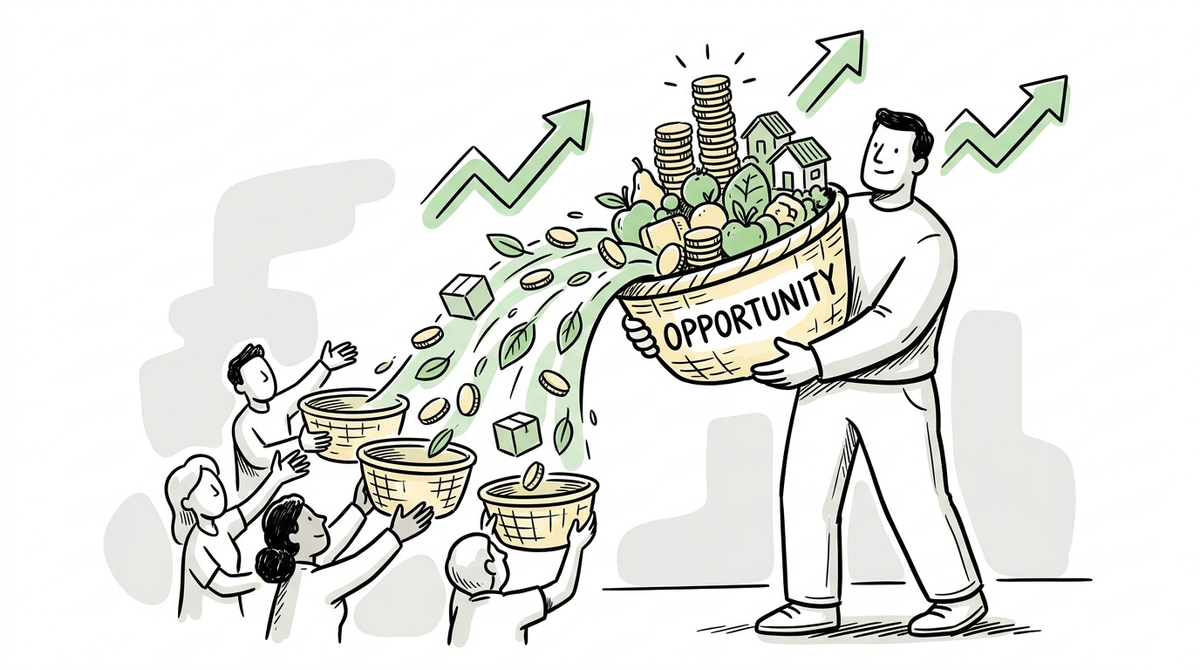
The Philippines' lagging consumer recovery stems from structural shifts toward lower-productivity work and volatile overseas remittances, widening the gap between headline economic numbers and everyday household struggles.
There is a quiet routine playing out in wet markets and grocery aisles across the country. A parent stands before a shelf of cooking oil, pauses, compares prices, and puts the smaller bottle back. A worker checks their digital e-wallet balance after a long week of work, only to find that after settling the electric bill and buying a sack of rice, there is barely anything left to save.
On paper, the broader conversations about the country's economic indicators paint a picture of movement and growth. News anchors read out gross domestic product percentages, and institutional outlooks project macroeconomic expansion. Yet, for the average Filipino household, the question remains immediate and unresolved: If the economy is recovering, why does it still feel so difficult to stretch a peso?
This disconnect is not a matter of imagination. According to an economic assessment by ING Bank, the Philippines is trailing behind several of its Asian neighbors in terms of consumer recovery. While countries like Japan, South Korea, Taiwan, India, and Singapore are witnessing stronger, more resilient consumer spending—buoyed by structural demand, rising real incomes, and technological advancements—the domestic scene tells a different story. For ordinary families, the path back to financial breathing room has been slow, uneven, and deeply constrained. Understanding why this recovery is lagging requires moving past the grand headlines and looking at the structural shifts occurring right beneath our feet.
The Shift to Shifting Gears: The Productivity Dilemma
At the heart of a country's spending power is its earning capacity. Ideally, an economy grows by moving workers into higher-productivity sectors—industries that generate more value per hour, invest in advanced technology, and consequently offer higher, more sustainable wages. Historically, export-oriented manufacturing and expanding service sectors served as these ladders of upward mobility.
However, a structural shift has been quietly taking place in the Philippine labor landscape. Rather than climbing into higher-productivity, high-value-added sectors, a significant portion of the workforce has transitioned into lower value-added activities and lower-productivity domestic jobs. Think of the sudden explosion of informal transport services, small-scale independent delivery driving, micro-retail operations, and insecure contract roles.
While these activities provide vital, immediate survival mechanisms for millions of families, they possess structural limitations. Lower-productivity sectors cannot sustain rapid or compounding wage growth. When an economy relies heavily on low value-added domestic sectors, the overall growth in household incomes flattens. A worker might be busy all day, working longer hours than ever before, but their net purchasing power remains stagnant because the economic value of that work is capped by the system. This reality acts as a structural anchor, keeping consumer recovery grounded while prices for basic necessities continue to fluctuate.
The Fragility of the Safety Net from Afar
For decades, the standard cushion against domestic economic downturns has been the steady inflow of overseas remittances. The monthly padala from a daughter in the Middle East, a son on a cargo ship, or a sibling in North America has served as the ultimate social safety net for millions of households. It built houses, paid for hospital bills, and kept children in school.
But relying on overseas remittances means that household spending is inherently vulnerable to external global shocks. When global inflation rises, or when economic slowdowns hit host countries, overseas workers feel the squeeze first. They face higher living costs abroad, which reduces the surplus income they can afford to send back home.
Furthermore, a general deceleration in remittance inflows means that the reliable baseline of discretionary spending that once fueled local neighborhoods is no longer expanding at its previous pace. When remittance growth slows down, the ripple effect is felt immediately in domestic communities. The neighborhood sari-sari store sees fewer daily transactions; the tricycle driver notices fewer passengers taking rides for leisure; and small local businesses experience a drop in steady, predictable demand. The safety net is still there, but it is being stretched thinner than before.
The Human Cost of Structural Constraints
When consumer recovery stalls, the impact is never evenly distributed. It falls heaviest on families dependent on lower-productivity jobs, single parents managing household expenses single-handedly, stay-at-home parents trying to budget with less, and vulnerable sectors like senior citizens and persons with disabilities who live on fixed or non-existent incomes.
For these households, the slow recovery changes the definition of daily stability. It means that purchasing decisions are no longer about preference, but about stark trade-offs. Does a family buy fresh, nutritious food, or do they opt for cheaper, processed alternatives to make sure everyone feels full? Do parents keep their children enrolled in enrichment activities, or do they cut back to the barest educational essentials?
This environment creates an atmosphere of chronic economic anxiety. When survival requires constant calculation, communities lose their resilience. Long-term planning—saving for a house, investing in a small livelihood, or preparing for health emergencies—becomes a luxury that few can afford. The structural issues debated by economists become, at the kitchen table, a daily exercise in doing more with less.
A Community-Based Perspective on Resource Efficiency
The reality of slow income growth and rising household costs highlights why localized, structural interventions within our neighborhoods are becoming more critical than ever. When macro-level economic settings fail to provide immediate relief, the focus inevitably turns toward how communities can better organize their existing resources to insulate themselves from external pressures.
This ongoing structural challenge reflects why community-based efforts around organized resource pooling matter. Within community ecosystems, programs like the BUKLURAN HUB focus on practical, collective participation rather than the promise of passive financial returns. By organizing initiatives like structured cooperative purchasing and group buying of basic commodities at lower costs, such frameworks help households directly reduce their everyday operational expenses.
When families pool their purchasing power locally, they bypass some of the retail markups that exacerbate high inflation, allowing them to stretch their stagnant wages just a little further. Similarly, structured technical and applied digital skills training—such as the digital literacy sessions under the BUKLURAN Bagong Simula program—helps individuals navigate modern digital payment tools and understand digital environments safely. While these localized models do not alter the macroeconomic trajectories of global remittances or national productivity figures, they demonstrate a sustainable approach to building community resilience from the ground up. They offer practical toolkits for everyday survival, helping families protect their limited purchasing power through solidarity and shared organization.
Moving Beyond the Numbers
The path toward a true and inclusive recovery cannot be measured solely by national balance sheets or corporate earnings reports. An economy is only as healthy as the purchasing power of its average household. As long as ordinary citizens struggle to fill their market baskets despite positive macroeconomic narratives, the recovery remains incomplete.
Addressing these deep-seated challenges requires an honest look at how our labor market is structured and how we support household stability. It demands a transition toward high-value, high-productivity sectors that can genuinely sustain real wage growth, alongside a concerted effort to foster local economic systems that shield families from the volatility of global shifts. Until those structural changes take root, the true measure of our progress will not be found in the percentages broadcast on the evening news, but in the security, dignity, and peace of mind of the families gathering around the dinner table each night.
Bakit nga ba kahit laging sinasabi sa balita na lumalago ang ekonomiya, ramdam pa rin ng maraming pamilya ang hirap sa pagbabadyet araw-araw? Ayon sa mga eksperto, may malalim na dahilan kung bakit mabagal ang pagbangon ng mga kabahayan sa Pilipinas kumpara sa ibang bansa sa Asya. Alamin ang katotohanan sa likod ng mga numero at kung ano ang epekto nito sa ating sahod at kabuhayan.

Power Our Mission, Shape the Future
We empower single parents, PWDs, youths, seniors, and stay-at-home parents through digital livelihood.
Help us build resilient communities.
BUKLURAN remains open to partnerships, sponsorships, and collaborative initiatives that create meaningful community impact.
Whether through funding, in-kind support, volunteerism, or shared services, your organization can help strengthen programs that serve underserved communities.
Do you want to take part in our free livelihood programs, scholarship assistance, and community resource pooling initiatives? Membership is completely free.
Join BUKLURAN!
Register, volunteer, and become a member today.