The Hidden Question Behind New Construction and Empty Towers
Fewer new construction projects are breaking ground. Here is how a shifting real estate market hits your pockets and community.
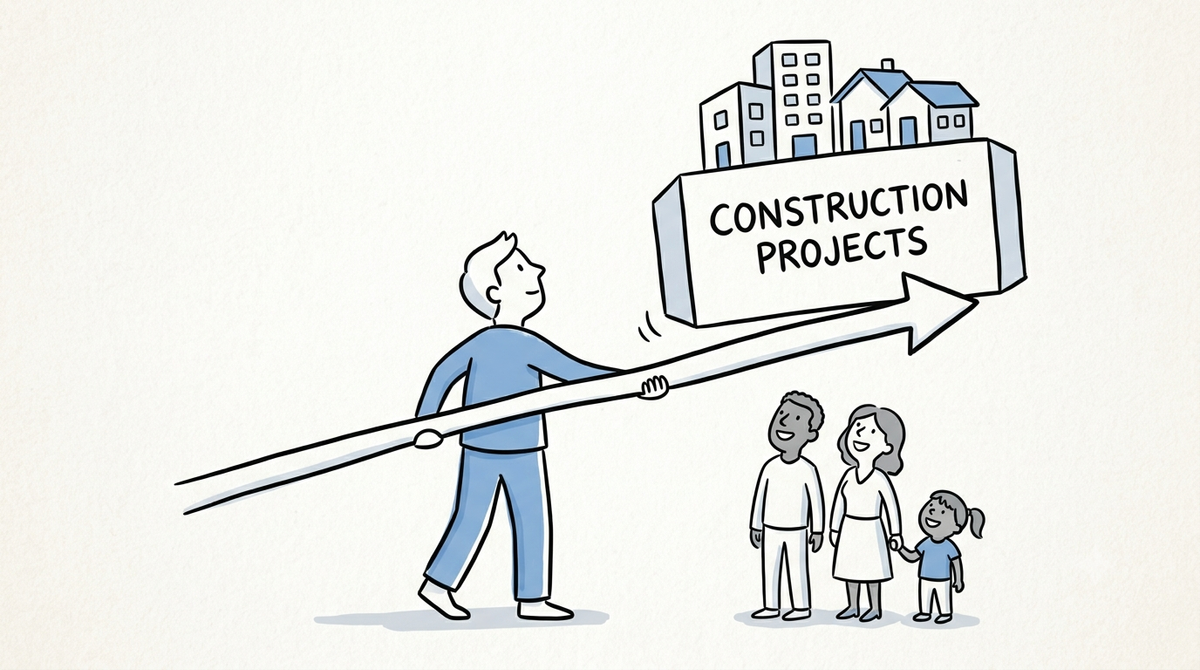
The slowdown in Philippine building permit growth reflects underlying real estate challenges that directly impact housing affordability and employment for ordinary Filipinos.
Walk through almost any major urban hub in the Philippines today, and you will see a landscape defined by contrasts. On one corner, concrete skeletons rise into the sky, surrounded by bamboo scaffolding and workers in hard hats. On another, shimmering glass condominium towers stand completed, yet their windows remain dark night after night. For years, the constant thrum of construction has been accepted as the undisputed heartbeat of our economic progress. We have been taught to look at crane-filled skylines as proof that the country is moving forward, providing jobs, and building the future.
But lately, an uneasy quiet has begun to settle over certain parts of the industry. If you talk to neighborhood carpenters, local hardware store owners, or families searching for an affordable place to rent, the narrative of an endless boom feels increasingly disconnected from reality.
Recent economic data confirms what many on the ground have already begun to sense. In 2025, the number of approved building permits across the Philippines grew by a mere 0.8%. While any increase technically represents growth, this is the slowest pace of expansion the sector has seen in two years. The roaring engine of construction has not ground to a halt, but it is visibly tapping the brakes.
To the average commuter trapped in traffic or a parent budgeting for next month's groceries, an economic indicator like "approved building permits" sounds like corporate jargon best left to boardroom meetings and financial analysts. It feels distant. Yet, these numbers act as an early warning system for the real economy—the economy of the streets, household budgets, and daily livelihoods. When building permits slow down, it sends ripples through communities that eventually land on the doorsteps of everyday citizens.
To understand why this matters, we have to look behind the numbers at the forces shaping our cities. For nearly a decade, the real estate sector poured billions into high-end developments, particularly vertical condominiums designed for investors, foreign buyers, and high-income earners. For a time, this strategy generated massive profits and fueled a hiring spree for construction workers.
However, the market is hitting a wall. The industry is currently wrestling with an extended condominium oversupply. Thousands of units sit empty because they were built for a segment of the population that is either saturated or shrinking, rather than the millions of ordinary working-class Filipinos who actually need affordable shelter. At the same time, lingering structural challenges, including regulatory bottlenecks and persistent corruption scandals within local permitting processes, have made developers more cautious about investing in new ground-up projects.
When developers slow down, the immediate impact is felt by the people who build our cities. The construction industry is one of the largest employers of informal and semi-skilled labor in the Philippines. It absorbs farmers during the off-season, young high school graduates looking for their first break, and fathers trying to send their children to school. A project delay or a decision not to break ground doesn't just hurt a corporation's stock price; it means a foreman has to tell twenty laborers not to report to work next Monday. Without that daily wage, a family's food security, tuition payments, and medical emergency funds vanish overnight.
The consequences stretch far beyond the construction site. Think of the small carinderias (eateries) that set up stalls near construction zones to feed hundreds of workers daily. Think of the tricycle drivers who rely on moving laborers to and from the site, or the local hardware stores that supply cement, rebar, and tools. When building activity moderates, the economic micro-climate of an entire neighborhood cools down.
For consumers and families looking for a place to live, this slowdown exposes a deeper, more frustrating irony. Despite the oversupply of luxury units, the Philippines faces a massive, chronic housing deficit for low-to-middle-income families. The slowdown in building permits indicates that the market is failing to pivot where it is needed most. Instead of shifting resources to build affordable horizontal housing, public infrastructure, or accessible community dwellings, the formal real estate sector is simply contracting.
As a result, ordinary workers are left with fewer viable options. They are squeezed between high rental rates in urban centers—propped up artificially by developers hesitant to lower prices on empty buildings—and the reality of being pushed further into the peripheries, forcing them to endure hours of grueling, expensive daily commutes just to get to work.
This real estate shift highlights a critical gap in how we plan our communities. Relying entirely on speculative market forces to dictate what gets built, where it gets built, and for whom, leaves ordinary citizens vulnerable to the boom-and-fast-fade cycles of commercial industries. True development cannot just be measured by the height of our skyscrapers or the number of permits approved for luxury developments; it must be measured by how safely and affordably a society can shelter its people.
While macro-level shifts can feel overwhelming, they underscore the vital importance of community-focused vigilance and localized tracking. Understanding these housing and employment trends reflects why community-based efforts around monitoring local development, advocating for transparent urban planning, and demanding accountability in local government permitting matter so deeply. When ordinary citizens understand how land and resources are being used in their towns and cities, they are better equipped to advocate for projects that serve the collective welfare rather than speculative financial interests.
The slowing pace of building permits is more than a statistical blip on a financial chart. It is an invitation to pause and re-examine the kind of growth we are prioritizing as a nation. It asks us to look past the glitz of real estate billboards and see the real people whose lives are bound to the rise and fall of these industries.
As we look at the changing landscapes of our cities and municipalities, we must ask ourselves a fundamental question: Are we building structures merely to store wealth, or are we building communities where ordinary Filipino families can truly afford to live, work, and thrive?
Lahat tayo masaya kapag nakikitang mabilis ang pagpapatayo ng mga gusali dahil senyales ito ng pag-asenso. Pero paano kung malaman mong bumabagal na ang pag-apruba ng mga building permit sa bansa dahil sa dumaraming bakanteng condo at iba pang isyu? Ano ang epekto nito sa trabaho ng mga ordinaryong construction worker at sa pangarap ng pamilyang Pilipino na magkaroon ng sariling tahanan?

Power Our Mission, Shape the Future
We empower single parents, PWDs, youths, seniors, and stay-at-home parents through digital livelihood.
Help us build resilient communities.
BUKLURAN remains open to partnerships, sponsorships, and collaborative initiatives that create meaningful community impact.
Whether through funding, in-kind support, volunteerism, or shared services, your organization can help strengthen programs that serve underserved communities.
Do you want to take part in our free livelihood programs, scholarship assistance, and community resource pooling initiatives? Membership is completely free.
Join BUKLURAN!
Register, volunteer, and become a member today.