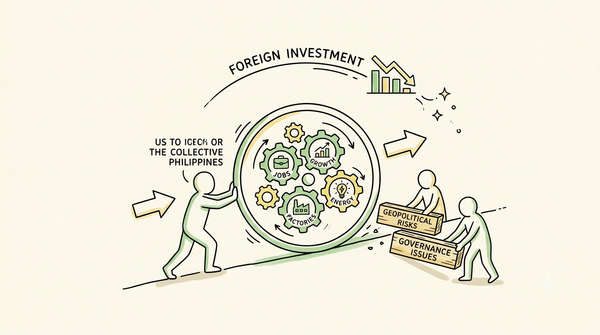
The Numbers on the Screen: Why a Drop in National Debt Matters at the Palengke
When the government borrows 66% less in a single month, it sounds like abstract math. But it actually changes the rhythm of your daily budget.
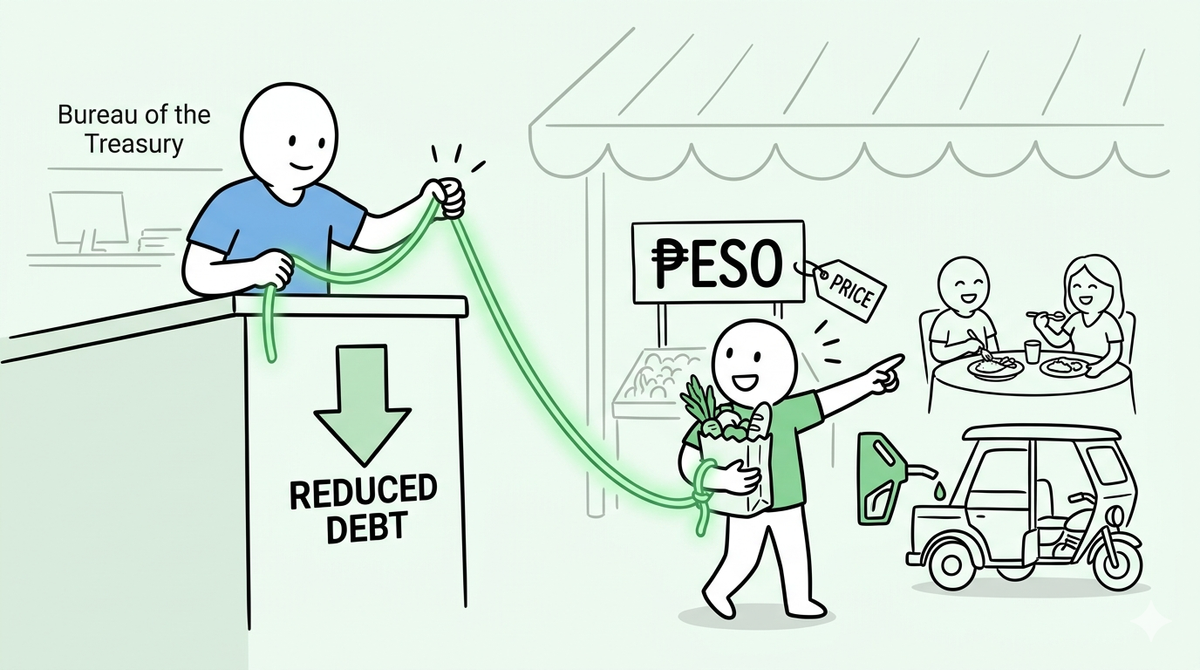
While a massive drop in government borrowing looks like a technical win for national debt management, its true value lies in how it impacts local prices, job stability, and the daily survival of ordinary Filipino households.
The Silent Math of the Dinner Table
Step into any local wet market on a Saturday morning, and you will hear a familiar rhythm of calculation. A mother weighs a kilo of local rice against the cost of a few pieces of vegetables. A tricycle driver counts his loose change, measuring his daily boundaries against the rising cost of spare parts and fuel. To these households, economic survival isn't measured in percentages or billions of pesos. It is measured in what a five-hundred-peso bill can still buy before the week ends.
Yet, far from the bustling stalls of the palengke, inside the quiet, air-conditioned offices of the Bureau of the Treasury, a different kind of calculation just took place. The government reported that its gross borrowings for the month of April dropped sharply by over 66%.
To the busy Filipino, this sounds like an abstract corporate memo. National debt, treasury bonds, and fiscal management feel worlds away from the immediate stress of paying the monthly electric bill or securing tuition money. But these two worlds—the high-finance ledgers of the state and the humble wooden counters of the local grocery store—are tied together by a very real, invisible string. When the government changes how it handles its wallet, it inevitably changes what happens to yours.
Breaking Down the 66% Drop
To understand why this matters, we have to look at what actually happened without getting lost in financial jargon. Every year, the Philippine government spends money on infrastructure, public schools, healthcare, and civil service salaries. Often, the tax revenues collected aren't enough to cover all these expenses, so the state does what many families do when unexpected emergencies hit: it borrows money.
This borrowing happens in two ways. The government can look abroad, taking out foreign loans from international banks or selling bonds in foreign currencies like US dollars. Alternatively, it can look inward, borrowing from local investors, insurance companies, and ordinary citizens through domestic treasury bonds and bills.
In April, the total amount of money the government borrowed plummeted by more than half compared to previous periods. Instead of piling on more debt, the state took a sharp step back. This decline was particularly visible in our external or foreign borrowings. Rather than rushing to sign up for new international project loans or global bonds, the financial managers decided to pull the reins.
The immediate reason for this shift is a mix of global caution and local strategy. The international financial market has been volatile, with high interest rates making foreign loans incredibly expensive. By choosing not to borrow heavily right now, the government avoided locking the country into high-interest repayments for decades to come.
What This Really Means Beyond the Headline
When we hear that the government is borrowing less, our first instinct is to breathe a sigh of relief. On paper, less debt sounds like a victory. But a deeper look reveals a complex balancing act that carries both quiet benefits and hidden friction for ordinary citizens.
First, consider the local currency. When the government stops borrowing heavily in US dollars and relies more on domestic funding, it changes the demand for our own currency. Increased interest and reliance on the local bond market can create a stabilizing environment for the Philippine Peso.
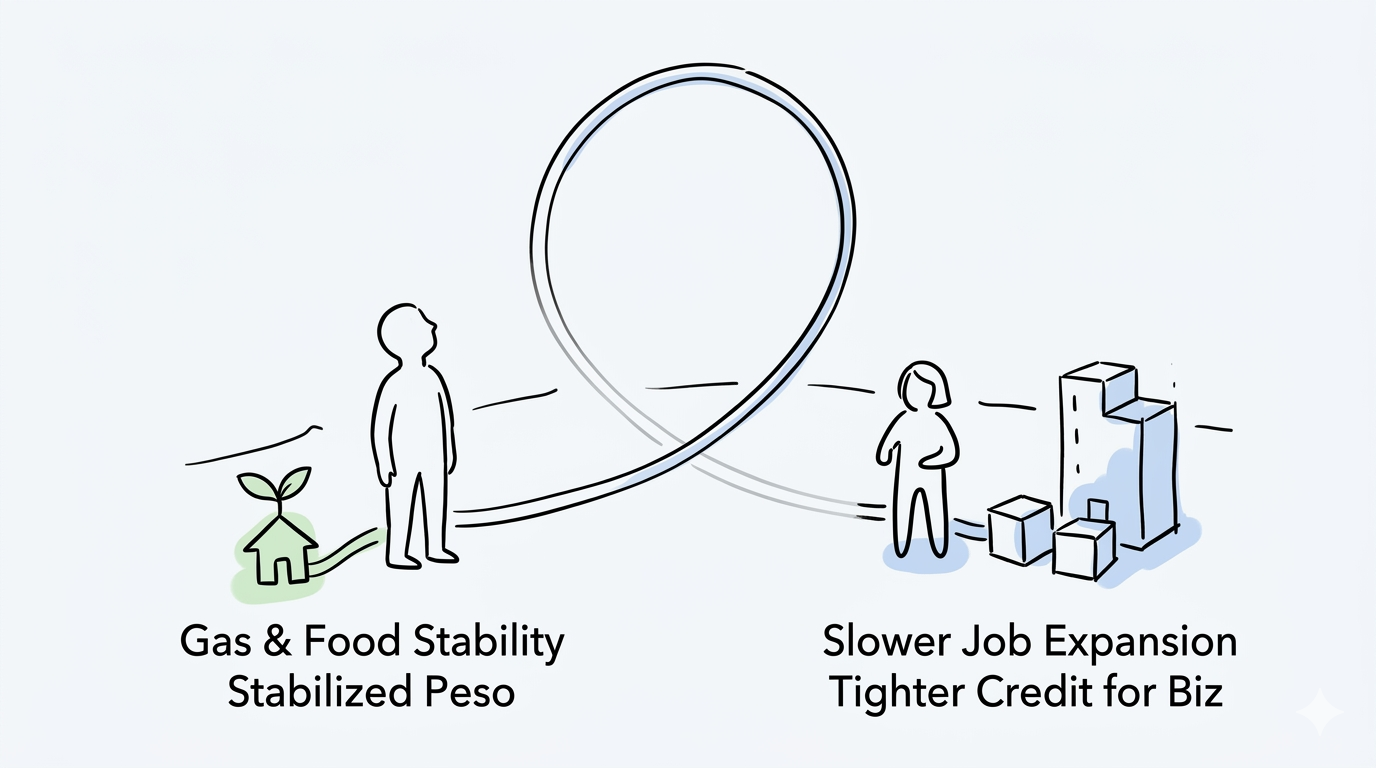
Why should a commuter or a small store owner care about a stable peso? Because the Philippines relies heavily on imported goods. We import fuel, fertilizer, and components for manufacturing. When the peso holds its ground against foreign currencies, the cost of importing these essentials stabilizes. This means that the sudden, violent price spikes we often see at the gas pump or the grocery aisle become less frequent. A stable borrowing strategy acts as a buffer, keeping the prices of everyday items from swinging wildly out of control.
However, this shift inward creates a different kind of pressure within our own borders. When the government decides to borrow domestically, it becomes a massive competitor in the local financial ecosystem. Local banks and large institutions have a fixed amount of capital. If they choose to lend their money to the government—which is considered the safest borrower because a country cannot easily go bankrupt—they have less money left over to lend to others.
This can lead to a subtle squeeze on local businesses. If a local supermarket chain, a small manufacturing plant, or a agricultural cooperative wants to take out a loan to expand their operations, build new warehouses, or hire more staff, they might find that credit is harder to come buy or that local interest rates have stayed stubbornly high. For the ordinary worker, this means that the new job openings or wage adjustments they were hoping for might be put on hold while businesses navigate tighter credit.
The Human Impact: Families, Workers, and Futures
Economic policies do not live in vacuums; they eventually land on human shoulders. To see the true impact of fiscal discipline, we have to look at the generations navigating today’s economy.
Consider our local investors and workers. Many ordinary Filipinos invest their hard-earned savings in retail treasury bonds or rely on cooperative funds that purchase government securities. These are the teachers, nurses, and small-scale entrepreneurs looking for a safe place to grow their retirement funds. When the government drastically reduces its borrowing, fewer new bonds are issued. With less supply available, the yields or returns on these safe investments can shift, altering the long-term savings calculus for families trying to build a financial cushion.
Moreover, the sharp decline in foreign project loans can have a direct impact on community development. Many massive public works—like regional bridges, flood control systems, and rural health infrastructure—are tied to specific international program loans. When borrowing slows down, the timeline for these projects can stretch.
For a community in the provinces, a delayed bridge isn't just a point on a chart; it means another rainy season where farmers cannot bring their vegetables to the main market before they spoil. It means school children must continue to take longer, more dangerous routes to class. The choice to borrow less protects the country's macro-financial health, but the immediate cost is often borne by communities waiting for vital infrastructure.
The Reality of Community-Led Stability
This delicate balance between high-level economic decisions and grassroots survival underscores a fundamental truth: while macroeconomic indicators fluctuate, the daily resilience of communities must remain steady. National fiscal policies can attempt to shield the country from global shocks, but they cannot replace the foundational security that local, self-reliant ecosystems provide.
This ongoing economic tension reflects why community-based efforts around financial literacy and localized livelihood sustainability matter. When national credit markets tighten or infrastructure projects experience delays, neighborhoods that have built strong internal networks—such as local credit cooperatives, community-supported agriculture, and independent livelihood projects—are far better equipped to weather the adjustments. Ensuring that ordinary families understand how to manage household debt and maximize local resources acts as a vital safety net when the broader economic tide shifts.
Looking Beyond the Ledger
A 66% drop in government borrowing is neither a pure victory nor a cause for panic. It is a reminder that managing a nation's wealth involves constant trade-offs. It shows a government attempting to navigate a turbulent global landscape with caution, choosing to protect the country from overwhelming foreign debt obligations even if it means moving at a more deliberate, conservative pace domestically.
As we look to the future, the true measure of this economic decision will not be found in the fiscal reports published at the end of the quarter. It will be found in whether the savings gained from avoiding expensive foreign debt are effectively channeled into protecting local public services.
The next time we read a headline about national billions, debt reductions, or treasury updates, we should look past the grand numbers. The real question worth asking is simpler, quieter, and far more vital: Will this decision make it just a little bit easier for the Filipino family to certain of their tomorrow?
Bakit nga ba biglang bumaba ng mahigit 66% ang inutang ng ating pamahalaan noong Abril?
Sa unang tingin, mukhang malaking bawas-utang ito para sa bansa. Pero ano nga ba ang totoong epekto nito sa presyo ng mga bilihin, sa interes ng mga loan, at sa araw-araw na badyet ng pamilyang Pilipino? Hindi lang ito usaping pang-bilyonaryo—may direktang kinalaman ito sa laman ng wallet mo.

Power Our Mission, Shape the Future
We empower single parents, PWDs, youths, seniors, and stay-at-home parents through digital livelihood.
Help us build resilient communities.
BUKLURAN remains open to partnerships, sponsorships, and collaborative initiatives that create meaningful community impact.
Whether through funding, in-kind support, volunteerism, or shared services, your organization can help strengthen programs that serve underserved communities.
Do you want to take part in our free livelihood programs, scholarship assistance, and community resource pooling initiatives? Membership is completely free.
Join BUKLURAN!
Register, volunteer, and become a member today.