The Ripple in the Vault: Why a Credit Warning for Banks Matters at the Dinner Table
When global credit experts sound alarms about our banks, the real story isn't about corporate profits—it's about the cost of your groceries.
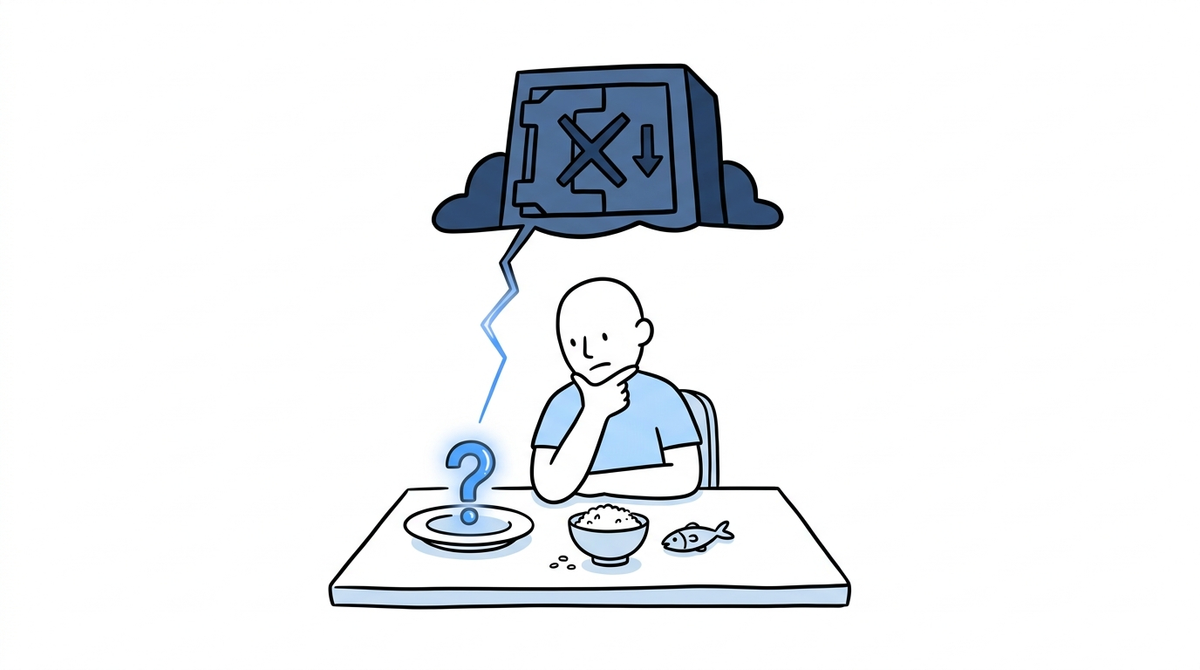
The mid-2026 downgrade of the Philippine banking sector's outlook reflects a deeper reality of how rising global oil costs and persistent domestic inflation squeeze ordinary household budgets and local livelihoods.
Walk into any local wet market or neighborhood grocery store on a payday weekend, and you can feel the subtle shift in how people shop. Parents are looking a bit longer at the price tags of cooking oil and rice. Jeepney drivers calculate their routes more carefully as fuel prices edge upward. Families are having quiet, serious conversations about whether that planned home repair or small tricycle upgrade needs to wait another year.
To the casual observer, these are just the standard compromises of everyday life. But in the boardrooms of international credit rating agencies, these exact consumer anxieties are being translated into cold, institutional data.
Recently, the global credit watcher Fitch Ratings shifted its sector outlook for Philippine banks from "neutral" to "deteriorating." To the average citizen, a phrase like "deteriorating bank outlook" sounds like a problem exclusive to financial analysts, stockbrokers, and corporate executives. It feels entirely disconnected from the reality of a mother balancing a tight weekly budget in Tondo or a farmer seeking a modest loan in Isabela.
The truth, however, is that our banking system does not exist in a vacuum. It operates as a mirror—and an amplifier—of what is happening in ordinary households. When international agencies sound an alarm about the financial health of our lenders, they are not just predicting lower corporate profits; they are pointing to a quiet squeeze that is already affecting the wallets, livelihoods, and futures of ordinary Filipinos.
The Global Spark and the Local Squeeze
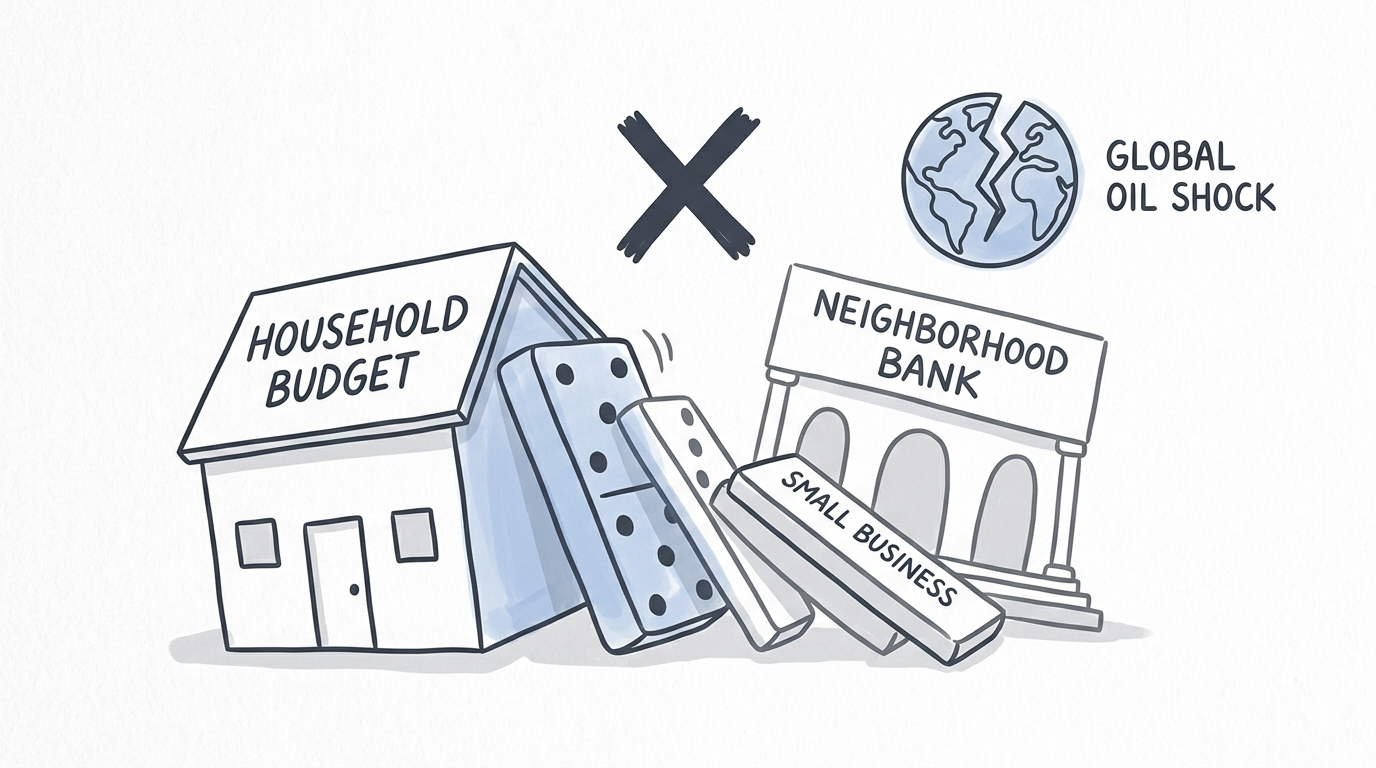
To understand why this is happening, we have to look past our own borders. Mid-2026 has been marked by severe geopolitical friction, specifically the escalating US-Iran conflict in the Middle East. Because the Philippines relies heavily on oil and gas imports from the Gulf region, any spike in global energy prices hits our shores almost instantly.
When fuel becomes expensive, everything else follows. It costs more to transport vegetables from Benguet to Manila. It costs more to run small manufacturing businesses. It costs more for a family to keep the lights on. Fitch Ratings noted that this significantly higher inflation is actively hurting our consumption-led economy. Because our economy relies mostly on people buying goods and services, when ordinary citizens start cutting back on spending just to survive, the entire economic engine begins to slow down.
This is where the banks come in. Banks make a living by lending money to businesses and individuals, counting on the fact that a healthy economy allows borrowers to pay them back with interest. But when inflation climbs, two things happen simultaneously: people become too afraid or unable to take on new debts, and those who already have existing loans find it much harder to keep up with their monthly payments.
Moving Beyond the Headline: What This Really Means
When financial reports predict "weaker loan growth" and "higher credit costs" for banks, what does that look like on the ground? It means that the path to financial progress for regular families is about to face steeper hurdles.
First, getting a loan will likely become much harder. Whether you are a young professional trying to buy a first home, a couple looking for a car loan to start a small transport business, or a micro-entrepreneur needing capital to restock a sari-sari store, banks are becoming highly selective. To protect themselves from risk, financial institutions are tightening their underwriting standards. They are scrutinizing applications more intensely and turning away borrowers who might have qualified easily just a year ago.
Second, the cost of borrowing money is remaining painfully high. While higher interest rates help banks maintain their profit margins on paper, they act as a heavy tax on regular consumers. If you carry credit card debt, an outstanding micro-loan, or a variable-rate mortgage, a larger portion of your hard-earned income will be eaten up by interest payments, leaving less money for food, utilities, and schooling.
Finally, there is the hidden danger of "credit costs"—a technical term for the money banks must set aside to cover loans that might never be paid back. As household budgets stretch to the breaking point, defaults on credit cards, motorcycle loans, and personal salary loans are beginning to edge upward. When banks have to brace for bad debts, they pull back even further from the community, creating a cycle where cash becomes scarce precisely when ordinary people need it most.
The Human Impact on Our Communities
The real casualties of a tightening financial sector are never the institutions themselves; they are the human stories unfolding in our neighborhoods.
Consider the small-scale vendors and micro-entrepreneurs who form the backbone of our local communities. When formal banks tighten their grip and refuse small commercial loans, these business owners do not stop needing capital. Instead, many are forced into the waiting arms of informal, predatory lenders—the notorious "5-6" operators or unregulated online lending apps that charge exorbitant, illegal interest rates. A temporary cash flow problem can quickly snowball into a permanent trap of generational debt.
For families relying on salary loans to cover emergency medical bills or sudden school tuition hikes, the tightening of bank credit means fewer safety nets. When a bank says "no" to a personal loan application, a family might have to pull a child out of college or delay a crucial medical procedure.
Even the youth and young professionals are feeling the shift. Brisk employment growth depends on businesses expanding, opening new branches, and hiring more staff. But when corporations delay their investment decisions because loans are too expensive or consumer demand is weak, the job market stagnates. The promising careers that young Filipinos studied hard for suddenly become harder to find.
A Community-Centered View on Economic Resilience
This tightening economic climate highlights exactly why localized, community-led interventions are so vital. The vulnerabilities flagged by global credit watchdogs are the precise reasons why programs focused on grassroots financial stability matter.
Within our network, this economic friction reflects the deep necessity of initiatives like the BUKLURAN Hub. When formal financial systems become distant or exclusionary due to rising institutional risks, community spaces must step in to offer reliable information, digital literacy, and practical guidance. Helping families navigate shifting financial terrains, understand credit risks, and manage household resources is essential to preventing vulnerable sectors from falling through the cracks.
Similarly, the pressure of inflation and tightening credit underscores the importance of the Bagong Simula program. When economic shocks or sudden livelihood displacements occur due to broader systemic slow-downs, individuals need structured, compassionate pathways to rebuild. Rather than leaving displaced workers or struggling micro-entrepreneurs to navigate a restrictive credit market entirely on their own, community-based support frameworks provide the stability needed to pivot, adapt, and protect family welfare during lean times.
Looking Forward with Focused Insight
A credit rating downgrade for our banking sector is not a reason to panic, but it is a loud call for collective awareness. The Philippine financial system itself remains generally stable, cushioned by capital reserves built during better years. Our banks are not on the verge of collapse; rather, they are battening down the hatches to weather a global storm.
The true lesson here is a reminder of our interconnectedness. A conflict thousands of miles away alters the price of fuel at a local station, which changes the decisions made in a skyscraper in Makati, which ultimately determines whether a local bakery can afford to expand.
As we face a period where formal credit may be tight and inflation remains an everyday opponent, our greatest asset is not the flexibility of bank policies, but the financial mindfulness we practice within our homes and communities. It forces us to ask a vital question: How can we better protect our households from global shocks, and how can we strengthen our local community networks so that when formal systems tighten, our human safety nets remain wide and resilient?
Lahat tayo masaya kapag naririnig na matatag ang mga bangko sa bansa, pero ano ang ibig sabihin kapag ang mga global experts na mismo ang nagbaba ng kanilang rating outlook patungong "deteriorating" ngayong mid-2026?
Hindi ito kuwento lang ng mga korporasyon—direkta itong nakatali sa presyo ng iyong bilihin, sa interes ng iyong mga utang, at sa dahan-dahang pagpreno ng mga bagong trabaho sa ating komunidad.

Power Our Mission, Shape the Future
We empower single parents, PWDs, youths, seniors, and stay-at-home parents through digital livelihood.
Help us build resilient communities.
BUKLURAN remains open to partnerships, sponsorships, and collaborative initiatives that create meaningful community impact.
Whether through funding, in-kind support, volunteerism, or shared services, your organization can help strengthen programs that serve underserved communities.
Do you want to take part in our free livelihood programs, scholarship assistance, and community resource pooling initiatives? Membership is completely free.
Join BUKLURAN!
Register, volunteer, and become a member today.