The Shield in Your Pocket: What the New Digital Anti-Scam Rules Mean for Everyday Filipinos
Waking up to an empty bank account is every Filipino's worst digital nightmare. By June 25, 2026, new rules change how we fight back.
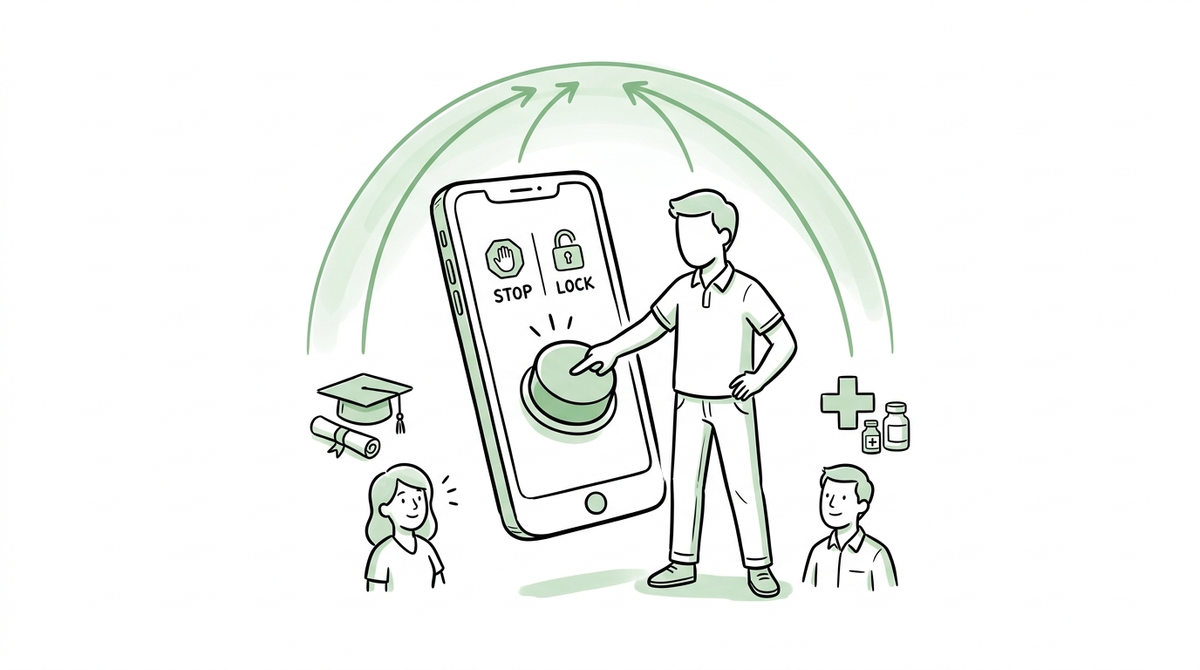
The implementation of the Anti-Financial Account Scamming Act (AFASA) mandates banks and e-wallet providers to equip consumers with immediate, proactive controls to secure their funds against rapid digital fraud.
Imagine waking up at two o’clock in the morning to the buzz of your phone. You reach for it, expecting a late-night work notification or a social media update. Instead, you find three consecutive text messages alerts showing unauthorized bank transfers from your savings account to an unfamiliar e-wallet. Within less than two minutes, the money you diligently set aside for your child’s tuition, your parent’s maintenance medicine, or your family’s emergency fund has vanished into the digital ether.
For hundreds of thousands of ordinary Filipinos, this is not a hypothetical horror story. It is a devastating reality that has repeated itself across the country as our lives have migrated to smartphones. For years, the standard response from institutions after a digital heist has been a mix of public reminders about password hygiene, a complicated web of customer service hotlines, and long, anxious weeks of waiting for an investigation. By then, the stolen funds have usually been splintered and withdrawn, leaving families to bear both the financial loss and the quiet shame of feeling like they made a mistake.
A fundamental shift is taking place in how the digital economy protects our hard-earned money. By June 25, 2026, all banks, e-wallet networks, and digital financial institutions supervised by the Bangko Sentral ng Pilipinas (BSP) are mandated to fully implement the core consumer protection features of Republic Act No. 12010, better known as the Anti-Financial Account Scamming Act (AFASA).
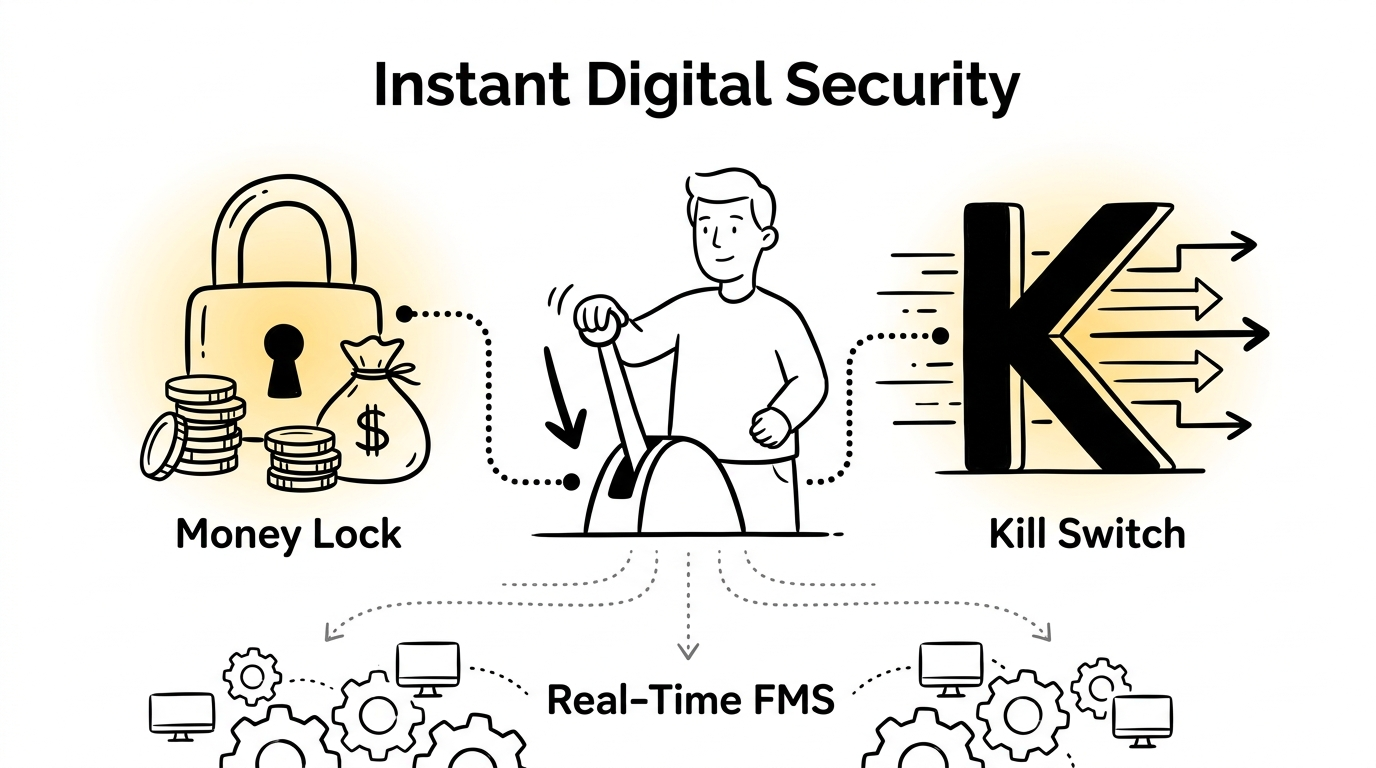
This development moves past the traditional strategy of merely teaching users how to spot sophisticated scams. Instead, it places the burden of protection firmly where it belongs: within the actual digital architecture of our financial providers. For everyday account holders, this means two very practical, life-saving buttons are coming to your mobile banking applications: the "Kill Switch" and the "Money Lock."
The New Digital Safety Toolbox
To understand why this matters, one must look at how digital thieves operate. Scams are no longer just clunky emails written in broken English; they arrive as convincing text messages mimicking legitimate courier services, urgent advisories from your electricity provider, or voice calls from individuals pretending to be bank representatives. Once a user is deceived into revealing their access details through social engineering, the criminal's goal is speed. They transfer the funds immediately before the victim even notices the compromise.
The AFASA guidelines neutralize this speed by giving consumers the power to freeze their accounts instantly, without having to wait on hold for a customer service representative.
The Kill Switch: Stopping the Bleeding
The Kill Switch is designed as an emergency emergency break. If you notice suspicious activity, click a link by mistake, or realize your phone has been compromised, you can open your app or use an automated channel to trigger the switch. It immediately suspends the account, blocks all outgoing financial movements, and locks your personal settings so a hacker cannot change your password or registered mobile number. You do not need to explain your situation to a hotline agent while watching your balance drop; you stop the transaction yourself.
The Money Lock: Creating a Virtual Vault
The Money Lock functions like a digital safe deposit box inside your account. Most users do not need access to their entire life savings when buying groceries via a QR code or paying a monthly internet bill. The Money Lock allows you to select a specific amount—for instance, 80% of your balance—and put it under virtual lock and key.
This locked amount cannot be moved via digital transfers, online shopping checkouts, or peer-to-peer sending. To move or spend that locked money, an account holder must go through an enhanced, multi-layered verification process that cannot be easily bypassed by an intruder who merely has your basic password. If an account is hacked, the thief can only access the small, unlocked portion left out for daily expenses.
Moving Beyond the "Blame the Consumer" Approach
This structural upgrade addresses a long-standing imbalance in the digital payment ecosystem. For years, the prevailing cultural narrative around digital fraud in the Philippines has leaned heavily on consumer fault. If you fell for a phishing link, the unspoken implication was that you were careless.
Data from international cybersecurity trackers shows that the Philippines has historically experienced some of the highest digital fraud rates globally, with losses accounting for billions of pesos annually. This volume suggests that the issue is not a collective lack of intelligence among Filipino users, but rather an ecosystem where financial criminals operate with much faster tools than the security systems available to ordinary citizens.
By legally requiring financial institutions to upgrade to real-time Fraud Management Systems (FMS), the law mandates banks to track behavioral anomalies, unusual transaction speeds, and geographic inconsistencies. If an account that normally transfers 500 pesos a week suddenly attempts to send 50,000 pesos to three different unknown accounts within three minutes, the bank’s system is required to pause the transaction and initiate a holding period of up to 30 days for investigation.
This shift recognizes that protecting wealth is a shared accountability. Consumers must remain vigilant, but financial networks must provide the infrastructure necessary to make that vigilance effective.
What This Means for Families, Workers, and Communities
The real impact of these features is measured in household stability rather than institutional data. For daily wage earners and middle-class workers, financial accounts are not abstract portfolios; they represent groceries for the month, rent due next week, or capital for a micro-enterprise. When an ordinary family loses 10,000 pesos to an online scam, it does not just damage their trust in digital apps—it disrupts their ability to put food on the table.
Consider a public school teacher who receives her salary digitally. Under the old system, keeping that money in her e-wallet meant it was constantly vulnerable to an accidental click on a malicious SMS link. With a Money Lock, she can secure her net pay immediately upon receipt, unlocking only the specific amounts needed for utility payments or market trips.
For overseas Filipino workers (OFWs) sending remittances home, these features offer peace of mind. A spouse in the province can place received funds directly into a Money Lock, ensuring that even if their phone is misplaced or targeted by local scammers, the remittance remains secure until it is time to pay for institutional needs like school tuition or medical bills.
This issue reflects why community-based efforts around digital literacy and household financial security matter. True consumer protection requires a combination of strong legal frameworks, responsive corporate technology, and organized communities that understand how to utilize these new tools. When ordinary citizens know their rights and possess the technical means to defend their savings, the entire neighborhood becomes a less profitable target for cybercriminals.
Embracing Shared Financial Security
As financial institutions complete their technical deployments this June, the responsibility transitions partly to the transacting public to integrate these mechanisms into daily routines. These updates are more than just new menu items in a settings tab; they represent an opportunity to rebuild trust in a digital financial system that has often felt unpredictable and indifferent to the losses of small account holders.
The next time you log into your banking application or check your e-wallet, take a moments to explore the security settings. Look for the implementation of these new protective locks. Activating them takes less than a minute, but that single action could be what protects your family's financial stability when a digital threat arrives. The system is finally building the walls higher; it is up to us to make sure we close the gate.
Lahat tayo masaya kapag sa isang pindot lang sa telepono, madali nating naipapadala ang pera para sa baon, kuryente, o emergency. Pero paano kung sa isang pindot din ng mga manloloko, biglang masaid ang lahat ng iyong naipon sa bangko o e-wallet?
Ngayong buwan, may mga bagong patakaran ang Bangko Sentral para bigyan tayo ng mas malakas na panangga laban sa mga scammer. Alam mo na ba kung paano gamitin ang "Kill Switch" at "Money Lock"?

Power Our Mission, Shape the Future
We empower single parents, PWDs, youths, seniors, and stay-at-home parents through digital livelihood.
Help us build resilient communities.
BUKLURAN remains open to partnerships, sponsorships, and collaborative initiatives that create meaningful community impact.
Whether through funding, in-kind support, volunteerism, or shared services, your organization can help strengthen programs that serve underserved communities.
Do you want to take part in our free livelihood programs, scholarship assistance, and community resource pooling initiatives? Membership is completely free.
Join BUKLURAN!
Register, volunteer, and become a member today.