The Silent Tax on Small Pockets: Why Free Bank Transfers Matter More Than You Think
A twenty-peso transfer fee might look small on a corporate ledger, but for a Filipino household, it is the price of a daily meal component.
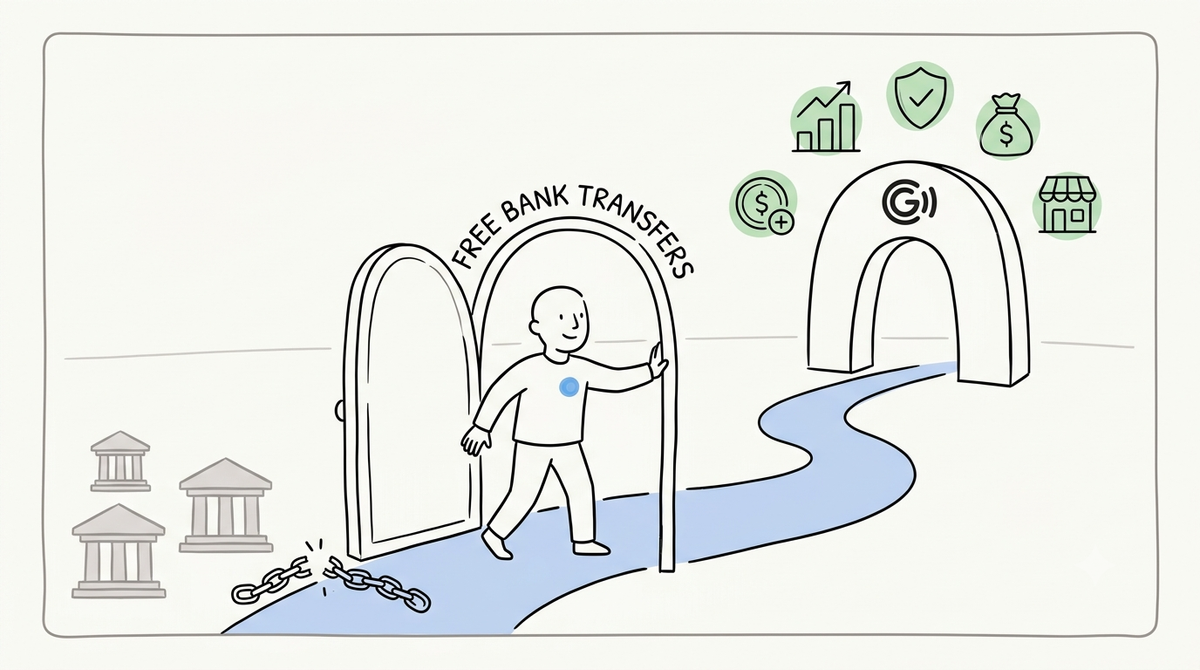
The removal of digital transfer fees by major banks like BPI shifts the financial battleground from transactional costs to ecosystem engagement, offering a rare relief from the small fees that quietly chip away at the budgets of ordinary Filipino families.
Consider the ritual that plays out every fifteen days in millions of Filipino households. A worker receives their salary through a traditional bank account, looks at their phone, and begins the multi-step process of distributing those hard-earned funds. A few thousand pesos go to a spouse in the province via a digital wallet. A few hundred pesos go to a local water station or electricity collector. Another small transfer pays for a child’s school contributions. On paper, this is the modern convenience of the digital economy—a seamless world where cash is replaced by bits of code traveling through thin air.
But for years, this thin air has carried a invisible cost. For every swipe, click, and tap to move money from a traditional bank to an e-wallet, a fee of fifteen, twenty, or twenty-five pesos is quietly deducted. To a corporate executive or a high-net-worth investor, these double-digit figures are smaller than a rounding error. But to a family navigating the tight margins of a minimum wage income, these micro-transaction fees function as a persistent, unavoidable tax on survival. When you are counting every single peso to buy a kilo of rice or a piece of soap, paying twenty pesos just to move your own money from point A to point B feels like a penalty for being unbanked.
This is the ground-level context behind the recent shifts in the local financial sector. When the Bank of the Philippine Islands (BPI) announced its decision to eliminate InstaPay and PESONet transfer fees for specific transactions made through its digital platforms, financial analysts immediately began talking about market shares, corporate competition, and the impending initial public offering (IPO) of tech giants like Mynt, the parent company of GCash. Corporate watchers quickly debated whether traditional commercial banks were finally waking up to reclaim the territory they lost to agile fintech platforms over the last decade.
Yet, the true significance of this development does not lie in the boardroom or on the trading floor. It lies in the way money moves through the hands of ordinary citizens. For years, mobile wallets like GCash gained overwhelming dominance across the archipelago because they filled a massive vacuum left by traditional banking systems. They made financial services accessible to the millions of Filipinos who felt intimidated by marble-floored bank branches, long lines, and complex maintaining balance requirements. Fintech became synonymous with convenience and relative affordability. But as these digital wallets grew more dominant, they too introduced various convenience fees and transaction charges, leaving consumers caught between old banking friction and new digital premiums.
BPI’s strategic shift to lower the cost of transferring money through digital channels marks an essential turning point. Market strategists suggest that eliminating these fees helps level the playing field between traditional banking giants and digital-first fintech networks. As traditional institutions improve their user interfaces and strip away transaction costs, the automatic advantage that mobile wallets enjoyed is starting to experience healthy tension. Consumers are no longer forced to accept whatever transaction fees are handed down to them; they are entering an era where financial services must genuinely compete for their loyalty.
What does this mean in everyday practice? It means that the friction of moving money across different financial ecosystems is slowly dissolving. In the past, a micro-entrepreneur running a backyard business or a neighborhood sari-sari store faced a logistical dilemma. If a customer wanted to pay via an e-wallet but the supplier only accepted traditional bank transfers, the store owner had to absorb the transfer fee, directly eating into their razor-thin profit margins. By removing the cost of shifting funds from a commercial bank account directly into digital ecosystems, the flow of daily commerce becomes smoother and less punitive for the smallest participants in our economy.
Furthermore, industry experts observe that this move might unexpectedly benefit fintech platforms in a roundabout way. When it becomes completely free to move money out of a traditional bank account, users are more likely to pump liquidity into their mobile wallets without hesitation. Once that money settles into a digital wallet ecosystem, users do not just leave it there; they interact with higher-tier, higher-margin financial products such as micro-insurance, small consumer loans, digital savings accounts, and accessible investment funds. The competition is no longer about who can charge the most for a basic electronic transfer. The battle has officially shifted toward user engagement, long-term trust, and the variety of meaningful services a platform can offer once the money arrives.
When we shift the perspective from corporate competition to human reality, we see that the true value of any technological or financial innovation must always be measured by its social utility. For a long time, digital financial inclusion in the Philippines was a lopsided narrative. Millions acquired e-wallets, but true financial literacy did not automatically follow the download of an application. Many users remained vulnerable to sudden policy shifts, unexpected charges, and digital scams simply because the technology arrived much faster than the public education required to navigate it safely.
This ongoing transition in our digital economy highlights exactly why community-based education and grassroots readiness are so vital. It is one thing for financial institutions to lower transaction fees; it is another for everyday citizens to understand how to leverage these platforms safely without losing their savings to digital fraud or predatory lending practices. In communities where families live day-to-day, a single misleading link or a misunderstood digital charge can disrupt an entire monthly budget.
This critical intersection between modern digital tools and community resilience reflects why focused grassroots initiatives matter so deeply today. For instance, within the community spaces of District 5 in Quezon City, the BUKLURAN Bagong Simula Learning and Digital Readiness Program works directly to address these exact challenges. Through its dedicated sub-track on Financial & Digital Literacy, the program conducts community learning sessions and workshops specifically designed to help youth, solo parents, and stay-at-home mothers understand how to navigate e-wallets, utilize online banking systems safely, and protect themselves against rampant digital scams. Rather than treating technology as something intimidating or distant, these community-led sessions break down how modern payments work, ensuring that lower transaction costs translate into real, protected household savings. When ordinary citizens are equipped with genuine digital readiness, they transform from passive consumers of financial apps into informed, self-sustaining participants in the broader economy.
Ultimately, the elimination of transfer fees by major banking platforms shouldn’t just be viewed as a temporary corporate promotional strategy or an aggressive play for market relevance. It should be seen as a necessary correction in a developing country where access to financial services ought to be a basic right rather than an expensive luxury. The money saved from a waived twenty-peso transaction fee might seem insignificant on paper, but over a year, across multiple transfers, it represents several kilograms of rice, a child’s school materials, or medicine for a sick relative.
As our financial landscapes continue to evolve and merge, the ultimate winners should not be the institutions with the highest valuations or the largest IPOs. The true victory belongs to the ordinary Filipino worker, the neighborhood merchant, and the community families who are finally seeing the heavy cost of managing their own money begin to drop. Technology is only as good as the lives it makes easier, and a financial system is only truly successful when it protects and respects the small pockets that hold our society together.
Bakit nga ba malaking balita para sa bulsa ng ordinaryong Pilipino ang pagkawala ng transfer fees sa mga bangko tulad ng BPI? Akala natin maliit na bagay lang ang 15 o 20 pesos na kaltas tuwing magpapasa tayo ng pera. Pero sa pamilyang nagtitipid, ang maliliit na bawas na ito ay parang nakatagong bayad sa sarili nating pawis at pagod. Ano nga ba ang totoong ibig sabihin ng pagbabagong ito para sa mga e-wallet at sa ating pang-araw-araw na pamumuhay?

Power Our Mission, Shape the Future
We empower single parents, PWDs, youths, seniors, and stay-at-home parents through digital livelihood.
Help us build resilient communities.
BUKLURAN remains open to partnerships, sponsorships, and collaborative initiatives that create meaningful community impact.
Whether through funding, in-kind support, volunteerism, or shared services, your organization can help strengthen programs that serve underserved communities.
Do you want to take part in our free livelihood programs, scholarship assistance, and community resource pooling initiatives? Membership is completely free.
Join BUKLURAN!
Register, volunteer, and become a member today.