The Unseen Ledger: Why Missing an Economic Target Matters at the Dinner Table
When the country misses its economic targets, it isn't just a failure of statistics—it's a story of vulnerability for millions of homes.
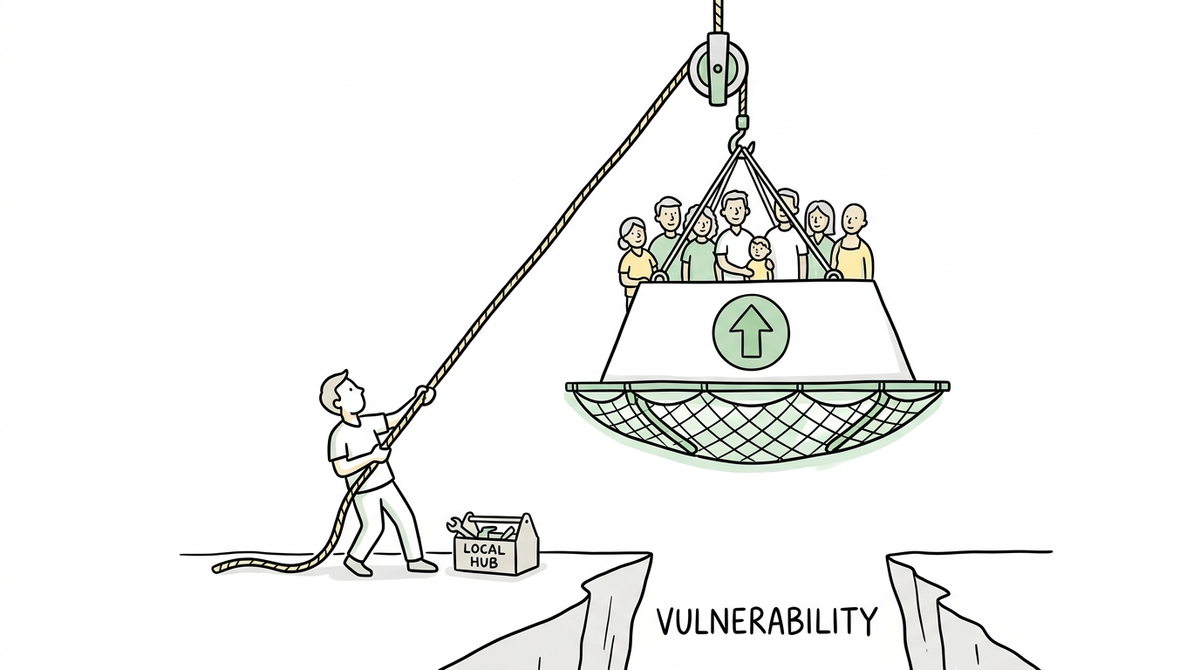
While macroeconomic targets remain out of reach, ordinary Filipino families continue to bear the brunt of inflation and economic shocks without a secure financial safety net.
Every morning before dawn, Aling Susan rearranges the plastic jars of instant coffee, the small transparent bags of sugar, and the canned sardines on the wooden shelves of her small sari-sari store in Caloocan. For years, this small retail storefront has been the economic lifeblood of her household. It paid for her oldest daughter’s high school uniform and kept food on the table when her husband’s construction gigs dried up. But lately, Susan has noticed a quiet shift in how her neighborhood shops. People who used to buy a whole tin of sardines now ask if they can purchase half on credit. Neighbors who once bought an entire pack of instant noodles are opting for a single piece, split between two children.
Susan does not read international financial publications, nor does she track macroeconomic forecasts. Yet, her store’s ledger holds a truth that global financial institutions are only now putting into percentages: the economic ground beneath the feet of ordinary Filipino families is growing increasingly fragile.
The Story Behind the Percentages
The World Bank recently released its latest Poverty and Equity Assessment for the Philippines, bringing a sobering dose of reality to the country’s long-term economic plans. According to the report, the Philippines is highly unlikely to meet its official target of reducing poverty to single-digit levels by the year 2028.
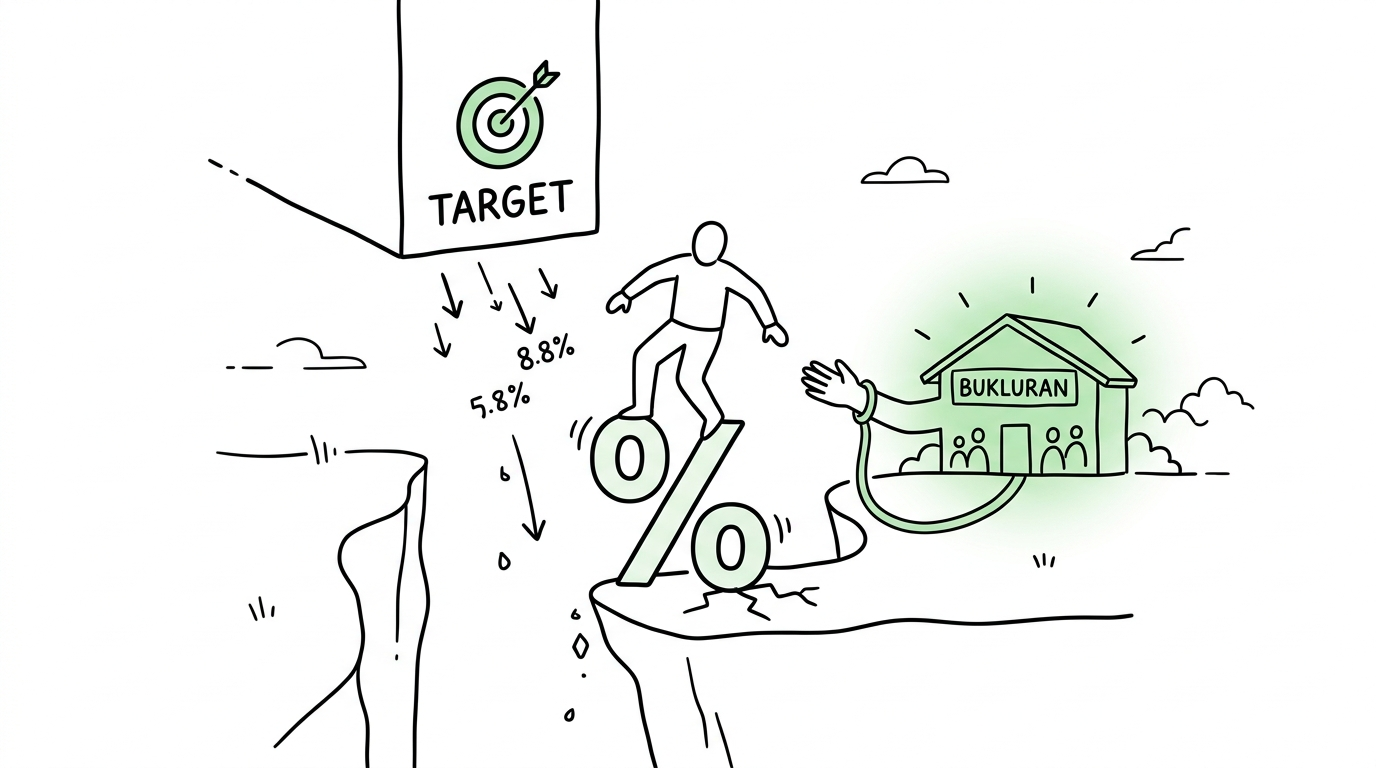
The national government had set an ambitious goal to bring the poverty rate down to between 8.8% and 9% by the end of the current presidential term. However, institutional projections now indicate that the poverty rate will likely sit at around 12.3% by 2028, falling short of the milestone.
To those working in high-rise financial offices, a difference of roughly three percentage points might look like a minor statistical variance—a temporary delay on a graph leading toward future prosperity. But in a country of over 115 million people, that gap represents millions of real human lives. It represents families who were promised a pathway out of deprivation but who instead remain trapped in a daily struggle for basic survival.
Moving Beyond the Headline Numbers
To truly understand why this development matters, we have to look past the abstract phrase "single-digit poverty." The real emergency highlighted by economists is not just the number of people currently living below the official poverty line, but the staggering volume of citizens hovering just barely above it.
The assessment reveals that a massive 28% of the Filipino population remains chronically vulnerable to falling back into poverty at any given moment. Meanwhile, only about 24% of the country belongs to a secure, stable middle class or high-income tier. The vast space in between is occupied by an emerging underclass of workers who are technically no longer classified as "poor" by statistical standards, but who possess absolutely no financial buffer.
"Given the high concentration of people just above the poverty line and the country’s high prevalence of shocks, progress can easily be reversed." — World Bank Poverty and Equity Assessment
This means that for nearly one in three Filipinos, economic security is an illusion. They are one severe typhoon, one prolonged family illness, or one international fuel crisis away from losing everything they have worked for years to build. The report explicitly warns that regional instability, such as global energy fluctuations and geopolitical friction, could unexpectedly push up to two million more Filipinos back into poverty simply because ordinary households lack an economic cushion to absorb sudden price spikes.
The Daily Realities of an Elusive Middle Class
When economic progress stalls, it creates a structural bottleneck that alters the lifecycle of communities. For an ordinary worker, the structural barriers to moving upward are heavily tied to education and quality employment. Currently, only about one in ten Filipino workers who did not complete secondary education holds a formal job that offers healthcare, security, and regular benefits. The rest are left to navigate the volatile informal economy—driving passenger tricycles, working temporary agricultural shifts, or running informal micro-retail operations like Susan’s.
This lack of formal infrastructure trickles down into every aspect of domestic life:
- The Household Food Budget: When inflation strikes and incomes remain static, nutrition is the first compromise. Families shift away from fresh proteins and vegetables toward cheaper, calorie-dense options, directly impacting early childhood development.
- Educational Continuity: Although public education is free, the peripheral costs of schooling—such as transportation, projects, and uniform maintenance—often force vulnerable parents to pull older children out of the classroom so they can contribute to the household income.
- The Debt Cycle: Without structural access to formal credit or micro-banking, families experiencing minor household emergencies are frequently forced to rely on informal, high-interest local lenders, trapping them in a cycle of perpetual repayment.
The dream of a resilient, broad middle class—the ideal state where the average citizen can look toward the future without fear of immediate financial ruin—remains out of reach for the majority of the population. The national growth numbers may rise on paper, but the actual benefits are failing to cascade down to those who provide the foundational labor for that growth.
The Role of Local Spaces
This widespread economic vulnerability is precisely why institutional frameworks must be accompanied by deep, community-level interventions. The systemic gaps in public service delivery and localized employment generation show that top-down economic models cannot solve regional insecurity on their own. Progress requires localized spaces where families can gather, access reliable safety nets, and build localized economic resilience.
This exact dynamic illustrates why localized, community-led infrastructure—such as the BUKLURAN Hub—is so vital. When national safety nets encounter administrative bottlenecks or utilization delays, the existence of dedicated community spaces offers a direct countermeasure to local vulnerability.
The BUKLURAN Hub does not seek to replace large-scale state reforms or alter national monetary policies. Instead, it serves as a tangible, local anchor where residents can gain access to digital literacy tools, community-led livelihood support networks, and shared neighborhood resources. When a family is operating on the razor-thin margin between stability and poverty, having a reliable local space to learn new livelihood skills, coordinate mutual aid, or access disaster-preparedness resources can be the exact factor that prevents a temporary economic shock from turning into permanent financial ruin.
Finding a Better Measure of Progress
If the upcoming years are to bring genuine transformation rather than just statistical adjustments, the definition of success must change. A nation’s health cannot be measured solely by whether its gross domestic product rises or whether its executive offices hit single-digit metrics on a target date. The true indicator of progress is how safely its most vulnerable citizen can sleep at night.
As the country navigates an unpredictable global economy, the path forward requires more than just hoping for wealth to trickle down. It demands targeted social protections, meaningful local employment, and the fortification of neighborhood-level networks. Until our economic systems prioritize building a resilient safety net for the families hovering just above the line, the numbers on the ledger will continue to tell one story, while the empty spaces on our kitchen tables continue to tell another.
Lahat tayo masaya kapag naririnig nating umuunlad ang ekonomiya ng bansa, pero bakit tila hindi ito nararamdaman sa pang-araw-araw na gastusin? Ayon sa huling ulat, maaaring hindi maabot ng Pilipinas ang target nitong bawasan ang kahirapan sa bansa. Ano ang ibig sabihin nito para sa milyun-milyong pamilyang Pilipino na isang baha o isang matinding pagkakasakit lang ay sapat na para mawalan ng kabuhayan? Huwag nating iwanan ang usapan sa mga numero lang.

Power Our Mission, Shape the Future
We empower single parents, PWDs, youths, seniors, and stay-at-home parents through digital livelihood.
Help us build resilient communities.
BUKLURAN remains open to partnerships, sponsorships, and collaborative initiatives that create meaningful community impact.
Whether through funding, in-kind support, volunteerism, or shared services, your organization can help strengthen programs that serve underserved communities.
Do you want to take part in our free livelihood programs, scholarship assistance, and community resource pooling initiatives? Membership is completely free.
Join BUKLURAN!
Register, volunteer, and become a member today.