Beyond the Boardrooms: How Corporate Extortion Drains the Pockets of Everyday Filipinos
When a high-ranking regulator extorts a corporation, it isn't just a corporate scandal—it's a hidden tax passed down to ordinary consumers.
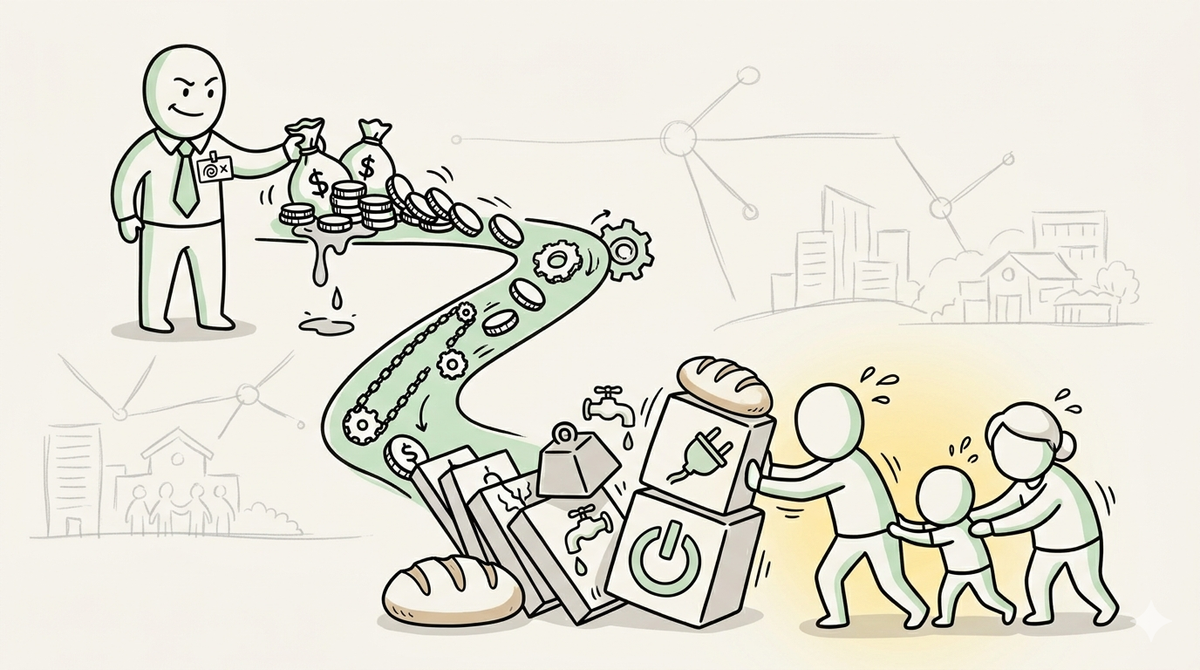
The arrest of an SEC director for corporate extortion highlights the systemic threat of white-collar crime and underscores the profound necessity of cultivating financial discipline and integrity at the community level.
Step into any local talipapa or neighborhood sari-sari store in the early afternoon, and you will hear a familiar, rhythmic calculation. Parents are counting coins for tonight’s dinner, weighing the price of a kilo of rice against a few pieces of vegetables. In these everyday moments, every single peso is heavy with purpose.
When news breaks about high-level corruption or white-collar crime in distant financial hubs, it is easy to view these events as isolated boardroom dramas—affairs involving wealthy executives, high-powered lawyers, and government regulators that have no bearing on the struggles of ordinary citizens. But the reality is far more interconnected. When systems built to protect public interest fail, the financial shockwaves travel downward, quietly altering the prices of the very goods a family relies on to survive.
Recently, public trust was shaken following reports that a director of the Securities and Exchange Commission (SEC) was arrested for allegedly extorting funds from a private corporation. The SEC quickly placed the erring official under preventive suspension while investigations proceeded. In an official statement, SEC Chairperson Francis Lim re-emphasized a policy of zero tolerance against unlawful practices, stating that the Commission would not hesitate to take drastic actions against individuals compromising the capital market's integrity from within its ranks.
The SEC exists fundamentally to oversee the corporate sector, regulate the capital market, and guard against fraudulent schemes. When a regulator, tasked with keeping businesses honest, is accused of weaponizing their authority for personal gain, it compromises the machinery of national economic governance.
To understand why an ordinary Filipino should care about corporate extortion, we must look past the legal jargon and examine the hidden pipeline of business expenses.
When a private company is forced to pay a bribe, grease hands, or succumb to extortion just to obtain a permit, clear an audit, or continue operating, that expense does not simply vanish from the company's ledger. It is classified as an operational cost or an unexpected loss. Because businesses must maintain profitability to survive, these artificial expenses are almost always passed down the line.
For the average consumer, this manifests as a slow, untraceable rise in the cost of daily necessities. It is the hidden premium added to a bag of bread, a bottle of cooking oil, or utility rates. Extortion behaves exactly like an unregistered, illegal tax—one collected by corrupt individuals, but paid for by the working class.
Furthermore, widespread regulatory extortion creates a hostile environment for legitimate businesses. It discourages honest investments, slows down the creation of new enterprises, and creates market instabilities where only companies willing to compromise their integrity survive. When systemic corruption goes unchecked, it stifles genuine economic development, ensuring that fewer stable livelihoods are available for communities that need them most.
The burden of systemic integrity failures falls heaviest on underserved households—single parents balancing multiple odd jobs, persons with disabilities navigation limited work options, underemployed youth, and elderly citizens relying on micro-grunnels of income. When macroeconomic structures are vulnerable to extortion, these are the sectors pushed deeper into financial vulnerability.
Consider a stay-at-home parent attempting to manage a household budget. When macro-level institutional integrity breaks down and drives consumer prices up, that parent is forced to make immediate, painful compromises. Portions of food are reduced, older children are forced to cut back on school materials, and medical emergencies become catastrophic events because there is zero financial buffer left.
White-collar crime isn't victimless; its victims are simply separated from the crime scene by layers of corporate documentation. The true price of regulatory extortion is paid in missed meals, unbought medicines, and delayed educations in neighborhoods far removed from corporate towers.
This ongoing challenge within our national financial institutions underscores why grassroots, community-based efforts around institutional transparency and structured resource management matter so deeply. When large-scale systems falter, the immediate safety net for ordinary citizens lies in the resilience, discipline, and shared integrity developed within local community systems.
Within localized frameworks, such as the BUKLURAN HUB Livelihood and Community Enterprise Program, communities learn to navigate economic challenges collectively through clean, documented, and transparent systems. By practicing community resource pooling—where resources are combined purely for collective access to goods without commercial middle-layers—residents build a direct defense against external market volatility.
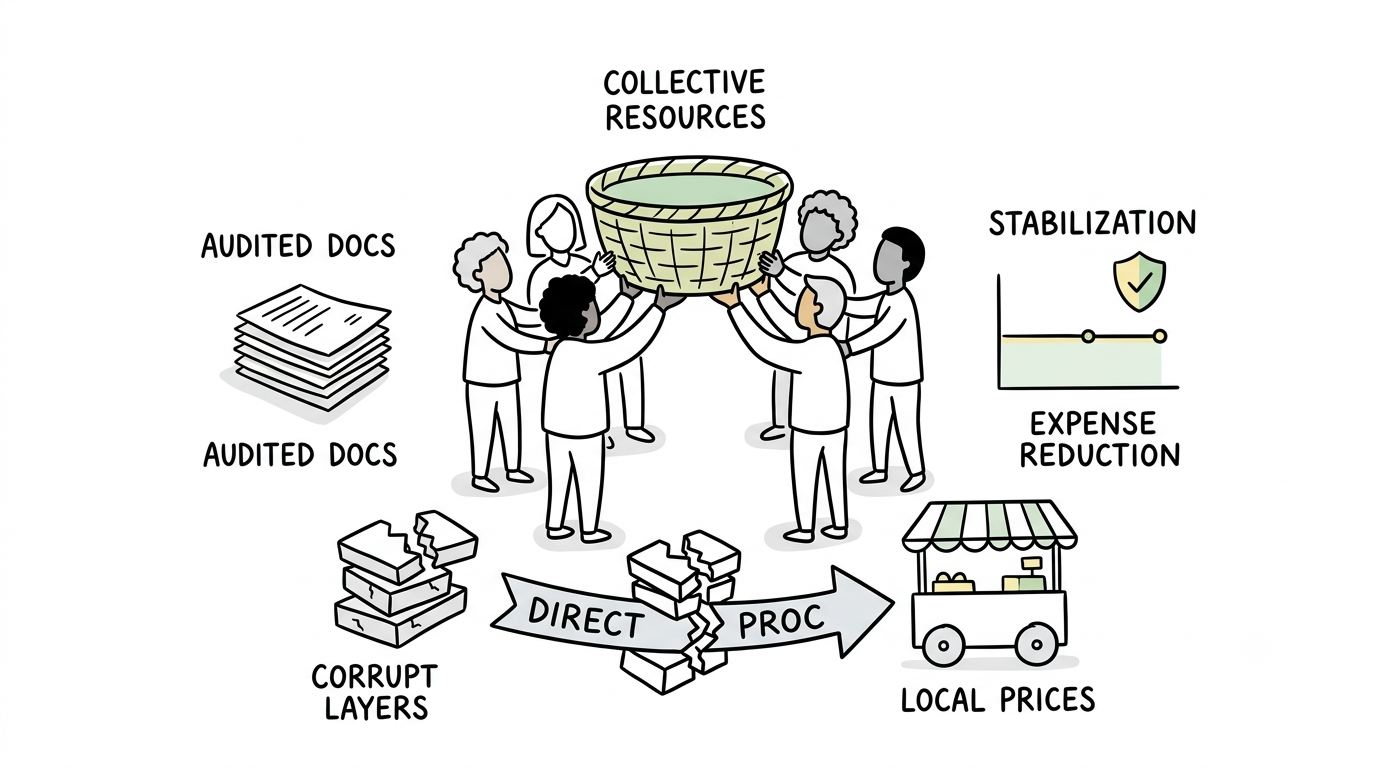
When grassroots initiatives strictly emphasize absolute accountability, cash-based transparency, and zero-tolerance for individual profit-sharing, they provide more than just financial relief; they cultivate a culture of systemic discipline. This grassroots focus on consumer protection and financial awareness demonstrates that safeguarding the integrity of how resources are handled is the most practical way to protect families from broader economic exploitation.
The arrest of a regulatory director serves as a stark reminder that institutions are only as reliable as the integrity of the individuals who operate them. While the state manages corporate oversight and legal accountability at the highest echelons, ordinary citizens are left with an essential reflection: How do we protect our homes and communities from the trickling effects of institutional failures?
Real economic security does not only come from waiting for top-down reforms to succeed. It is built from the ground up, nurtured by everyday citizens who demand transparency in their local associations, practice financial discipline in their households, and support collective systems based on mutual trust. By fostering an unyielding commitment to integrity within our own immediate circles, we build a community capable of weathering whatever storms occur in the boardrooms above.
Lahat tayo masaya kapag may mga ahensya ng gobyerno na nagbabantay sa mga korporasyon, pero ano ang ibig sabihin para sa bulsa ng ordinaryong Pilipino kapag mismong ang mga taga-regula ang nasasangkot sa nakatagong bentahan at pangingikil?
Ang korapsyon sa itaas ay hindi lang isyung pang-negosyo—ito ay tila nakatagong buwis na nagpapamahal sa bigas, ulam, at mga pangangailangan ng pamilya. Paano nga ba tayo maaapektuhan ng ganitong white-collar crime sa ating pang-araw-araw na pamumuhay?

Power Our Mission, Shape the Future
We empower single parents, PWDs, youths, seniors, and stay-at-home parents through digital livelihood.
Help us build resilient communities.
BUKLURAN remains open to partnerships, sponsorships, and collaborative initiatives that create meaningful community impact.
Whether through funding, in-kind support, volunteerism, or shared services, your organization can help strengthen programs that serve underserved communities.
Do you want to take part in our free livelihood programs, scholarship assistance, and community resource pooling initiatives? Membership is completely free.
Join BUKLURAN!
Register, volunteer, and become a member today.