Beyond the Extra ₱85: What the Wage Hike Means for Everyday Filipino Families
An ₱85 daily raise is welcome news, but without stronger support for local skills and small businesses, prices catch up fast. Here’s why.
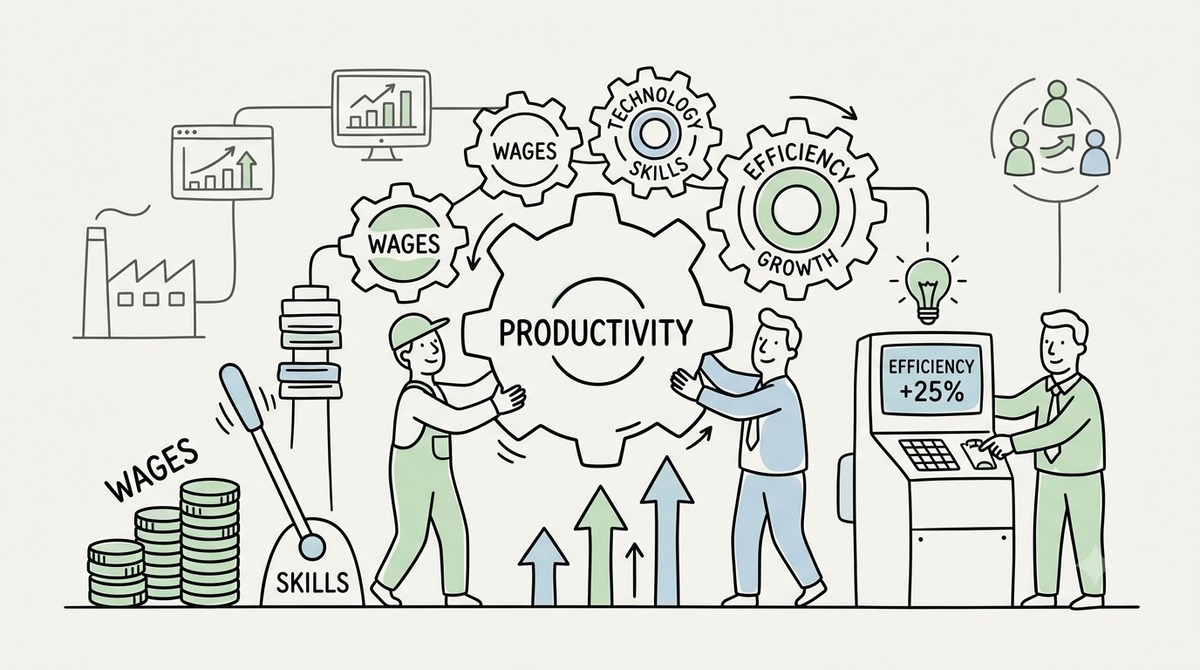
While the ₱85 minimum wage hike offers immediate relief from high living costs, long-term stability for Filipino workers requires bridging the productivity gap through skill-building and small business support.
Introduction
When news hits that minimum wages are going up, the initial feeling for millions of workers is relief. An extra ₱85 per day under Wage Order NCR-27 means a bit more leeway when paying for rice, electricity, or jeepney fares.
However, many families notice a familiar pattern shortly after a wage hike takes effect: prices at the local market creep up, small shop owners start cutting back on staff hours, and the extra money seems to stretch no further than before.
Understanding why this happens requires looking beyond the daily rate. It comes down to the relationship between wages, productivity, and the survival of the neighborhood businesses that employ millions of our fellow Filipinos.
What Happened
Under Wage Order NCR-27, the regional tri-party board granted an ₱85 daily increase to the minimum wage for non-agricultural workers in the National Capital Region. This adjustment was designed to help families cope with high inflation and the rising cost of basic commodities over recent years.
At the same time, regional economic data highlights an ongoing challenge: while Filipino employees work some of the longest hours in Southeast Asia, the average economic value generated per worker daily remains significantly lower than in neighboring countries like Vietnam, Thailand, and Malaysia.
Why This Matters
Wages do not exist in a vacuum. When a government mandates higher pay to match the cost of living, businesses must cover those higher operational costs.
For large multinational corporations, higher labor costs without a matching increase in automated equipment or streamlined processes can make other countries more attractive for future investments. But for local communities, the immediate concern isn't foreign investment—it is the survival of neighborhood enterprises.
- For Micro and Small Businesses: Micro, small, and medium enterprises (MSMEs) make up the vast majority of employers in the country. Unlike large corporations, a neighborhood grocery or small repair shop cannot easily absorb an 8-to-10% jump in payroll without changing how they operate.
- For Workers: If a business cannot increase its sales or efficiency to match higher wages, it may reduce staff, cut overtime, or pass the added cost directly onto consumers by raising prices.
What the Headlines Don't Explain
Working harder is not the same as producing more value.
The current debate often leaves the impression that low national productivity means workers aren't trying hard enough. In reality, the Filipino workforce is widely recognized for its dedication and long hours.
The gap exists because productivity depends heavily on tools, technology, and systems:
Manual Tools & Processes  --->  Long Hours, Lower Daily Output  --->  Tight Margins
Modern Tools & Training   --->  Balanced Hours, Higher Output   --->  Sustainable Pay
Without access to modern equipment, updated digital tools, or streamlined workflows, even the most hardworking employee faces a physical ceiling on what they can accomplish in an eight-hour shift.
How This Could Affect Ordinary Filipinos
The ripple effects of a wage hike tied to fixed productivity levels touch nearly every household in distinct ways:
- Low-Income Families: While the extra ₱85 per day adds roughly ₱1,800 to ₱2,000 a month to a full-time paycheck, much of that gain can be eroded if local vendors and transport providers raise their prices to offset their own rising operating costs.
- Small Business Owners & Franchisees: Business operators face tough decisions. To avoid closing down, some may freeze new hiring or shift to informal hiring practices.
- Youth and Job Seekers: If businesses slow down entry-level hiring due to higher payroll risks, young adults entering the labor force for the first time face stiffer competition for fewer formal job openings.
Impact on Vulnerable Communities
When local businesses struggle, the pressure lands heaviest on vulnerable community members:
- Single Parents and Breadwinners: Reductions in available work shifts mean less predictable household income, making monthly budgeting a moving target.
- Seniors and PWDs: Many households rely on multi-generational income pooling. If a family member’s work hours are trimmed, senior dependents and persons with disabilities (PWDs) may experience reduced access to health products and daily care items.
- Informal Workers: Vendors, street food sellers, and informal service workers do not receive mandated minimum wage increases, yet they face the same higher prices at wholesale markets.
Practical Takeaways
While broad economic policies take time to evolve, practical steps at the individual and community level can help build financial resilience:
1. Focus on Practical Skill Building
Increasing personal productivity doesn't require a college degree. Learning practical skills—such as basic digital tools, spreadsheet management, customer service management, or fundamental bookkeeping—makes workers more versatile and valuable to employers.
2. Manage Household Budgets Proactively
When wage increases occur, treat the extra income as a buffer rather than extra spending money. Allocating a portion of any raise directly into household savings helps cushion against potential local price increases down the line.
3. Support Local Community Learning
Community-based programs—such as functional digital literacy workshops and financial awareness sessions—help local workers and micro-entrepreneurs adapt to modern business needs without expensive tuition costs.
Looking Ahead
Legislated wage increases offer vital short-term relief, but long-term financial security requires structural support. For sustainable wage growth, public policy and community efforts must focus on:
- Helping micro and small businesses adopt low-cost digital tools to increase their operational efficiency.
- Expanding accessible vocational training and adult skills programs to match modern industry requirements.
- Strengthening community support systems that promote financial literacy and household resilience.
An extra ₱85 a day is a step toward helping families manage daily bills, but it is only one piece of the puzzle. Real, lasting prosperity comes when workers have access to the tools, training, and systems that allow their hard work to yield greater value. By combining fair wages with practical skill development and strong community support, local economies can build a foundation where both workers and small businesses thrive together.

Power Our Mission, Shape the Future
We empower single parents, PWDs, youths, seniors, and stay-at-home parents through digital livelihood.
Help us build resilient communities.
BUKLURAN remains open to partnerships, sponsorships, and collaborative initiatives that create meaningful community impact.
Whether through funding, in-kind support, volunteerism, or shared services, your organization can help strengthen programs that serve underserved communities.
Do you want to take part in our free livelihood programs, scholarship assistance, and community resource pooling initiatives? Membership is completely free.
Join BUKLURAN!
Register, volunteer, and become a member today.