What the 2026 Foreign Investment Drop Means for Every Filipino Household
Foreign investment in the Philippines hit a nearly 10-year low in April 2026. Here is what that means for your household budget, job security, and community.
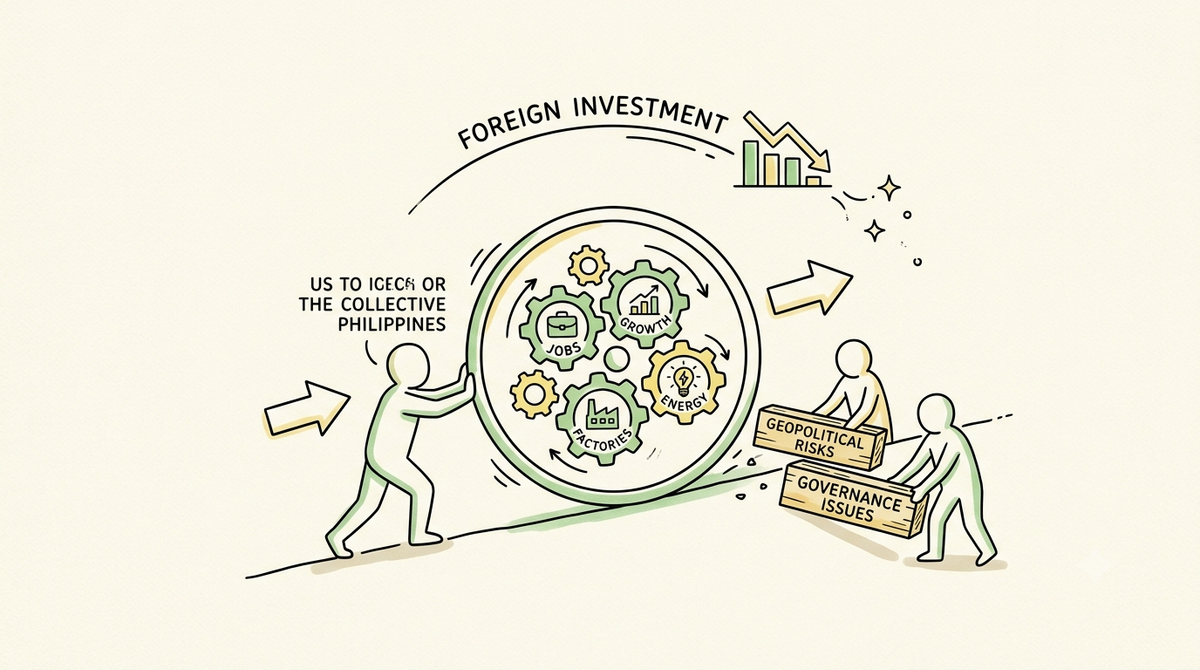
A sharp decline in foreign direct investment in 2026 threatens local job growth and public infrastructure, making community-driven economic participation and practical skills development essential for ordinary Filipino households.
Introduction
When news breaks that Foreign Direct Investment (FDI) into the Philippines has plunged to its lowest point in nearly a decade, it is easy to dismiss it as high-level business talk that only matters to corporate executives and government officials. Words like "capital formation," "aggregate demand," and "geopolitical risks" sound distant from the everyday realities of budgeting for groceries or paying monthly electric bills.
However, foreign investment is not just a statistical abstract—it is a primary engine that funds local factory expansions, builds new commercial centers, powers infrastructure development, and creates steady employment. When foreign capital pulls back, the ripple effects quietly travel from financial districts directly into local barangays and family living rooms.
What Happened
In April 2026, the Philippines registered a steep 58.8% year-on-year drop in monthly FDI net inflows, falling to $250 million from $607 million in the same period in 2025. This represents the lowest monthly investment intake the country has seen since June 2016.
Economists point to a combination of persistent global geopolitical tensions, rising domestic borrowing costs, and unresolved governance issues as key reasons foreign companies are choosing to hold onto their cash or invest in neighboring Asian markets instead. Cumulative figures for the first four months of 2026 show net inflows down by 26.5%, signaling a broader trend that experts expect to persist throughout the remainder of the year.
Why This Matters
Foreign direct investment represents long-term commitments by international companies to establish operations, build facilities, or expand enterprises within the country. Unlike short-term stock market bets, FDI builds physical assets and creates enduring jobs.
When foreign investors hesitate, domestic capital formation slows down. This means fewer new factories opening, fewer office spaces being leased, delayed infrastructure upgrades, and fewer expansion projects across manufacturing, property, energy, and export sectors. Over time, a sustained slowdown limits the overall productive capacity of the domestic economy, dampening long-term income growth and national development momentum.
What the Headlines Don't Explain: 5 Original Insights
To truly understand how an economic headline connects to daily life, we must look beyond macro numbers. Here are five practical implications that standard news reports leave out:
1. The Local Job Market Will Be Facing a Silent Freeze
A drop in FDI does not immediately result in visible mass layoffs; instead, it causes a quieter, structural hiring freeze. Companies scale back their future expansion plans, meaning new branch openings, plant facilities, and departmental expansions are put on hold. For new college graduates, out-of-school youth, and job seekers, this translates to fewer entry-level positions, intensified competition for existing openings, and slower wage growth across formal employment sectors.
2. Micro and Small Neighborhood Businesses Will Feel the Squeeze
Large foreign-backed projects generate subcontracts for local suppliers, maintenance crews, catering services, transport operators, and small-scale vendors. When major investments stall, the surrounding micro-economy feels the loss of foot traffic and commercial activity. A neighborhood carinderia, tricycle driver, or sari-sari store owner near an industrial zone or commercial construction site ultimately experiences reduced daily sales because fewer workers are on the ground.
3. Increased Pressure on Family Safety Nets and OFW Remittances
When local wage employment stalls, households become significantly more reliant on alternative safety nets. Families with overseas workers will likely lean harder on remittances to cover basic expenses rather than using those funds for long-term savings or investments. Meanwhile, households without foreign remittances are forced to absorb higher living costs on tighter domestic budgets, increasing financial stress on primary breadwinners.
4. Public Services and Infrastructure Projects May Face Delays
Foreign investments frequently fund or complement large-scale public-private partnerships in transportation, energy, and digital infrastructure. A muted investment climate can lead to delayed rollouts of public works, slower expansion of internet connectivity into suburban and rural areas, and reduced tax collection for government social programs.
5. Community-Level Economic Systems Become Essential Safety Valves
When national formal employment cannot expand fast enough to absorb the labor force, informal economic cooperation becomes a crucial buffer. Shared purchasing, neighborhood trading networks, local skills development, and community-driven resource pooling help households reduce their cost of living and bridge income gaps when formal corporate jobs are scarce.
How This Could Affect Ordinary Filipinos
The contraction in economic momentum affects different groups in distinct ways:
- Low-Income Households & Single Parents: Rising daily expenses coupled with limited wage growth make basic necessities harder to afford. Reducing daily kitchen costs and accessing fair-priced basic goods becomes vital for household survival.
- Youth & Recent Graduates: Facing a tighter formal job market, young people need practical, adaptable skills—such as basic digital tools, technical repair, or applied freelancing—to create alternative income sources.
- Stay-at-Home Parents: With single-income households under pressure, stay-at-home parents often seek manageable, home-based livelihood opportunities or collective buying mechanisms to stretch household budgets.
- Senior Citizens & PWDs: Fixed-income individuals and vulnerable sectors suffer when inflation remains high and corporate-led social assistance shrinks, making community care programs and health outreach essential.
Practical Takeaways: What You Can Do
While macroeconomic trends are beyond individual control, households can take concrete steps to build personal and community resilience:
- Audit and Streamline Household Expenses: Track monthly spending to eliminate non-essential expenses and protect emergency savings.
- Focus on Practical, Output-Based Skills: Invest time in learning practical, high-demand skills such as basic computer productivity, online tools, or hands-on technical trades that enable flexible income generation.
- Practice Smart Purchasing: Look for cooperative buying opportunities or group purchasing options in your local area to secure basic food staples below standard retail prices.
- Strengthen Local Community Ties: Engage in neighborhood support networks, local voluntary initiatives, and skills-sharing groups. Community cooperation provides both social support and practical economic safety nets during lean periods.
Contextual Integration: Grassroots Support Systems
In times of broader economic uncertainty, organized community efforts play a vital role in helping families navigate daily challenges. Frameworks like the BUKLURAN 3-Generation Community Development Model demonstrate how local initiatives can support households across different stages:
- For Children: Educational support initiatives, such as community-led school supply and pabaon programs, help ensure that children stay motivated and prepared for school, reducing everyday financial burdens on parents.
- For Adult Members: Initiatives like the BUKLURAN HUB offer structured community resource pooling, allowing participating members to access essential goods like rice and household staples at managed costs through collective purchasing rather than commercial retail markups.
- For Youth and Learners: Community learning and digital readiness tracks—including practical skills workshops in applied digital tools or basic technical maintenance—help equip individuals with practical capabilities to adapt to changing market demands.
By combining education support, cooperative cost-saving mechanisms, and practical capacity building, local community structures help bridge the gap when macro-economic conditions remain tight.
Looking Ahead
Economists suggest that foreign investment inflows may remain uneven throughout the rest of 2026 until global geopolitical conditions stabilize and domestic reforms restore investor confidence. While macro-level recovery will take time, local adaptability remains the ultimate shock absorber for Filipino families. Building personal financial literacy, mastering practical skills, and participating in cooperative community structures ensure that neighborhoods stay resilient regardless of external economic headwinds.
A dip in foreign investment figures is more than a headline—it is an early warning signal for the real economy. By understanding these broader shifts and taking proactive steps to manage household expenses, acquire practical skills, and engage in local support networks, ordinary Filipinos can protect their families and build lasting resilience from the ground up.

Power Our Mission, Shape the Future
We empower single parents, PWDs, youths, seniors, and stay-at-home parents through digital livelihood.
Help us build resilient communities.
BUKLURAN remains open to partnerships, sponsorships, and collaborative initiatives that create meaningful community impact.
Whether through funding, in-kind support, volunteerism, or shared services, your organization can help strengthen programs that serve underserved communities.
Do you want to take part in our free livelihood programs, scholarship assistance, and community resource pooling initiatives? Membership is completely free.
Join BUKLURAN!
Register, volunteer, and become a member today.