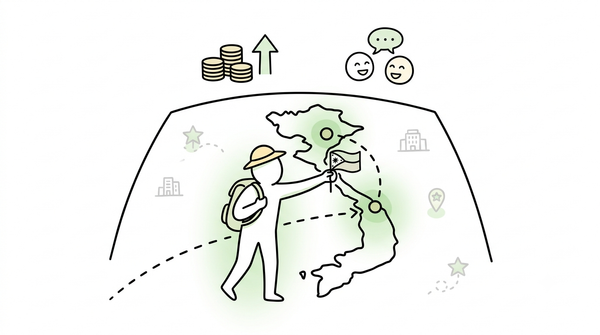
The Hidden Thread: How Global Fuel Shocks Quietly Decide What Sits on the Filipino Dinner Table
When global fuel prices spike, the true crisis unfolds quietly in the local market, changing what families can afford to eat.
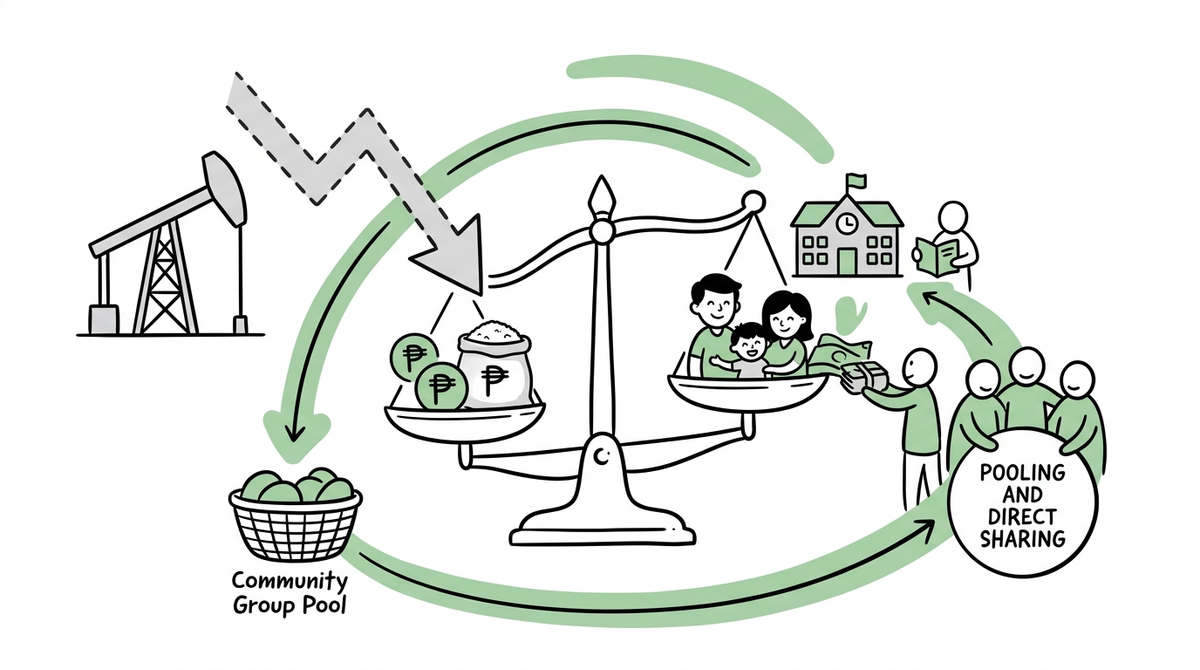
While headline inflation focus centers on the gas pump, global energy disruptions fundamentally threaten Filipino food security by silently compounding logistics costs from farm to table.
A quiet negotiation happens every morning under the corrugated iron roofs of neighborhood wet markets. A mother stands before a vegetable stall, lifting a piece of ginger, weighing it in her hand, and putting it back. She calculates the cost of tomatoes, checks the price of a kilo of rice, and mentally adjusts her family’s meals for the week. To the casual observer, this is just a standard scene of domestic budgeting—the familiar art of making ends meet. But look closer, and you will see that her choices are being dictated by events thousands of miles away.
When international headlines flash news of geopolitical tensions, shipping lane disruptions, or oil production cuts, the immediate analysis almost always centers on the gas pump. We see television reports featuring long lines of jeepneys waiting to fill up, and we read commentary about transport fare hikes. While these visible disruptions are real and painful, they represent only the surface of a much deeper, more systemic problem. The most profound crisis caused by volatile global energy markets does not happen on our highways; it happens silently in our kitchens.
The Domino Effect of the Pump
To understand why a spike in global crude oil affects the price of a bunch of pechay or a bag of onions, one must look at the fragile infrastructure that connects production to consumption in the Philippines. Our archipelago relies entirely on transit. Food does not simply appear on supermarket shelves or market stalls; it travels through a complex, energy-intensive logistical chain.
Consider a typical agricultural journey. Vegetables grown by farmers in Benguet must be loaded onto trucks to reach regional trading posts. From there, they are transferred to larger cargo vehicles traveling down the highways of Luzon, passing through multiple private and public hands before arriving at major wholesale hubs like Divisoria or Balintawak. For island provinces, this process is even more precarious, requiring inter-island roll-on/roll-off (RoRo) ferries that consume massive amounts of marine fuel oil.
When fuel prices rise, every single kilometer of this journey becomes more expensive. The truck driver must charge more to cover his overhead. The middleman adjusts his wholesale price to protect his margins. The market vendor, faced with higher wholesale procurement costs and expensive tricycle transport to move goods to her stall, is forced to raise retail prices. By the time the vegetable reaches the consumer, the invisible energy tax embedded within it has multiplied several times over.
But the vulnerability goes deeper than transportation logistics. Modern agriculture is completely dependent on petroleum products. Commercial fertilizers, which are essential for maintaining crop yields in many parts of the country, are manufactured using natural gas and petroleum derivatives. When global energy supplies tighten, fertilizer production costs soar internationally. For the small-scale Filipino farmer already operating on paper-thin margins, expensive fertilizer means one of two things: either they borrow more money to buy the input, raising the baseline cost of their harvest, or they use less fertilizer, resulting in a smaller, poorer yield. Both scenarios lead directly to scarcer, more expensive food at the local market.
Moving Beyond the Headline Numbers
When economic agencies release monthly reports on inflation, the statistics can feel abstract. A statement declaring that inflation has ticked up by a fraction of a percent can feel completely disconnected from the lived reality of an ordinary household. This is because headline numbers smooth out the uneven ways economic shocks injure different sectors of society.
For an affluent household, an increase in fuel and food prices might mean spending a little less on leisure, or shifting from premium grocery brands to standard options. The structure of their daily life remains intact. But for low-income families, stay-at-home parents, or single breadwinners, food and utilities already swallow up the vast majority of their monthly earnings. They do not have a buffer of discretionary spending to trim.
When food prices escalate due to fuel shocks, these vulnerable families are forced into severe compromises. They do not simply buy cheaper brands; they shift their diets toward less nutritious, carbohydrate-heavy alternatives. Fresh fish and lean meat are replaced by instant noodles and canned goods. Vegetables are skipped entirely. This is the structural reality of food insecurity: it is a crisis of quality and nutrition long before it becomes a crisis of absolute availability. The long-term consequences of these dietary shifts—stunted growth in young children, micro-nutrient deficiencies, and chronic health issues among adults—are silent liabilities that communities will pay for decades after global oil markets have stabilized.
The Vulnerability of a Fragile Supply Chain
The core issue exposed by global energy volatility is the extreme centralized dependency of our food supply. Because our food distribution system relies heavily on long-distance hauling and multiple layers of intermediaries, it acts as an amplifier for external economic shocks. A disruption at the global level travels directly down this linear chain, gaining destructive momentum before crashing into the local household.
Furthermore, our reliance on imported fuel means we are structural price-takers. We have no control over the macroeconomic forces that dictate energy costs, yet our daily survival remains anchored to them. When local communities are completely dependent on traditional commercial retail networks for every basic necessity, they remain entirely exposed to these market fluctuations. If the road between the farm and the city becomes expensive to traverse, the city goes hungry, and the farm goes broke because it cannot afford to ship its produce.
This vulnerability underscores a fundamental truth about community development: true economic resilience cannot be built purely on wage increases or individual financial literacy. It requires a structural reassessment of how communities secure their most basic needs. If a neighborhood can find ways to shorten the distance between production and consumption, or if it can build cooperative structures that bypass unnecessary transactional layers, it can insulate itself from the worst effects of global instability.
Shifting the Focus to Shared Responsibility
This persistent challenge is precisely why community-centered frameworks are becoming essential pillars of local survival. When individual households can no longer cope with rising costs on their own, the only viable alternative is to pool collective strength. This shift from isolated consumption to cooperative participation alters the economic dynamics of a neighborhood.
This systemic reality reflects why community-based efforts around organized resource sharing matter so deeply. Within grassroot ecosystems, initiatives like the BUKLURAN HUB Livelihood and Community Enterprise Program offer a practical demonstration of how communities can respond to macro-level pressures. Rather than acting as passive consumers at the mercy of extended retail supply chains, residents utilize community resource pooling mechanisms to combine their voluntary contributions.
Through organized structures like a Rice Distribution Cycle or a Grocery Support Cycle, communities engage in direct bulk purchasing of essential commodities. By consolidating their resources, they minimize the transactional and logistical overhead that typically inflates prices during fuel crises. This cooperative framework is intentionally structured not as a commercial business or an investment scheme, but as a non-profit participation system designed to lower household expenses. It demonstrates that while a community cannot control global oil prices, it can change how it organizes its internal economy to absorb the shock.
Similarly, the pressures of food and energy inflation place an immense burden on household budgets that would otherwise support human development. When a parent must spend more on a kilo of rice, the money set aside for school supplies or child nutrition disappears. This tension highlights the importance of targeted interventions like the BUKLURAN Pabaon Program. By focusing on providing basic school support, snack packs, and learning materials directly to kindergarten and elementary school children, such programs remove immediate, everyday financial barriers to education. It ensures that even when external economic shocks tighten a family's budget, a child's basic educational preparations are not completely sacrificed to cover the rising cost of the dinner table.
The Path to Local Resilience
The lesson of global fuel shocks is that our communities cannot afford to remain completely passive endpoints of a volatile global market. As long as our daily survival is bound to linear, energy-dependent supply chains, our families will continue to experience the anxiety of fluctuating prices.
Building true resilience requires a continuous commitment to local organization. It forces us to ask how we can better support one another, how we can structure our local economies to be more cooperative, and how we can protect the most vulnerable among us from shocks they did nothing to cause. The ultimate answer to global volatility does not lie in waiting for international markets to calm down. It lies in building communities that are organized enough, disciplined enough, and unified enough to stand firm no matter which way the global wind blows.
An ordinary Filipino family shouldn't have to look at the news with dread, wondering if a conflict across the ocean will redefine what they can feed their children tomorrow. By understanding the hidden threads that connect global systems to our local markets, we can begin to appreciate the true value of shared responsibility, local cooperation, and community organization.
Bakit nga ba kapag tumataas ang presyo ng petrolyo sa pandaigdigang merkado, hindi lang ang mga tsuper ang nahihirapan, kundi pati ang mga nanay na namamalengke para sa pamilya? Ang totoong epekto ng krisis sa enerhiya ay hindi lang makikita sa mga kalsada—tahimik itong pumapasok sa ating mga kusina at nagtatakda kung ano ang kaya nating ihain sa hapag-kainan. Ano ang ugnayan ng pandaigdigang ekonomiya sa ating pang-araw-araw na ulam?

Power Our Mission, Shape the Future
We empower single parents, PWDs, youths, seniors, and stay-at-home parents through digital livelihood.
Help us build resilient communities.
BUKLURAN remains open to partnerships, sponsorships, and collaborative initiatives that create meaningful community impact.
Whether through funding, in-kind support, volunteerism, or shared services, your organization can help strengthen programs that serve underserved communities.
Do you want to take part in our free livelihood programs, scholarship assistance, and community resource pooling initiatives? Membership is completely free.
Join BUKLURAN!
Register, volunteer, and become a member today.