The Power of the Group: Can We Really Pool Our Way to Lower Electric Bills?
Flipping a switch is automatic, but paying the bill is a monthly dread. Can new energy rules finally give ordinary consumers a choice?
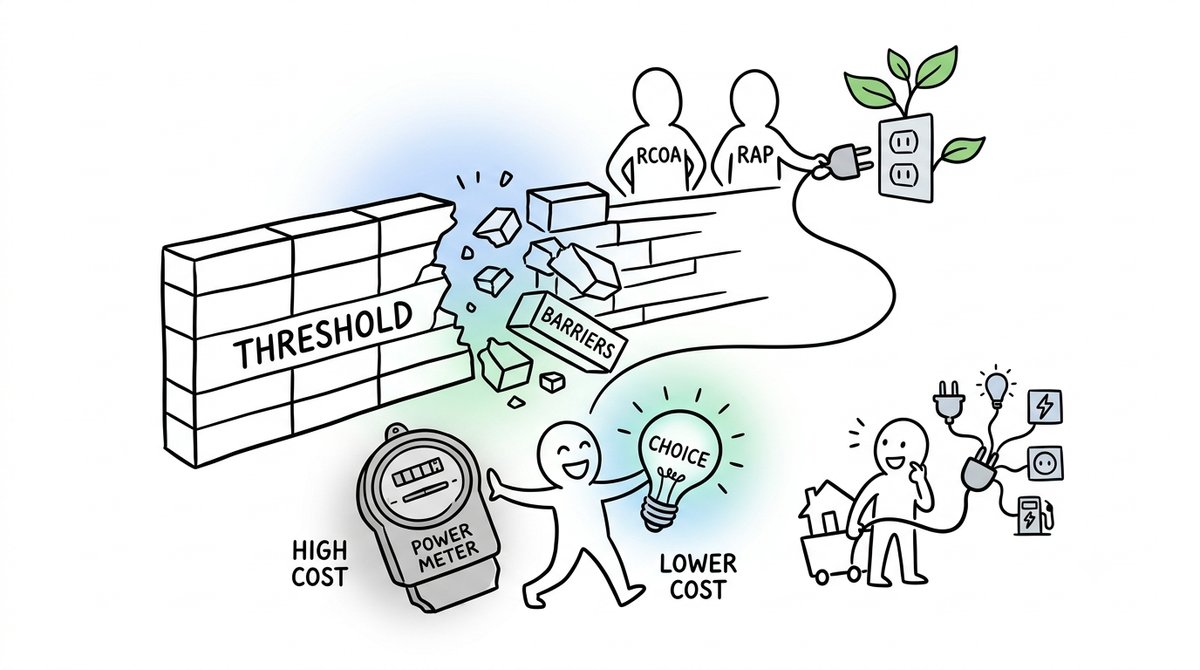
The opening of the retail electricity market to smaller consumers highlights both the potential of collective aggregation to lower household expenses and the practical hurdles communities face when navigating complex regulatory systems.
Every month, the routine is exactly the same in millions of Filipino households. A small slip of paper arrives at the doorstep, and with it comes a familiar wave of anxiety. Parents sit at the kitchen table, smoothing out the paper, eyes darting straight to the final row of numbers highlighted in bold. We look at the total amount due, compare it to the remaining cash in the envelope or the balance in our digital wallets, and quietly calculate what needs to be sacrificed this week. Do we cut back on the grocery budget? Do we delay buying a child’s new school shoes?
Flipping a light switch or plugging in an electric fan to brave the tropical heat feels completely automatic, almost like a natural right. But the bill that follows is a stark reminder that every second of comfort is meticulously metered and priced. For decades, ordinary citizens have viewed electricity as an unyielding, unnegotiable force of nature. You paid whatever the local utility provider demanded because the alternative was darkness. There was no shopping around for a better deal, no bargaining for lower rates, and absolutely no choice.
However, a shift is quietly occurring in the landscape of the Philippine power sector. Recent developments have brought a technical policy framework called Retail Competition and Open Access (RCOA) into the realm of smaller consumers. Traditionally, only massive factories, sprawling commercial malls, and industrial empires consuming immense amounts of electricity—originally set at a threshold of 1 megawatt, and later reduced to 500 kilowatts—had the legal right to choose their electricity suppliers. These corporate giants could interview different power generation companies, negotiate custom prices, and sign competitive contracts to lower their operational costs. The rest of us, from small neighborhood bakeries to suburban family homes, were locked into whatever default rate our distribution utility provided.
The landscape is changing with energy retailers like Rockport Power partnering with distribution utilities like the Manila Electric Company (Meralco) to aggressively expand their presence in the retail electricity market. This movement is fueled by the continuous lowering of the contestability threshold and the promotion of the Retail Aggregation Program (RAP). Under these evolving rules, smaller electricity consumers who were previously left in the dark are being given the theoretical framework to participate in the open market. Retail aggregation allows distinct end-users within a contiguous area to combine or "pool" their electricity demands so that their collective consumption meets the legal threshold required to bypass default utility rates and negotiate directly with preferred retail electricity suppliers.
On paper, this sounds like a monumental victory for consumer empowerment. It introduces the spirit of free-market competition into a sector notorious for rigid monopolies. The logic is simple: when multiple energy retailers are forced to compete for the business of grouped households and small businesses, prices should naturally fall, and service quality should improve. It promises to transform ordinary citizens from passive, captive customers into active market participants who hold genuine bargaining leverage.
Yet, moving beyond the optimistic corporate headlines reveals a massive gap between policy design and everyday reality. For an ordinary Filipino family or a struggling micro-enterprise, the concept of negotiating a power purchase agreement is as foreign as a different language. It sounds ideal to say that a neighborhood can band together to demand cheaper electricity, but the practical barriers to achieving this are immense.
First, consider the structural hurdles of coordination. To aggregate power demand, a community must possess a high level of organization, legal literacy, and consensus. Who takes responsibility for auditing the monthly consumption of dozens of households? Who steps forward to sign the contract with an energy retailer like Rockport Power, bearing the legal and financial liabilities if some members of the aggregated group fail to pay their share on time? In many underserved or lower-income communities, families are focused entirely on daily survival. They do not have the spare time, energy, or legal expertise to review complex, multi-page energy supply agreements filled with technical jargon like "demand charges," "fuel pass-through costs," and "transmission wheeling rates."
Furthermore, market competition does not automatically guarantee equity. Energy suppliers are businesses driven by profit margins. When they negotiate with a single industrial factory that operates 24/7 with predictable, massive energy usage, it is highly profitable for them to offer a steep discount. But a group of hundred residential homes has an entirely different consumption pattern—surging dramatically in the evening when people come home from work and school, and dropping during the day. Managing this volatile load is more complex and less profitable for retail suppliers. Consequently, the actual discounts offered to aggregated residential groups may turn out to be negligible compared to the corporate discounts enjoyed by manufacturing plants. There is a real risk that without strong consumer advocacy and simplified processes, the benefits of the Retail Aggregation Program will only be captured by high-end residential enclaves or well-funded commercial clusters, leaving ordinary working-class neighborhoods completely left behind.
When we analyze the human impact of these energy shifts, we realize that electricity rates are not just dry economic statistics; they dictate the quality of daily human life. Consider the reality of a neighborhood sari-sari store owner. Her modest store relies entirely on a couple of commercial refrigerators to keep drinks cold and frozen goods fresh for her neighbors. In the current system, her electricity bill can easily consume up to a third of her total monthly revenue. If her local community could successfully tap into a retail aggregation program and secure even a ten percent reduction in power rates, that saved money would translate directly into extra food on her family’s table, capital to expand her inventory, or savings for her children's future.
For senior citizens living on fixed pensions, or stay-at-home parents trying to manage tight household budgets amidst inflation, the cost of power is a constant source of stress. During the scorching summer months, they face an agonizing choice between suffering through oppressive indoor heat or turning on an air conditioner and inviting a financial crisis at the end of the month. True consumer choice in the energy market could alleviate this heavy mental burden, but only if the mechanism to access that choice is made simple, transparent, and genuinely accessible to the grassroots level.
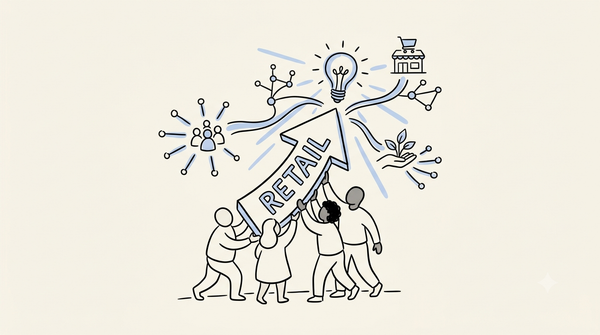
This systemic challenge reflects why community-based efforts around structured resource pooling matter so deeply. The core philosophy behind the Retail Aggregation Program—the idea that individual small entities have no power alone, but can achieve immense leverage and better terms when they pool their demands together—is identical to the principles guiding grassroots community frameworks. Within the BUKLURAN ecosystem, this exact methodology is utilized through the BUKLURAN HUB Livelihood and Community Enterprise Program.
Instead of dealing with energy, the BUKLURAN HUB applies this concept to everyday survival by facilitating community resource pooling for essential commodities like rice and basic household goods. Through structured, voluntary program cycles, individual members contribute their modest resources into a collective pool. This combined purchasing power allows the group to source essential goods directly at a much more favorable cost level compared to standard retail market prices, distributing the allocated goods back to the participating members without any profit-driven motives.
Observing how communities interact with such systems yields a crucial insight: for collective pooling to succeed among ordinary people, the system must be entirely transparent, strictly non-profit, free of hidden penalties, and deeply rooted in mutual trust. It cannot be an intricate financial maze. When an organization or a regulatory body handles the collective resources of ordinary families, the primary focus must always be cost reduction and community welfare, rather than passive financial speculation or corporate profit. If the national energy sector truly desires to make the Retail Aggregation Program work for the masses, policy makers must study these grassroots dynamics. They need to design aggregation systems that are as simple, safe, and community-centered as a local commodity distribution cycle.
Ultimately, the opening of the retail electricity market should force us to re-examine how we view our role within the wider national economy. For too long, the ordinary consumer has been treated as an isolated, powerless individual at the bottom of a massive corporate ladder, expected to pay whatever price is dictated from above. We have been trained to look at our monthly expenses through a lens of individual endurance—simply working harder or cutting back further to make ends meet.
But as the rules of the energy market slowly evolve to permit collective bargaining, perhaps it is time to shift our perspective from individual survival to collective cooperation. The true power to change our economic realities rarely comes from waiting for large corporations to lower their prices out of benevolence. Instead, it lies in our capacity to look at our neighbors, recognize our shared struggles, and understand that our collective demand possesses genuine economic value. As we move forward into an era of potential market choices, the defining question for the Filipino community will be a practical one: Can we build the internal trust, organization, and solidarity required to turn our shared needs into a collective force that no monopoly can ignore?
Bakit nga ba laging may kasamang kaba tuwing darating ang billing ng kuryente? Sanay tayong tanggapin na lang kung ano ang nakasulat, dahil wala naman tayong ibang pagpipilian kundi magbayad o maputulan. Pero paano kung sabihin naming may bagong patakaran kung saan pwedeng magsama-sama ang mga magkakapitbahay para pumili ng mas murang supplier ng kuryente? Madali nga ba itong gawin, o para lang ito sa malalaking kumpanya?

Power Our Mission, Shape the Future
We empower single parents, PWDs, youths, seniors, and stay-at-home parents through digital livelihood.
Help us build resilient communities.
BUKLURAN remains open to partnerships, sponsorships, and collaborative initiatives that create meaningful community impact.
Whether through funding, in-kind support, volunteerism, or shared services, your organization can help strengthen programs that serve underserved communities.
Do you want to take part in our free livelihood programs, scholarship assistance, and community resource pooling initiatives? Membership is completely free.
Join BUKLURAN!
Register, volunteer, and become a member today.