When the Global Chain Snaps: The Unseen Cost of a Seafood Ban at Home
When global supply chains snap, local factory workers bear the brunt. Exploring the human cost of the sudden Philippine crab import ban.
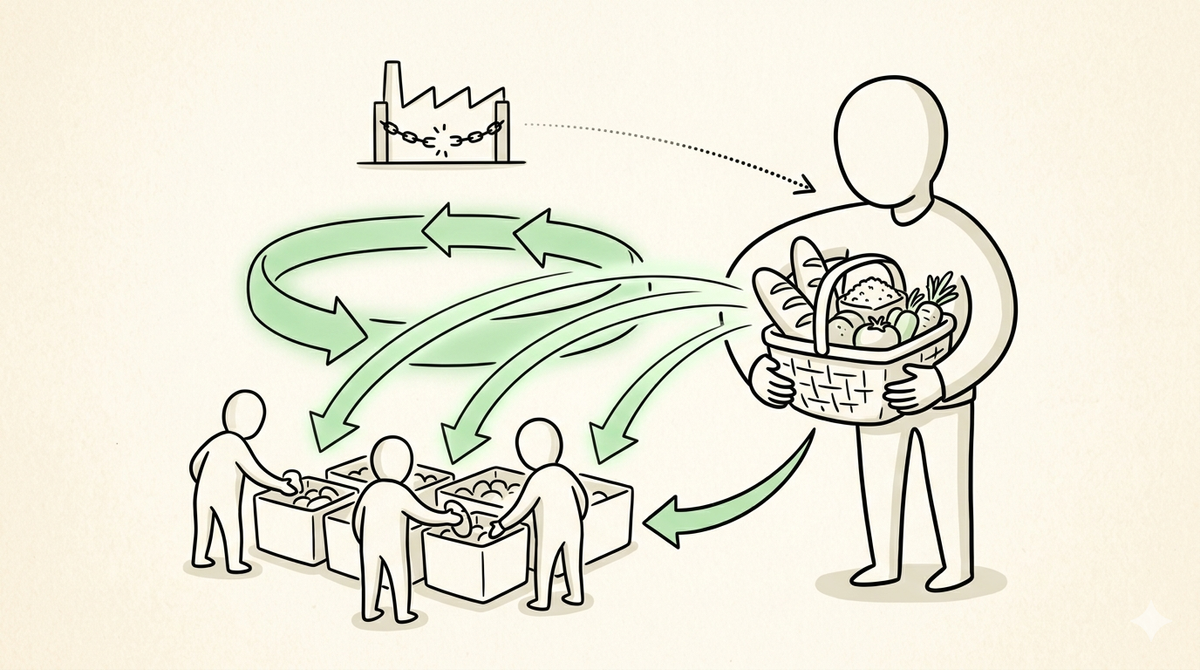
The sudden US ban on Philippine crab imports exposes the deep economic vulnerabilities of local seafood factory workers, highlighting the urgent need for communities to build localized social safety nets and versatile skills.
Early in the morning, long before the sun hits the corrugated iron roofs of our neighborhoods, the lights in the processing plants are already bright. For hundreds of families, the rhythmic scraping of crab shells and the cold blast of the freezing rooms have defined the baseline of survival. It is grueling work, the kind that leaves hands calloused and shoulders permanently stiff, but it represents predictability. A steady day of processing seafood translates directly to rice on the table, school allowance for the children, and a sense of security against the shifting tides of the local economy.
But what happens when that predictability vanishes overnight, not because of a failure on the factory floor, but because of a decision made thousands of miles away across the ocean?
The recent news regarding the United States ban on Philippine crab imports has sent a sudden, freezing shockwave through the local seafood sector. In a flash, processing plants faced immediate operational halts, resulting in massive, unexpected layoffs for hundreds of workers. For regulatory bodies and trade officials, this is a matter of international compliance, sanitary standards, and macroeconomic adjustments. It is a problem analyzed through policy briefs and diplomatic cables. However, on the ground, away from the air-conditioned offices of trade attaches, this development reads entirely differently. It is a sudden, terrifying silence where the steady hum of a factory once stood.
To truly understand this crisis, one must look past the broad strokes of international trade data. When an export market as massive as the United States closes its doors to a specific product, the impact does not trickle down slowly—it crashes down like an anvil. Seafood processing plants operate on remarkably tight margins and are heavily reliant on continuous, high-volume demand. When that demand is abruptly choked off, companies rarely have the financial cushions required to maintain a non-productive workforce. The immediate recourse is almost always structural contraction: shutting down assembly lines, suspending seasonal contracts, and laying off the frontline laborers who form the backbone of the enterprise.
The deeper issue here is the extreme vulnerability of highly specialized labor. A worker who has spent a decade perfecting the precise art of de-shelling and packing crab meat possesses an extraordinary, localized skill. But within a hyper-specialized export economy, that skill is inextricably tied to a single supply chain. When that specific chain snaps, those years of dedication do not easily transfer to other sectors. A displaced seafood processor cannot simply walk into an electronics assembly plant or a corporate call center the next morning and find employment. They are left stranded in an economic vacuum, holding specialized capabilities that have suddenly lost their immediate market value.
This reality cuts deep into the fabric of everyday household life. For the typical worker in these processing plants, there is no such thing as a substantial emergency fund or a multi-month financial cushion. Most households operate on a cash-frequency that matches their pay cycles—money earned this week is already spoken for by next week's rent, utility bills, and basic sustenance. A sudden layoff means that the buffer between economic stability and outright hardship disappears in a matter of days.
Consider the compounding pressures on a household when the primary earner is suddenly displaced. Parents are forced to make immediate, painful compromises. The quality of daily meals drops as budgets are slashed to the absolute bare minimum. Simple medical needs are deferred, transforming minor health issues into long-term family risks. For students within these families, the disruption is immediate; even when public education itself is free, the daily costs of transportation, school meals, and basic learning materials become insurmountable hurdles. The anxiety of the parents quietly transfers to the children, who watch the adults navigate the sudden disappearance of their livelihood with a quiet, heavy desperation.
Furthermore, this disruption ripples outward into the immediate neighborhood economy. Factory workers do not spend their wages in isolation. They buy their morning coffee and bread at the local bakery, purchase their fresh produce from nearby wet markets, and buy their daily household essentials from neighborhood sari-sari stores. When hundreds of workers lose their purchasing power simultaneously, the local commercial ecosystem stalls. The micro-enterprises that rely on the steady, daily spending of factory employees find themselves watching their own revenues plummet. A crisis that began at an international shipping port rapidly morphs into a quiet economic depression stretching across entire blocks and communities.
This compounding vulnerability highlights a fundamental truth about modern labor: depending entirely on a single economic pipeline, especially one dictated by international markets, leaves communities exposed to severe systemic shocks. It underscores the profound necessity of community-based frameworks that focus on localized economic resilience, versatile skills development, and community-driven safety nets.
This pressing societal challenge reflects precisely why community-based efforts around programs like the BUKLURAN HUB matter. While large-scale macro-economic shifts are managed at the state level, the immediate survival of families requires a localized infrastructure that can cushion blows and provide alternative pathways. Within a resilient community framework, the goal is to shift away from total dependence on external variables and build collective systems that keep resources moving internally.
When a primary income stream disappears due to a sudden industry shutdown, a family's immediate defense mechanism is often their ability to access essential goods without incurring crippling debt. This is where the practice of community resource pooling and structured cooperative buying becomes essential, allowing households to mitigate the rising costs of living through collective action rather than individual isolation.
Moreover, an industrial crisis serves as a stark reminder that vocational adaptability is a necessity for survival. When highly specific jobs vanish, the resilience of the local workforce depends heavily on accessible, practical training initiatives—such as the technical, livelihood, and applied digital tracks found within the BUKLURAN Kasanayan program. By expanding a worker's capabilities from a single specialized factory task into broader, practical skill sets like small-scale food production, product packaging, or digital tools for home-based work, the community begins to break the cycle of total vulnerability. It ensures that when one global door slams shut, families have the foundational knowledge and local organizational support to pivot, adapt, and sustain themselves from within their own neighborhoods.
Ultimately, the sudden crisis in the seafood export sector is more than just a temporary blip in trade statistics or a hurdle for corporate compliance officers. It is a deeply human story about the fragility of modern work and the speed with which global events can alter the realities of a local household. It serves as an urgent reminder that while we strive to participate in a globalized economy, we must never neglect the economic foundations of our own communities.
As the affected workers and their families look towards an uncertain horizon, we are left to ponder a broader, vital question: How can we better design our local economies so that the livelihoods of our families are anchored by community solidarity, rather than held hostage by the unpredictable decisions of a distant global market?
Bakit nga ba kapag nagkakaroon ng problema sa mga usaping pang-internasyonal, ang mga ordinaryong manggagawa sa pabrika ang unang nakatitikim ng bigat? Ang kamakailang ban sa export ng alimango ay nagdulot ng malawakang tanggalan sa trabaho. Sa kabila ng mga ulat at datos, ano nga ba ang totoong epekto nito sa hapag-kainan ng pamilyang Pilipino kapag biglang tumigil ang mga makina?

Power Our Mission, Shape the Future
We empower single parents, PWDs, youths, seniors, and stay-at-home parents through digital livelihood.
Help us build resilient communities.
BUKLURAN remains open to partnerships, sponsorships, and collaborative initiatives that create meaningful community impact.
Whether through funding, in-kind support, volunteerism, or shared services, your organization can help strengthen programs that serve underserved communities.
Do you want to take part in our free livelihood programs, scholarship assistance, and community resource pooling initiatives? Membership is completely free.
Join BUKLURAN!
Register, volunteer, and become a member today.