Aligning AI Strategy with Human-Centered Values: A Sociotechnical Approach to Non-Profit Planning
Explore why effective AI adoption in the non-profit sector requires balancing technology with human-centered strategic planning.
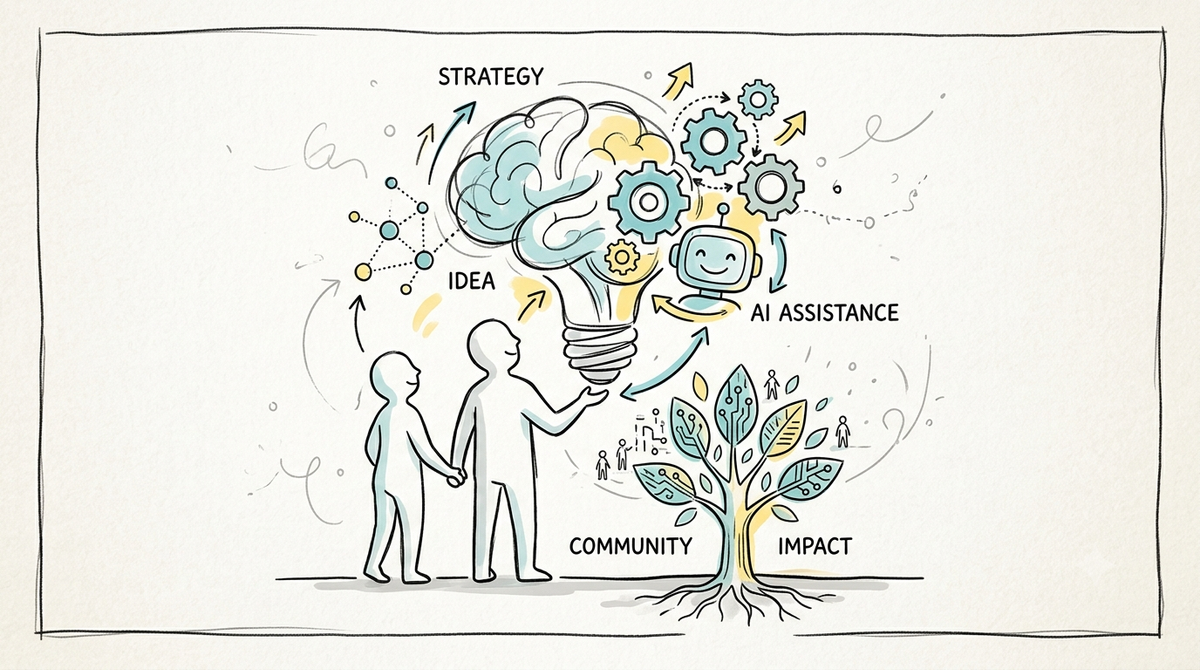
This article explores the critical intersection of strategic planning, ethical artificial intelligence, and non-profit operations. By adopting a sociotechnical approach, mission-driven organizations can ensure technology adoption enhances human capacity rather than replacing it. It highlights key insights from a recent learning event focused on navigating digital transformation responsibly and effectively.
In an era defined by rapid technological acceleration, mission-driven organizations face a delicate balancing act. The pressure to adopt modern tools, streamline operations, and scale impact has never been greater. Yet, non-profits operate in high-stakes environments where trust, human relationships, and ethical accountability are paramount. When new tools—particularly artificial intelligence—enter the workplace, they rarely arrive in a vacuum. They disrupt existing workflows, alter team dynamics, and raise fundamental questions about organizational culture and mission alignment.
For many social impact organizations, the primary challenge is not simply acquiring software or learning how to write effective prompts. The real challenge lies in integration: how to adopt transformative technology without losing sight of the people who power the mission. When organizations view technology purely as an IT upgrade rather than an organizational shift, implementation often stalls or creates friction. Bridging this gap requires moving beyond tech-centric solutions and embracing a holistic perspective that treats social structures and technological tools as deeply interdependent systems.
Why This Topic Matters
The non-profit sector operates under a unique set of constraints. Resources are often tight, community needs are continuously evolving, and the demand for services frequently exceeds organizational capacity. In this environment, the promise of artificial intelligence—to automate routine tasks, analyze complex data, and free up valuable staff time—is undeniably compelling. There are simply too few resources and too high a need to approach technology implementation carelessly.
However, adopting AI without a coherent strategy poses distinct risks. Misaligned technology initiatives can waste limited funding, burden staff with ill-fitting systems, and unintentionally compromise community trust or ethical standards. Technology is never neutral; it reflects the values, assumptions, and processes of the systems in which it is deployed.
If an organization's internal culture, workflows, and ethical frameworks are not prepared for AI, the tool will amplify existing inefficiencies rather than solve them. This is why a human-centered approach is vital. To build long-term resilience, non-profits must evaluate not just what technology can do, but how staff interact with it, how it affects service delivery, and how it aligns with broader community values.
Event Objectives
To address these pressing challenges, TechSoup hosted a dedicated learning session focused on guiding non-profit leaders and practitioners through the fundamentals of ethical technology integration. The primary objectives of the session included:
- Demystifying Sociotechnical Systems: Unpacking how human behavior, organizational culture, and technical tools interact within mission-driven environments.
- Integrating AI into Strategic Planning: Demonstrating how to build artificial intelligence directly into long-term organizational strategy rather than treating it as an afterthought.
- Promoting Responsible and Ethical AI Use: Examining the importance of diversity, equity, inclusion, and ethical oversight in AI education, training, and deployment.
- Optimizing Limited Resources: Providing actionable frameworks to help organizations maximize their capacity and impact while avoiding common implementation pitfalls.
Key Insights and Takeaways
Understanding the Sociotechnical Framework
One of the foundational concepts highlighted during the session was the Sociotechnical Systems (STS) approach. In simple terms, an STS framework recognizes that an organization consists of two intertwined parts: the technical system (tools, software, devices, and automation) and the social system (people, roles, relationships, and culture).
When a non-profit introduces artificial intelligence, it is not merely installing a new program; it is changing how people communicate, make decisions, and complete their daily tasks. True strategic planning must account for both sides of this equation. A strategy that focuses solely on software capabilities while ignoring team readiness, training, and emotional comfort will inevitably fall short. Sustainable digital transformation happens when technology is configured to support and enhance human potential, not displace or frustrate it.
       ┌────────────────────────────────────────────────────────┐
       │             SOCIOTECHNICAL SYSTEM (STS)                │
       └───────────────────────────┬────────────────────────────┘
                                   │
         ┌─────────────────────────┴─────────────────────────┐
         ▼                                                   ▼
┌─────────────────────────┐                         ┌─────────────────────────┐
│     SOCIAL SYSTEM       │                         │    TECHNICAL SYSTEM     │
├─────────────────────────┤                         ├─────────────────────────┤
│ • Organizational Culture│                         │ • AI & Automation Tools │
│ • Team Relationships    │ ◄─── Mutual Impact ───► │ • Software & Infrastructure│
│ • Decision-Making       │                         │ • Workflows & Data      │
└─────────────────────────┘                         └─────────────────────────┘
Strategic Alignment Over Ad-Hoc Adoption
Another critical takeaway was the necessity of embedding AI planning directly into general organizational strategy. Far too often, non-profits experiment with digital tools in isolated silos—a communications officer using an AI assistant for drafting emails, or a data coordinator using a tool for basic reporting—without clear organizational guidelines.
While individual experimentation has value, long-term success requires deliberate alignment. Strategic planning must ask key questions:
- Which operational bottlenecks can AI legitimately help resolve?
- How does technological assistance align with our core ethical principles?
- What safeguards are needed to protect sensitive community data?
- How will we measure whether a tool actually improves our capacity to deliver on our mission?
By embedding tech assistance directly into strategic roadmaps, organizations ensure that every digital investment explicitly serves their broader public-interest goals.
Ethics, Equity, and Inclusion in AI Education
The session underscored that ethical technology adoption is fundamentally tied to diversity, equity, and inclusion (DEI). AI systems are trained on historical data, which means they can inherit and perpetuate societal biases if left unchecked. For non-profits working directly with vulnerable or underrepresented populations, ethical vigilance is a necessity.
Responsible AI practice requires proactive education. Organizations must ensure that diverse team members—across various roles, backgrounds, and technical skill levels—have a voice in how tools are chosen and implemented. Demystifying AI through inclusive training builds organizational confidence and ensures that technology serves everyone equitably, preventing digital divides from widening within the social sector itself.
Event Snapshot
| Detail | Information |
| Event Title | Introduction to AI Strategy Development (Strategic Planning + Technology Assistance) |
| Host Organization | TechSoup |
| Date | July 29, 2026 |
| Platform | Virtual (Cloud) |
| Featured Speaker | Tina Crouse (AI Ethics and Strategy Specialist, ResponsibleAI Practitioner, Management Consultant) |
The session provided non-profit professionals with a space to reflect on the intersection of strategic management and emerging tech, emphasizing practical approaches for small businesses and social impact organizations navigating digital transformation.
From Learning to Community Impact
The ultimate goal of organizational capacity building is not technical sophistication for its own sake; it is improved community outcome. When a non-profit strengthens its internal systems, the surrounding community directly reaps the benefits.
By applying a sociotechnical lens to strategic planning, organizations can stream line administrative overhead and reduce burnout among staff. When workers spend less time bogged down in manual, repetitive tasks, they can dedicate more time, energy, and empathy to direct service, advocacy, and relationship-building.
Furthermore, responsible AI adoption safeguards the trust that communities place in public-service organizations. When non-profits handle technology thoughtfully—prioritizing ethical oversight, data privacy, and inclusive design—they model responsible leadership. Capacity-building initiatives that thoughtfully balance human needs with technological tools ensure that the social sector remains resilient, responsive, and deeply rooted in public trust.
Looking Ahead
As digital tools continue to evolve at a dizzying pace, the ability to adapt thoughtfully will be a defining characteristic of effective public service. Adaptation does not mean rushing to adopt every new tool that emerges. Rather, it means cultivating a culture of continuous learning, responsible inquiry, and grounded innovation.
The future of community service belongs to organizations that treat technology as a collaborator in human effort rather than a replacement for human wisdom. By centering staff well-being, ethical standards, and clear strategic goals, mission-driven entities can navigate technological shift with confidence and clarity, ensuring that every innovation ultimately serves the greater good.
Join the Conversation
Every meaningful change begins with learning, reflection, and open conversation. As social sector organizations continue to navigate new technological landscapes, sharing experiences and strategies remains one of our most effective ways to grow together.
We invite non-profit leaders, advocates, practitioners, and community members to reflect on how technology intersects with your own mission. How is your team balancing human-centered values with new digital tools? What frameworks have helped you navigate strategic planning in an era of rapid change? We encourage you to share your thoughts, start discussions within your networks, and continue exploring ideas that build a more capable, thoughtful, and resilient public sector.
Introduction to AI Strategy Development (Strategic Planning + Technology Assistance)
July 29, 2026
Virtual
Organizational Development

This initiative was independently funded by the BUKLURAN Officers through personal contributions.
We gratefully acknowledge the groups and individuals who shared resources, services, venues, supplies, and other forms of community support.
• TechSoup
BUKLURAN remains open to partnerships, sponsorships, and collaborative initiatives that create meaningful community impact.
Whether through funding, in-kind support, volunteerism, or shared services, your organization can help strengthen programs that serve underserved communities.