Why Slower Government Spending Matters to Ordinary Filipino Households
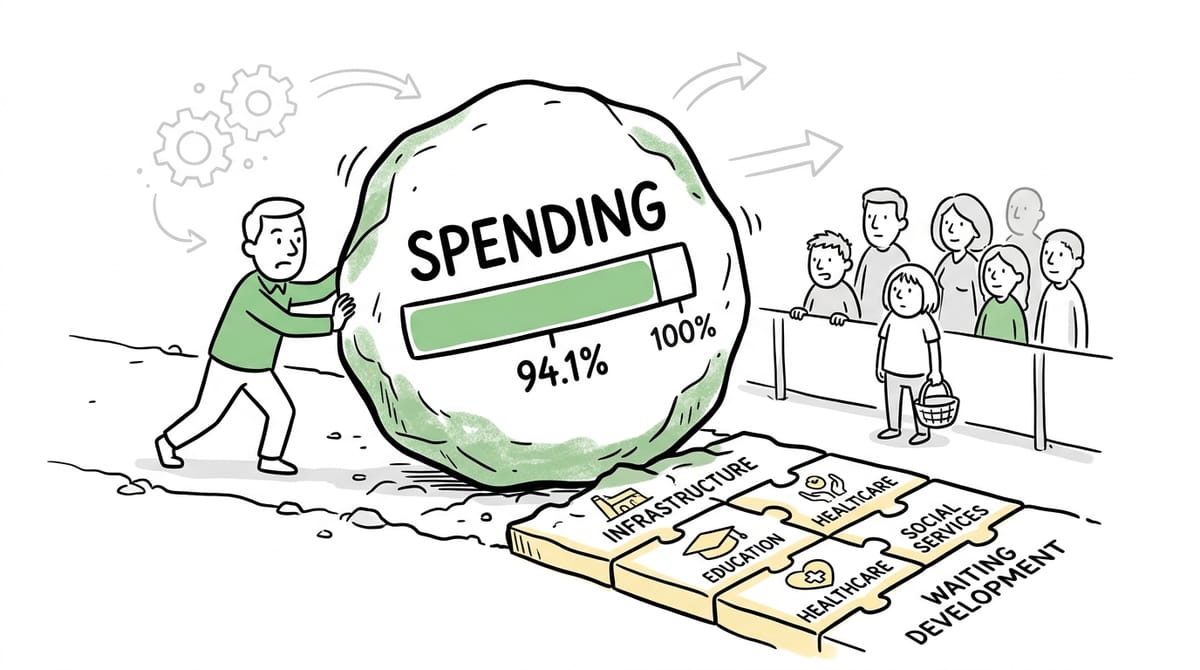
As of end-August 2026, Department of Budget and Management (DBM) data shows that 94.1% of the ₱6.793-trillion national budget has been released—a slower pace compared to the same period in previous years. Key sectors such as agriculture and education faced lower release rates. This article breaks down what slow budget execution means for public services, community infrastructure, and household economic resilience, while offering practical steps for ordinary Filipinos to manage their resources.
National Government Spending Momentum & Fiscal Deficit Dashboard
National budget announcements often feel like distant macroeconomic numbers reserved for economists and policymakers. However, when the national government releases funds at a slower pace, the ripple effects eventually reach everyday barangays across the country.
Data from the Department of Budget and Management (DBM) shows that by the end of August 2026, the government released 94.1% of the ₱6.793-trillion national budget. While 94.1% sounds high, it represents a slower pace than the release rates recorded during the same period in previous years.
Understanding why spending pace matters is essential for ordinary Filipinos. Delays in releasing allocated funds affect everything from public school supplies and local health clinic stocks to social welfare payouts and community public works.
What Happened?
According to official DBM allotment reports for 2026, the government released approximately ₱6.39 trillion out of the total ₱6.793-trillion budget by end-August. This leaves over ₱400 billion undistributed heading into the final four months of the year.
The release pace varies significantly across key sectors:
- Department of Agriculture (DA): Received only 68.8% of its ₱163.26-billion program by end-August, down sharply from the 96.7% pace recorded in the previous year.
- Department of Education (DepEd): Received 92.5% of its ₱961.14-billion budget, running behind its 95.9% release rate from the prior year.
- Department of Tourism (DOT): Recorded an 87.4% release rate for its adjusted program.
- Department of Public Works and Highways (DPWH): Maintained a near-complete release rate of 99.5% of its ₱530.12-billion budget.
Why It Matters
Budget releases represent the transfer of government funds to operating agencies. When releases slow down, agencies cannot execute programs on time.
- Delayed Community Support: Programs providing agricultural subsidies, educational support, and financial aid operate on strict timelines. Delayed allotments mean delayed assistance to local beneficiaries.
- Impact on Local Economies: Government spending is a major engine of local economic activity. Public construction, procurement of goods, and social assistance put money directly into local circulation, supporting small vendors, informal workers, and transportation drivers.
- Slower Infrastructure Progress: When project funding is delayed, community-level infrastructure—such as local roads, flood control measures, and school building repairs—takes longer to complete.
What the Headlines Don't Explain
Headlines often report "allotment releases," but a released budget does not automatically mean money has been spent at the community level.
- Release vs. Disbursement: The DBM releasing allotments to an agency is only step one. The agency must still conduct public bidding, award contracts, and disburse actual payments. A slow release rate at the top inevitably causes bottlenecking at the ground level.
- Absorptive Capacity: Agencies with complex procurement requirements or institutional bottlenecks often struggle to process funds quickly. When agencies take time to liquidate or submit project proposals, subsequent funding releases slow down.
- Special Purpose and Unprogrammed Funds: A significant portion of the remaining unreleased budget consists of Special Purpose Funds and Unprogrammed Appropriations. These require specific triggers (such as excess revenue generation or foreign loan approvals) before they can be disbursed.
How This Could Affect Filipinos
Low-Income Families and Vulnerable Sectors
When social service agencies face delayed disbursements, assistance programs for single parents, persons with disabilities (PWDs), senior citizens, and low-income families can experience backlogs. Subsidies meant to offset rising living costs arrive late, forcing families to borrow money or skip basic necessities.
Farmers and Small Food Producers
With the Department of Agriculture experiencing a release rate of under 70% by August 2026, critical agricultural support—such as seed distribution, fertilizer assistance, farm equipment, and irrigation maintenance—risks missing crucial planting cycles. This can impact farm yields and contribute to higher market prices for staples like rice and vegetables.
Informal and Daily Wage Workers
Slow public spending affects government procurement and public works, directly impacting jobs for daily wage laborers, small suppliers, and transportation workers whose livelihoods depend on active local project sites.
What People Should Know
- Public Budgeting Has Steps: A budget passing through Congress is only an authorization. Funds must move from authorization to allotment release, and finally to actual disbursement before projects hit the ground.
- Delayed Spending Is Not Savings: Unspent allocated funds do not automatically mean government savings. In many cases, it reflects operational delays or bureaucratic hurdles that prevent planned public benefits from reaching citizens on schedule.
- Social Safety Nets Take Time to Adjust: When national agencies face budget execution delays, local government units (LGUs) and community organizations often bear the immediate burden of serving residents needing urgent support.
Practical Takeaways
- Track Local Government Services: For daily health, social welfare, and education needs, inquire directly with your local Barangay or City Social Welfare and Development (CSWD) office regarding available municipal-level programs, which may have different funding schedules than national agencies.
- Build Household Buffer Plans: Given potential delays in national cash assistance or subsidy programs, families should prioritize basic food and medical security in their household budgeting.
- Engage in Community Resource Sharing: Grassroots initiatives can help households bridge supply gaps during economic slowdowns. Participating in organized community initiatives—such as cooperative purchasing or shared logistics—helps reduce household expenses.
- Verify Official Announcements: Rely on verified updates from government portals or trusted community notices regarding the schedule of social welfare payouts, agricultural distribution drives, and public assistance.
What Happens Next
In the final quarter of the year, government agencies typically accelerate spending to utilize remaining allocations before the fiscal year ends. Monitoring whether agencies successfully catch up on spending—particularly in agriculture, education, and social protection—will reveal how quickly public services reach communities in the months ahead.
Slower government spending is not just an abstract financial figure; it directly affects the speed at which public services, community infrastructure, and social assistance reach Filipino families. While macro-level policy execution rests with government institutions, building informed, resilient, and cooperative communities remains a crucial line of defense for ordinary households navigating changing economic conditions.

Power Our Mission, Shape the Future
We empower single parents, PWDs, youths, seniors, and stay-at-home parents through digital livelihood.
Help us build resilient communities.
BUKLURAN remains open to partnerships, sponsorships, and collaborative initiatives that create meaningful community impact.
Whether through funding, in-kind support, volunteerism, or shared services, your organization can help strengthen programs that serve underserved communities.
Do you want to take part in our free livelihood programs, scholarship assistance, and community resource pooling initiatives? Membership is completely free.
Join BUKLURAN!
Register, volunteer, and become a member today.