Beyond NLEX’s Flood Fix: What Expressways and Regional Drainage Mean for Everyday Commuters
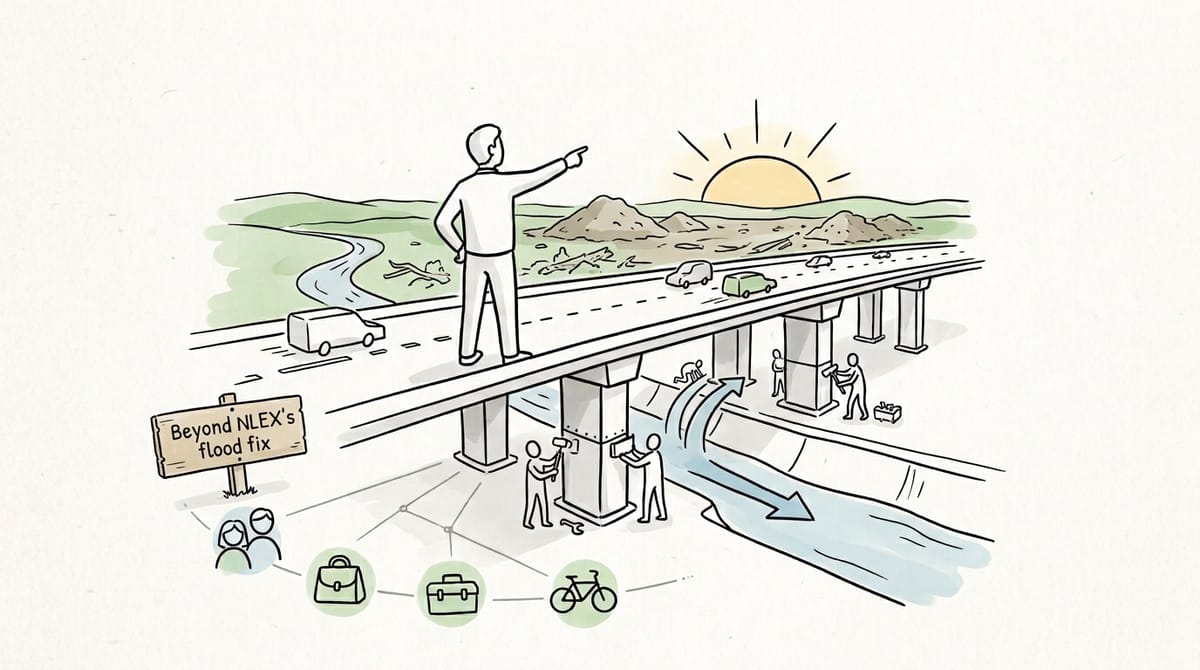
Severe monsoon (Habagat) rains led to unexpected flooding along sections of the North Luzon Expressway (NLEX), particularly near the Candaba Viaduct in San Simon, Pampanga. To ease travel disruptions, toll-free passage was provided between Pulilan, Bulacan, and San Fernando, Pampanga during the peak of the overflow. Beyond immediate roadway fixes, the situation underscores long-term structural challenges within the Candaba floodplain, requiring broader drainage updates, river basin management, and regional flood controls. For daily commuters, low-income workers, and small business owners reliant on cross-provincial transport, infrastructure resilience directly impacts daily livelihoods and transit costs.
10km Gridlock to Toll-Free Relief: The Numbers Behind NLEX's Flood Crisis
"NLEX has admitted that keeping the road partly open was the wrong judgment... What would help is treating the river system with the same urgency as the road — a serious commitment to a dredging schedule, a viaduct extension, and a national government that sees it through."
Heavy seasonal monsoon (Habagat) rains brought unexpected flooding to portions of the North Luzon Expressway (NLEX), creating severe travel bottlenecks and stranding thousands of commuters between Bulacan and Pampanga. In response to the rising water level near San Simon, tollway operators provided temporary toll-free passage between the Pulilan and San Fernando plazas to keep traffic moving.
While temporary toll waivers offer short-term relief, the event exposed deeper infrastructural realities. Elevating expressway pavements addresses the immediate roadway, but long-term flood resilience requires fixing the broader regional drainage systems surrounding the Candaba floodplain. Understanding these dynamics helps everyday commuters and working families evaluate how infrastructure decisions impact their daily travel and household stability.
What Happened?
During the height of the monsoon season, heavy rainfall overwhelmed natural waterways in Central Luzon, leading to water accumulation along low-lying sections of NLEX. The most critical point occurred in San Simon, Pampanga—a location situated directly inside the natural drainage path of the Candaba Swamp and Pampanga River basin.
To manage the disruption, toll operators implemented operational measures:
- Toll-Free Transit: Motorists traveling between Pulilan, Bulacan, and San Fernando, Pampanga were temporarily exempted from paying tolls to speed up vehicle throughput.
- Targeted Elevating Works: Pavement raising and engineering adjustments were undertaken along vulnerable stretches to keep lanes open.
- Traffic Rerouting: Light vehicles were periodically advised to take alternative routes when water levels threatened engine safety.
Why It Matters
NLEX is the main economic arterial link connecting Metro Manila to northern and central Luzon. When a major express corridor experiences standing water or severe slowdowns, the operational disruption extends far beyond private car owners.
When expressway traffic comes to a standstill, public buses, cargo trucks carrying agricultural produce, and utility vehicles face multi-hour delays. For everyday workers, this translates to lost wages, missed shifts, and increased transportation costs. For micro and small enterprises, delayed logistics can mean spoiled perishable goods and lost operational revenue.
What the Headlines Don't Explain
While news coverage naturally focuses on the flooded highway lanes and toll adjustments, the underlying issue extends well beyond the expressway boundaries.
- The Floodplain Reality: San Simon sits inside the natural basin of the Candaba floodplain. An expressway can be raised, but if surrounding rivers, spillways, and agricultural canals remain silted or blocked, water has nowhere to go except to collect at the lowest topographic points.
- Expressways vs. Local Drainage: Expressway concessionaires are responsible for their right-of-way infrastructure. However, local flood control involves national government agencies, local government units (LGUs), and river basin authorities. Elevating the highway without upgrading regional drainage can inadvertently impound water in adjacent low-lying communities.
- Public Transit Vulnerability: While toll waivers benefit vehicle owners and transport operators directly, low-income commuters reliant on public jeepneys or buses still experience total journey delays, increased waiting times, and potential fare spikes on secondary routes.
How This Could Affect Filipinos
Infrastructure resilience directly affects household stability across several sectors:
- Daily Commuters and Hourly Workers: Severe transit delays mean longer travel times, reduced time with family, and risk of salary deductions due to late arrivals.
- Small Business Owners and Informal Traders: Vendors relying on daily shipments of goods from Central Luzon face supply chain disruptions and higher freight charges.
- Low-Income Families in Nearby Municipalities: When main expressways overflow, traffic spills into local provincial roads, causing severe congestion in inner barangays and disrupting community-level transport.
What People Should Know
Understanding how flood control works helps citizens interpret official announcements and prepare effectively during the rainy season:
- Toll Exemptions Are Temporary Emergency Measures: Free toll passage during emergency events is meant to ease immediate congestion, not replace structural flood mitigation.
- Infrastructure Elevating Takes Time: Engineering interventions like road elevating require thorough hydrological studies so that raised roads do not inadvertently cause worse flooding for neighboring residential areas.
- Inter-Agency Coordination Is Essential: Resolving major basin flooding requires joint action from the Department of Public Works and Highways (DPWH), local government units, and private infrastructure concessionaires.
Practical Takeaways
When monsoon rains and highway flooding threaten daily travel, commuters and families can take practical precautions:
- Monitor Official Express Advisories: Check real-time traffic updates from toll operators and traffic management authorities before departing.
- Budget Extra Travel Time: During the Habagat season, assume potential delays on cross-provincial routes and adjust schedules accordingly.
- Verify Alternative Public Routes: Identify secondary provincial routes or alternative public transport options if main expressway segments experience standing water.
- Protect Livelihood Supplies: Small business owners transporting perishable inventory should arrange shipments around major weather warnings to minimize loss.
What Happens Next
Long-term resolution depends on the completion of regional dredging, river basin management projects, and comprehensive drainage upgrades across Central Luzon. Pavement elevations along NLEX serve as an essential defense, but permanent relief requires sustained cooperation between public public-works agencies and private tollway operators. Monitoring regional infrastructure budgets and municipal flood-mitigation initiatives remains critical for communities residing along the corridor.
Flooding along major highways like NLEX demonstrates that road infrastructure cannot be viewed in isolation from the natural ecosystem it crosses. Short-term relief measures like temporary toll waivers keep traffic moving during emergencies, but long-term socio-economic stability relies on resilient, well-planned regional drainage systems. Ensuring reliable transport corridors protects the livelihoods, time, and hard-earned income of ordinary Filipino workers and families.

Power Our Mission, Shape the Future
We empower single parents, PWDs, youths, seniors, and stay-at-home parents through digital livelihood.
Help us build resilient communities.
BUKLURAN remains open to partnerships, sponsorships, and collaborative initiatives that create meaningful community impact.
Whether through funding, in-kind support, volunteerism, or shared services, your organization can help strengthen programs that serve underserved communities.
Do you want to take part in our free livelihood programs, scholarship assistance, and community resource pooling initiatives? Membership is completely free.
Join BUKLURAN!
Register, volunteer, and become a member today.