How Existing Industrial Estates Are Accelerating the Luzon Economic Corridor for Filipino Workers
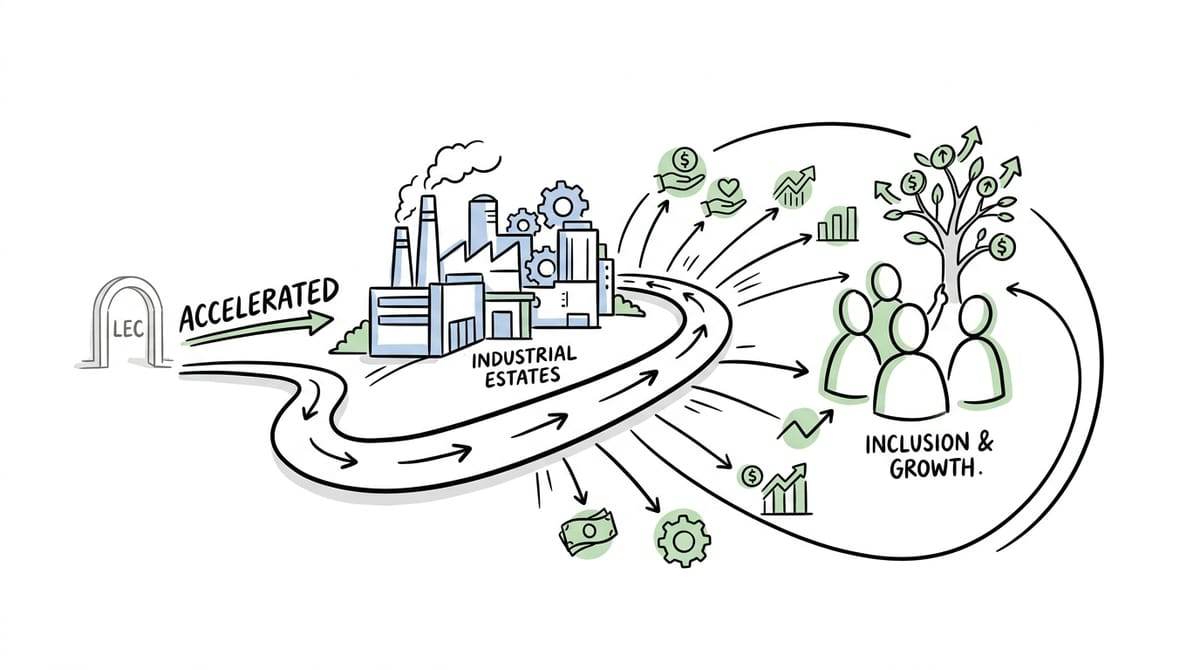
This article examines how existing industrial estates—such as LIMA Estate in Batangas and TARI Estate in Tarlac—are accelerating the development of the Luzon Economic Corridor (LEC). Rather than waiting years for new infrastructure projects to be built from scratch, private developers are putting "shovel-ready" industrial sites, power, water, and digital connectivity to work immediately. We break down what the LEC actually means for ordinary Filipino workers, consumers, and families across Luzon and nationwide.
How 1,100-Hectare Industrial Hubs and ₱129B in Capital Are Fast-Tracking the Luzon Economic Corridor
"To realize that ambition, connectivity must be matched by industrial capacity, talent and operating capability. Existing estates such as LIMA Estate can help strengthen that foundation..."
In mid-September 2026, discussion around the Luzon Economic Corridor (LEC) shifted from high-level infrastructure plans to immediate industrial execution. A visiting delegation from the U.S. Trade and Development Agency (USTDA) and leading private estate developers highlighted how established industrial hubs in Southern and Central Luzon are already translating government policy into physical investment and jobs.
Rather than waiting for new, long-term construction projects to open, the strategy focuses on leveraging "shovel-ready" industrial platforms. Sites like the 1,100-hectare LIMA Estate in Batangas and the 384-hectare TARI Estate in Tarlac are stepping in with existing power, water, digital infrastructure, and estate services to host international manufacturing operations today.
What Happened?
The Luzon Economic Corridor was launched as a joint economic initiative connecting four key hubs across Central and Southern Luzon: Subic, Clark, Metro Manila, and Batangas. The region already generates approximately 50 percent of the Philippines' Gross Domestic Product (GDP).
In September 2026, private developers, led by Aboitiz Economic Estates, emphasized that utilizing existing industrial parks is key to putting the corridor into high gear.
- Southern Anchor (LIMA Estate, Batangas): A mature industrial estate in Lipa and Malvar covering around 1,100 hectares. It currently hosts over 200 global companies, employs 75,000 workers, and has a long-term expansion pathway toward 1,600 hectares, with projections pointing toward up to 250,000 total manufacturing and services jobs over time.
- Central Anchor (TARI Estate, Tarlac): A 384-hectare industrial platform designed to serve Central Luzon, connected directly to Subic, Clark, and major expressway networks. It is currently attracting major food, beverage, and light manufacturing facilities.
- Corridor Scale: The LEC aims to create up to one million direct and indirect jobs across Luzon by linking ports, airports, expressways, clean energy grids, and digital infrastructure to support semiconductors, electronics, artificial intelligence (AI), and advanced manufacturing.
Why It Matters
For decades, big economic policy announcements in the Philippines have faced a common hurdle: execution delay. Building freight railways, port expansions, and industrial zones from scratch can take many years.
By linking the Luzon Economic Corridor directly to existing, well-managed private estates, foreign investments can take root immediately. When a global technology or manufacturing company chooses to invest in the Philippines, a shovel-ready estate allows them to set up operations, install machinery, and hire workers within months rather than years.
What the Headlines Don't Explain
While major economic headlines showcase multi-billion-peso investments and global trade partnerships, several practical realities determine whether these developments deliver long-term value to everyday citizens:
- Infrastructure Bottlenecks Remain: Industrial estates can expand quickly inside their perimeters, but the speed of freight transport still depends on public roads, port efficiency, and upcoming projects like the Subic-Clark-Manila-Batangas freight railway.
- The "Job Quality" Gap: Headline job counts often combine direct factory employment with temporary construction work and indirect service jobs. The long-term economic gain depends on whether these facilities offer technical, high-paying jobs with room for career growth.
- Regional Disparities: Industrial corridors naturally concentrate wealth, infrastructure, and opportunities along specific geographic lines. Communities located outside these primary transport nodes risk being left behind if local government units and regional programs fail to bridge the gap.
How This Could Affect Everyday Filipinos
- Factory and Technical Jobs: High-tech manufacturing, logistics, food processing, and assembly plants require skilled technicians, operators, engineers, and administrative staff.
- Small Business and Livelihood Opportunities: A growing industrial estate creates massive local demand for informal and small-scale services—ranging from eateries (carinderias), boarding houses, and transport services (jeepneys and tricycles) to local retail and maintenance shops.
- Household Budgets: As more family members secure formal employment with regular paychecks and benefits, household income stabilizes, improving access to better food, housing, and education.
What People Should Know
Industrial growth does not happen in a vacuum, and ordinary workers should keep these core concepts in mind when looking at regional developments:
- Skills Requirements Are Changing: Modern manufacturing facilities rely heavily on automation, digital logistics, and quality control. Basic manual labor jobs are increasingly yielding to roles that require basic digital literacy, technical comprehension, and equipment handling skills.
- Local Employment Offices (PESO): Job openings for major industrial estates are routinely coordinated through local Public Employment Service Offices (PESO) in host municipalities and provinces. Workers seeking opportunities do not need to pay placement fees to recruitment agencies.
- Community Impacts: Rapid industrialization increases local housing demand and road traffic. Host communities must prepare for adjustments in local living costs and municipal services.
Practical Takeaways
For families and workers looking to position themselves for regional industrial growth:
- Identify In-Demand Technical Skills: Seek out short-term vocational courses (such as those offered by TESDA or local community training centers) in industrial electricity, basic electronics, machine operation, logistics, and digital tools.
- Check Official Job Channels: Regularly monitor your local LGU’s PESO page or official career portals of major economic zones to avoid illegal recruitment scams.
- Prepare Necessary Employment Documents: Keep foundational career documents—such as SSS, Pag-IBIG, PhilHealth, NBI clearance, and school records—updated and ready for immediate submission.
What Happens Next
Over the coming months, public focus will remain on the implementation of major infrastructure projects supporting the Luzon Economic Corridor, including port upgrades in Subic, airport expansions in Clark, and energy grid improvements across Luzon. Investors will continue observing whether government agencies and private estate operators can maintain smooth regulatory processes and stable utility supplies.
The acceleration of the Luzon Economic Corridor through established industrial estates demonstrates that national economic policy works best when grounded in practical operational capacity. For ordinary Filipino families, the true measure of these multi-billion-peso initiatives will not be found in international forum announcements, but in stable employment, fair wages, and viable economic opportunities brought closer to home.

Power Our Mission, Shape the Future
We empower single parents, PWDs, youths, seniors, and stay-at-home parents through digital livelihood.
Help us build resilient communities.
BUKLURAN remains open to partnerships, sponsorships, and collaborative initiatives that create meaningful community impact.
Whether through funding, in-kind support, volunteerism, or shared services, your organization can help strengthen programs that serve underserved communities.
Do you want to take part in our free livelihood programs, scholarship assistance, and community resource pooling initiatives? Membership is completely free.
Join BUKLURAN!
Register, volunteer, and become a member today.