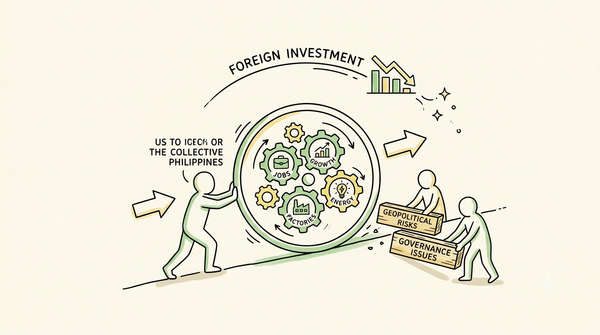
Beyond the Billions: What Growth Looks Like at Home in Aurora
P18 billion in investment pledges are coming to Aurora. But beyond the staggering numbers, what changes for the ordinary family at home?
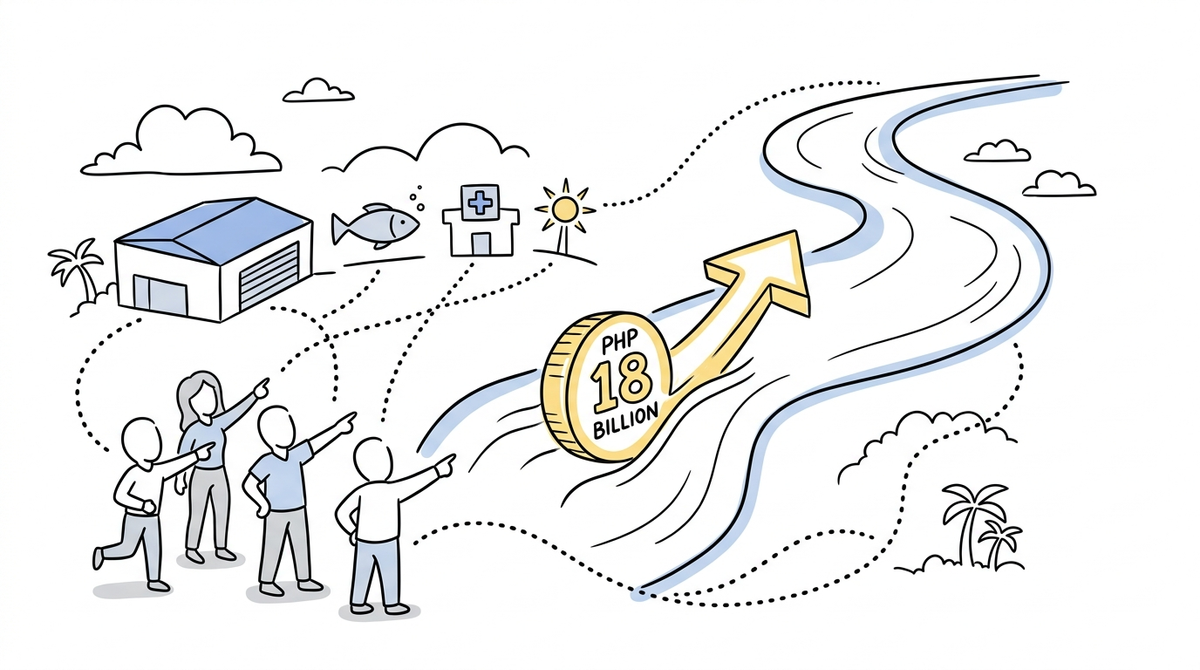
While massive investment pledges for the Aurora Pacific Economic Zone promise economic growth and new tech, their true value depends on how effectively they translate into secure local jobs and protection for the province's community life.
Walk into any small coastal eatery or coastal community in Aurora, and the conversation rarely starts with billions of pesos. Instead, parents talk about whether their children will have to move to Manila or go abroad just to find a stable job. Tricycle drivers calculate their daily take-home pay against the rising cost of rice, and fishers look out at the sea, wondering if tomorrow’s catch will pay for the next school uniform.
For decades, Aurora has been celebrated for its raw, breathtaking beauty—its rugged mountains, sprawling coconut groves, and Pacific waves that draw surfers from around the globe. Yet, beneath this idyllic postcard image lies a persistent, quiet struggle shared by many rural provinces: the lack of diverse, well-paying local industries that can keep families together.
So, when headlines suddenly announce that the Aurora Pacific Economic Zone and Freeport Authority (APECO) has secured a staggering 18 billion pesos in investment pledges, it feels like a massive wave is about to hit the coast. The numbers are loud, impressive, and public. But for an ordinary family in Casiguran or Baler, a critical question remains: what does this money actually look like when it finally reaches our doorsteps?
The Blueprint on Paper
To understand the scale of what is being promised, it helps to look at what these investments are supposed to build. According to official reports, international firms—including a Singapore-based development company and an American logistics giant—are planning to set up operations in the province.
The proposed projects span a fascinating, diverse mix of modern industries. There are plans for renewable energy farms, tourism hubs, and agri-processing centers. More surprising to many is the inclusion of advanced technology facilities, such as a drone testing zone and potential defense-related manufacturing. For a province traditionally dependent on farming and fishing, this blueprint reads like a sudden leap into the future.
On paper, this is exactly what provincial development is supposed to look like. It brings capital, creates buzz, and puts a quiet region on the global corporate map. But an economic pledge is not yet a factory, and a corporate signing ceremony is not yet a payday. For these investments to mean anything to the community, they have to transform from abstract financial figures into practical, everyday benefits.
Translating Pledges to the Kitchen Table
When we look beyond the boardroom terminology, the real-world value of any economic zone boils down to local security. One of the most promising aspects of the new APECO pledges is the focus on building cold storage facilities and fish processing plants.
For the average rural worker, this is where macroeconomics becomes personal. Right now, small-scale farmers and fishers in remote provinces face a brutal ticking clock. Without proper refrigeration, fresh catch and harvested crops spoil rapidly. Local producers are often forced to sell their goods to middle-tier traders at fractions of their actual value just to avoid a total loss.
If these processing and storage facilities are built responsibly, they could serve as a vital economic shield. A local cold storage facility means a fisherman can store his catch during a surplus, stabilizing market prices and protecting his hard-earned income. It creates local processing jobs—packing, sorting, logistics—that don't require an advanced degree in tech, providing immediate lifelines to households that need them most.
However, the introduction of high-tech sectors like drone testing and advanced manufacturing introduces a different kind of challenge: the skills gap. It is one thing to build a state-of-the-art facility; it is another to ensure that the people hired to work inside it are the ones who grew up down the road. If the local workforce isn't prepared or trained for these technical roles, companies will simply import talent from Manila or overseas. When that happens, the local community bears the environmental and spatial burden of an industrial zone, while the economic rewards bypass them entirely. Sustainable development demands that skills training initiatives run parallel to construction, ensuring the youth of Aurora are equipped to step into these new roles.
Weighing the Risks and the Realities
Every major industrial shift comes with a cost, and it is a public interest duty to look closely at the scales. Aurora’s greatest assets have always been its pristine environment and its tight-knit communities. The entry of defense-related manufacturing, drone testing, and large-scale industrial footprints alters the physical and social landscape of a province.
Large economic zones inevitably increase the demand for local resources. Power grids get strained, roads face heavy-vehicle wear and tear, and water consumption skyrockets. There is also the delicate balance of land use. When agricultural or coastal lands are reallocated for commercial and industrial zones, local governments must ensure that the families who previously relied on those lands are not left stranded without a livelihood.
Furthermore, a "pledge" is an expression of serious intent, but it is not a binding guarantee. In the history of global trade, many economic zones have seen massive financial commitments dry up when global markets shift or investor priorities change. The true measure of governance here lies in managing these expectations—ensuring that local infrastructure is protected, environmental guardrails are strictly enforced, and community welfare is never traded away for quick economic metrics.
The Anchor of Local Stability
This complex intersection of rapid industrial hope and day-to-day community vulnerability highlights a deeper truth: big economic shifts make local, grassroots stability more important than ever. Massive corporate investments can take years to materialize, and their benefits can be unevenly distributed. While a province waits for the factories of tomorrow to be built, families still need to survive today.
This delicate transition reflects exactly why community-based efforts around basic health, digital literacy, and immediate livelihood support matter so much. When an area undergoes rapid economic transformation, the communities with strong local safety nets are the ones who adapt best. A family that has access to reliable community health services and basic livelihood training is in a much better position to navigate changing times. They can afford to send a child to a technical training seminar or wait for a sustainable job opening because their baseline survival isn't constantly under threat.
The structural changes proposed at APECO shouldn't replace the quiet, steady work of building up community resilience from the ground up. Instead, they emphasize why that local groundwork is indispensable. True progress isn't just about importing global industries; it is about strengthening the local population so they can meet those industries on equal footing.
A Meaningful Horizon
Change is definitely coming to the coast of Aurora. An 18-billion-peso pledge is a powerful signal that the province is no longer just a quiet weekend getaway, but a serious player in the country’s economic conversation.
But as the buildings rise and the drones take flight, the real audit of this success will not be found in regional economic reports or corporate balance sheets. The true test will be measured in the homes of Aurora's residents.
Will a father be able to find work five minutes from his house instead of five hours away? Will a daughter be able to use her new technical skills to build a career in her hometown? If the arrival of these billions means that ordinary families can look toward the future with a little less anxiety and a lot more security, then this growth will be real. Until then, the community watches the horizon—hopeful for the opportunities, but fiercely protective of the home they love.
Lahat tayo masaya kapag may balitang bilyun-bilyong pisong pamumuhunan ang papasok sa ating mga probinsya. Pero kapag nagdatingan na ang mga dayuhang kumpanya at makabagong pasilidad, sino nga ba ang tunay na makikinabang? May espasyo nga ba ang karaniwang lokal na manggagawa, magsasaka, at mangingisda sa ganitong uri ng modernong pag-unlad?

Power Our Mission, Shape the Future
We empower single parents, PWDs, youths, seniors, and stay-at-home parents through digital livelihood.
Help us build resilient communities.
BUKLURAN remains open to partnerships, sponsorships, and collaborative initiatives that create meaningful community impact.
Whether through funding, in-kind support, volunteerism, or shared services, your organization can help strengthen programs that serve underserved communities.
Do you want to take part in our free livelihood programs, scholarship assistance, and community resource pooling initiatives? Membership is completely free.
Join BUKLURAN!
Register, volunteer, and become a member today.