Beyond the Blackouts: What Grids and Alerts Mean for the Dinner Table
When the fans stop turning and the lights go out, it’s more than an inconvenience—it’s a sign of a deeper structural problem affecting your wallet.
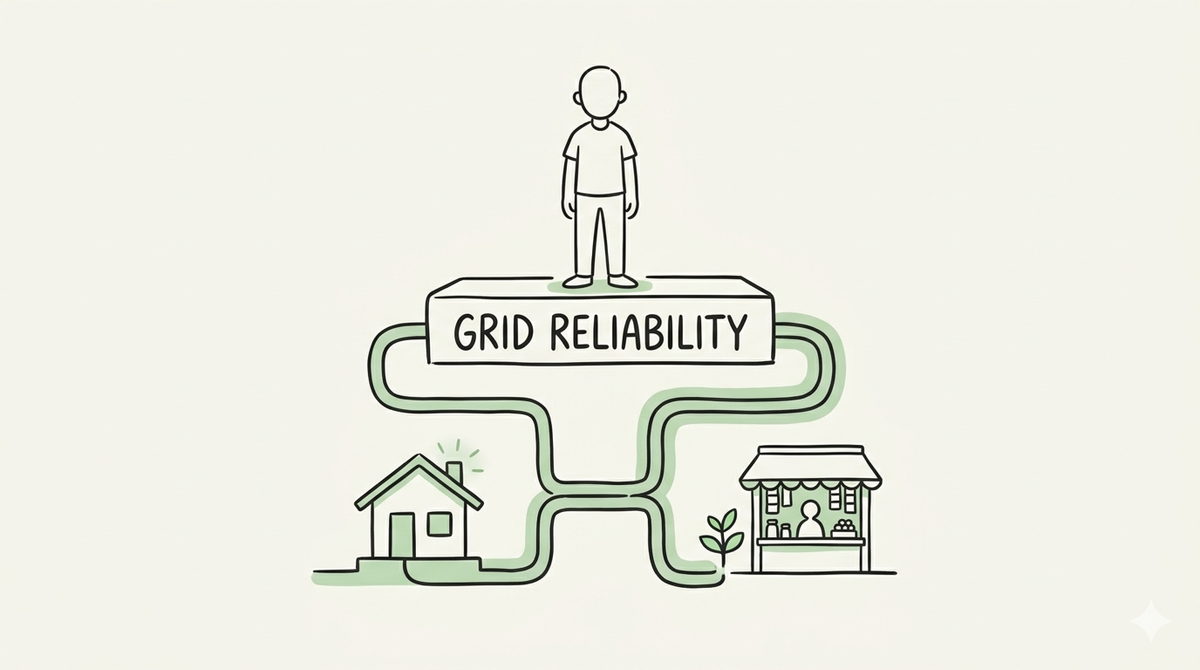
The recurring power grid alerts in Luzon and Visayas are symptoms of a deeper deficit in reliable, year-round electricity capacity that directly impacts the cost of living and stability of Filipino households.
Every household in the Philippines knows the silent anxiety of a sudden blackout. It begins with the distinct click of an air conditioner cutting out, followed by the slow, suffocating crawl of tropical heat through the living room. For a parent, it means checking if the remaining milk in the refrigerator will spoil before morning. For a small sari-sari store owner, it means watching ice candy melt away, representing lost capital that took days to earn. For a student cramming for an exam under the weak glow of a smartphone flashlight, it means a night of interrupted focus.
In recent months, these interruptions have moved from occasional annoyances to a recurring feature of daily life. The terms "yellow alert" and "red alert" have broken out of technical power plant offices and into the daily vocabulary of ordinary citizens. Yet, when the lights finally flicker back on, a larger question remains unanswered for millions of Filipinos: why does a country with soaring bills and modern aspirations still struggle to keep its fans spinning during the hottest months of the year?
The Story Behind the Alerts
When energy authorities issue warnings about the power grid, the language used is often clinical, filled with terms like "generation capacity," "forced outages," and "transmission tripping." To a busy citizen, these words can obscure a simple reality: the country’s electrical system is running too close to its absolute limit.
Recent official inspections and regulatory hearings have placed a spotlight on the vulnerability of the Luzon and Visayas grids. When a major transmission line trips or an aging power plant undergoes emergency maintenance during peak demand periods, the entire system trembles. Spot market electricity prices—the price distribution utilities pay for immediate, back-up power—surged to a three-year high in May.
While public officials frequently rush to inspect facilities in the wake of public outcry, historical patterns reveal that these issues are neither sudden nor unexpected. Data spanning nearly a decade, from 2016 to 2025, shows a stark reality: 96.7 percent—or 235 out of 243 red alerts—were caused directly by generation supply issues rather than simple distribution glitches. In short, the country is consistently failing to generate enough reliable, round-the-clock electricity to match the natural growth of its communities and industries.
What This Really Means for Everyday Life
The structural deficit in our power sector creates a ripple effect that extends far beyond the duration of a blackout. The immediate consequence of a tight energy supply is financial. When power plants fail or capacity falls short, utilities are forced to buy expensive emergency power from the spot market. These spikes are not absorbed by the companies; they are quietly passed down to consumers through the "generation charge" line item on the monthly electricity bill. A family trying desperately to manage a tight monthly budget suddenly finds themselves paying more for the exact same amount of electricity—or worse, paying more for a month plagued by service interruptions.
Furthermore, relying on a fragile grid shifts the burden of risk onto those least able to bear it. Large commercial establishments often possess heavy-duty back-up generators to sustain their operations uninterrupted. An ordinary household or a micro-enterprise does not have this luxury.
When power fails, a home-based digital worker loses hours of billable employment. A local bakery must delay its production schedule, affecting its morning sales. The long transmission lines that cross isolated terrain remain vulnerable to environmental wear and external disruptions, meaning that rural and suburban communities often experience the longest wait times for restoration.
The Human Cost of Unreliability
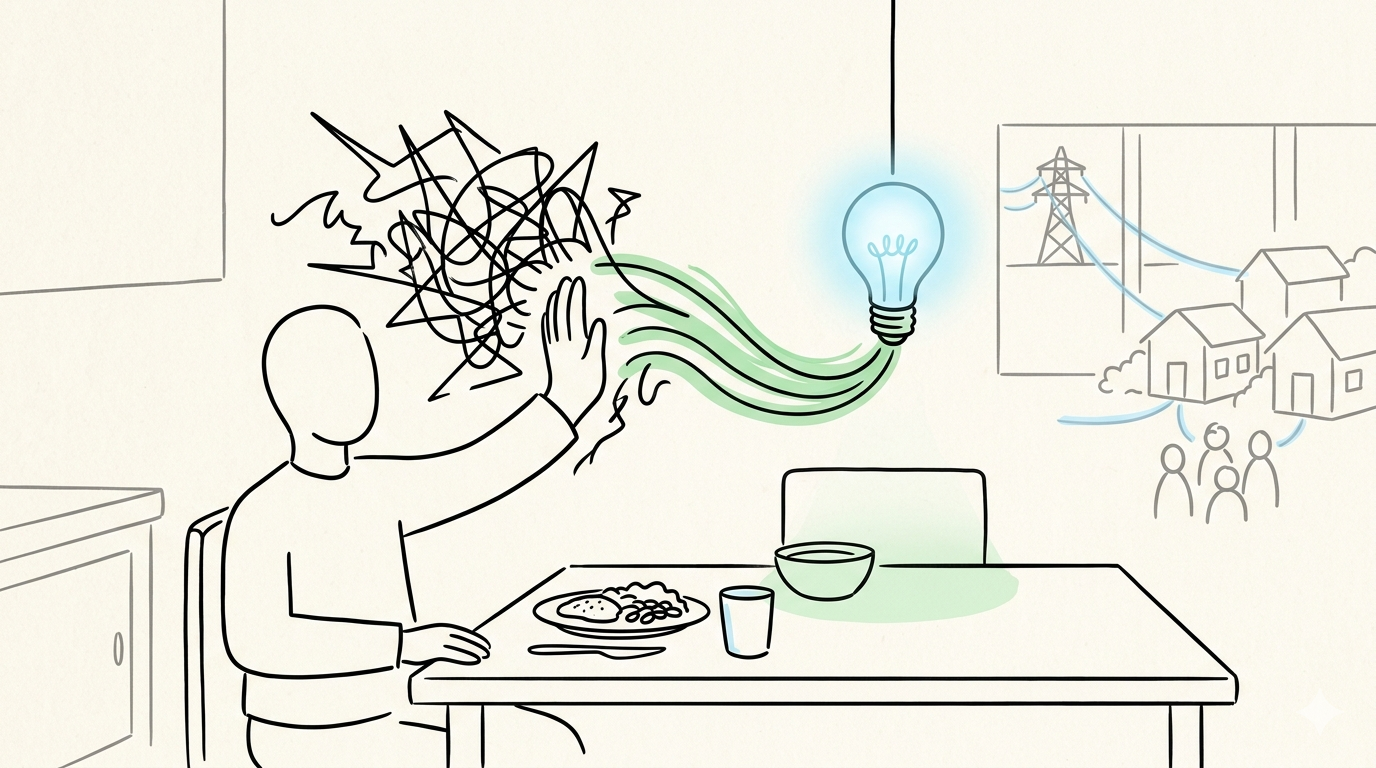
To view energy purely as a matter of engineering or economics is to overlook the human tissue connects communities together. Stability in infrastructure creates stability in human lives. When a community cannot guarantee consistent electricity, the rhythm of family life is broken.
Consider the elderly family members who depend on steady cooling to prevent heat-related health complications, or neighborhoods where public safety is compromised when streetlights go dark unexpectedly during a grid crisis. The invisible cost of inadequate energy capacity is measured in the collective anxiety of a population that cannot fully trust the switches on their walls.
When supply conditions become tighter, it is the ordinary worker who adjusts their lifestyle, turning off appliances, enduring sleepless nights, and sacrificing other essential household expenses to cover the rising cost of utilities. The conversation around energy infrastructure must therefore center not on corporate returns or political optics, but on the basic security required for a Filipino family to thrive.
A Community Perspective
This ongoing struggle for reliable resources highlights a fundamental truth: top-down systems often leave gaps that local communities must navigate on their own. This reality reflects why community-based efforts around disaster preparedness and localized resource management matter so deeply. When large-scale systems face instability, the immediate safety net of any neighborhood relies on how well-prepared local associations, barangays, and families are to handle resource constraints.
Building resilience at the grassroots level—whether through shared community guidelines, local emergency protocols, or small-scale sustainability practices—ensures that neighborhoods do not remain completely helpless while waiting for long-term structural changes to materialize in the national grid.
Looking Toward the Horizon
Resolving the deficit in our power supply requires moving past temporary fixes and performative inspections. It demands a commitment to long-term energy planning that prioritizes steady, dependable baseload capacity alongside the rigorous maintenance of transmission lines.
Until these foundational changes are realized, ordinary citizens will continue to bear the dual burden of high costs and erratic service. The ultimate measure of a nation’s development is not found in the grand design of its industrial plans, but in the quiet reliability of its public utilities. A stable life requires a stable grid, and ensuring that every Filipino household can keep its lights on without breaking the bank remains one of the most critical public interest challenges of our time.
Lahat tayo masaya kapag tuluy-tuloy ang agos ng kuryente sa ating mga tahanan, pero napansin mo ba kung bakit tila mas madalas ang mga "yellow" at "red alert" ngayon kahit patuloy namang tumataas ang ating buwanang bayarin?
Hindi lang ito usapin ng simpleng blackout—may mas malalim na dahilan kung bakit hirap ang ating grid na sabayan ang pangangailangan ng bawat pamilyang Pilipino at kung paano ito direktang nakakaapekto sa iyong bulsa.

Power Our Mission, Shape the Future
We empower single parents, PWDs, youths, seniors, and stay-at-home parents through digital livelihood.
Help us build resilient communities.
BUKLURAN remains open to partnerships, sponsorships, and collaborative initiatives that create meaningful community impact.
Whether through funding, in-kind support, volunteerism, or shared services, your organization can help strengthen programs that serve underserved communities.
Do you want to take part in our free livelihood programs, scholarship assistance, and community resource pooling initiatives? Membership is completely free.
Join BUKLURAN!
Register, volunteer, and become a member today.