Beyond the Broken Concrete: Why the Crisis at MSU-GenSan Matters to Every Filipino Family
A 7.8-magnitude earthquake didn't just break the walls of MSU-GenSan; it put the dreams of thousands of young Mindanaoans on sudden hold.
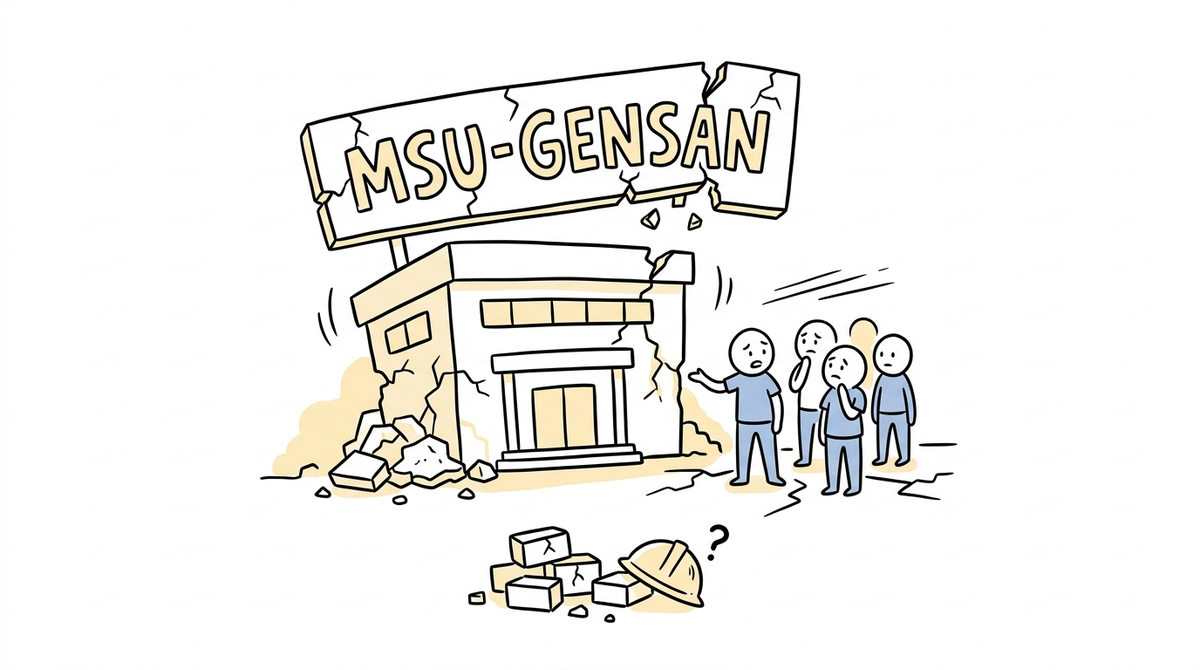
The catastrophic ₱870-million structural damage at MSU-General Santos following the June 2026 earthquake highlights how natural disasters dismantle the long-term educational lifelines of vulnerable student communities in Mindanao.
On ordinary mornings, the campus of Mindanao State University in General Santos City (MSU-GenSan) hums with the distinctive, hopeful energy of young people building their futures. You hear the rhythmic murmur of recitations, the shuffle of footsteps rushing toward lecture halls, and the lively debates of students under the shade of trees. Many of these young men and women come from underserved farming villages, indigenous communities, and conflict-weary areas across southwestern Mindanao. For their families back home, a university ID card isn't just a piece of plastic—it is a hard-won passport out of generational poverty.
But at 7:37 a.m. on Monday, June 8, 2026, that hopeful hum was replaced by the terrifying roar of a magnitude 7.8 earthquake. In less than sixty seconds, the earth violently reclaimed its ground, tearing through roads, shattering glass facades, and reducing years of structural progress to rubble. When the dust finally settled, a sobering reality emerged: MSU-GenSan had sustained an estimated ₱870 million to ₱900 million in structural damage.
For the casual observer reading the headlines in Manila, this is a story about a broken budget, delayed repairs, and ruined concrete. But for those who understand the fragile ecosystem of public higher education in the regions, this is an unfolding human crisis. When a premier state university in Mindanao crumbles, it isn't just the buildings that fall—it is the safety net of thousands of working-class students that begins to give way.
The Scale of the Ruin
To truly grasp what happened, one must look past the dry financial estimates and see what those millions of pesos actually represent. The powerful tremor did not spare the core functions of the university. According to preliminary engineering evaluations from the administration, at least 16 vital structures across the university’s sites have been severely compromised or rendered entirely unusable.
Among the casualties is the newly constructed College of Medicine building. Once hailed as a beacon of hope that would train future doctors to serve the region's severely understaffed rural hospitals, its concrete structure was left fractured and its architectural elements torn apart. The student library, the senior high school edifices, the campus gym, the infirmary, and the very dormitories that provided a safe haven for rural scholars have been closed off due to severe structural risks. Graduation ceremonies were abruptly postponed, administrative personnel were forced into cramped, temporary workspaces, and the entire academic calendar was thrown into deep uncertainty.
Chancellor Shidik Zed Abantas put the situation bluntly to the student publication, Bagwis, noting that the school essentially needs close to a billion pesos simply to return to normal operations. In the local vernacular of the students reeling from the shock, the sentiment was even more heartbreaking: "Back to zero tayo." (We are back to zero).
What This Really Means: The Hidden Toll on Student Lives
When a natural disaster strikes an educational institution, the immediate national conversation naturally focuses on the cost of rebuilding. Commentators debate emergency fund allocations, the sluggishness of national agency responses, and the immediate need for engineering retrofits. While these discussions are necessary, they frequently gloss over the immediate, practical disruptions that dictate everyday student life.
Consider the reality of a scholar who travelled hours from a remote province to study in General Santos City. With the dormitories declared unsafe, where do they sleep? Many cannot afford the sudden, inflated cost of private off-campus rentals in the city. When a campus library is closed, how does a student without a personal laptop or a reliable home internet connection finish their research? When laboratory spaces are fractured, how do engineering and science majors complete the hands-on competencies required for graduation?
These are not merely inconveniences; they are structural barriers that force students to drop out, stall their graduation, or lose their financial scholarships. For a wealthy student, a disrupted semester is an annoying pause. For a working-class student relying on a razor-thin allowance and state subsidies, a disrupted semester can mean the permanent end of their college journey. The longer it takes to rebuild a campus, the more scholars slip through the cracks of a fractured system.
The Deep Regional Implications
The crisis at MSU-GenSan travels far beyond the boundaries of its campus gates. This university holds a unique socio-cultural position in the landscape of southern Mindanao. Established to provide accessible, quality higher education to marginalized sectors—including Moro and indigenous communities—the institution acts as an engine for social mobility and regional peace.
When the university’s capacity is crippled, the entire region suffers a developmental setback.
- Healthcare Latency: The delay in retrofitting the College of Medicine means a direct delay in producing homegrown physicians who understand local health contexts.
- Economic Strain: Local micro-businesses around the campus—eateries, boarding houses, tricycle drivers, and photocopy shops—lose their primary source of livelihood when campus life is paralyzed.
- Widening Educational Inequality: Students who are forced out of school by structural disruptions face limited options, often pushing them toward low-wage, insecure labor or leaving them vulnerable to regional instabilities.
The structural failure of these school buildings exposes a deeper national vulnerability. It reveals that our educational infrastructure in high-risk seismic zones remains deeply fragile. It forces us to ask a difficult question: Why did relatively new buildings, constructed with public funds, suffer such immediate and devastating failure?
A Reflection on Community Resilience
This widespread destruction across Region 12 underscores exactly why community-driven preparedness and community-based institutional support matter so deeply. In the immediate aftermath of the earthquake, long before heavy machinery could arrive from national agencies, it was the local networks of students, faculty, and grassroots organizations that organized initial safety checks, accounted for missing personnel, and set up temporary shelter spaces.
This crisis reflects why sustained, community-based efforts around disaster risk reduction and institutional resilience are not optional luxuries—they are matters of basic survival. True resilience cannot be built post-disaster through emergency declarations alone; it must be woven into the very fabric of how we build, manage, and protect our communal institutions. The ongoing struggle of MSU-GenSan highlights the reality that communities must be actively equipped, informed, and empowered to assess their local risks and demand safer public infrastructures long before the ground ever starts to shake.
Moving Forward From the Rubble
As the Commission on Higher Education (CHED) and various legislative bodies begin the bureaucratic dance of audit reports, fund transfers, and debt settlements, the students of MSU-GenSan continue to wait in the limbo of an abnormal school year.
Rebuilding a campus requires hundreds of millions of pesos, but restoring the lost momentum of a generation of scholars requires something far more valuable: sustained national attention. We must refuse to let the story of MSU-GenSan fade from public consciousness once the dramatic footage of cracked walls stops trending on social media feeds.
The true test of our national commitment to education is not found in the grand declarations we make during peacetime. It is found in the speed, empathy, and integrity with which we rebuild our public spaces when the ground beneath our communities falls apart. Will we simply patch over the concrete cracks, or will we invest in an educational infrastructure that is genuinely strong enough to safeguard the dreams of Mindanao's youth?
Lahat tayo masaya kapag nakakakita ng mga bagong modernong gusali sa ating mga unibersidad, pero ano ang mangyayari kapag sa loob lang ng isang minuto ay gumuho ang lahat ng ito?
Matapos ang magnitude 7.8 na lindol, nahaharap ngayon ang MSU-GenSan sa halos ₱900-M na pinsala. Ngunit higit sa sirang semento, paano na ang mga pangarap ng libo-libong iskolar na umaasa rito? Bakit hindi lang ito isyu ng paaralan, kundi ng bawat pamilyang Pilipino?

Power Our Mission, Shape the Future
We empower single parents, PWDs, youths, seniors, and stay-at-home parents through digital livelihood.
Help us build resilient communities.
BUKLURAN remains open to partnerships, sponsorships, and collaborative initiatives that create meaningful community impact.
Whether through funding, in-kind support, volunteerism, or shared services, your organization can help strengthen programs that serve underserved communities.
Do you want to take part in our free livelihood programs, scholarship assistance, and community resource pooling initiatives? Membership is completely free.
Join BUKLURAN!
Register, volunteer, and become a member today.