Beyond the Grand Plans: When Big Infrastructure Deals Meet Daily Realities
A new deal promises to bring global investments to local infrastructure. But will it actually make our daily lives any easier?
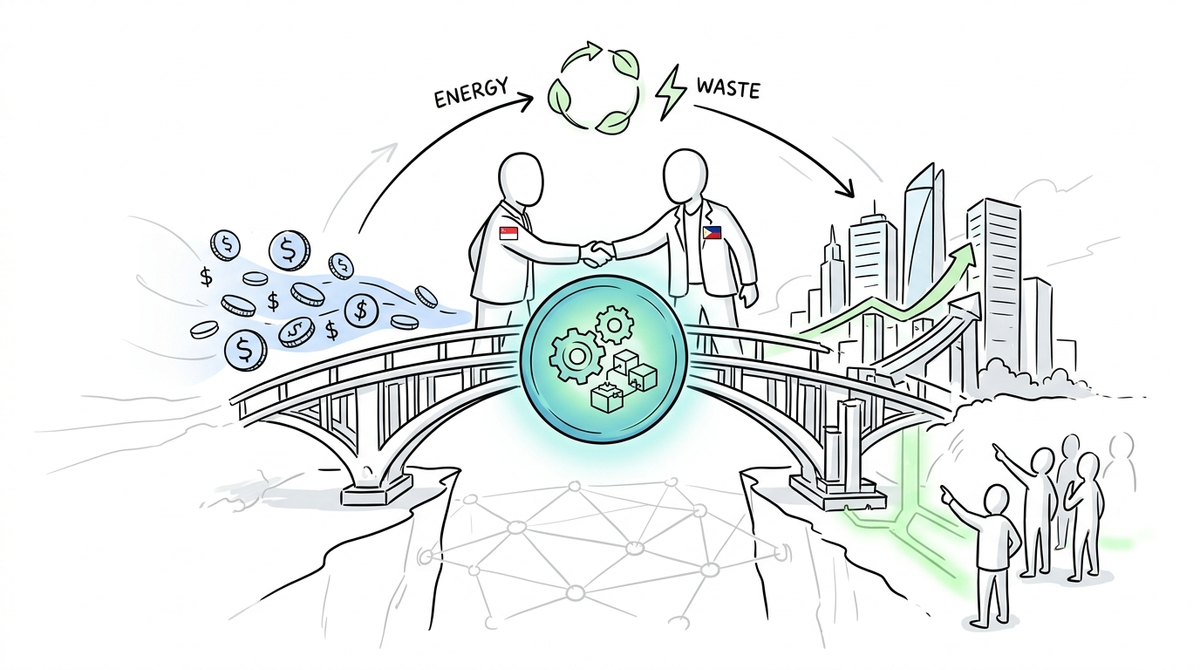
While the renewed public-private partnership between the Philippines and Singapore promises world-class expertise, its ultimate success depends on whether it translates into cleaner neighborhoods and stable utility bills for everyday Filipinos.
Wake up early enough in almost any neighborhood across the Philippines, and you will hear a familiar sequence of sounds. It might be the heavy rumble of a municipal collection truck struggling down a narrow street, or the quiet rustle of a neighbor sorting plastic bottles into a makeshift sack. For millions of Filipino families, managing household waste or dealing with the sudden flicker of an unstable power grid are not abstract policy challenges. They are the concrete, daily background noise of life.
When we read news headlines about multi-million dollar international agreements, they often feel entirely disconnected from these morning routines. A recent announcement that the Philippines and Singapore have renewed their partnership to boost Public-Private Partnerships (PPPs) sounds like something meant strictly for boardrooms and financial analysts. The agreement, signed between the PPP Center of the Philippines and Infrastructure Asia, aims to pull in foreign investment, local financiers, and global technical experts to build large-scale projects.
Yet, beneath the dense legal terminology of "bankability" and "project preparation," the core focus of this deal targets the very things we encounter at our doorsteps: waste management systems and green energy structures. The real question is whether these sweeping high-level agreements can successfully transform into smoother public services that make a noticeable difference for ordinary families.
The Blueprint and the Reality
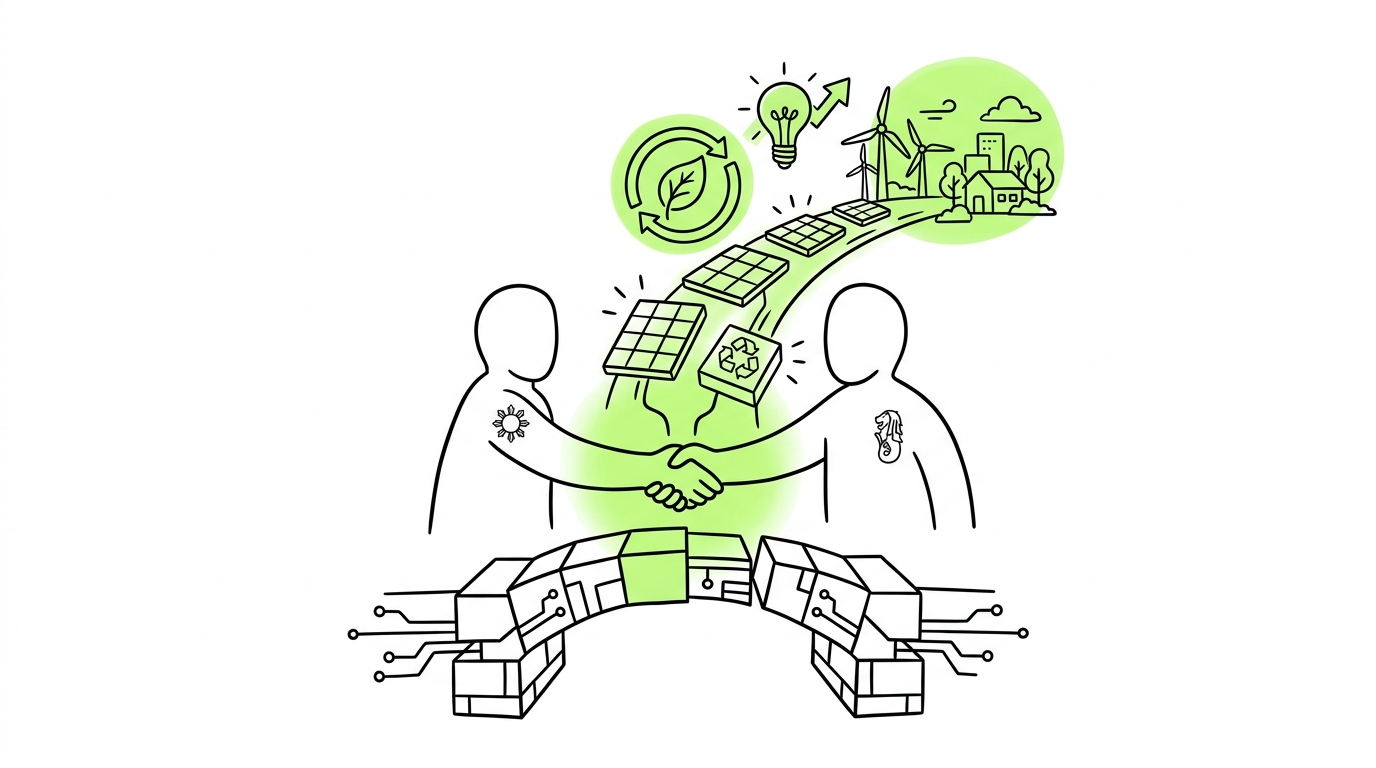
To understand why this matters, it helps to look at what a Public-Private Partnership actually does. Put simply, the government recognizes that building modern infrastructure—like advanced recycling plants, safe landfills, or renewable energy grids—requires massive funding and technical skills that public offices cannot always provide alone. By partnering with private corporations, especially through international hubs like Singapore, the country tries to secure the capital and technical design needed to construct these facilities.
The latest agreement specifically highlights "circular economy" initiatives. In plain terms, this means moving away from the old, broken habit of simply dumping trash into ever-growing landfills and hoping it disappears. Instead, the focus shifts toward building systems that treat waste as a resource—either by recycling it systematically or converting it directly into electricity through waste-to-energy facilities.
On paper, the strategy is incredibly logical. Singapore has spent decades mastering dense urban waste management and highly efficient energy systems, making their infrastructure agencies valuable partners for a growing nation like the Philippines. But an elegant blueprint designed in a modern boardroom can face deep friction when it meets the complex realities of a local Philippine municipality.
Overlooked Barriers in the Neighborhood
For an international infrastructure project to succeed, it has to fit into the existing ecosystems of our towns and cities. The most modern waste-to-energy plant in the world is useless if the local garbage trucks cannot navigate waterlogged roads during the rainy season, or if household waste isn't separated properly at the kitchen level.
There are several overlooked implications that dictate whether these mega-projects actually help communities:
- The Cost of Service: When private corporations build and operate public utilities, they expect a return on their investment. If a neighborhood gets a highly advanced, sustainable solid waste system, will the monthly garbage collection fees rise out of reach for low-income households?
- Local Displacement: Large facilities require land. Whether it is a solar farm or a modern processing plant, development must be balanced carefully against the displacement of local farming communities or informal settlements that live near the proposed sites.
- The Maintenance Gap: The Philippines is filled with old infrastructure projects that were launched with massive fanfare, only to fall into disrepair a few years later because local budgets couldn't cover specialized maintenance. Any deal with international experts must include long-term knowledge transfers so local workers can run these systems independently.
Bridging the Gap: The Human Scale
When an infrastructure deal succeeds at the human scale, it changes the trajectory of a community. For a parent, it means knowing that the local drainage system won't overflow with clogged plastic bags during the next typhoon, keeping the streets safe and dry for their children walking home from school. For a small business owner running a neighborhood sari-sari store, it means clean, renewable energy projects that stabilize the local power grid, ensuring that refrigerators stay running and inventory doesn’t spoil during sudden blackouts.
Clean energy and modern waste systems are not luxuries; they are basic foundations for health and safety. Air pollution from poorly managed dumpsites and unstable power supplies directly hold back families from climbing out of poverty. When mega-projects focus strictly on the financial numbers rather than the daily human experiences of the residents living around them, they risk becoming expensive monuments that look impressive in annual reports but fail to solve the actual crises on the ground.
This critical intersection reflects why community-based efforts around public safety and environmental care matter so deeply. No matter how many billions of pesos are mobilized by international financiers, the ultimate success of any public utility relies heavily on local participation. Top-down investment only works beautifully when it connects seamlessly with bottom-up community awareness—where residents understand the system, trust the operators, and see the tangible benefits reflected in their daily environments.
Looking Forward
International partnerships are vital for a country navigating rapid urbanization and climate vulnerability. We need the capital, the advanced machinery, and the structural expertise that global hubs like Singapore can bring to the table.
But as these new public-private projects begin their long journeys from legal contracts to actual brick-and-mortar structures in our provinces and cities, we must look past the grand announcements. The true metric of success for the renewed partnership will not be found in the number of contracts signed or the total investment dollars mobilized. It will be found in whether our streets become cleaner, our electricity bills become fairer, and our communities become safer places to live.
A Question for Reflection: As our cities grow and require more advanced systems, how can we ensure that ordinary citizens have a voice in the massive infrastructure decisions shaping their own neighborhoods?
Lahat tayo masaya kapag may mga bagong foreign investments at international partnerships ang bansa, lalo na para sa mga modernong proyekto. Pero naisip na ba natin kung paano ito makakaapekto sa mismong tinitirhan natin? Ang bagong infrastructure deal ng Pilipinas at Singapore ay nakatutok sa basura at kuryente—mga bagay na nararanasan natin araw-araw. Magiging mas malinis nga ba ang ating komunidad, o may kaakibat itong mas mataas na bayarin?

Power Our Mission, Shape the Future
We empower single parents, PWDs, youths, seniors, and stay-at-home parents through digital livelihood.
Help us build resilient communities.
BUKLURAN remains open to partnerships, sponsorships, and collaborative initiatives that create meaningful community impact.
Whether through funding, in-kind support, volunteerism, or shared services, your organization can help strengthen programs that serve underserved communities.
Do you want to take part in our free livelihood programs, scholarship assistance, and community resource pooling initiatives? Membership is completely free.
Join BUKLURAN!
Register, volunteer, and become a member today.