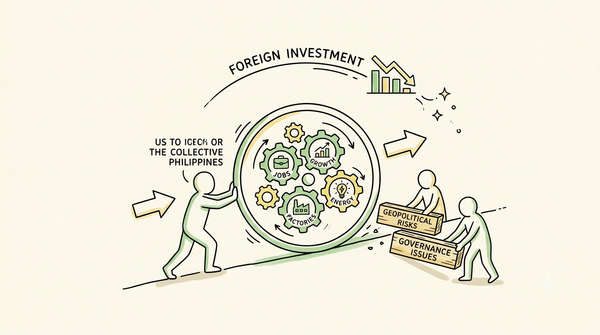
Beyond the Tech Boom: Will the AI Infrastructure Wave Lift Everyday Filipino Workers?
The global AI boom is knocking on the Philippines' door. But will it create better jobs for ordinary Filipinos, or leave them behind?
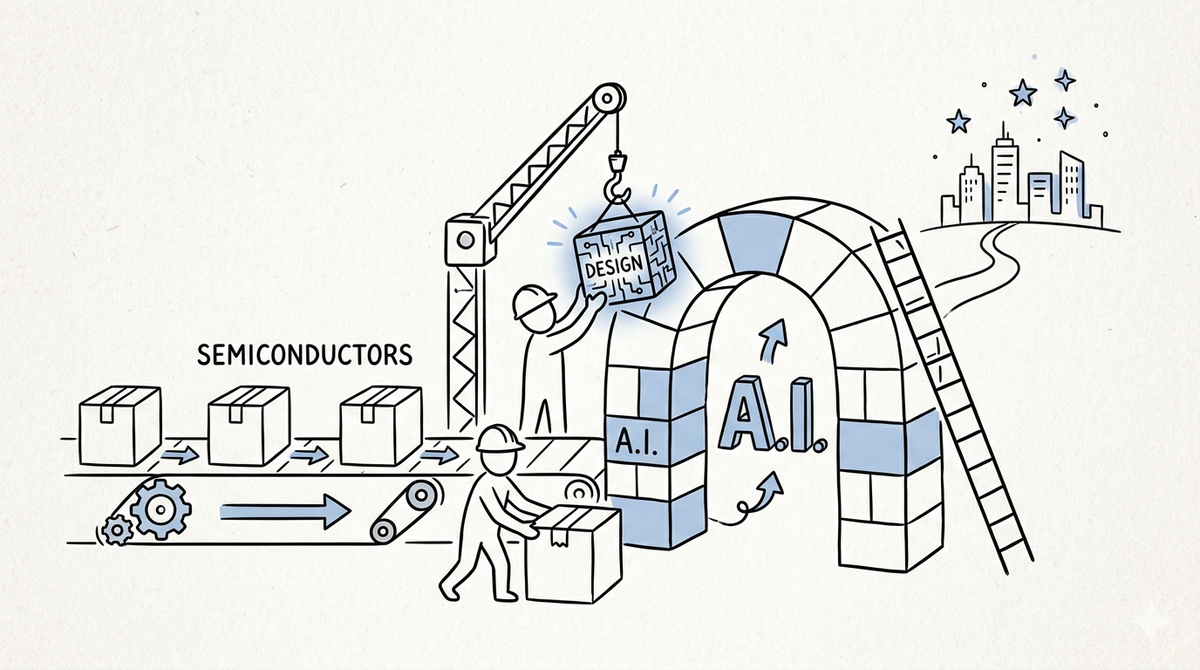
While the global AI infrastructure boom promises macroeconomic growth for the Philippines, its real value lies in whether the local workforce can transition from low-cost support roles to high-value tech careers.
Walk into any neighborhood internet cafe, watch a student typing away on a laptop at a fast-food chain, or talk to a call center agent wrapping up a night shift, and you will see a country deeply intertwined with the digital world. Filipinos are no strangers to technology; it powers our modern workforce, keeps families connected across oceans, and sustains millions of households through the Business Process Outsourcing (BPO) and electronics manufacturing industries.
Recently, headers across financial news websites have been buzzing with a new promise: the global Artificial Intelligence (AI) infrastructure boom. Economists and international financial institutions are pointing to the Philippines as a potential major player in this next technological revolution. There are talks of partnerships to build manufacturing hubs for AI components, and discussions about the country moving up the global value chain.
On paper, it sounds like a massive victory. But for the parent financing a child’s engineering degree, or the young professional trying to pivot into a stable career, these high-level announcements can feel incredibly distant. When we hear about billions of dollars in tech investments, the question that matters most at the kitchen table remains: What does this actually mean for our livelihoods?
Breaking Down the AI Infrastructure Wave
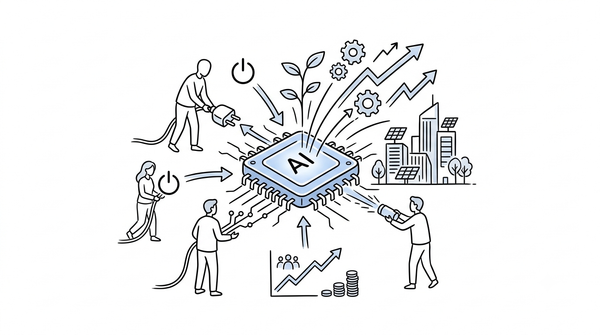
To understand what is happening, we have to look behind the curtain of what "AI" actually requires. Artificial Intelligence is not just software running on a phone; it relies on massive physical infrastructure. It requires hyper-fast semiconductors, sprawling data centers, complex engineering designs, and sophisticated financial analytics to run smoothly.
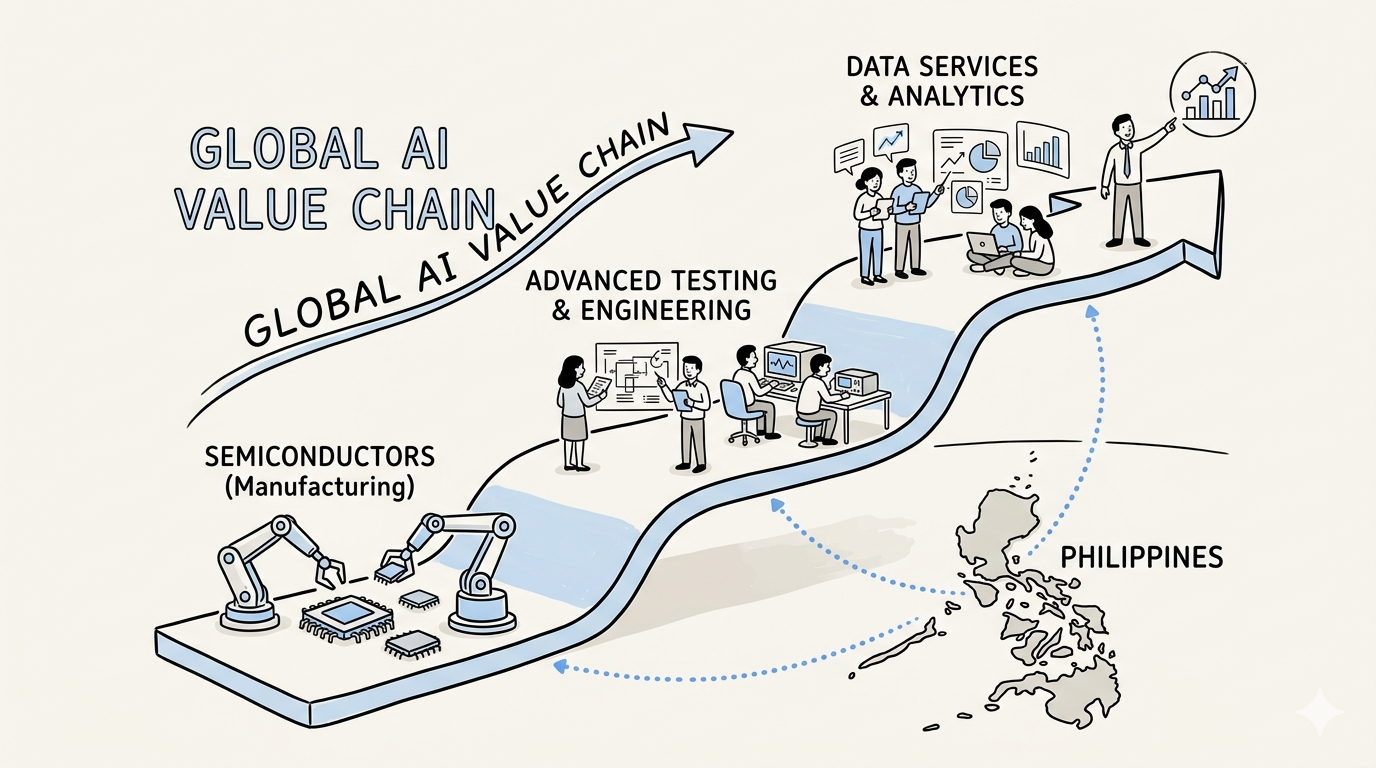
Currently, the Philippines already has a foot in the door. For decades, our export economy has relied heavily on semiconductor assembly and electronic components. When global tech giants need microchips tested and packaged, Philippine factories often handle the work. At the same time, our massive BPO sector has become the backbone of customer service and data management for companies worldwide.
The current global shift means that the demand for these components and services is skyrocketing. International analysts suggest that if the Philippines plays its cards right, the country could move beyond basic chip assembly and simple data entry. The goal is to transition into advanced testing, engineering and design services, and high-level data analytics. It is a shift from being the people who put the pieces together to being the people who design, analyze, and manage the systems.
Reading Between the Lines: The Reality of the Shift
While the macroeconomic outlook is optimistic—especially as the country seeks to bounce back from recent economic slowdowns caused by global oil supply constraints and pauses in infrastructure spending—the transition is not automatic. A rising tide does not lift all boats equally if some boats are not equipped to handle the deep water.
For the average Filipino worker, this technological shift presents a dual reality of barriers and opportunities.
- The Skills Gap: The primary challenge is that advanced AI infrastructure roles require a completely different skill set than traditional assembly or basic voice-based BPO work. Data services, finance analytics, and advanced engineering require specialized training. If the local workforce does not have access to affordable, high-quality upskilling, these new, high-paying jobs may either go unfilled or be outsourced to other nations moving at a faster pace.
- The Quality of Jobs: The promise of the AI boom should not just be about creating more jobs, but creating better ones. Basic data labeling—where workers spend hours tagging images to train AI algorithms for meager pay—is already happening in parts of the country. True economic progress happens when our workforce moves into stable, highly-compensated technical roles that offer long-term career growth.
- Infrastructure Readiness: It takes reliable electricity, stable internet connectivity, and robust public safety frameworks to attract and sustain high-tech industries. When local communities suffer from frequent power fluctuations or slow internet access, it limits the ability of local talent—especially those outside Metro Manila—to participate in the digital economy.
The View from the Household
What does this mean for a family living in a provincial hub or a bustling urban community?
Consider a family where the eldest child is studying Information Technology or Electronics Engineering. For years, the standard trajectory for tech graduates was either to look for employment abroad or enter a saturated local job market where entry-level pay struggles to keep up with the cost of living. A localized AI infrastructure boom could mean that this graduate no longer has to leave their hometown or country to find meaningful, competitive employment. They could find a career in a local data center or an advanced design firm right here at home.
Conversely, consider the millions of workers currently employed in routine administrative or repetitive data tasks. If AI systems become capable of handling these tasks autonomously, these workers face a genuine risk of displacement. For them, the AI boom isn’t a distant economic milestone; it is a ticking clock emphasizing the urgent need for accessible digital literacy and training.
The human element of economic growth is often lost in statistical reports. A 2.8% or 6% growth rate matters very little to a household if their monthly income remains unchanged while the price of basic goods rises. The true metric of success for any technological boom is how effectively it translates into household financial security and community resilience.
The Role of Community Groundwork
This critical turning point highlights exactly why grassroots community readiness and digital empowerment are so vital. Large-scale economic opportunities cannot be fully realized without building the capacity of local communities from the ground up.
This issue reflects why community-based efforts around basic digital literacy, local livelihood support, and accessible educational frameworks matter. When community initiatives focus on preparing young people and workers for the changing demands of the modern workforce, they bridge the gap between high-level economic shifts and everyday realities. Ensuring that sectors of society are not left behind requires a continuous, deliberate focus on human development, making sure that even small communities have the tools, safety nets, and knowledge to adapt to an evolving digital landscape.
Looking Forward
The global AI infrastructure boom will continue to progress, with or without us. The factories will be built, the data centers will operate, and the algorithms will become smarter. The true task for the Philippines is to ensure that our participation in this global narrative is not merely as a source of low-cost labor, but as a hub of innovation, capability, and dignified employment.
As we watch these developments unfold, a crucial question remains for us to ponder: How can we, as a society, ensure that the wealth generated by tomorrow's technology genuinely serves the well-being of the Filipino families working hard today?
Lahat tayo masaya kapag may balita tungkol sa mga bagong investment at teknolohiya sa Pilipinas, tulad ng tinatawag na "AI boom." Sinasabing magdadala ito ng paglago sa ating ekonomiya. Pero ano nga ba ang ibig sabihin nito para sa isang ordinaryong manggagawa o sa isang pamilyang nagpapaaral ng anak? Malaki ba talaga ang tsansa nating magkaroon ng mas magandang trabaho, o maiiwan lang tayo sa mabilis na pagbabagong ito?

Power Our Mission, Shape the Future
We empower single parents, PWDs, youths, seniors, and stay-at-home parents through digital livelihood.
Help us build resilient communities.
BUKLURAN remains open to partnerships, sponsorships, and collaborative initiatives that create meaningful community impact.
Whether through funding, in-kind support, volunteerism, or shared services, your organization can help strengthen programs that serve underserved communities.
Do you want to take part in our free livelihood programs, scholarship assistance, and community resource pooling initiatives? Membership is completely free.
Join BUKLURAN!
Register, volunteer, and become a member today.