Demystifying the Numbers: Building Trust and Community Impact Through Sound Nonprofit Accounting
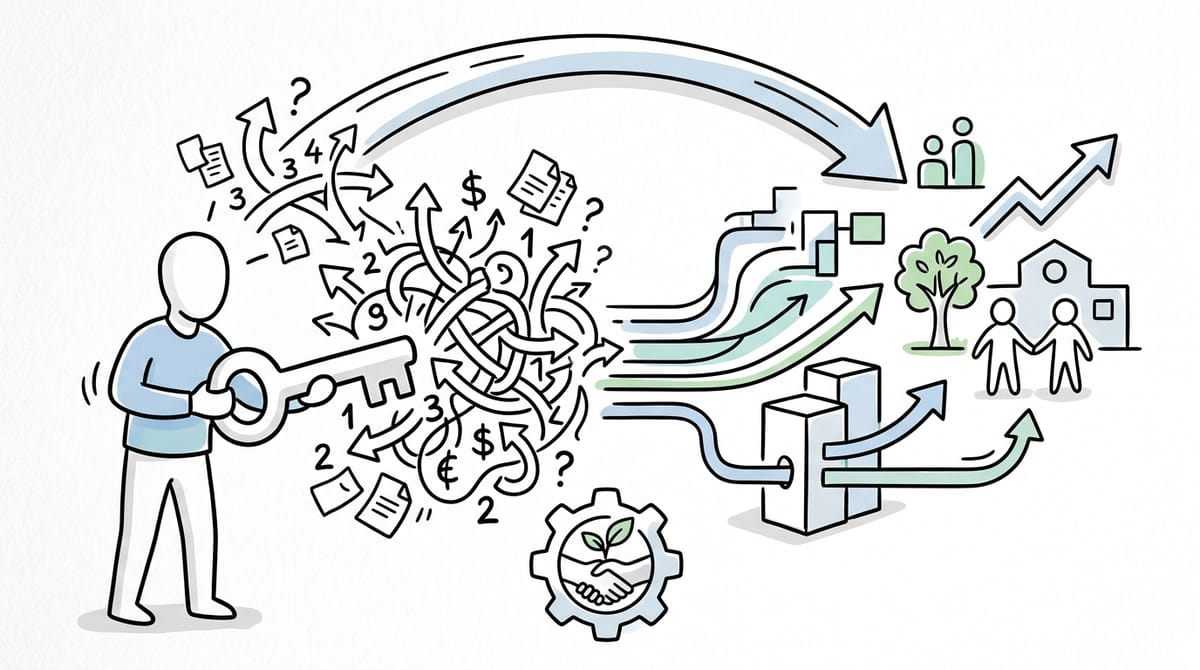
Managing a mission-driven organization requires more than just good intentions—it demands clear, accountable financial management tailored to the unique demands of fund accounting. Learning how to properly track restricted funds, read key financial statements, and establish sound reporting structures allows nonprofits to build trust with stakeholders and sustain their real-world community impact over the long term.
Introduction to Nonprofit Accounting: The Basics
Accounting can be hard enough if you haven’t studied it in school. Nonprofit accounting is actually very different and more challenging still. Join Nonprofit CPA and QuickBooks expert Gregg Bossen in this first-time webinar to learn the ABC’s of keeping books for a nonprofit organization.
- ✓ What accounting is and how it works
- ✓ How to read a financial statement
- ✓ What financial statements should be given to the board each month
- ✓ The three things that nonprofits are required to track
- ✓ What features to use in QuickBooks to track programs and grants
In the world of social impact, passion is the driving force behind every program, outreach campaign, and community initiative. However, passion alone cannot pay for supplies, maintain daily operations, or guarantee that every peso entrusted to an organization reaches the people who need it most. Behind every resilient community center, effective food distribution effort, or digital skills training program lies a quiet, essential backbone: transparent and disciplined financial stewardship.
For many mission-driven leaders, grassroots organizers, and passionate volunteers, entering the realm of finance can feel overwhelming. Terms like "fund accounting," "statement of functional expenses," and "restricted vs. unrestricted revenue" often seem like an intimidating language reserved solely for certified public accountants. Yet, financial accounting in the social sector is not merely a technical compliance chore or an administrative burden. When understood and applied thoughtfully, sound financial management is one of the most powerful storytelling and trust-building tools an organization can possess.
When community organizations lack clear financial systems, the risk is rarely limited to administrative confusion. Inadequate accounting can lead to misallocated funds, strained relations with donors, burnout among leaders, and ultimately, a disruption in critical services delivered to vulnerable households. Learning how nonprofit finance works—and how it fundamentally differs from standard commercial business accounting—is a vital capacity-building milestone for any group dedicated to long-term community service.
Why This Topic Matters
Commercial business accounting is built around a straightforward goal: tracking profitability and maximizing return for business owners or shareholders. Nonprofit accounting, by contrast, operates on a completely different core philosophy known as fund accounting. Instead of demonstrating profit, social-purpose organizations must demonstrate stewardship, accountability, and compliance with donor intentions or grant mandates.
In the public interest and community development sectors, money is frequently tied to specific obligations. A community may receive a grant specifically designated for youth educational supplies, a corporate donation set aside exclusively for disaster relief hygiene kits, or unrestricted general funds used to cover utility bills and administrative oversight. Mixing these revenue streams into a single general bank ledger without granular tracking creates major compliance risks and undermines organizational credibility.
Furthermore, community trust is delicate. Residents, volunteers, and funding partners want absolute certainty that the resources pooled for public good are used ethically, efficiently, and exactly as promised. Transparent financial reporting provides that certainty. It turns abstract goodwill into verifiable data, proving to board members, institutional partners, and the community at large that the organization is a safe, capable steward of public resources.
Event Objectives
To bridge the knowledge gap between mission goals and financial administration, TechSoup hosted a introductory learning session designed specifically for nonprofit professionals, board members, and grassroots leaders navigating the complexities of organizational bookkeeping.
- Explain the core mechanics of accounting and how fund accounting differs from commercial enterprise bookkeeping.
- Demystify essential financial statements, equipping leaders with the ability to read and interpret monthly balances with confidence.
- Define the key reporting packages that executive leadership must present to board members on a monthly basis for proper governance.
- Outline the three mandatory tracking categories required for nonprofit financial compliance: revenue restrictions, functional expenses, and program-specific outputs.
- Demonstrate practical software application, showing how tools like QuickBooks can be configured to track individual grants, projects, and restricted funds seamlessly.
Key Insights and Takeaways
Understanding financial management begins with recognizing that balance sheets and income statements are not just rows of numbers; they tell the story of an organization’s operational health and integrity. Several fundamental principles emerged from the session that demystify how nonprofits can manage their books effectively.
The Power of Three Core Tracking Requirements
Unlike for-profit businesses that simply report overall income and expenses, nonprofits are required to track financial activity across three distinct dimensions:
- Restriction Status (Unrestricted, Temporarily Restricted, or Permanently Restricted): Organizations must clearly categorize income based on whether donors placed explicit conditions on how and when the funds may be spent.
- Functional Expenses: Expenses must be classified into three categories: Program Services (direct cost of delivering community initiatives), Management & General (administrative overhead), and Fundraising (costs incurred to secure contributions). Healthy nonprofits strive to keep the vast majority of their spending anchored in direct program services while maintaining adequate administrative support for safe operation.
- Program or Grant Tracking: Every dollar spent must be traceable back to the specific project or grant funding stream that authorized it.
Reading Financial Statements as a Management Tool
A common challenge for grassroots leaders is knowing what to look for when reviewing monthly financial packets. Rather than glossing over reports, leaders and board members should focus on key indicators:
- Statement of Financial Position (Balance Sheet): Shows what the organization owns (assets), what it owes (liabilities), and its net assets. It reflects liquidity—answering whether the organization has enough cash on hand to weather short-term funding delays.
- Statement of Activities (Income Statement): Details incoming revenue against expenses over a specific timeframe, broken down by restriction category.
- Budget vs. Actual Variance Reports: Compares actual monthly performance against annual projections, highlighting unexpected cost spikes or shortfalls early enough to make operational adjustments.
Leveraging Tools Built for the Task
Setting up a general accounting software tool like QuickBooks using standard off-the-shelf business settings often leads to administrative headaches down the line. To reflect nonprofit realities, software tools must be configured using "Classes" or "Customer:Job" tracking features. This allows a single organization to run unified financial reports while simultaneously tracking individual grant cycles, disaster relief campaigns, or specific community training cohorts without needing separate bank accounts or duplicate bookkeeping entries.
Event Snapshot
The virtual learning event, "Introduction to Nonprofit Accounting: the Basics," took place on September 18, 2026, hosted virtually on Cloud platforms by TechSoup. The session featured nonprofit CPA and QuickBooks expert Gregg Bossen, who walked participants through practical bookkeeping setup, board reporting necessities, and financial statement analysis tailored specifically for first-time nonprofit managers and social sector administrators.
Designed as an entry-level masterclass, the session brought together nonprofit workers, board officers, and social enterprise team members seeking to demystify financial compliance, transition away from chaotic spreadsheets, and establish sound internal controls within their respective organizations.
From Learning to Community Impact
Capacity-building events of this nature yield immediate dividends in how community organizations carry out their day-to-day work. When grassroots teams master financial accounting, the benefits ripple far beyond the administrative office.
In community empowerment work—such as the digital literacy drives, practical livelihood workshops, and education support initiatives championed by community-led nonprofits like BUKLURAN—financial clarity ensures that limited community resources are maximized. For instance, when a social-purpose initiative runs structured resource-pooling frameworks like the BUKLURAN Hub or hands-on skills training under the Kasanayan Learning Program, clear fund accounting ensures that every cycle of goods purchased and every training kit distributed is fully accounted for.
Proper accounting practices safeguard programs designed for vulnerable sectors—including solo parents, persons with disabilities, seniors, and stay-at-home parents—by ensuring that funding intended for direct community care remains secure, audited, and continuous. Accurate reporting on functional expenses also helps organizations explain their true operational costs to donors, proving that administrative support is not "wasted money," but rather the necessary infrastructure required to deliver safe, dignified, and consistent community care.
Ultimately, when a nonprofit demonstrates meticulous financial stewardship, institutional grantors, local businesses, and individual donors gain the confidence needed to invest larger resources over longer periods. Better financial systems do not distract from social impact; they create the financial stability required to deepen and expand it.
Looking Ahead
In an era where social challenges are increasingly complex, responsiveness and adaptability are essential qualities for public service organizations. However, organizational agility cannot exist without operational stability. A nonprofit that struggles to understand its own cash flow or balance its restricted grants cannot effectively plan for long-term growth, navigate economic shifts, or scale its services to meet rising community needs.
Continuous professional development in administrative skills—whether in financial management, digital security, or project evaluation—is not an unnecessary luxury for social sector workers. It is an act of responsible leadership. By continually sharpening institutional capacity, non-profit organizations honor the trust placed in them by the communities they serve. When we invest in learning how to manage our shared resources with rigor, transparency, and care, we build stronger institutions capable of sustaining meaningful change for years to come.
Join the Conversation
Every meaningful change begins with learning, reflection, and open conversation. As communities continue to navigate new social and economic challenges, the exchange of practical knowledge remains one of our most valuable tools for collective progress.
How is your organization approaching financial transparency and board reporting? What financial management practices have helped your team build trust with the communities you serve? We invite readers, advocates, nonprofit leaders, and community members to share their perspectives, exchange lessons learned, and join us in exploring ideas that strengthen public service, empower local initiatives, and help build a more resilient society.
Introduction to Nonprofit Accounting: the Basics
September 18, 2026
Virtual
Organizational Development

This initiative was independently funded by the BUKLURAN Officers through personal contributions.
We gratefully acknowledge the groups and individuals who shared resources, services, venues, supplies, and other forms of community support.
• TechSoup
BUKLURAN remains open to partnerships, sponsorships, and collaborative initiatives that create meaningful community impact.
Whether through funding, in-kind support, volunteerism, or shared services, your organization can help strengthen programs that serve underserved communities.