Foundations of Trust: How Governance and Accreditation Strengthen Community Development
Compliance isn't just paperwork—it's a path to trust. Discover how navigating governance frameworks empowers community development.
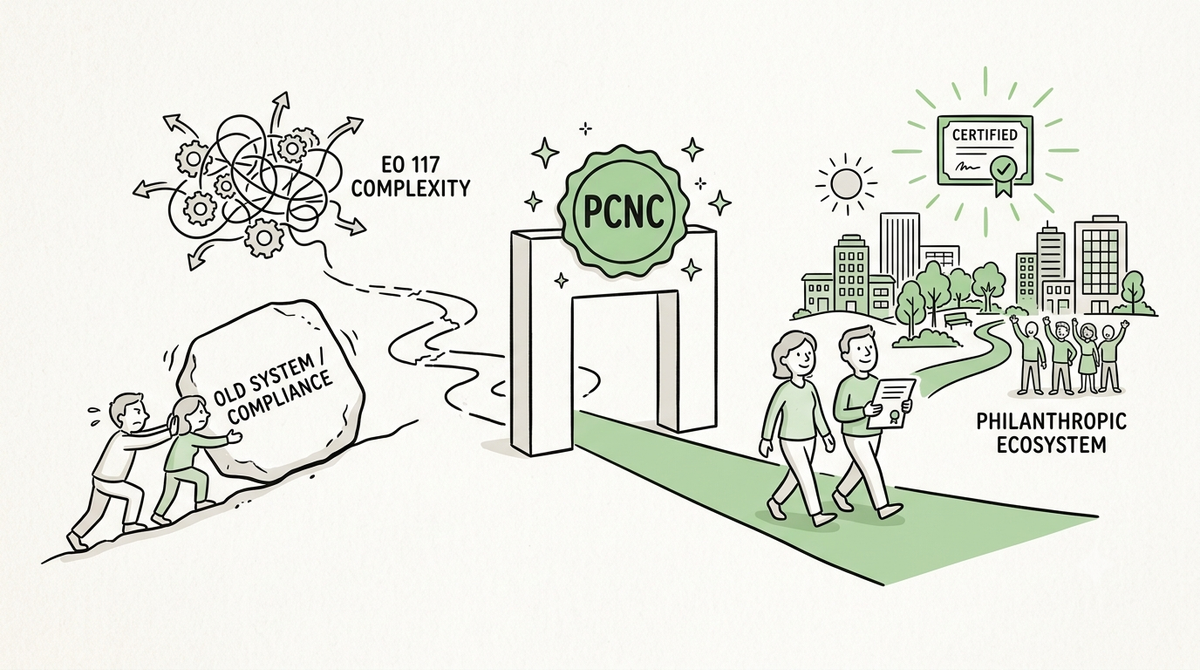
This article examines the intersection of institutional compliance and grassroots efficacy for non-profit organizations. By analyzing governance standards like PCNC accreditation, it illustrates how internal accountability serves as a foundational pillar for sustainable public service and community trust.
In the ecosystem of public service and social development, the bridge between an organization’s intentions and its actual impact is built entirely on trust. Non-governmental organizations (NGOs), civil society networks, and grassroots initiatives exist to address deep-seated systemic gaps, deliver essential services, and empower marginalized communities. Yet, the capacity to perform this vital work does not rest solely on passion or goodwill. It relies heavily on an organization's structural integrity, financial transparency, and adherence to rigorous institutional standards. When a nonprofit operates with clear accountability, it signals to partners, stakeholders, and the communities it serves that it is a reliable steward of resources. Conversely, when administrative compliance is treated as a secondary concern, even the most well-intentioned programs can falter under the weight of institutional skepticism or operational inefficiencies.
For many organizations navigating the modern regulatory landscape, compliance can frequently feel like an uphill battle against bureaucracy. The sheer volume of administrative guidelines, legal frameworks, and reporting mechanisms can easily overwhelm small to medium-sized organizations whose primary focus is immediate field-level intervention. However, framing governance as a mere administrative hurdle misinterprets its true value. Administrative diligence and structural alignment are not barriers to community work; rather, they are the very mechanisms that safeguard and sustain it over the long term.
Why This Topic Matters
The broader landscape of civil service requires a continuous balancing act between rapid community responsiveness and meticulous organizational health. In recent years, global and local shifts in regulatory environments have placed a premium on transparency. Donors, regulatory bodies, and community members are increasingly demanding clear evidence of sound financial management and ethical governance before committing their resources or cooperation. For a non-profit organization, the ability to demonstrate this level of institutional health is directly tied to its survival and scalability.
When structural frameworks or executive directives shift, organizations must quickly adapt to maintain their operational viability. Understanding the nuances of regulatory mechanisms—such as formal accreditation and state-issued guidelines—is essential for avoiding legal pitfalls that could stall critical community programs. More importantly, robust internal governance directly mitigates operational risks. It ensures that funds are utilized efficiently, programs are evaluated objectively, and leadership remains accountable to the organization's core mission. Ultimately, a well-governed sector fosters a healthier civic space where resources flow more freely to those who need them most, backed by the assurance that institutional frameworks are protecting the public interest.
Event Objectives
To bridge the gap between complex regulatory policies and everyday organizational management, a focused learning framework is essential. The core objectives of examining institutional compliance pathways include:
- Demystifying Regulatory Frameworks: Breaking down complex legal directives and administrative orders into actionable structural components that non-profit leaders can understand and implement.
- Clarifying the Accreditation Pathway: Outlining the specific benchmarks, evaluation criteria, and documentation required to successfully navigate formal certification processes.
- Elevating Governance Standards: Encouraging organizations to view compliance not as an isolated checklist, but as an opportunity to upgrade internal controls, financial systems, and strategic planning.
- Fostering a Culture of Accountability: Cultivating a shared commitment among development practitioners to uphold high ethical and operational standards across all facets of public service.
Key Insights and Takeaways
True organizational development requires translating statutory language into practical, institutional habits. A critical examination of governance frameworks reveals that institutional accreditation serves as a comprehensive diagnostic tool for an organization's health. Rather than evaluating a single project or financial report in isolation, formal certification processes look holistically at how an entity governs itself, manages its resources, and interacts with its target communities.
One of the central lessons from studying these systems is that financial integrity is inseparable from programmatic success. Certified systems require a meticulous separation of duties, robust internal audit tracks, and absolute clarity in resource allocation. When an organization implements these rigorous financial controls, it does more than just satisfy a regulator; it minimizes the risk of mismanagement and ensures that the maximum possible percentage of every resource directly benefits community programs.
Furthermore, institutional alignment emphasizes the importance of vision-driven planning. Accreditation metrics frequently assess whether an organization’s daily activities actually align with its stated mission, vision, and long-term goals. This forces non-profit boards and executives to step back from day-to-day crises and evaluate their strategic direction. It encourages organizations to establish clear indicators of success, implement regular monitoring systems, and cultivate an institutional memory that outlasts individual leadership tenures.
Finally, compliance frameworks highlight the value of stakeholder engagement. A healthy organization does not operate in a vacuum; it maintains open channels of communication with its beneficiaries, local government units, and funding partners. True accountability means being answerable to the community itself, ensuring that program designs are participatory and that feedback is actively integrated into future institutional strategies.
Event Snapshot
Reflecting this deep need for continuous institutional strengthening, practitioners recently gathered online for an operational deep-dive. The learning event, titled Navigating EO 117 & the PCNC Accreditation Process, took place on June 17, 2026. Hosted virtually by the Philippine Council for NGO Certification (PCNC), the session served as a specialized platform for organizational development, specifically tailored to address contemporary governance demands within the non-profit sector.
The virtual masterclass brought together development professionals, administrative leads, and board members seeking clarity on changing regulatory environments. Through detailed administrative presentations and interactive discussions, the session focused intensely on practical compliance pathways, clarifying how organizations can systematically align their internal operations with the high standards required for formal PCNC certification.
From Learning to Community Impact
The ultimate measure of any administrative or educational effort is how effectively it translates into positive realities on the ground. When a non-profit organization successfully elevates its governance standards, the immediate beneficiaries are the communities it serves. Institutional certification acts as a badge of credibility that significantly lowers the barriers to cross-sector collaboration. Local government units, corporate social responsibility arms, and international development agencies are far more likely to form deep, long-term partnerships with accredited organizations, knowing that their shared initiatives rest on a stable operational foundation.
For networks like BUKLURAN, prioritizing institutional development and organizational capacity building is fundamental to achieving sustained civic empowerment. When member organizations and partners understand how to navigate regulatory systems smoothly, they spend less time managing administrative crises and more time deploying effective local interventions. Stronger systems mean more resilient community centers, more consistent delivery of educational or livelihood assistance, and a more robust defense of public interest initiatives. Continuous learning in governance ensures that the non-profit sector remains a professionalized, potent, and enduring force for societal good.
Looking Ahead
As the socio-economic challenges facing our communities become increasingly complex, the organizations tasked with addressing them must evolve with equal speed. Institutional agility is no longer optional; it is a baseline requirement for relevant public service. Ongoing professional development and continuous structural assessments allow organizations to stay ahead of regulatory shifts, anticipate institutional risks, and adapt their strategies to changing community dynamics.
Embracing this path requires leadership that is both visionary and deeply grounded in procedural responsibility. It demands a willingness to look critically at internal shortcomings, invest time in administrative training, and foster an organizational culture that celebrates transparency. By committing to continuous learning and institutional excellence, the development community ensures that its vital work is built to last, providing steady, reliable support to the societies it works to uplift.
Join the Conversation
Every meaningful change begins with learning, reflection, and open conversation. As communities continue to navigate new challenges and opportunities, the exchange of knowledge remains one of our most valuable tools for collective growth. We invite readers, advocates, professionals, and community members to continue exploring ideas that strengthen public service, empower local initiatives, and help build a more informed, accountable, and resilient society.
What has your experience been with organizational transparency and capacity building? Share your thoughts, reflections, or questions below as we continue to learn and build stronger institutions together.
Navigating EO 117 & the PCNC Accreditation Process Confirmation
June 17, 2026
Virtual
Organizational Development
This initiative was independently funded by the BUKLURAN Officers through personal contributions.
We gratefully acknowledge the groups and individuals who shared resources, services, venues, supplies, and other forms of community support.
• PCNC
BUKLURAN remains open to partnerships, sponsorships, and collaborative initiatives that create meaningful community impact.
Whether through funding, in-kind support, volunteerism, or shared services, your organization can help strengthen programs that serve underserved communities.