From Vancouver to Valenzuela: What High-Level Diplomatic Trips Mean at the Filipino Kitchen Table
Beyond the handshake in Vancouver, what does the first presidential visit to Canada in a decade mean for regular Filipino families?
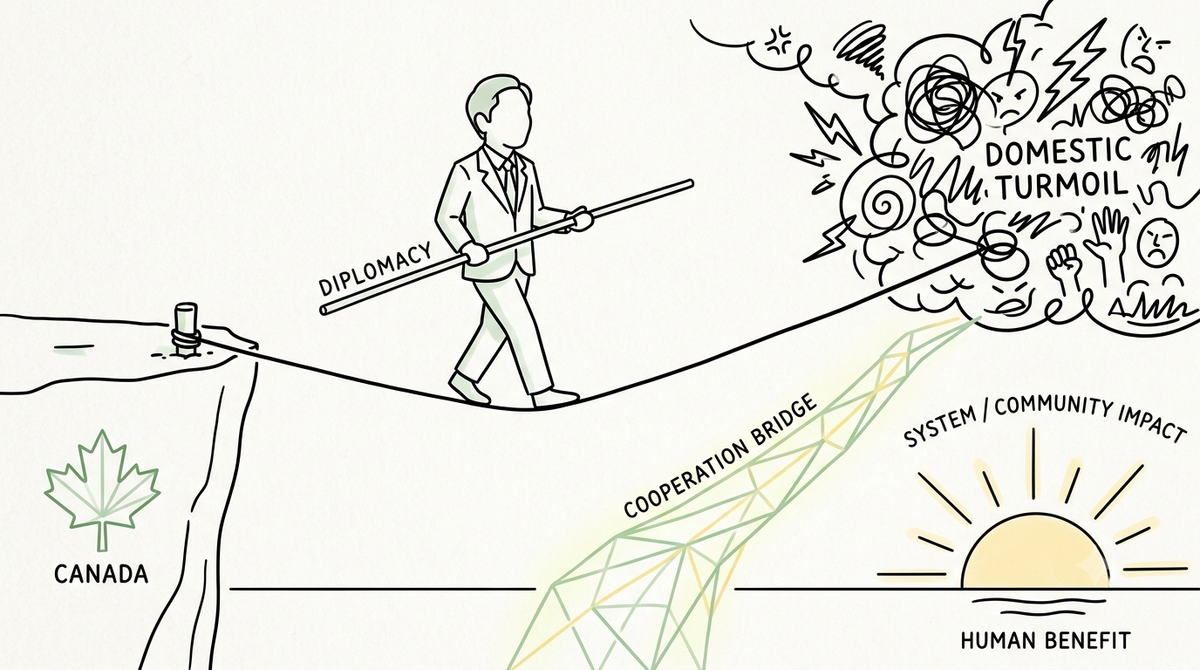
While high-level diplomatic agreements in Canada signal stronger defense and economic partnerships, the real measure of success lies in how these international commitments translate into secure livelihoods, safer migration pathways, and stable jobs back home in the Philippines.
Every few months, the news cycle fills with footage of state departures and red-carpet arrivals. We see the Philippine flag flying side-by-side with a foreign counterpart, the formal handshakes between heads of state, and the signing of beautifully bound bilateral agreements. For many ordinary Filipinos rushing to catch a jeepney, balancing the household budget, or managing a small neighborhood sari-sari store, these international events can feel incredibly distant. It is easy to watch the coverage of President Ferdinand Marcos Jr.’s official visit to Vancouver, Canada, and ask a simple, entirely justified question: “Ano naman ang kinalaman nito sa buhay ko?” (What does this have to do with my life?)
When international relations are discussed in the news, the language used is often dense and detached. Journalists and officials speak of "bilateral frameworks," "sovereign rights," "geopolitical alignments," and "macroeconomic resilience." But behind every treaty, trade negotiation, and diplomatic visit lies a very real human reality. Foreign policy is not just an abstract chess game played by leaders in distant capitals; it is a mechanism that directly shapes the safety of our waters, the cost of our energy, the availability of stable local jobs, and the welfare of millions of our relatives working across the globe.
To understand why this trip matters, we must look past the formal dinners and examine the everyday realities of Filipino communities.
The News Behind the Red Carpet
The visit from July 1 to 4, 2026, marks the first time a Philippine head of state has set foot in Canada for an official visit in over a decade. President Marcos Jr. traveled to Vancouver to hold bilateral talks with Canadian Prime Minister Mark Carney. This meeting takes place during a highly significant year, following the 75th anniversary of diplomatic ties between the two nations celebrated in 2024, and coinciding with the Philippines’ current role as the ASEAN Chair.
On paper, the agenda is packed with heavy-hitting institutional priorities. The two governments are focused on accelerating the negotiations for a bilateral Free Trade Agreement (FTA) alongside an ASEAN-Canada Free Trade Agreement, both targeted for completion within the year. There are also formal frameworks being established around defense cooperation, renewable and nuclear energy, critical mineral mining, and technology sectors like Information Technology and Business Process Management (IT-BPM).
Furthermore, Canada has been loud and consistent in its backing of the Philippines’ sovereignty in the West Philippine Sea, anchoring its stance on the 2016 Arbitral Award. From a strategic perspective, the visit is a major diplomatic push to diversify the Philippines' global partnerships in an increasingly unpredictable world.
Translating Trade to the Family Budget
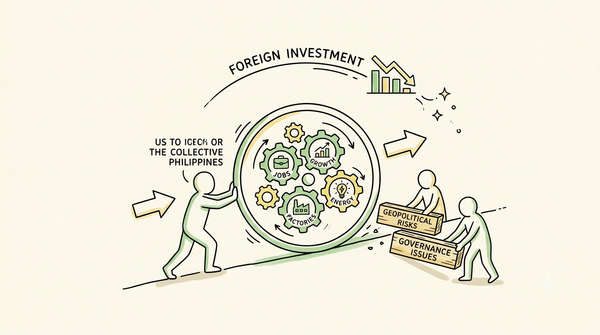
When we hear about a potential Free Trade Agreement or a 40% increase in Canadian direct investments, it sounds like numbers on a spreadsheet. But for an ordinary Filipino family, "investment" is the difference between a father finding a stable job in his home province or being forced to apply for work overseas.
Consider the focus on critical minerals, digital infrastructure, and renewable energy during this visit. The Philippines is rich in resources needed for the global transition to green energy, such as nickel and copper. If foreign investments from experienced Canadian firms are guided by strong, transparent local governance, it could mean the creation of thousands of specialized engineering, construction, and environmental management jobs right here on Philippine soil.
Similarly, expanding cooperation in the IT-BPM and telecommunications sectors can help bring high-quality digital employment outside of Metro Manila, allowing young professionals in rural areas to earn a competitive living without leaving their families behind.
However, the barrier has always been implementation. Historically, the Philippines has signed numerous agreements that take years to bear fruit, or whose benefits fail to trickle down to the informal economic sectors where most ordinary citizens survive. For a vendor in a public market or a freelance worker, a trade agreement only matters if it lowers the cost of logistics, stabilizes the price of basic commodities, or creates a domestic market strong enough to increase purchasing power. The success of the Vancouver trip cannot be measured by the number of memoranda signed; it must be measured by how effectively those agreements create structural protections for local livelihoods.
The Human Core: One Million Strong
Perhaps the most direct connection between this diplomatic visit and regular Filipino homes lies in the diaspora. There are currently around one million Canadians of Filipino descent. Nearly every community in the Philippines has a connection to Canada—a cousin working as a nurse in Alberta, an aunt raising a family in Toronto, or a sibling working in the service sector in Vancouver.
The remittances sent back by these workers keep millions of households afloat, paying for tuition, medical emergencies, and house repairs. During this official visit, discussions regarding labor, immigration, and people-to-people linkages are high on the agenda. For the ordinary Filipino, this is the most critical aspect of foreign policy.
Stronger bilateral relations mean better institutional frameworks to protect our workers from exploitation, smoother pathways for permanent residency, and fairer systems for recognizing Philippine professional credentials abroad. When our government engages with a destination country like Canada, the goal shouldn't just be exporting our talent; it must be securing the dignity, safety, and rights of the people who have made the painful choice to work far from home.
Security on the Waves and Safety at Home
Another major pillar of the discussions is maritime security. For residents of coastal communities, particularly fisherman families in Zambales, Palawan, or Ilocos, the ongoing tensions in the West Philippine Sea are not a geopolitical debate—they are a matter of daily survival and food security. When tension escalates, fishers lose access to traditional fishing grounds, impacting their daily income and driving up fish prices in local markets across Luzon.
Canada’s explicit support for the Philippines’ maritime rights and the implementation of defense cooperation frameworks—such as the Status of Visiting Forces Agreement finalized recently—provide a counterweight to regional bullying. By building a network of international allies who respect international law, the Philippines builds a shield around its sovereign resources.
For the average citizen, a rules-based ocean means that our fisherfolk can continue their livelihoods without fear, and our maritime territory remains protected for future generations of Filipinos.
Looking Beyond the Headlines
International diplomacy is a powerful tool, but it is not a cure-all for the deep-seated domestic challenges facing the country. As President Marcos Jr. travels abroad to project an image of stability and economic readiness, back home, ordinary citizens are dealing with immediate domestic realities—local political friction, community protests, transport strikes, and the constant pressure of inflation.
There is always a risk that high-profile international travel serves as a distraction from structural issues at home that require urgent policy attention. It is the responsibility of an active and informed citizenry to ensure that the commitments made on the global stage align with the genuine needs of local communities. Foreign policy is only as good as the domestic policy that supports it. If we invite foreign investments but fail to address local corruption, poor infrastructure, or an unequal justice system, the benefits of international partnerships will remain concentrated in the hands of a wealthy few.
Ultimately, the true value of the President’s visit to Canada will not be found in the press releases issued by Malacañang or the official statements from Vancouver. It will be found in whether a young graduate in Bulacan can find a decent job without buying a plane ticket, whether an OFW in British Columbia feels safer and more respected by their employer, and whether a fishing family can peacefully cast their nets in our own seas. High-level diplomacy must always serve the public interest, bringing the benefits of global cooperation back to the Filipino kitchen table.
Lahat tayo natutuwa kapag may mga bagong ugnayan ang Pilipinas sa ibang bansa tulad ng Canada, pero ano nga ba ang totoong epekto nito sa buhay ng isang karaniwang pamilyang Pilipino? Higit sa mga red carpet at pirmahan ng kasunduan, paano ba nito mababago ang sitwasyon ng ating mga OFW, lokal na trabaho, at seguridad sa sarili nating karagatan?

Power Our Mission, Shape the Future
We empower single parents, PWDs, youths, seniors, and stay-at-home parents through digital livelihood.
Help us build resilient communities.
BUKLURAN remains open to partnerships, sponsorships, and collaborative initiatives that create meaningful community impact.
Whether through funding, in-kind support, volunteerism, or shared services, your organization can help strengthen programs that serve underserved communities.
Do you want to take part in our free livelihood programs, scholarship assistance, and community resource pooling initiatives? Membership is completely free.
Join BUKLURAN!
Register, volunteer, and become a member today.