How AI is Changing Medical Imaging—and What It Means for Filipino Patients and Healthcare Workers
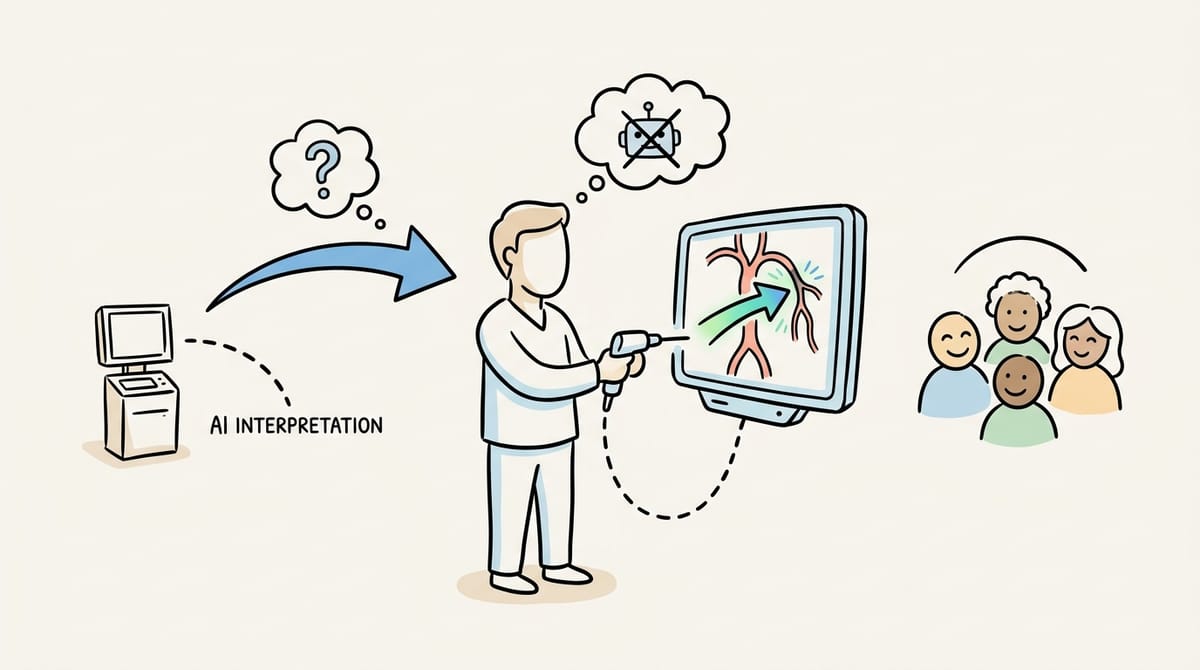
This article examines how the rise of artificial intelligence in reading medical scans is prompting medical professionals to focus on hands-on interventional radiology. It explains the core difference between reading images and performing image-guided procedures, breaks down what this shift means for aspiring Filipino healthcare workers, and highlights the potential benefits and digital divide risks for patients relying on public healthcare in the Philippines.
As artificial intelligence rapidly advances, software programs are becoming highly accurate at analyzing medical images like X-rays, CT scans, and MRIs. This technological leap is prompting healthcare experts to advise aspiring medical specialists to focus on interventional fields—hands-on medical procedures guided by real-time imaging—which require physical skill and human decision-making that machines cannot easily replicate.
For ordinary Filipinos, this trend is not just an academic discussion among doctors. It touches on critical national issues: the future of local healthcare careers, how fast local hospitals can adopt lifesaving technology, and whether advanced diagnostic tools will reach low-income families in public hospitals or remain limited to top-tier private medical centers.
Aspiring Radiologists Advised to Pursue Interventional Field Amid Rapid AI Expansion
"While AI excels at rapidly pattern-matching images, human expertise remains indispensable in complex intra-procedural judgment, direct catheter manipulation, and hands-on patient intervention."
What Happened?
Medical industry experts, including representatives from regional healthcare platforms such as Singapore-based Pan-Asia Care Collective (PCC), have noted that diagnostic radiology—the practice of reviewing X-rays, CT scans, and ultrasound images to spot diseases—is uniquely suited for automation. Computer algorithms trained on millions of scans can now detect abnormalities, tumors, or fractures within seconds, often with accuracy comparable to human experts.
Because basic image reading is becoming automated, specialists advise medical students and young doctors to consider interventional radiology. Unlike diagnostic radiologists who primarily analyze still images on screens, interventional radiologists perform delicate, minimally invasive procedures—such as inserting catheters, guiding biopsies, or unblocking blood vessels—using live imaging as a visual map.
Diagnostic vs. Interventional: Understanding the Difference
To understand why this distinction matters, it helps to separate the two main sides of radiology:
- Diagnostic Radiology: Focuses on reading and interpreting visual data. A doctor sits at a computer monitor, reviews scans sent from a machine, and writes a detailed medical report summarizing what they see.
- Interventional Radiology: Focuses on active treatment. A doctor operates directly on a patient, using real-time imaging (like live fluoroscopy or ultrasound) to insert tiny instruments into the body to treat conditions without large open surgeries.
While an AI algorithm can easily scan thousands of digital images to flag a shadow on a lung, a software program cannot physically maneuver a micro-catheter through a patient’s blood vessels or respond dynamically to unexpected bleeding during a procedure.
What the Headlines Don't Explain
While news reports focus heavily on career advice for doctors, the broader adoption of AI in radiology carries deeper implications for the Philippine healthcare system and general public:
1. The Philippines Faces a Specialist Shortage
The country already suffers from an uneven distribution of specialized doctors. Most radiologists and advanced imaging centers are concentrated in major urban hubs like Metro Manila, Cebu, and Davao. In provincial or rural areas, patients often wait days or weeks for a radiologist to interpret a basic CT scan. AI tools could help bridge this gap by offering rapid preliminary scans in provincial public hospitals.
2. Implementation Costs and the Digital Divide
Advanced AI diagnostic tools require strong digital infrastructure, reliable high-speed internet, secure medical data systems, and substantial software licensing fees. While private hospital networks can easily afford these upgrades, underfunded rural health units (RHUs) and provincial public hospitals may lag behind, risking a wider gap in quality of care between wealthy and low-income patients.
3. Patient Safety and Legal Responsibility
AI is a powerful diagnostic assistant, but it is not infallible. If an algorithm misses a subtle tumor or misinterprets a scan, who is held accountable—the software developer, the hospital, or the supervising physician? In the Philippines, clear regulatory framework guidelines for AI integration in medical diagnostics are still developing.
4. Shifting Job Skills for Allied Health Workers
It is not just doctors who are affected. Radiology technologists (rad techs)—the professionals who operate X-ray and CT machines—will need updated training in managing AI-integrated diagnostic software, data privacy protocols, and digital equipment maintenance.
How This Could Affect Filipinos
- For Medical Students and Allied Health Workers: Young Filipinos pursuing careers in medicine or radiologic technology should prioritize gaining practical, hands-on clinical skills. Embracing digital tools while mastering direct patient procedures will make healthcare professionals far more resilient against future workplace automation.
- For Patients in Public Hospitals: If public health agencies successfully adopt basic diagnostic AI, turnaround times for scan results in regional hospitals could drop significantly. This means faster diagnoses for critical conditions like stroke, tuberculosis, or internal trauma.
- For Low-Income Families: The main risk is cost. If AI technology is implemented primarily in private institutions, advanced diagnostic speed will remain a privilege for those who can pay out-of-pocket, leaving public hospital patients dependent on overburdened human diagnostic pipelines.
Practical Takeaways for Everyday Life
- Ask Questions About Scan Results: If you or a family member undergoes a complex medical scan, ask your attending physician how the results were verified and what the recommended next steps are.
- Encourage Digital Literacy in Healthcare Studies: For students entering health sciences, focus on learning how technology supports clinical practice rather than fearing automation. Combining technical know-how with human empathy is key.
- Support Community Health Awareness: Community education on preventive health remains essential. Early screening for chronic conditions reduces the need for complex interventional procedures down the road.
Looking Ahead
Artificial intelligence will continue to expand its role as a diagnostic support tool rather than a complete replacement for human healthcare professionals. The key challenge for the Philippines over the coming years will be policy and equity: ensuring that technological advancements in medicine lead to accessible, affordable, and safe healthcare for all Filipinos, regardless of economic background.

Power Our Mission, Shape the Future
We empower single parents, PWDs, youths, seniors, and stay-at-home parents through digital livelihood.
Help us build resilient communities.
BUKLURAN remains open to partnerships, sponsorships, and collaborative initiatives that create meaningful community impact.
Whether through funding, in-kind support, volunteerism, or shared services, your organization can help strengthen programs that serve underserved communities.
Do you want to take part in our free livelihood programs, scholarship assistance, and community resource pooling initiatives? Membership is completely free.
Join BUKLURAN!
Register, volunteer, and become a member today.