How Alternergy’s ₱2 Billion Green Energy Expansion Impact Everyday Electricity
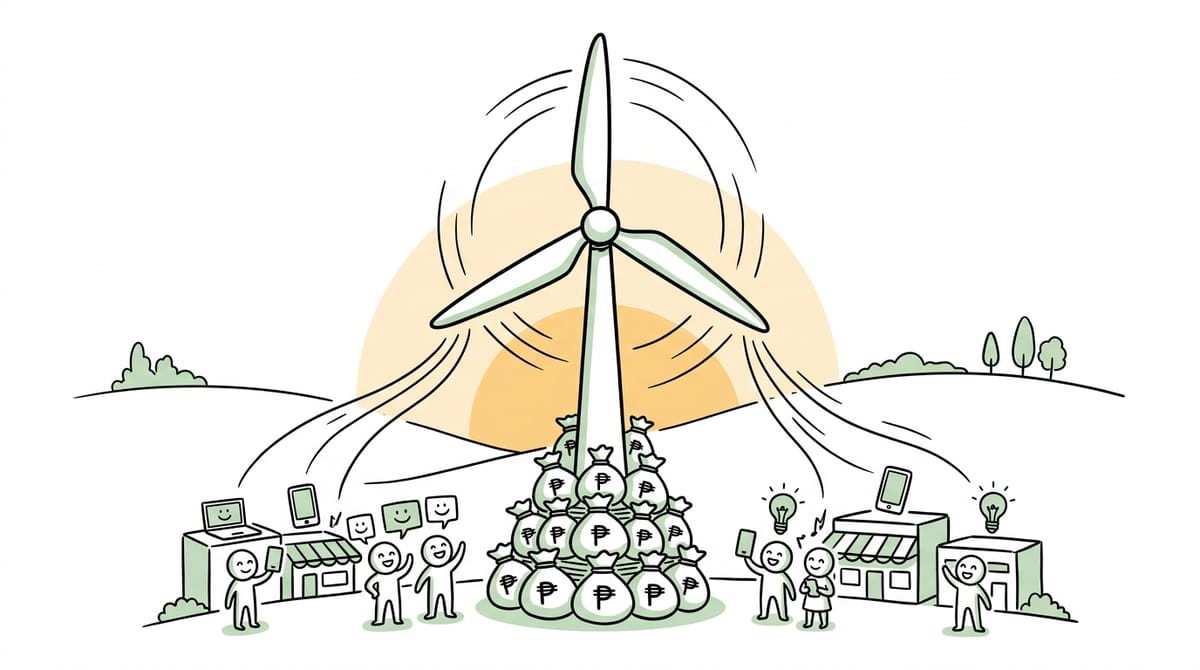
Alternergy Holdings Corp. approved its maiden ₱2 billion green fixed-rate notes offering to fund the pre-development and expansion of its renewable energy projects, particularly those awarded under the government's Green Energy Auction Program (GEA-4). While increasing clean energy capacity helps stabilize the national power supply and supports long-term economic activity, short-term transition costs and debt financing could influence electricity rates for end-consumers.
Alternergy Powers Up Clean Energy Expansion with ₱2-Billion Debt Debut
"The maiden notes issuance represents a key capital milestone for Alternergy, allowing us to lock in non-dilutive funding to rapidly bring our wind and solar projects to commercial operations."
On September 17, 2026, listed renewable energy producer Alternergy Holdings Corp. announced that its Board of Directors approved a maiden ₱2 billion green fixed-rate notes issuance. The capital raised will fund the pre-development phase of its expanding portfolio of clean energy projects, particularly those under the Department of Energy’s (DOE) 4th Green Energy Auction (GEA-4), alongside existing pipeline projects.
The 1.5-year green notes will carry an annual interest rate of 7.75% and will be listed on the Philippine Dealing & Exchange Corp. (PDEx). BDO Capital & Investment Corp. is serving as the sole issue manager and arranger for the transaction, which secured an investment-grade rating of PRS Aa minus from Philippine Rating Services Corp. (PhilRatings).
What Happened?
Alternergy is tapping the domestic debt capital market to secure early-stage funding for its clean energy expansion.
- The Goal: Raise ₱2 billion to fund pre-development requirements for renewable projects—such as Liberty Solar, Kalandagan Solar, Alegria Wind, and Tayabas North Wind—and cover general corporate requirements.
- Current & Future Capacity: Alternergy currently operates 119 megawatts (MW) of power capacity across the Philippines and Palau. The company expects to scale its operating capacity to 311 MW by the end of 2026 as its 128-MW Tanay Wind and 64-MW Alabat Wind farms come online.
- Long-Term Target: Alternergy aims to reach 1,000 MW (1 gigawatt) of total capacity by 2030 through a mixed portfolio of wind, solar, and run-of-river hydropower facilities.
Why It Matters
The Philippines faces ongoing challenges with energy security, high electricity costs, and potential power shortages during peak demand periods. Tapping private capital to construct renewable infrastructure increases total generation capacity on the grid without adding to public debt.
Over time, adding renewable facilities helps diversify the nation's energy mix, reducing reliance on imported fossil fuels like coal and diesel, which are susceptible to global market shocks and price volatility.
What the Headlines Don't Explain
While corporate announcements focus on capital metrics and capacity targets, several practical operational and financial factors shape how this affects everyday power consumers:
- Pre-Development vs. Actual Generation: Issuing notes for "pre-development" means the funds go toward site preparation, permitting, environmental assessments, and engineering studies. Electricity from GEA-4 projects will not immediately flow into household outlets.
- Borrowing Costs and Rate Tariffs: The 7.75% interest rate reflects the cost of capital. Capital investments by power developers must eventually be recovered through power purchase agreements (PPAs) or auction feed-in tariffs, which form part of the baseline generation cost paid by distribution utilities and passed on to consumers.
- Grid Connection Constraints: Generating clean power is only half the battle; connecting power plants to the national grid requires timely transmission upgrades by the grid operator. Delayed transmission connections can result in stranded capacity, preventing cheaper energy from reaching end-users promptly.
How This Could Affect Everyday Filipinos
- Micro & Small Businesses: Small enterprises—such as neighborhood carinderias, bakeries, print shops, and cold-storage traders—depend heavily on stable electricity. An expanded renewable grid reduces the frequency of rotating brownouts, preventing operational downtime and inventory loss.
- Low-Income Households: Generation charges make up the largest portion of monthly electric bills. In the short term, capital recovery for new energy infrastructure keeps baseline rates high. In the long term, a higher share of domestic renewable energy can shield households from global fuel price spikes.
- Off-Grid & Underserved Communities: Unless clean energy infrastructure is paired with localized distribution improvements or off-grid mini-grids, rural and low-income communities remain vulnerable to transmission delays and localized service disruptions.
What People Should Know
Understanding the relationship between power generation and household expenses helps families manage monthly budgets effectively:
- Generation Charge Volatility: The generation charge on your electric bill changes monthly depending on fuel costs and power supplier mix. Knowing which power sources supply your local distribution utility helps explain why bills fluctuate.
- Appliance Energy Efficiency: When baseline electricity tariffs remain high due to capital expansion across the energy sector, managing household consumption through energy-efficient appliances and habits offers the most immediate relief to monthly budgets.
- Distinguishing Corporate Debt from Consumer Services: A company raising funds through debt markets reflects private corporate financing, not a government grant or direct consumer subsidy.
Practical Takeaways
- Monitor Local Utility Advisory Notices: Pay attention to monthly breakdowns on your electricity bills to track changes in generation charges and line loss fees.
- Conduct Household Energy Audits: Identify high-consumption appliances (such as older refrigerators or air conditioning units) and schedule regular maintenance to minimize wattage draw.
- Explore Community Financial Awareness: Community learning sessions, such as those conducted under BUKLURAN’s Community Learning Programs, offer guidance on household financial management and budgeting strategies to navigate changing utility costs.
What Happens Next
Alternergy’s green notes will be offered to Qualified Institutional Buyers (QIBs) and officially listed on the PDEx. Investors will watch for the completion and commercial operation of the Tanay and Alabat wind farms toward the end of 2026, alongside regulatory progress and site development across its GEA-4 project pipeline.

Power Our Mission, Shape the Future
We empower single parents, PWDs, youths, seniors, and stay-at-home parents through digital livelihood.
Help us build resilient communities.
BUKLURAN remains open to partnerships, sponsorships, and collaborative initiatives that create meaningful community impact.
Whether through funding, in-kind support, volunteerism, or shared services, your organization can help strengthen programs that serve underserved communities.
Do you want to take part in our free livelihood programs, scholarship assistance, and community resource pooling initiatives? Membership is completely free.
Join BUKLURAN!
Register, volunteer, and become a member today.