How Artificial Intelligence Is Changing Philippine Outsourcing Jobs: What BPO Workers and Families Need to Know
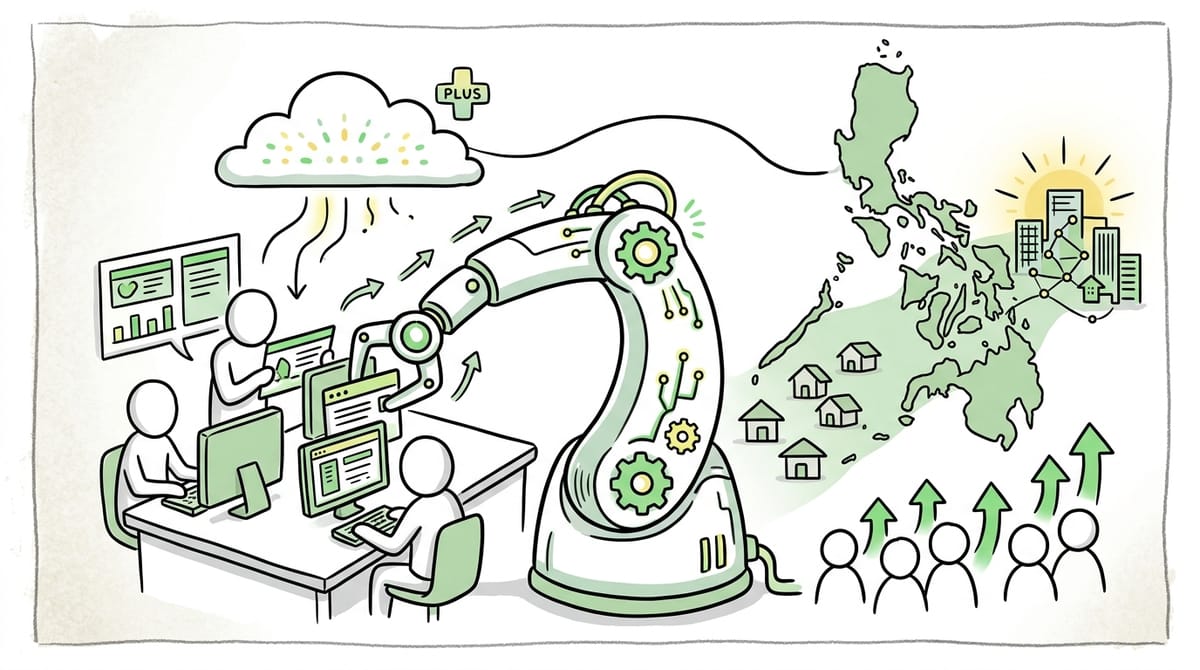
This article examines a September 2026 study by ING Bank N.V., which reveals that Artificial Intelligence (AI) is transforming rather than reducing jobs in the Philippine IT-BPO and outsourcing sector. While routine tasks are increasingly automated, the industry is shifting toward higher-value, specialized services like financial analytics and tech support. The article breaks down what this transition means for Filipino workers, families, and community digital literacy initiatives.
How Artificial Intelligence Is Reshaping Philippine Outsourcing
"AI disruption fears look premature in India and the Philippines. The bigger story is one of upgrading, with growth increasingly concentrated in higher-skilled, more technology-intensive activities."
For years, headlines have warned that Artificial Intelligence (AI) would wipe out millions of call center and Business Process Outsourcing (BPO) jobs across the Philippines. However, new economic data suggests a different reality: AI is changing the nature of work rather than eliminating jobs on a massive scale.
According to a report released in September 2026 by ING Bank N.V., fears of broad-based job destruction in the Philippine IT-BPO sector remain premature. Instead of causing a decline, AI technology is driving an industry-wide "upgrading" process, shifting demand from basic, routine tasks toward higher-skilled, tech-intensive roles.
What Happened?
In a research study led by Deepali Bhargava, Head of Asia-Pacific Research at ING, the bank analyzed service export and employment data across key outsourcing hubs, particularly the Philippines and India.
Key findings from the report include:
- Service Exports are Growing: Combined telecommunications, computer, and business service exports expanded to 7.1 percent of the Philippine Gross Domestic Product (GDP) by mid-2026, up from 6.3 percent prior to the COVID-19 pandemic.
- Growth in Digitally Delivered Services: Digitally delivered service exports have grown by 24 percent since 2022, fueled heavily by financial services (growing around 25 percent annually) and computer services.
- Job Growth Remains Steady: Employment across information, communication, professional, scientific, and technical services grew by approximately 4.5 percent over the past year, remaining close to long-term historical trends.
- Low High-Risk Displacement: Citing International Labour Organization (ILO) estimates, ING noted that while over a quarter of Philippine jobs interact with generative AI, only about 4 percent fall into the high-risk category for direct automation replacement. The vast majority of exposed jobs will see AI augment daily tasks rather than replace workers entirely.
Why It Matters
The IT-BPO sector generates over $40 billion annually, accounts for roughly 15 to 17 percent of the global outsourcing market, and directly employs around 1.9 million Filipinos. For millions of households nationwide, outsourcing salaries pay for daily groceries, rent, utility bills, and children's school expenses.
When AI automates repetitive tasks like standard customer verification or basic data entry, it creates two simultaneous effects:
- Efficiency Gains: Companies perform routine operations faster using Large Language Models (LLMs) and automated tools.
- Skill Shift: Employers increasingly seek workers who can operate alongside AI platforms, manage specialized data, perform complex financial analytics, or handle escalated customer issues that require human empathy and critical thinking.
What the Headlines Don't Explain
While the overall employment numbers remain positive, the transition is not entirely painless. The headlines stating "jobs are safe" leave out crucial nuances that individual workers must consider:
- Routine Tasks Face Pressure: Traditional, entry-level positions focused strictly on scripts or repetitive data entry are facing declining demand.
- Higher Skill Requirements: The job growth reported by ING is concentrated in specialized segments like software development, IT management, legal reviews, and financial consulting.
- The Upskilling Gap: The primary challenge for the Philippine labor force is no longer defending against job destruction, but closing the skills gap quickly enough to keep pace with changing industry needs.
How This Could Affect Filipinos
- For BPO Professionals: Frontline agents and entry-level specialists who rely solely on script-based workflows face higher performance pressures. Learning how to use AI software tools, basic coding, or specialized industry knowledge (such as fintech or healthcare BPO) will be vital for career stability.
- For Fresh Graduates and Young Jobseekers: Entry-level qualifications are shifting. Understanding digital platforms, maintaining high digital literacy, and demonstrating strong analytical skills are becoming essential prerequisites for BPO employment.
- For Families Depending on BPO Earnings: Household budgets remain stable as the industry expands, but long-term family financial security will increasingly depend on a worker's ability to transition into higher-value technical or managerial roles.
What People Should Know
"AI exposure" does not mean immediate job loss. In most workplace scenarios, generative AI acts as an assistant. For example, instead of a customer service representative manually looking up policy rules across several databases, an AI tool retrieves the information instantly, allowing the agent to focus on solving the customer's specific problem faster.
The key distinction lies between replacement and augmentation:
- Replacement (High Risk ~4%): Fully automated tasks requiring no human intervention.
- Augmentation (Majority of Roles): AI handles data retrieval, while human workers manage communication, decision-making, and specialized problem-solving.
Practical Takeaways
To stay competitive in an AI-assisted job market, workers and jobseekers can take several practical steps:
- Learn Basic Digital Tools: Gain familiarity with AI productivity software, data analysis tools, and modern customer management platforms.
- Focus on Uniquely Human Skills: Develop skills that software cannot easily replicate, such as complex negotiation, critical reasoning, emotional intelligence, and specialized industry consultation.
- Utilize Free Learning Resources: Take advantage of free online courses, community workshops, or government-led upskilling programs in digital literacy, basic coding, or financial management.
- Monitor Industry Trends: Keep track of which BPO segments are expanding (such as health information management or financial technology) and align training toward those growth sectors.
What Happens Next
The Philippine outsourcing sector will continue moving up the global value chain. As global companies demand higher technical expertise, the national focus will center on education and workforce development. Government agencies, educational institutions, and community organizations will need to work together to ensure training programs align with actual industry requirements.
For ordinary Filipino workers, adaptation is the pathway forward. AI is reshaping how work gets done, but continuous learning remains the best protection for household livelihoods.
Community Context
Efforts to promote digital readiness across communities align directly with BUKLURAN’s commitment to capacity-building and family resilience. Through community-based learning initiatives like the BUKLURAN Bagong Simula Learning Program—which offers orientations on digital literacy, online safety, and practical digital tools—and the BUKLURAN Kasanayan Program, community members gain accessible opportunities to build modern skills, navigate changing digital landscapes, and protect their household economic stability.

Power Our Mission, Shape the Future
We empower single parents, PWDs, youths, seniors, and stay-at-home parents through digital livelihood.
Help us build resilient communities.
BUKLURAN remains open to partnerships, sponsorships, and collaborative initiatives that create meaningful community impact.
Whether through funding, in-kind support, volunteerism, or shared services, your organization can help strengthen programs that serve underserved communities.
Do you want to take part in our free livelihood programs, scholarship assistance, and community resource pooling initiatives? Membership is completely free.
Join BUKLURAN!
Register, volunteer, and become a member today.