How to Stretch Your Grocery Budget in Times of High Inflation
Rising grocery costs are stretching family budgets. Learn how community resource pooling can help ease your daily household expenses.
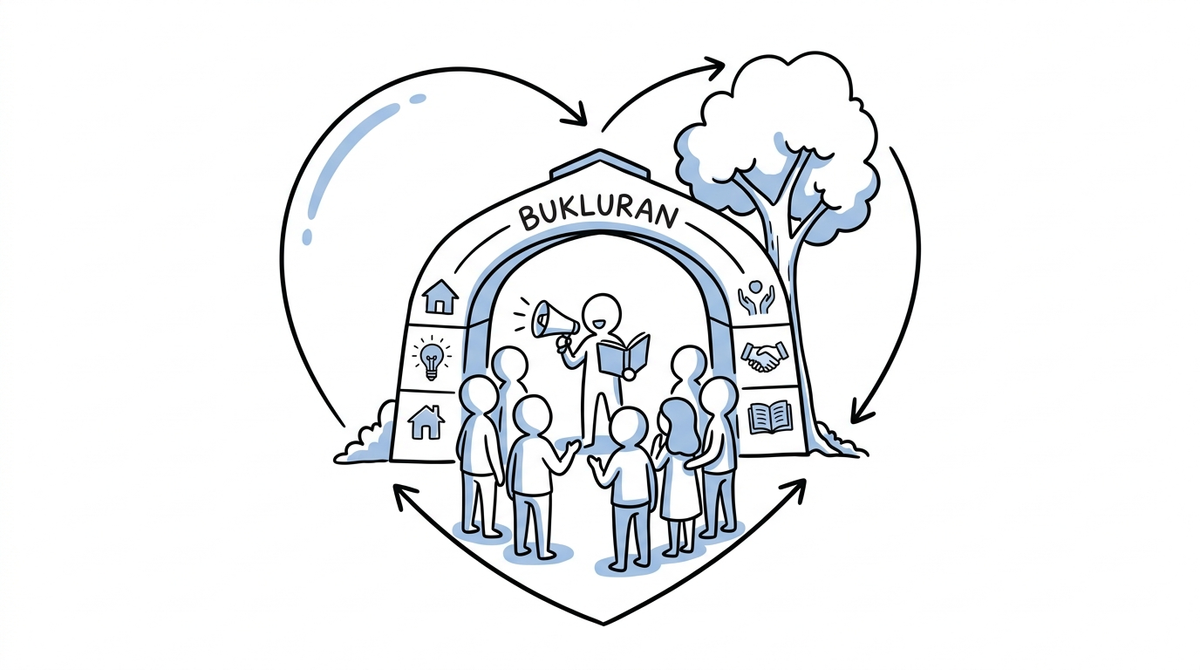
This article explores the economic struggles of ordinary Filipino families due to rising commodity prices and highlights how the BUKLURAN HUB Livelihood Program offers a collaborative solution without requiring heavy capital.
The Silent Challenge Inside the Grocery Basket
Have you ever stood at the checkout counter of a supermarket or a local neighborhood store, looked at the total amount on the screen, and double-checked your items just to make sure you weren't charged twice? You are definitely not alone. Lately, it feels like our hard-earned money has developed a habit of disappearing faster than ever before. A thousand pesos that used to easily fill a grocery cart now seems to dwindle away on just a few basic essentials—a couple of canned goods, a bottle of cooking oil, a bar of soap, and a modest bag of rice.
For the ordinary Filipino household, the rising cost of commodities is not just an abstract topic discussed by economists on evening news programs. It is a tangible, daily hurdle. It is the heavy sigh of a mother trying to stretch her budget for the family dinner. It is the anxiety of a father wondering how to balance the utility bills with the children’s school allowance.
We hear these conversations everywhere—on the jeepney commute, at the local market, or over the fence with our neighbors. People say, "Ang mahal na ng bilihin ngayon" (Everything is so expensive nowadays) or "Kasya pa ba ang sahod natin?" (Is our salary still enough?). It has become a shared reality, an accepted background noise to our daily routines. But it leaves us with an uncomfortable question: Is there anything we can actually do besides quietly enduring the squeeze and tightening our belts further?
Why Individual Struggle Is No Longer Enough
As Filipinos, we pride ourselves on our resilience and resourcefulness. We are known for our ability to find a way—diskarte—whenever things get tight. When income falls short, we look for extra hours of work, find a side hustle, or cut down on personal comforts. However, when inflation hits basic survival necessities like rice, sugar, and daily household goods, relying purely on individual diskarte begins to show its limitations.
There is a harsh reality in modern consumer economics: buying in small, retail pieces—the tingi system—is inherently expensive. Purchasing a single sachet of coffee, a tiny pouch of cooking oil, or a single kilogram of rice carries a premium. Yet, how can a low-income family afford to buy in bulk when their cash flow only allows them to plan for the day's immediate meals? Economists call this the "poverty penalty"—the frustrating truth that it costs more to live when you have less financial flexibility.
This constant financial pressure does not just drain the wallet; it wears down the spirit. It heavily impacts vulnerable sectors that may not have access to steady, high-paying jobs, including single parents, stay-at-home mothers and fathers taking care of young children, youth, persons with disabilities (PWDs), and senior citizens. When an entire neighborhood faces the exact same economic pressure, it becomes clear that the solution cannot rest on the shoulders of one household alone. We need a mechanism where individual small capacities can be combined to form a collective strength.
Moving from Isolation to Community Action
This brings us back to a deeply rooted Filipino value: Bayanihan. If purchasing a whole sack of rice or a bulk crate of household groceries is financially impossible for a single family, what happens if ten, twenty, or fifty families in a neighborhood decide to synchronize their efforts?
This collaborative approach forms the foundation of Community Resource Pooling. Stripped of complex terms, it is simply the voluntary gathering of resources by community members to achieve a shared goal that none could accomplish alone—specifically, accessing essential goods at much better, more manageable rates.
Through this system, the neighborhood stops being a passive observer of rising prices. Instead, residents become active participants in managing their own supply lines. By working together, they naturally build stronger, more reliable relationships with the people living right next door.
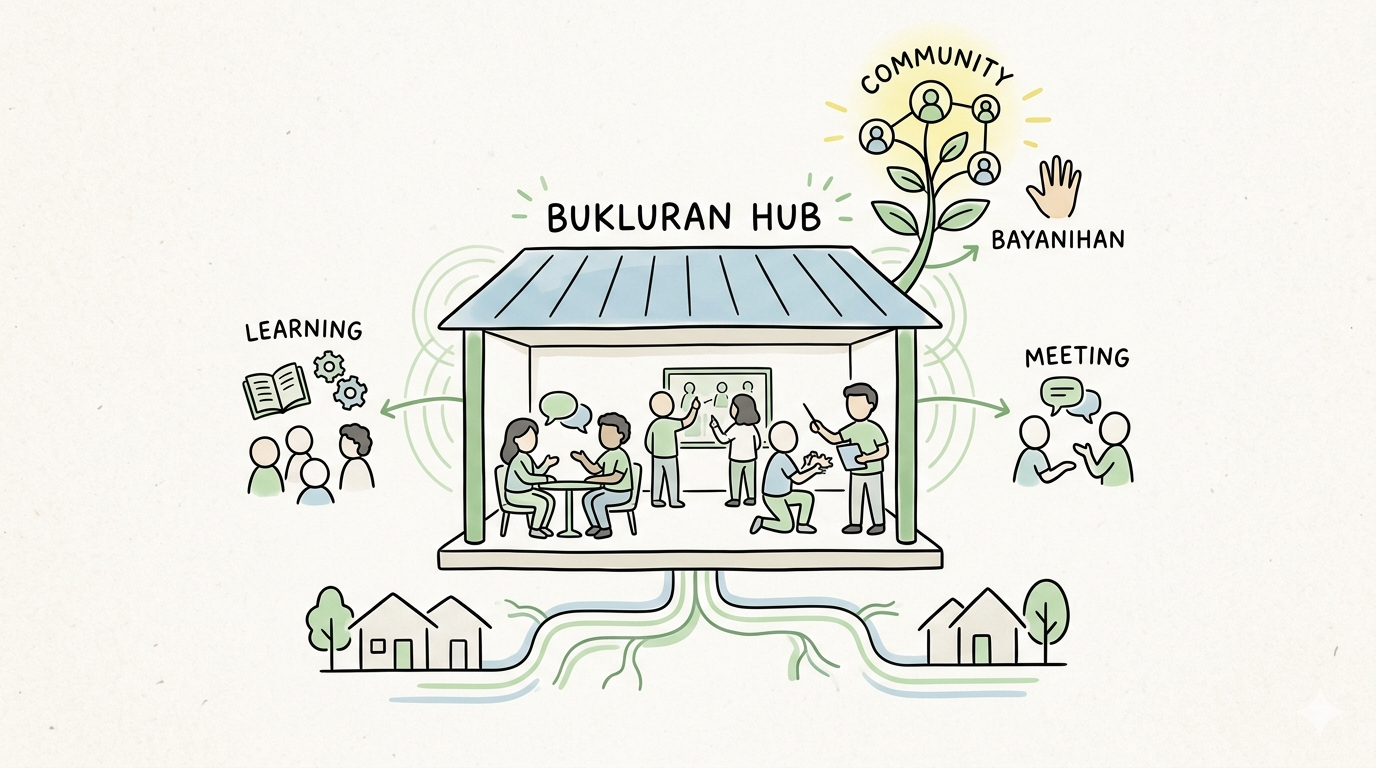
Understanding the Program: BUKLURAN HUB Livelihood Program
To address these very real grassroots economic challenges, the BUKLURAN NG KALINGA NG MAMAMAYANG DISTRITO SINGKO INC. established its flagship livelihood initiative: the BUKLURAN HUB Livelihood and Community Enterprise Program. BUKLURAN is a SEC-registered, non-stock, non-profit, and non-sectarian community development organization based in District 5, Quezon City, with membership extending to anyone nationwide who wishes to participate.
It is important to understand that the BUKLURAN HUB is not a typical retail business, commercial grocery store, or profit-driven convenience shop. Rather, it operates as a community-driven livelihood ecosystem designed to help families reduce their overall household expenses while training members in cooperative management and financial discipline.
How the System Functions
The entire program operates through structured periods called Program Cycles. Each cycle has a distinct beginning and end, focusing on specific essentials, such as a Rice Distribution Cycle or a Grocery Support Cycle. The process follows these direct steps:
| Step | What Happens in the Program Cycle BUKLURAN HUB HANDBOOK.pdf |
| 1. Participation Phase | Members voluntarily decide to join the upcoming cycle based on their needs. |
| 2. Resource Pooling Phase | Participating members provide a voluntary contribution to consolidate the community's purchasing power. |
| 3. Community Procurement | BUKLURAN acts as the central coordinator to source and purchase items in bulk directly from suppliers. |
| 4. Distribution Phase | The procured goods are distributed (allocated) to the participating members according to their share in the cycle. |
| 5. Documentation | A transparent reporting and review process is completed to close the cycle properly. |
By purchasing directly in bulk and eliminating middle-tier commercial retail markups, the program allows members to access selected high-quality goods at prices that are often lower than the Suggested Retail Price (SRP) found in commercial stores, subject to commodity supply and market availability.
Financial Discipline and Long-Term Goals
To ensure sustainability and protect the community's collective funds, the BUKLURAN HUB strictly enforces a cash-based system. This means the program does not allow credit, loans, or installment options for contributions or goods.
During each cycle, a specific portion of the voluntary pool is set aside as a Program Support Contribution (₱100). This amount is not a membership fee, as joining BUKLURAN is entirely free, nor is it a corporate investment or capital deposit. Instead, it goes directly toward operational maintenance and supporting the organization’s long-term objective: establishing a permanent community pickup center or microhub. Once established, this microhub will serve as a local distribution point for bulk essentials and community-made products.
Furthermore, if a cycle concludes with remaining funds, this is classified as a Program Surplus. In strict accordance with the laws governing non-profit organizations, this surplus is never distributed as profit or dividends to any coordinator or member. Instead, it is automatically retained and reinvested into upcoming cycles or alternative community development initiatives.
Shared Responsibility, Shared Success
A distinct pillar of the BUKLURAN HUB is its recognition that a community’s true wealth lies not just in financial capital, but in the time, effort, and dedication of its people. Because of this, members who find themselves temporarily unable to provide a financial contribution can still fully participate in the program.
They can achieve this by becoming a Program Volunteer. Volunteers contribute their time and energy to sustain the logistics of the hub through various vital roles:
- Assisting in the physical packing and distribution of items.
- Managing logistics, such as unloading, lifting, and organizing bulk crates and sacks.
- Handling documentation, tracking allocations, and maintaining records to ensure transparency.
- Coordinating with neighbors and helping communicate schedules within the community.
To value their contribution, volunteers receive food provisions during operations, equivalent in-kind goods when appropriate, or direct reimbursements for verified out-of-pocket expenses like transportation or communication mobile load. This ensures that every bit of labor within the HUB is respected and that everyone has an opportunity to be included.
A Realistic Look at the Path Forward
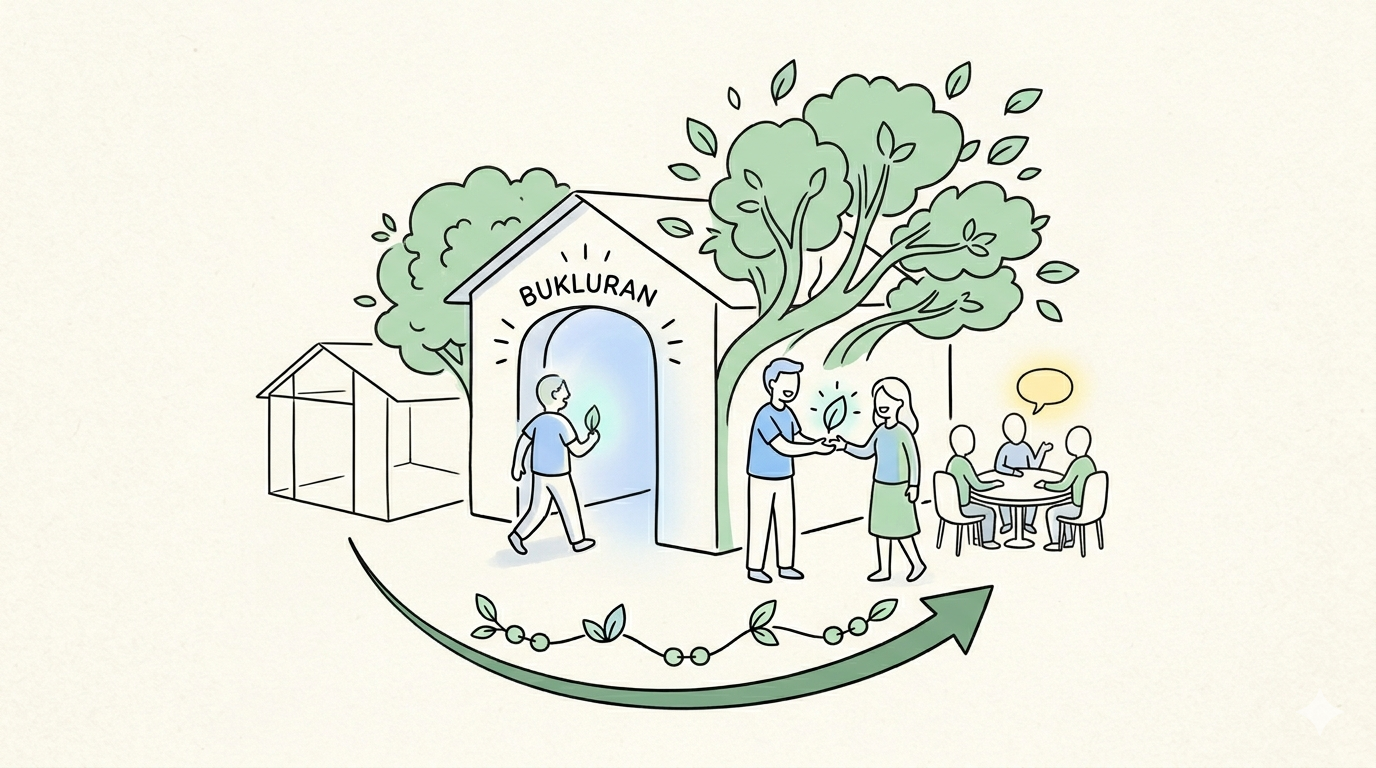
The BUKLURAN HUB Livelihood Program does not claim to be a magical cure that will eliminate poverty overnight. It does not offer passive income, quick monetary returns, or financial investment schemes. It is, instead, a practical, highly disciplined framework built on collective savings, shared labor, and community trust.
Ultimately, the goal of the HUB extends beyond finding cheaper rice for this week's meals. It aims to prove that the true strength of a community lies in its willingness to look out for one another. When we learn to pool our resources, manage our systems transparently, and plan collectively, we take a steady, realistic step toward easing the burdens of daily life.
It leaves us with a simple thought to consider: If we continue to face economic challenges entirely on our own, our resources will always be limited by what a single household can bear. But if we choose to cooperate and align our efforts, what else can our communities achieve together?
Napapansin mo rin ba na tila lumiliit ang halaga ng pera tuwing namamalengke? Sa patuloy na pagtaas ng presyo ng mga pangunahing bilihin tulad ng bigas, normal lang na mag-alala sa budget ng pamilya. Alam mo ba na may paraan pala para makatipid sa pamamagitan ng pagtutulungan ng komunidad nang walang mabigat na kapital? Basahin ang aming bagong blog upang malaman kung paano nakatutulong ang BUKLURAN HUB sa pagtitipid ng pamilyang Pilipino. Kasya ba ang grocery budget mo ngayong linggo?

Power Our Mission, Shape the Future
We empower single parents, PWDs, youths, seniors, and stay-at-home parents through digital livelihood.
Help us build resilient communities.
BUKLURAN remains open to partnerships, sponsorships, and collaborative initiatives that create meaningful community impact.
Whether through funding, in-kind support, volunteerism, or shared services, your organization can help strengthen programs that serve underserved communities.
Do you want to take part in our free livelihood programs, scholarship assistance, and community resource pooling initiatives? Membership is completely free.
Join BUKLURAN!
Register, volunteer, and become a member today.