More Than a Houseguest: The Hidden Realities Behind the European Au Pair Dream
When a dream of European culture becomes a 60-hour work week of heavy cleaning, the line between exchange and exploitation disappears.
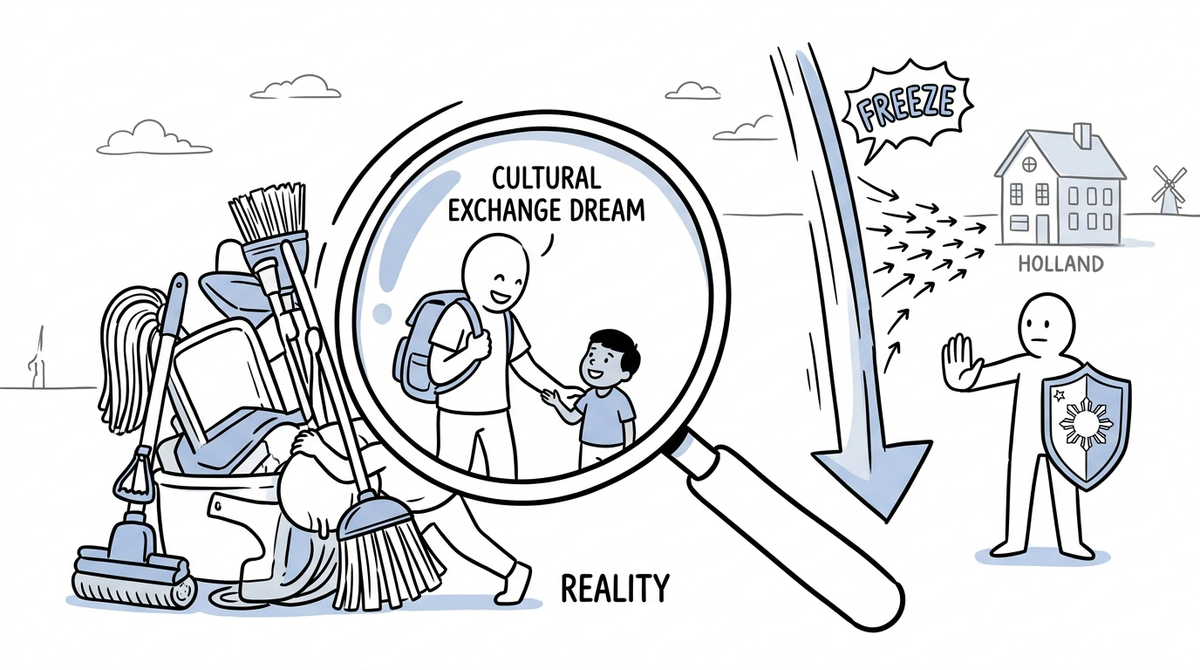
The suspension of Filipino au pair deployments to the Netherlands highlights the urgent need to protect young cultural exchange participants from sliding into systemic, unregulated domestic exploitation.
For many young Filipinos, the chance to live in Europe sounds like the opportunity of a lifetime. The concept is deeply appealing: you move into a comfortable home in a historic city like Amsterdam or Utrecht, become an older sibling figure to local children, and immerse yourself in an entirely new culture. In exchange, you help out with light chores and receive a modest allowance or "pocket money." It is framed not as stressful labor, but as an enriching, cross-cultural adventure—a bridge to seeing the world without the steep financial barriers that usually block young travelers from developing countries.
But for many who pack their bags with visions of bicycle rides along Dutch canals and weekend trips across Europe, the reality inside the front door can be starkly different. The suitcases are filled with hope, but the daily schedule is quickly filled with exhausting, unwritten demands.
This gap between expectation and reality forms the core of the Philippine government’s decision to temporarily suspend the deployment of Filipino au pairs to the Netherlands starting July 1, 2026. The Philippine Embassy in The Hague announced the halt following "repeated" reports of systemic abuse. Young Filipinos, arriving on cultural exchange visas, were routinely forced to work excessive hours, perform heavy manual labor far beyond what the rules allow, and accept compensation that falls dramatically short of the host country's legal minimum wage.
To understand why this ban is happening, it is necessary to parse what an au pair arrangement is supposed to be versus what it has become. Legally, the au pair program is not a labor track. Under Dutch immigration rules, it is strictly classified as a cultural exchange. Participants must be young—historically up to 30, but recently restricted to those between 18 and 25 to reduce financial dependencies—and they are required to live with a host family to experience authentic local life. They are permitted to perform a maximum of 30 hours of "light supportive household tasks" per week, such as light cooking, grocery shopping, or walking the children to school. In return, they receive free room, board, and a monthly pocket money allowance ranging from €300 to €350.
The trouble arises because this setup exists in a regulatory twilight zone. Because it is legally designated as an exchange rather than employment, au pairs do not enjoy standard domestic worker protections, regular labor inspections, or local minimum wage guarantees. If a local Dutch childminder or cleaning service costs significantly more per hour, the au pair system inadvertently creates an enticing, low-cost loophole for busy households navigating their own economic pressures.
When the system breaks down, the "light household tasks" transform into full-scale, undocumented domestic employment. Embassy reports and advocacy groups have documented cases where young women are expected to act as full-time, on-call nannies while simultaneously taking on heavy manual labor—such as deep-cleaning entire homes, scrubbing floors, or performing extensive garden maintenance.
When these demands increase, a unique and isolating vulnerability sets in. An au pair’s legal right to stay in the country is tied entirely to their host family and the mediating agency. If a young Filipino speaks up or complains about working 50 or 60 hours a week, they face the immediate, terrifying prospect of having their sponsorship revoked. In a foreign country, thousands of miles away from their support networks, the threat of sudden repatriation or being left undocumented functions as a powerful tool of silence. Many choose to endure the fatigue and isolation simply because they cannot afford to lose the visa, or because they feel an immense pressure to send a portion of their small allowance back to families in the Philippines who believe they are living out a glamorous European dream.
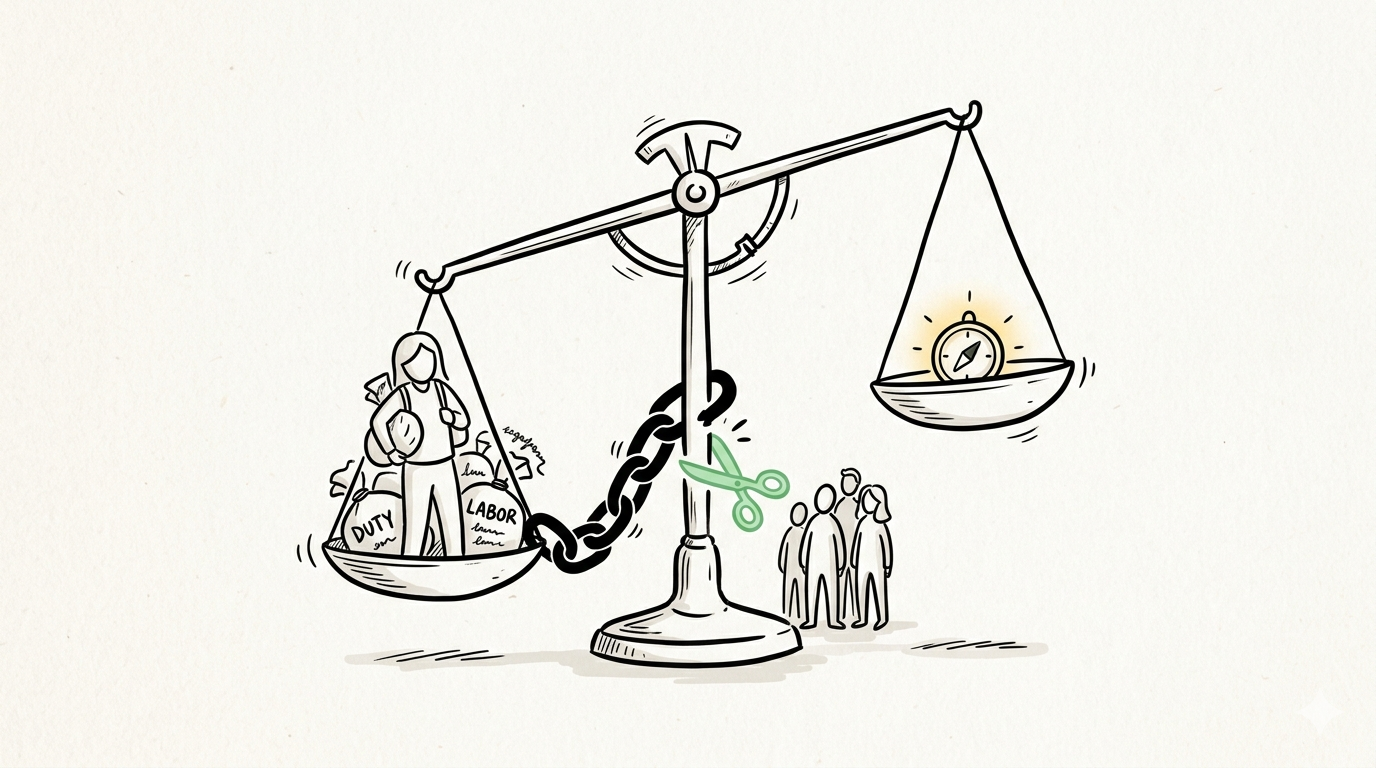
This vulnerability is intensified by a lack of institutional oversight. Local immigration authorities and private au pair agencies are rarely equipped or authorized to conduct unannounced inspections inside private households. When disagreements or exploitative conditions emerge, agencies have frequently been criticized for prioritizing the paying host families over the young, isolated au pairs. The structural power imbalance is absolute: one side holds the keys to shelter, legal status, and income, while the other side possesses little more than a temporary passport stamp.
The decision to freeze the processing of new au pair contracts to the Netherlands is part of a broader, historical pattern of protective interventions by the Philippine government. Similar suspensions have been triggered over the years in countries like France, Switzerland, and Germany when the scale of reported grievances signaled that cultural exchange programs were being systemically misused as a pipeline for cheap, unprotected labor.
However, while a temporary freeze prevents more young citizens from entering potentially exploitative situations, it also brings immediate complications for those caught in transition. Aspiring au pairs who have spent months submitting documents, passing background checks, and matching with families now find their futures on hold. Migrant advocacy organizations point out that simply halting deployments addresses the symptom rather than the underlying cause. It stops the immediate flow of people, but it does little to reshape the international frameworks that allow domestic exploitation to masquerade as cultural exchange in the first place.
This friction illustrates why community-based education and grassroots orientation efforts matter so deeply. When young people look to opportunities beyond our borders, they need comprehensive, unvarnished insight into their legal rights, the specific boundaries of their programs, and concrete strategies for recognizing systemic warning signs before they board a plane. True protection cannot rely solely on sudden administrative shutdowns; it requires a continuous, grounded effort to equip traveling youth with the digital literacy, peer networks, and collective advocacy tools needed to navigate unfamiliar foreign legal landscapes safely.
The suspension of the Netherlands au pair track forces us to look beyond the enticing highlights of social media travel posts and confront the systemic dependencies of the global economy. It invites us to ask a fundamental question about how we value human dignity across borders: When we encourage our youth to share their culture with the world, are we ensuring they are received as valued global citizens, or are we quietly allowing them to be utilized as invisible, low-cost labor to keep foreign households running? The answer determines whether our young people are truly exploring the world, or simply bearing its heaviest structural burdens in silence.
Lahat tayo masaya kapag may pagkakataon ang mga kabataang Pilipino na makatuntong sa Europa sa pamamagitan ng mga "cultural exchange" program gaya ng pagiging au pair. Pero paano kung ang pangarap na makita ang mundo ay mauwi sa tago at mabigat na trabaho sa loob ng bahay na walang sapat na proteksyon?
Power Our Mission, Shape the Future
We empower single parents, PWDs, youths, seniors, and stay-at-home parents through digital livelihood.
Help us build resilient communities.
BUKLURAN remains open to partnerships, sponsorships, and collaborative initiatives that create meaningful community impact.
Whether through funding, in-kind support, volunteerism, or shared services, your organization can help strengthen programs that serve underserved communities.
Do you want to take part in our free livelihood programs, scholarship assistance, and community resource pooling initiatives? Membership is completely free.
Join BUKLURAN!
Register, volunteer, and become a member today.