More Than Miles: The Human Story Behind PAL’s Shift to a Global Alliance
Philippine Airlines is joining the oneworld Alliance. Beyond business headlines, what does this mean for OFWs and families waiting at home?
While Philippine Airlines’ entry into the global oneworld Alliance marks a major corporate milestone, its true success lies in how it eases the heavy structural and financial burdens borne by ordinary overseas Filipino workers and their families.
Every few minutes at the arrival gates of our international airports, a deeply familiar scene plays out. A child cranes their neck over a metal barrier, trying to catch a glimpse of a face they have only seen through a smartphone screen for the past two years. A mother adjusts a makeshift cardboard sign, her hands trembling slightly with anticipation. Nearby, an arriving worker pushes a luggage cart piled high with heavy balikbayan boxes—cardboard containers taped tightly around edges, filled with clothes, canned goods, and soaps that represent months of physical sacrifice abroad.
For millions of Filipino families, international air travel is rarely about leisure, luxury, or business conventions. It is a vital, emotional bridge that keeps separated homes intact. Aviation is the physical infrastructure of our modern migratory reality, carrying the human capital that keeps our domestic economy afloat.
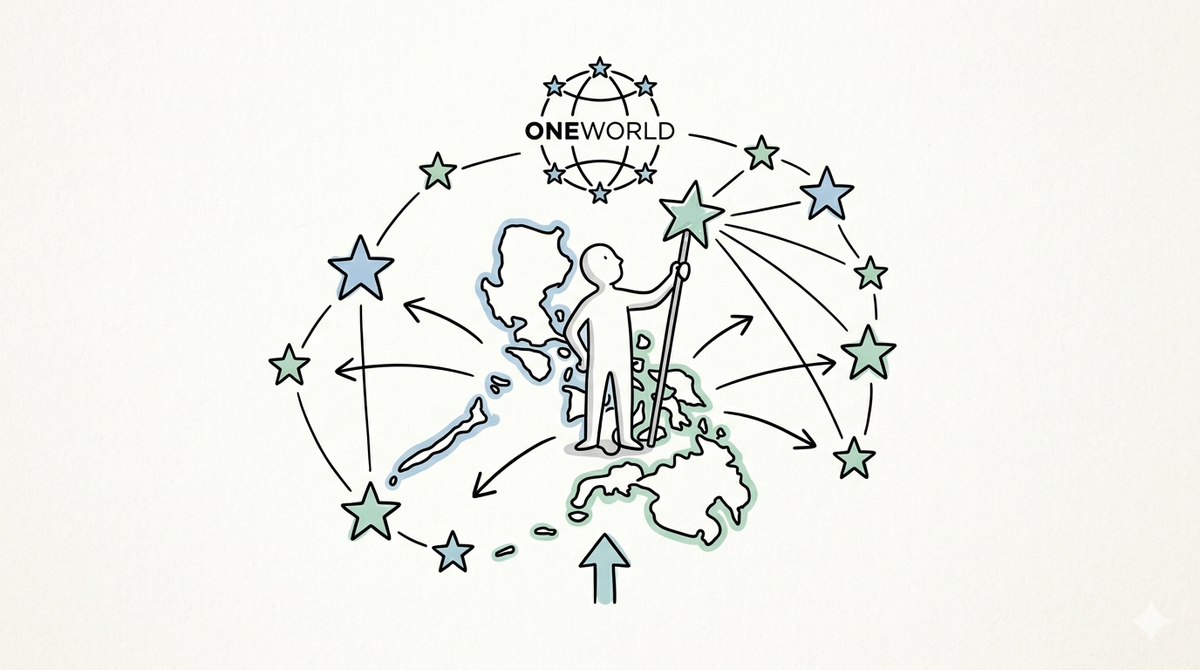
This is the essential backdrop against which we must view the latest corporate development shaking up the local aviation industry. Over the weekend, at the International Air Transport Association (IATA) Annual General Meeting in Rio de Janeiro, Brazil, it was officially announced that Philippine Airlines (PAL) has accepted an invitation to join the prestigious oneworld Alliance. Slated for full integration by 2027, PAL will become the 16th member of this global network, standing alongside aviation giants like Cathay Pacific, Japan Airlines, Qantas, Qatar Airways, and British Airways.
To the business community and corporate strategists, this is a triumphant milestone. It represents economic validation, expanded market reach, and structural prestige for Asia’s oldest commercial carrier. But for the ordinary citizen, the headline prompts a more basic, pressing question: Why should a regular Filipino care?
Shifting from Isolated Routes to Interconnected Networks
To understand what this development means, one must first look at how global airline alliances actually operate. Historically, if an ordinary traveler wanted to fly from a provincial city in the Philippines to a mid-sized town in Europe or the American Midwest, they had to navigate a fragmented patchwork of ticket bookings. PAL could fly them to a major global gateway—like Los Angeles, Dubai, or Tokyo—but from there, the traveler was largely on their own. They had to retrieve their baggage, check in again with an entirely separate airline, risk costly delays if their first flight was late, and manage separate baggage allowances.
An alliance fundamentally eliminates these operational friction points. By joining oneworld, PAL is integrating its network with 15 other world-class carriers. This links our local skies to a massive web of nearly 1,000 destinations across more than 170 countries.
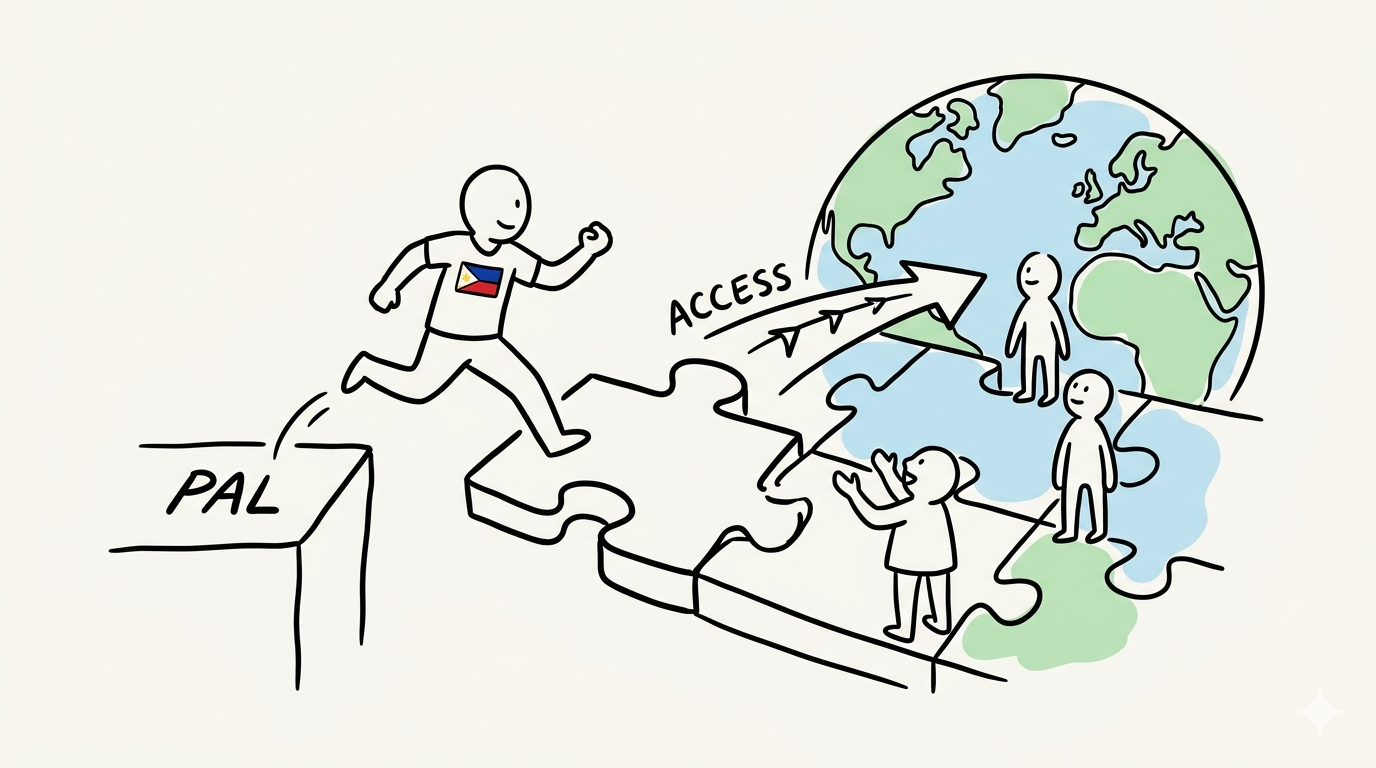
For a busy passenger, this means "interline connectivity." A single ticket can now cover a multi-leg journey where bags are checked through directly to the final destination, even if the second or third leg is operated by American Airlines or Qatar Airways. If a connection is missed due to a delay, the alliance framework obligates the partner airlines to reroute the passenger seamlessly without additional financial penalties. It shifts the burden of structural coordination from the individual traveler to the global network.
The True Cost of Separation: What This Means for Everyday Lives
While the convenience of a unified ticket is an obvious benefit for frequent flyers and business travelers, the deep human impact of this transition lands squarely on our modern heroes: our Overseas Filipino Workers (OFWs).
There are over two million documented OFWs globally, with countless others scattered across every continent. They are concentrated heavily in regions where direct flights from Manila do not exist. Consider our domestic helpers in remote Mediterranean territories, engineers in rural areas of the Middle East, or nurses deployed in small medical facilities across the United Kingdom and North America. For these workers, going home for an annual vacation or returning during an unexpected family emergency has always been a logistical and financial nightmare.
The financial barriers are often compounded by severe psychological stress:
- The Layover Trap: For many workers, a cheap ticket often meant enduring 12-hour to 18-hour layovers in unfamiliar foreign terminals, sleeping on hard benches because their fragmented tickets did not cover lounge access or hotel transfers.
- Baggage Vulnerability: When changing between unaligned carriers, bags are frequently lost, broken, or delayed, stalling the long-awaited distribution of pasalubong (homecoming gifts) to waiting children.
- The Loyalty Gap: Previously, the miles an OFW earned flying back and forth on PAL could only be used within PAL's limited network. If they took an regional partner flight to their specific workplace, those miles were essentially wasted.
Under the new alliance framework, these daily realities shift significantly. Members of PAL’s loyalty program will be able to earn and redeem miles across the entire global network. More importantly, top-tier frequent flyers—status levels often reached by long-haul workers who fly back and forth for years—will gain priority check-in, extra baggage allowances, and access to more than 700 premium airport lounges worldwide. For a exhausted worker who has just finished a grueling shift before boarding a flight home, having a quiet place to rest, eat a warm meal, and wash up during a long layover is not a luxury—it is a matter of basic human dignity.
Overlooked Risks and Practical Realities
However, corporate integration is never an instant cure-all, and a healthy dose of public interest analysis requires looking at the potential hurdles.
First, joining a premium global alliance requires a massive overhaul of internal systems, technology, and service standards. PAL must align its operational metrics—such as baggage handling speed, digital check-in platforms, and on-time performance—with strict global benchmarks. While PAL was recognized by data firm Cirium for high on-time performance in the Asia-Pacific region recently, maintaining that consistency under the pressure of a global alliance is a different challenge altogether. If our local infrastructure, such as terminal congestions at Ninoy Aquino International Airport (NAIA), continues to cause systemic delays, the benefits of alliance connectivity could be bottlenecked by domestic realities.
Second, there is the question of competitive pricing. Alliances provide unparalleled convenience, but they also give member airlines significant collective market power. When major carriers cooperate closely on routes and codesharing, smaller, independent budget airlines can find it harder to compete on those same global lanes. For the budget-conscious traveler, the long-term risk is that premium convenience might eventually come with a premium price tag. The public will need to watch whether the convenience of a unified network offsets the raw affordability that many low-income travelers rely on.
The Community Connection: Why Local Support Matters
This systemic shift in how we connect with the rest of the world highlights an essential truth: global systems are only as strong as their local foundations. You cannot have a world-class journey if the first mile of that journey, rooted in our local communities, is fractured or unsupportive.
This issue reflects why community-based efforts around local digital literacy and social welfare programs matter. Long before an OFW buys an international ticket or navigates a complex multi-leg global itinerary, they must first navigate the digital systems required to manage their documents, book flights, and communicate with their families left behind. True connectivity does not begin at an airport boarding gate in Manila or Cebu; it begins in rural barangays, where families learn how to use digital platforms safely, manage remittances responsibly, and build local support networks that sustain them while their breadwinners are thousands of miles away.
Looking Toward a Closer Horizon
Ultimately, the news of Philippine Airlines joining the oneworld Alliance reminds us that globalization is not just an abstract concept found in economic textbooks or corporate press releases. It is a tangible force that directly alters the physical paths our people take when they leave home, and more importantly, when they try to return.
The true success of this corporate milestone will not be measured by the rising stock prices of aviation holding companies or the executive handshakes filmed in Rio de Janeiro. It will be measured quietly, one passenger at a time, at our arrival terminals. It will be measured by whether an OFW from a distant province can get home a few hours faster to see a sick parent. It will be measured by whether a family's hard-earned resources are spent on exorbitant, fragmented tickets or saved for their children's education.
As our national carrier prepares to paint the global alliance logo alongside our flag on its aircraft fleet, we are left with a vital reflection: As a nation whose greatest export has long been the labor of its people, are we doing enough to ensure that the global systems we join truly serve the welfare of those who carry our country on their backs?
Lahat tayo masaya kapag naririnig nating umaangat ang mga sikat na kumpanyang Pilipino sa buong mundo. Pero kapag ang ating pambansang eroplano ay sumali sa isang dambuhalang global alliance, may totoong epekto ba ito sa bulsa at biyahe ng ordinaryong OFW at kanilang pamilya? O para lang ito sa mga mayayamang madalas mag-travel? Alamin ang katotohanan sa likod ng mga naglalakihang headline.

Power Our Mission, Shape the Future
We empower single parents, PWDs, youths, seniors, and stay-at-home parents through digital livelihood.
Help us build resilient communities.
BUKLURAN remains open to partnerships, sponsorships, and collaborative initiatives that create meaningful community impact.
Whether through funding, in-kind support, volunteerism, or shared services, your organization can help strengthen programs that serve underserved communities.
Do you want to take part in our free livelihood programs, scholarship assistance, and community resource pooling initiatives? Membership is completely free.
Join BUKLURAN!
Register, volunteer, and become a member today.