Moving Upward, Looking Downward: What Luxury Towers Leave Behind in the City
A new ₱3.7-billion luxury tower is rising in Pasay City. Discover what this rapid urban growth really means for everyday Filipinos.
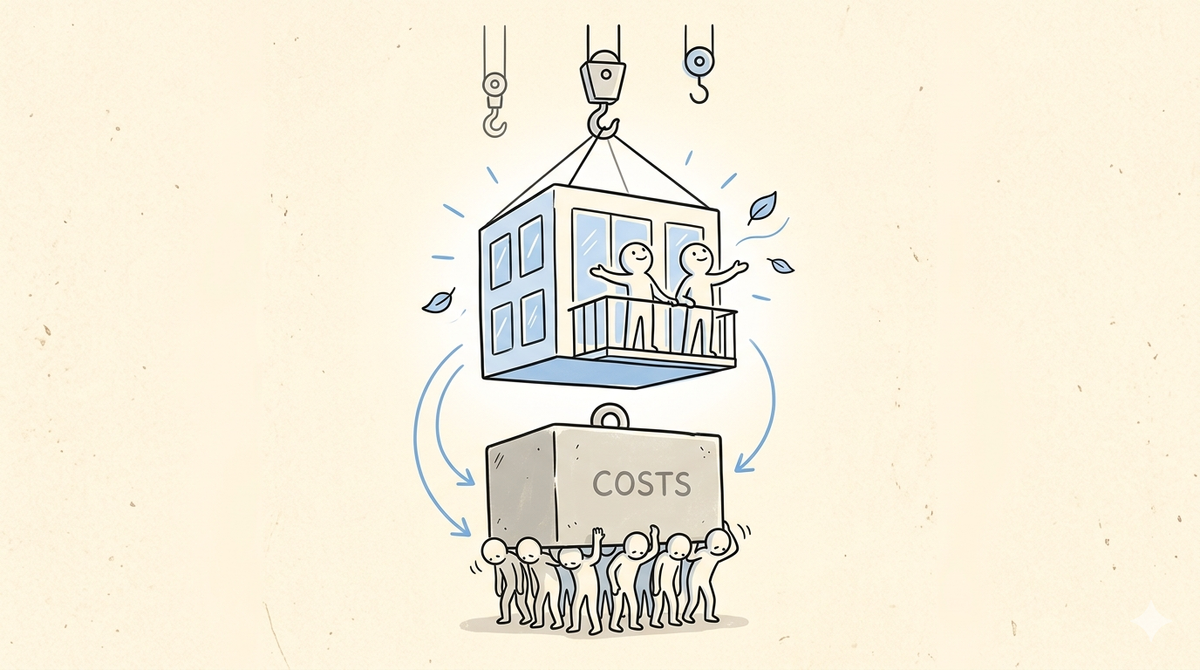
The rise of luxury high-rises like One Portwood Residences highlights the stark contrast between premium urban development and the daily struggles of ordinary commuters and workers sharing the same city spaces.
Every afternoon around five o’clock, the intersection of EDSA and Taft Avenue in Pasay City transforms into a sea of exhausted shoulders and scanning eyes. Thousands of workers—sales clerks from nearby malls, call center agents, security guards, and jeepney drivers—jostle for position to catch a ride home. Above them, the city skyline is constantly shifting. Cranes swing lazily against the setting sun, lifting concrete and steel to build the next towering monument to modern living.
For the average commuter waiting on the asphalt below, these rising towers feel less like a promise of progress and more like a distant, parallel universe. We see the colorful tarpaulins draped over construction fences showing pristine, glass-fronted residences where young professionals sip coffee on balconies overlooking the bay. But as the traffic crawls and the dust settles on our skin, a quiet question inevitably surfaces: Who are these massive developments really for, and what do they mean for the rest of us who make the city run every single day?
The News Behind the Skyline
Recently, headlines announced that construction giants have officially broken ground on a new ₱3.7-billion vertical residential project in Pasay City, dubbed One Portwood Residences. It promises "First-World engineering standards," premium spaces, and efficient execution. On paper, it is a massive win for the economy. It injects billions into the construction sector, expands corporate order books to the tune of tens of billions, and creates immediate employment for construction crews, masons, and project engineers.
To the business community, a project of this scale is a heartbeat check for economic health. It signals investor confidence, soaring property values, and the relentless appetite for high-end real estate in the metro. But for the intelligent, busy Filipino trying to balance a household budget, these macroeconomic triumphs require a bit of translation. Stripped of the corporate jargon, a ₱3.7-billion high-end tower means our urban centers are rapidly dense-packing luxury, even as the surrounding neighborhoods grapple with basic, everyday livability.
What This Really Means for Everyday Life
When a mega-structure begins its vertical climb, the local impact is felt almost immediately on the ground. For the immediate community in Pasay, the short-term reality is measured in decibels and traffic delays. Heavy equipment moving materials into narrow city streets inevitably ripples outward, adding minutes—and sometimes hours—to the daily commutes of workers who already spend a significant chunk of their lives stuck in transit.
But beyond the temporary inconvenience of construction noise and dust lies a much deeper, long-term shift in the urban ecosystem.
When luxury developments cluster in a specific area, they inadvertently drive up the cost of everything around them. Land values appreciate, which sounds excellent for wealthy property owners, but for the small-time carinderia owner, the sari-sari store tenant, or the family renting a modest apartment nearby, it signals an impending squeeze. Commercial rents rise, forcing local micro-businesses to either hike their prices or close shop. The affordable bowl of pares or the budget-friendly lunch option for nearby workers slowly gets replaced by trendy cafes and convenience store chains catering to a different demographic.
Furthermore, this rapid vertical expansion highlights a glaring urban imbalance. As premium towers claim their stake in the sky, the public infrastructure supporting them on the ground remains largely unchanged. The same aging drainage systems, overburdened power grids, and strained public transport lines must suddenly bear the weight of an increasingly dense population.
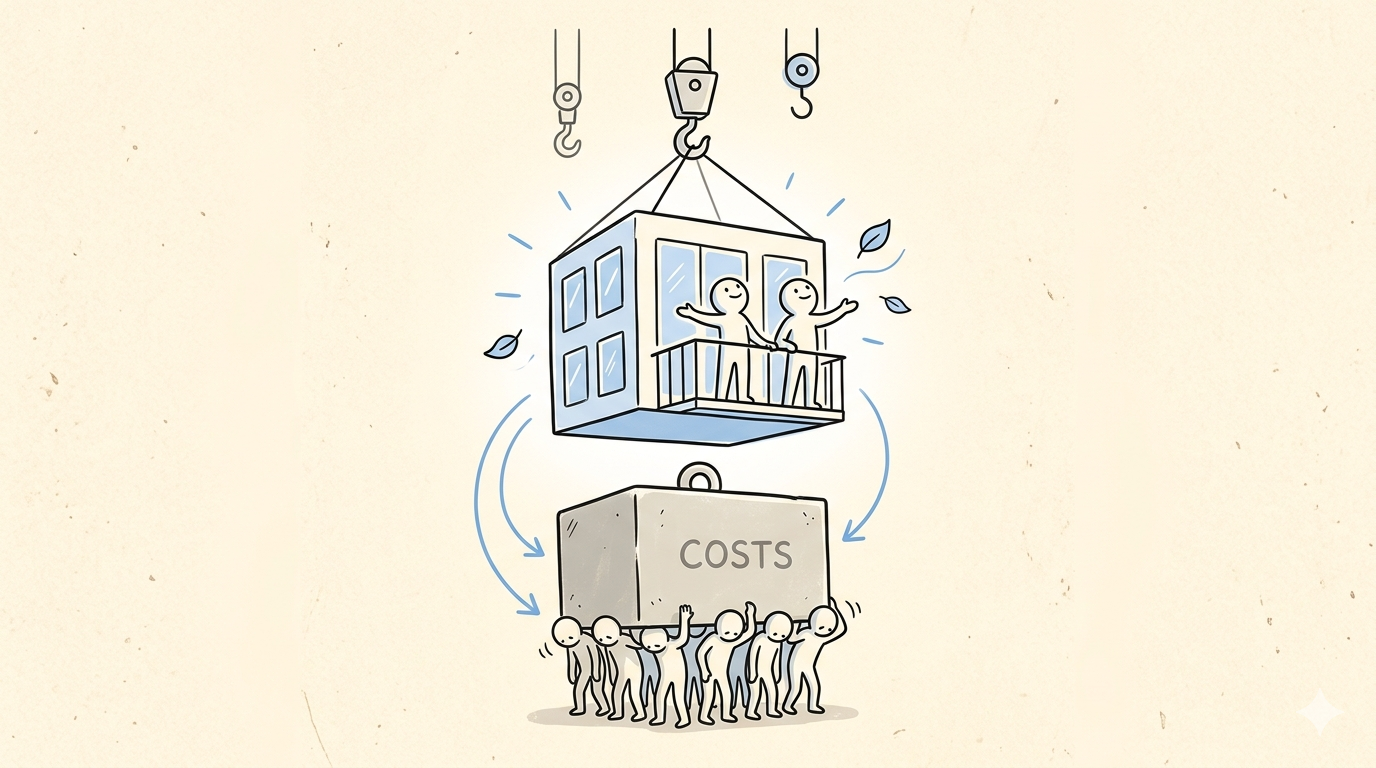
The Human Divide in the Concrete Jungle
To truly understand this phenomenon, one must look at the human cost of spatial inequality. Consider a typical construction worker building these premium units. He spends twelve hours a day tying rebar and pouring high-grade concrete to build a sanctuary of luxury he could never dream of affording. When his shift ends, he returns to an informal settlement or a cramped, rented room miles away, navigating a city that feels increasingly hostile to low-income earners.
Similarly, consider the public school teachers, city utility workers, and service staff who are the lifeblood of Pasay City. As property values skyrocket, affordable housing options within the city center vanish. This forces the workforce to move further and further into the peripheries—to neighboring provinces like Cavite or Laguna.
What follows is the erosion of family time. A mother who has to commute three hours each way to her workplace in Metro Manila loses six hours of her day to the road. Those are six hours stolen from helping her children with homework, preparing healthy meals, or simply resting. The rise of a luxury tower, therefore, can indirectly contribute to the fragmentation of domestic life for the working class who service those very buildings.
The Need for Balanced Urban Ecosystems
This stark contrast between private luxury and public neglect underscores a critical lesson for community development. True progress cannot be measured solely by how high our skyscrapers can reach or how many billions are added to corporate portfolios. Real development must be measured by how well a city protects and nurtures its most vulnerable citizens.
When cities prioritize high-end vertical spaces without an equal, aggressive commitment to socialized housing, public parks, and efficient mass transit, they risk turning urban centers into exclusive enclaves. A healthy city needs a mix of people—from the corporate executive to the street sweeper—and all of them deserve safe, affordable places to live and dignified ways to move around. This issue reflects why community-based efforts around urban livability, local micro-economies, and equitable resource distribution matter so deeply. Without a conscious effort to ground development in the realities of the majority, the gap between the skyline and the sidewalk will only continue to widen.
Looking Toward the Horizon
As the vertical construction continues in Pasay and across the rest of the metro, the changing landscape serves as a daily reminder of our collective choices. A city is not merely a collection of real estate assets, investment portfolios, and premium concrete structures. A city is a living, breathing community composed of human beings who require dignity, space, and a fair shot at a comfortable life.
The next time we look up at a towering new crane silhouetted against the clouds, perhaps we shouldn't just wonder how high the building will go or how much the units will cost. Instead, we should ask ourselves: What kind of city are we building on the ground, and how do we ensure that as our buildings rise, no Filipino family is left stranded in the shadows?
Lahat tayo namamangha kapag nakakakita ng mga bagong modernong condo at high-rise buildings na naglalakihan sa siyudad. Pero naisip ba natin kung ano ang epekto ng mabilis na pag-usbong ng karangyaang ito sa buhay ng mga ordinaryong manggagawa na nag-aabang ng masasakyan sa ibaba? Bakit nga ba habang tumataas ang mga gusali, tila mas sumisikip ang espasyo para sa karaniwang Pilipino?

Power Our Mission, Shape the Future
We empower single parents, PWDs, youths, seniors, and stay-at-home parents through digital livelihood.
Help us build resilient communities.
BUKLURAN remains open to partnerships, sponsorships, and collaborative initiatives that create meaningful community impact.
Whether through funding, in-kind support, volunteerism, or shared services, your organization can help strengthen programs that serve underserved communities.
Do you want to take part in our free livelihood programs, scholarship assistance, and community resource pooling initiatives? Membership is completely free.
Join BUKLURAN!
Register, volunteer, and become a member today.