Practical Innovation: How Nonprofits Are Harnessing AI for Real Community Impact
AI is reshaping community work. Discover how nonprofits are moving beyond the tech hype to drive real, practical impact.
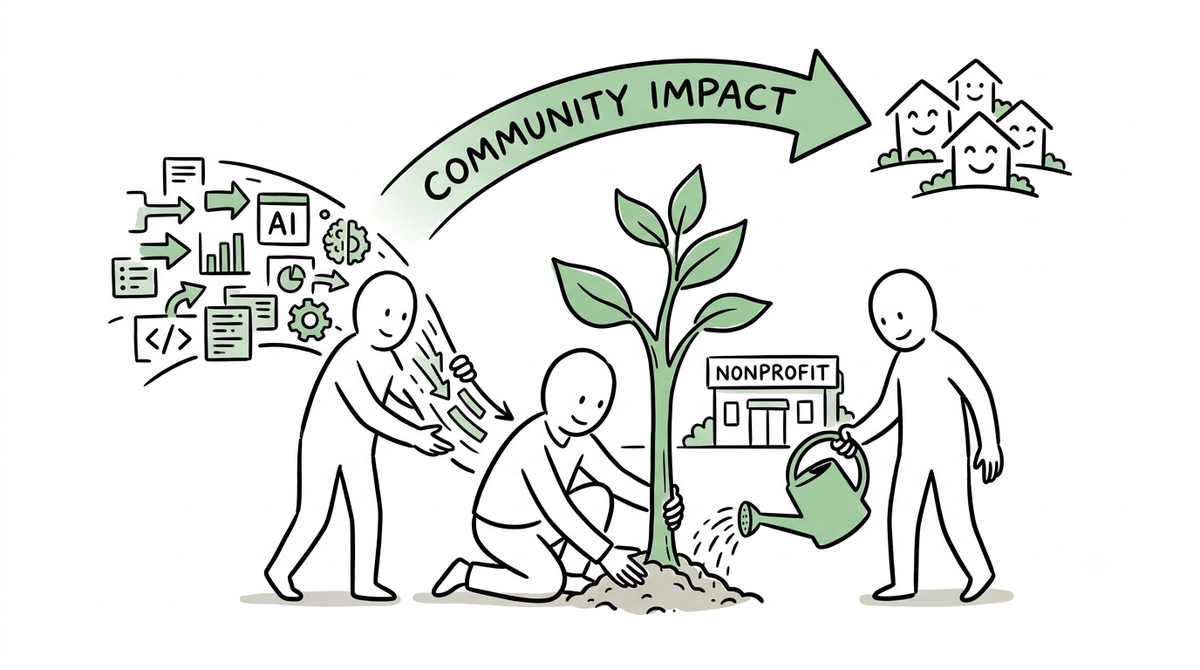
Artificial intelligence presents both opportunities and challenges for the social sector. This article explores how nonprofit leaders, volunteers, and staff can move past technology hype to adopt practical, mission-driven AI solutions. By learning together, civil society organizations can use simple digital tools to strengthen service delivery and better serve local communities.
Across the social sector, grassroots organizations and public-interest groups face a relentless balancing act. Demands for community support are rising, administrative expectations are growing, and time remains the most constrained resource of all. In this context, artificial intelligence (AI) has shifted from a futuristic concept discussed in corporate boardrooms into a daily conversation among executive directors, program staff, board members, and frontline volunteers.
Yet, for many community-based organizations, the rapid evolution of technology brings a mixture of curiosity and skepticism. Modern non-profit professionals are rarely looking for overly complex digital transformations or expensive tech overhauls; they are searching for practical ways to stretch limited resources, reduce staff burnout, and spend more time directly serving their constituents. Technology, at its best, serves as a bridge rather than a barrier. When approached intentionally, emerging digital tools allow civil society organizations to improve administrative workflows, refine communication, and respond to community needs with greater agility and precision.
Why This Topic Matters
The non-profit sector operates on human connection, empathy, and localized trust. Because of this mission-driven focus, discussions surrounding automation and machine learning can sometimes feel disconnected from the day-to-day realities of public service. Misconceptions abound: many assume AI requires vast technical departments, large budgets, or total automation of human interaction. Others worry that digital tools might undermine the personal, relational nature of community development work.
Addressing these concerns is vital for the long-term sustainability of the social sector. Organizations that ignore technological shifts risk getting bogged down by manual administration, drawn-out planning processes, and time-consuming documentation. Conversely, those that rush into adopting tech tools without a grounded strategy risk wasting scarce funds on platforms that fail to serve their mission.
The true value of AI in the non-profit space does not lie in shiny algorithms or flashy automation. It lies in simple, accessible applications that perform repetitive administrative tasks—such as drafting initial copy, analyzing survey responses, or summarizing lengthy meeting transcripts—so that human professionals can focus on strategy, relationship-building, and direct community care. By demystifying these tools and creating spaces for peer-to-peer learning, civil society can bridge the digital divide, ensuring that community-serving groups of all sizes benefit from technological advancement.
Event Objectives
To explore these practical intersections, social sector practitioners gathered for the AI Impact Hour for Nonprofits, hosted by TechSoup. The learning session was designed to demystify artificial intelligence through a grounded, peer-led framework.
- Demystify AI Applications: Provide clear, actionable demonstrations showing how everyday non-profit tasks can be simplified using basic AI tools.
- Encourage Peer Knowledge Sharing: Create a global forum where staff, volunteers, and leaders from both small and large organizations could share real-world experiments, challenges, and insights.
- Identify Pragmatic Use Cases: Move past hypothetical technology hype to focus on accessible, low-cost digital tools that support immediate organizational needs.
- Strengthen Digital Capacity: Empower non-profit personnel—regardless of their technical background—to make informed decisions about technology adoption within their programs.
Key Insights and Takeaways
1. Small Experiments Drive Meaningful Innovation
One of the primary takeaways from the session was that technology adoption does not require an all-or-nothing approach. Nonprofits often achieve the greatest success by starting with small, low-risk experiments. Whether utilizing AI assistants to outline grant proposals, generate social media copy, format survey data, or translate public materials into local languages, micro-innovations allow teams to build confidence while evaluating practical outcomes.
2. Peer-to-Peer Learning Outpaces Top-Down Instruction
Technology is changing too quickly for any single expert or manual to hold all the answers. The most valuable lessons often come directly from peers in the field who are navigating similar resource constraints. When grassroots practitioners share their lived experiences—including what failed and what worked—the collective intelligence of the sector grows. Collaborative learning models help break down technical intimidation and foster practical, community-centric problem solving.
3. Human Intent Must Guide Digital Execution
AI tools are assistants, not decision-makers. Every prompt, review process, and strategic output requires clear human oversight, context, and values. Organizations must view technology as a supportive layer that enhances human effort rather than replaces human judgment. Ethical considerations, data privacy, and cultural sensitivity must remain front and center whenever digital tools are introduced to community programs.
4. Overcoming the "Resource Gap" Myth
A common misconception among small civil society groups is that artificial intelligence is reserved for high-budget institutions. The discussions highlighted that many effective AI applications are built directly into existing, accessible software platforms or available through open, low-cost tiers. Financial constraints are no longer an absolute barrier to digital adoption; thoughtful integration and open-minded leadership matter far more than large software budgets.
Event Snapshot
Event Title: AI Impact Hour for Nonprofits
Host Organization: TechSoup
Date: July 8, 2026
Platform: Virtual (Cloud)
Target Beneficiaries: Non-Profit Leaders, Staff, Board Members, and Volunteers (Organizational Development Focus)
The virtual learning event brought together global participants ranging from small, local initiatives to established international non-profits. Rather than following a rigid lecture format, the session prioritized interactive conversations, real-time tool demonstrations, and shared problem-solving. Participants candidly discussed their real-world attempts at utilizing AI, examining both successful outcomes and common stumbling blocks in a supportive, collaborative environment.
From Learning to Community Impact
Capacity building within non-profits is never just about improving internal office workflows; it is about expanding the depth and quality of services delivered to people on the ground. When organizations learn to streamline administrative overhead through modern tools, the benefits flow directly downward into community programs.
Within initiatives such as BUKLURAN’s organizational development and learning frameworks, capacity building serves as a cornerstone for long-term community resilience. When partner organizations and public servants gain confidence in modern systems, several positive outcomes emerge:
- Smarter Resource Allocation: Saved staff hours can be redirected toward direct community engagement, stakeholder consultation, and field interventions.
- Enhanced Public Communication: Faster content generation allows groups to keep their communities informed, raise awareness about social issues, and communicate transparently during critical moments.
- Stronger Program Planning: Rapid data processing and text analysis assist teams in synthesizing community feedback, ensuring programs remain responsive to actual local needs.
Continuous organizational learning creates an environment where civil society entities are better equipped to deliver sustainable, meaningful impact. By cultivating digital literacy alongside traditional community development skills, non-profit teams build institutions that are both socially grounded and modernly equipped.
Looking Ahead
As society navigates rapid technological shifts, non-profit leadership must remain both open-minded and discerning. Technology alone will never solve structural social problems, end poverty, or build resilient neighborhoods. Those outcomes require empathetic leadership, policy engagement, dedicated advocacy, and authentic human relationships.
However, choosing to ignore emerging tools can slow down important public work. Modern non-profit practice calls for responsible, grounded adoption—learning what tools exist, evaluating their alignment with organizational values, and applying them thoughtfully to advance the public good. Through continuous learning, shared reflection, and ongoing adaptation, community organizations can ensure they remain responsive, effective, and fully prepared to meet the demands of tomorrow.
Join the Conversation
Every meaningful change begins with learning, reflection, and open conversation. As communities continue to navigate new challenges and technological opportunities, exchanging knowledge remains one of our most valuable tools for social progress.
How is your team exploring new digital tools and capacity-building strategies? What practices have helped your organization stay focused on its core mission while adopting modern approaches? We invite readers, advocates, professionals, and community leaders to share their experiences, explore new ideas, and participate in constructive dialogue aimed at building stronger, more resilient public service ecosystems.
AI Impact Hour for Nonprofits
July 8, 2026
Virtual
Organizational Development

This initiative was independently funded by the BUKLURAN Officers through personal contributions.
We gratefully acknowledge the groups and individuals who shared resources, services, venues, supplies, and other forms of community support.
• TechSoup
BUKLURAN remains open to partnerships, sponsorships, and collaborative initiatives that create meaningful community impact.
Whether through funding, in-kind support, volunteerism, or shared services, your organization can help strengthen programs that serve underserved communities.