Safeguarding the Mission: How Managed IT Support Drives Nonprofit Impact
Discover how managed IT services help nonprofits reduce security risks, lower costs, and stay focused on their core mission.
Nonprofits face mounting operational pressures, but maintaining a secure and reliable IT infrastructure shouldn't distract from driving real-world impact. This article explores how managed IT support offers a strategic bridge—enabling organizations to safeguard data, optimize productivity, and direct more resources toward community service.
Every day, nonprofit organizations work on the frontlines of social change, addressing critical needs in food security, community health, housing, and education. Yet, behind every successful field operation, food drive, or community workshop lies an intricate network of daily administration: donor databases, sensitive client records, internal communications, and financial systems.
For many mission-driven organizations, keeping these digital systems running smoothly is a constant, quiet struggle. A sudden server outage, a phishing attempt, or software that hasn't been updated in months might seem like minor technical annoyances, but in the public-interest sector, they represent real friction. Time spent troubleshooting hardware or recovering lost files is time taken directly away from serving families and strengthening local neighborhoods.
As digital tools become deeply woven into how public service gets done, nonprofits are realizing that technology is no longer just a back-office utility—it is a core foundation of community trust and operational stability.
Why This Topic Matters
Nonprofits operate under a unique set of constraints. They manage confidential beneficiary data and rely on public trust, yet they frequently work with lean teams and tight operational budgets. Traditionally, this has led to a reactive approach to technology, commonly known as the "break-fix" model: something stops working, and someone attempts to fix it as quickly as possible.
While this approach may seem cost-effective in the short term, it introduces significant long-term risks:
- Cybersecurity Vulnerabilities: Nonprofits are increasingly targeted by digital threats. A single data breach can compromise sensitive community data and permanently damage hard-earned public trust.
- Downtime and Lost Productivity: When staff members spend hours fixing software glitches or dealing with slow networks, project timelines stall and community outcomes suffer.
- Unpredictable Expenses: Emergency technical repairs often come with unexpected, high costs that strain carefully allocated project budgets.
To build long-term resilience, organizations need proactive systems that prevent problems before they occur. Managing technology strategically allows teams to move from constantly putting out operational fires to focusing entirely on their purpose.
Event Objectives
To address these pressing operational challenges, TechSoup hosted a specialized session designed to guide nonprofit leaders through modern, collaborative IT solutions.
The primary goals of the learning session were to:
- Demystify Managed IT Services: Clarify what outsourced IT support actually entails and how it differs from traditional, reactive technical support.
- Evaluate Operational Compatibility: Help organizations understand how external managed services can seamlessly integrate with and support existing in-house IT teams rather than replacing them.
- Mitigate Digital Risks: Identify actionable strategies to reduce network vulnerabilities, enhance data privacy, and maintain cybersecurity compliance.
- Optimize Resource Allocation: Demonstrate how predictable IT management models can help lower overall operational costs and increase day-to-day productivity.
Key Insights and Takeaways
1. Moving from Reactive to Proactive IT Management
One of the core takeaways from the session is the fundamental difference between traditional IT repairs and managed IT support. Managed services focus on continuous monitoring, regular maintenance, and preventive care. By identifying network weaknesses and patching security gaps early, organizations can prevent system downtime altogether, keeping daily operations running without unexpected interruptions.
2. Strategic Partnership, Not Replacement
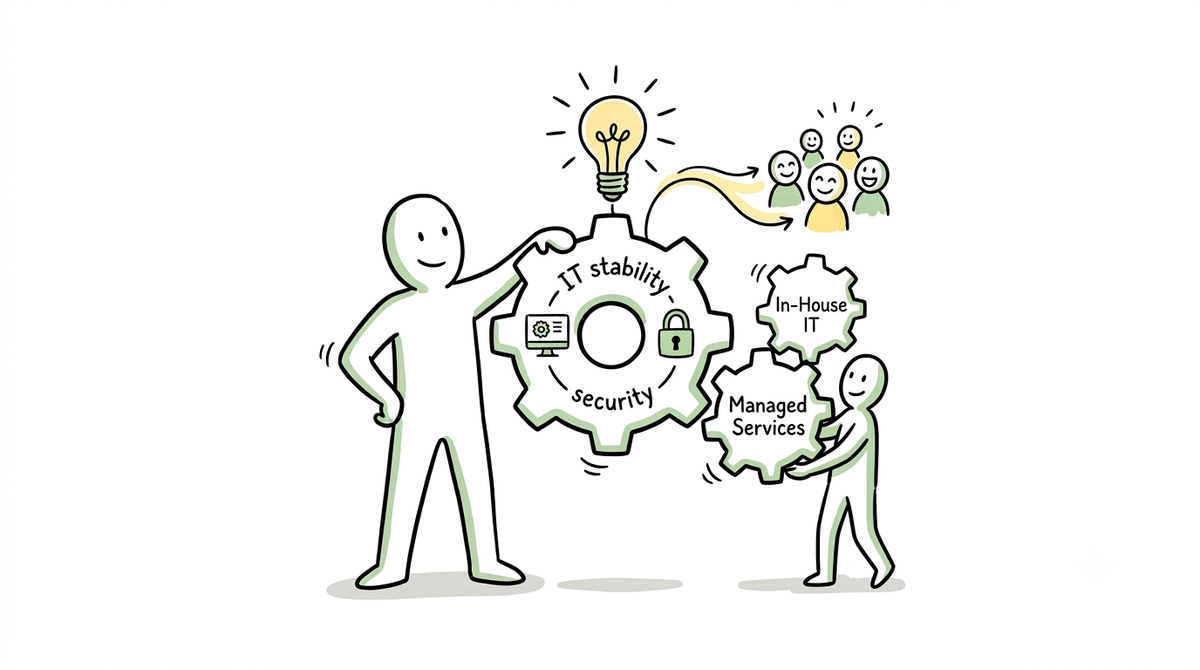
A common misconception among nonprofit leaders is that managed services are designed to replace internal IT staff. In reality, managed IT acts as an extension of an organization’s team. External providers handle routine background tasks—such as software updates, network monitoring, and system backups—which frees up in-house talent to focus on mission-aligned digital initiatives, staff training, and strategic technology planning.
3. Safeguard Community Trust Through Robust Security
Data security is a matter of ethics and community trust. Nonprofits hold sensitive personal information from the individuals and families they serve. Implementing managed IT support ensures that data protection protocols, firewall management, and secure backup systems are handled using industry best practices, protecting beneficiary privacy and keeping organizational records secure.
4. Cost Predictability and Productivity Gains
Unplanned technical fixes create unpredictable expenses that ruin operational planning. Managed IT operates on predictable subscription models, allowing nonprofits to budget accurately for tech costs. Furthermore, when staff members have access to reliable tools, stable networks, and responsive technical helpdesk support, their productivity rises, allowing more energy to go directly toward community-facing work.
Event Snapshot
- Event Title: Understanding Managed IT Support for Nonprofits
- Host Organization: TechSoup
- Date: July 22, 2026
- Platform: Virtual (Cloud)
This learning session brought together civil society professionals, nonprofit staff, and technology advocates to explore practical approaches to digital infrastructure. The discussion focused on equipping organizations with clear framework criteria to evaluate potential managed service providers and align technology choices with organizational needs.
From Learning to Community Impact
Continuous capacity building and strong internal systems are essential to sustaining meaningful community development. When a nonprofit strengthens its infrastructure—whether through administrative efficiency, financial stewardship, or digital security—it directly enhances its ability to deliver quality services to the public.
By adopting proactive IT support models, community-focused organizations achieve several key operational outcomes:
- Enhanced Service Delivery: Reliable systems mean uninterrupted community programs, smoother logistics, and timely responses to local needs.
- Stronger Data Stewardship: Protecting client data upholds the dignity and privacy of community members who rely on nonprofit services.
- Sustainable Resource Management: Saving time and money on tech emergencies means more resources can be funneled directly into program activities and community initiatives.
Investing in internal capacity is not a detour from public service; it is what makes long-term public service possible. Smart systems allow changemakers to focus on what matters most: building resilient, empowered communities.
Looking Ahead
The digital landscape will continue to evolve, presenting both new tools and new challenges for the public-interest sector. To remain effective, organizations must cultivate a culture of ongoing learning, flexibility, and proactive management.
Adapting to modern technology does not mean adopting every new trend; it means making thoughtful choices that safeguard organizational health and support staff well-being. By staying informed, seeking collaborative partnerships, and prioritizing steady capacity building, civil society organizations can ensure they remain responsive and ready to serve whatever needs arise tomorrow.
Join the Conversation
Every meaningful change begins with learning, reflection, and conversation. As communities continue to navigate new challenges and opportunities, the exchange of knowledge remains one of our most valuable tools.
We invite readers, advocates, professionals, and community members to continue exploring ideas that strengthen public service, empower local initiatives, and help build a more informed and resilient society. How is your organization approaching digital resilience this year? Share your thoughts and join the dialogue as we work together toward stronger, more capable community systems.
Understanding Managed IT Support for Nonprofits
July 22, 2026
Virtual
Organizational Development

This initiative was independently funded by the BUKLURAN Officers through personal contributions.
We gratefully acknowledge the groups and individuals who shared resources, services, venues, supplies, and other forms of community support.
• TechSoup
BUKLURAN remains open to partnerships, sponsorships, and collaborative initiatives that create meaningful community impact.
Whether through funding, in-kind support, volunteerism, or shared services, your organization can help strengthen programs that serve underserved communities.