Strategic Automation: Harnessing AI to Strengthen Mission-Driven Work
Discover how non-profits can automate repetitive tasks, optimize workflows, and keep human judgment at the center of impact.
Artificial intelligence offers transformative potential for non-profit operations, but adopting it effectively requires a structured, practical approach. Rather than focusing on shiny new tools, organizations must learn to audit their workflows, identify repetitive bottlenecks, and apply automation where it adds true efficiency. By keeping human discretion and empathy at the core of decision-making, mission-driven teams can harness AI to save time, reduce burnout, and direct more energy toward community service.
Across the social sector, mission-driven teams constantly grapple with a common structural tension: the gap between overwhelming community needs and finite organizational resources. Staff members and volunteers dedicate long hours to vital outreach, program delivery, and administrative upkeep. Yet, a substantial portion of their daily capacity is often consumed by repetitive operational tasks—transcribing meeting notes, reformatting donor spreadsheets, drafting routine announcements, and manually cross-referencing activity reports.
When administrative burdens accumulate, the time available for direct community engagement and strategic development contracts. The rapid emergence of accessible artificial intelligence (AI) tools has introduced a promising frontier for non-profit operations, but it has also brought a wave of uncertainty. Non-profit leaders and grassroots organizers rarely ask what AI can do in abstract terms; instead, they ask how to adopt modern digital tools responsibly without losing the human warmth, ethical integrity, and ground-level trust that define community work.
Understanding how to integrate smart automation into everyday non-profit workflows is not merely a technical exercise—it is an essential strategy for long-term capacity building and organizational sustainability.
Why This Topic Matters
The operational landscape for non-profit organizations and public service initiatives has grown increasingly complex. Teams are expected to maintain high levels of program delivery, ensure rigorous transparency, and communicate consistently across multiple channels, often while operating on lean budgets and limited staffing.
In resource-constrained environments, administrative inefficiency carries a high human cost:
- Staff and Volunteer Burnout: Valuable personnel spend energy on repetitive data entry and document preparation rather than relationship-building and problem-solving.
- Delayed Community Responsiveness: Manual workflows create bottlenecks in processing community inquiries, managing participant records, and coordinating outreach drives.
- Resource Fragmentation: Valuable insights buried in unorganized spreadsheets or narrative reports often remain underutilized due to a lack of time for analysis.
While commercial industries have rapidly adopted automated technologies to boost profit margins, civil society organizations must evaluate technology through a different lens: community impact, ethical stewardship, and operational longevity.
Adopting digital tools without a clear methodology can lead to fragmented systems, security risks, or generic, unfeeling communications that alienate community members. Conversely, avoiding technology altogether risks leaving non-profits overworked and under-resourced. The challenge lies in establishing a balanced framework—one where technology handles routine mechanical repetition so human professionals can focus on strategy, empathy, and meaningful service.
Event Objectives
To address these pressing operational questions, TechSoup hosted a specialized virtual learning session focused on practical digital transformation for non-profit organizations. Designed specifically for civil society practitioners, development communicators, and administrative teams, the workshop aimed to demystify artificial intelligence and turn abstract concepts into actionable, low-cost strategies.
The core learning objectives of the session centered on:
- Establishing a Practical Framework: Moving away from tool-centric hype to evaluate where and how automated systems fit into existing non-profit workflows.
- Mastering Workflow Audits: Learning to pinpoint hand-off points, repetitive tasks, and administrative bottlenecks that drain staff time.
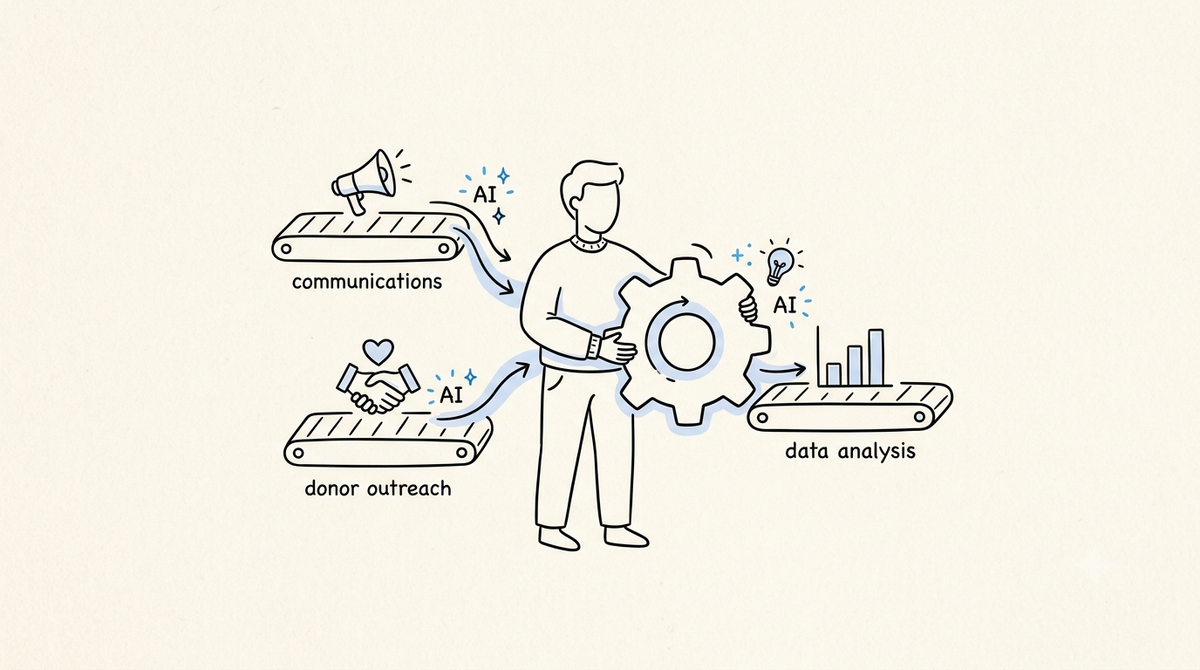
- Structuring Real-World Use Cases: Examining practical applications across three essential operational pillars—communications, donor outreach, and data analysis.
- Embedding Human Judgment: Operationalizing the core governance principle: technology handles the repetition, humans handle the judgment.
Key Insights and Takeaways
1. Shift Focus from Tools to Workflows
The pace of technological change often leads organizations into a cycle of constantly adopting new software without a clear strategy. The session highlighted that specific tools will continuously evolve, update, or be replaced, but the underlying methodology for workflow optimization remains stable.
Before adopting any digital tool, organizations must conduct a thorough workflow audit. This involves tracing a process from start to finish—such as managing participant sign-ups for a community workshop or preparing a quarterly impact report—and asking three fundamental questions:
- Which steps are purely administrative and rule-based?
- Where are the primary friction points and delays?
- What is the exact moment where human discretion, empathy, or contextual knowledge is required?
By identifying these transfer points, teams can introduce automation precisely where it saves time without disrupting the essential human touch.
+-------------------------------------------------------------------+
|                     NON-PROFIT WORKFLOW AUDIT                      |
+-------------------------------------------------------------------+
|  1. Map the Process      --> Identify start, end, and steps      |
|  2. Pinpoint Friction    --> Find repetitive administrative gaps   |
|  3. Define Human Roles   --> Isolate judgment & empathy points    |
|  4. Apply Automation     --> Delegate mechanical tasks to tech    |
+-------------------------------------------------------------------+
2. Tiered Implementation Across Operational Pillars
Digital readiness varies across organizations, and adoption should occur in manageable, ascending levels of complexity rather than through all-at-once overhauls.
- Level 1: Communications & Content StructuringRoutine communication tasks—such as reformatting event announcements into social media posts, generating initial outlines for newsletter updates, or drafting standardized follow-up emails—can be significantly accelerated. AI serves here as a "first-draft assistant," taking raw notes and producing structured templates for human review.
- Level 2: Outreach & Relationship CoordinationManaging engagement with partners, supporters, and community volunteers requires consistent follow-up. Automation tools can assist in categorizing inquiry types, drafting personalized response templates based on previous interactions, and scheduling reminder sequences, ensuring no community inquiry falls through the cracks.
- Level 3: Data Synthesizing & Impact AnalysisNon-profits collect substantial amounts of qualitative and quantitative data through attendance logs, feedback forms, and program evaluations. Instead of spending days manually sorting through survey rows, automated data tools can rapidly identify recurring themes, aggregate demographic trends, and pull out draft summaries, allowing program managers to spend more time interpreting results and refining services.
3. The Non-Negotiable Human-in-the-Loop Standard
A central theme throughout the learning event was the concept of the "accidental techie"—professionals who step into technology roles out of operational necessity rather than formal computer science training. For non-profits, this perspective is an asset because it anchors technology choices in practical, human realities.
Automated systems do not possess community context, cultural nuance, or lived empathy. Therefore, any effective workflow must incorporate strict human review mechanisms. Automated tools should draft, parse, compile, and format, but human practitioners must edit, verify, approve, and deliver. Protecting participant privacy, ensuring data accuracy, and maintaining authentic community relationships require continuous human oversight.
Event Snapshot
| Field | Details |
| Event Title | AI for Everyday Automation: Practical Tools You Can Use This Week |
| Host Organization | TechSoup |
| Guest Presenter | Dan Lombardi (Author of No Code Nonprofit) |
| Date | July 14, 2026 |
| Platform | Virtual (Cloud) |
Hosted by TechSoup as part of its ongoing organizational development offerings, the virtual workshop brought together non-profit workers, administrative staff, and community leaders seeking realistic digital solutions.
Guest presenter Dan Lombardi grounded the session in over a decade of hands-on fundraising and administrative experience across healthcare, corporate giving, and grassroots organizations. Drawing from his work with resource-constrained teams and his publication No Code Nonprofit, Lombardi provided an accessible, jargon-free roadmap for adopting modern automation while preserving the human-centered trust that makes community work effective.
From Learning to Community Impact
For organizations like BUKLURAN (Bukluran ng Kalinga ng Mamamayang Distrito Singko Inc.), operational learning is directly tied to the quality and reach of community support. As an organization dedicated to empowering single parents, persons with disabilities (PWDs), youth, stay-at-home parents, senior citizens, and underserved households, efficient internal management ensures that resources go where they are needed most.
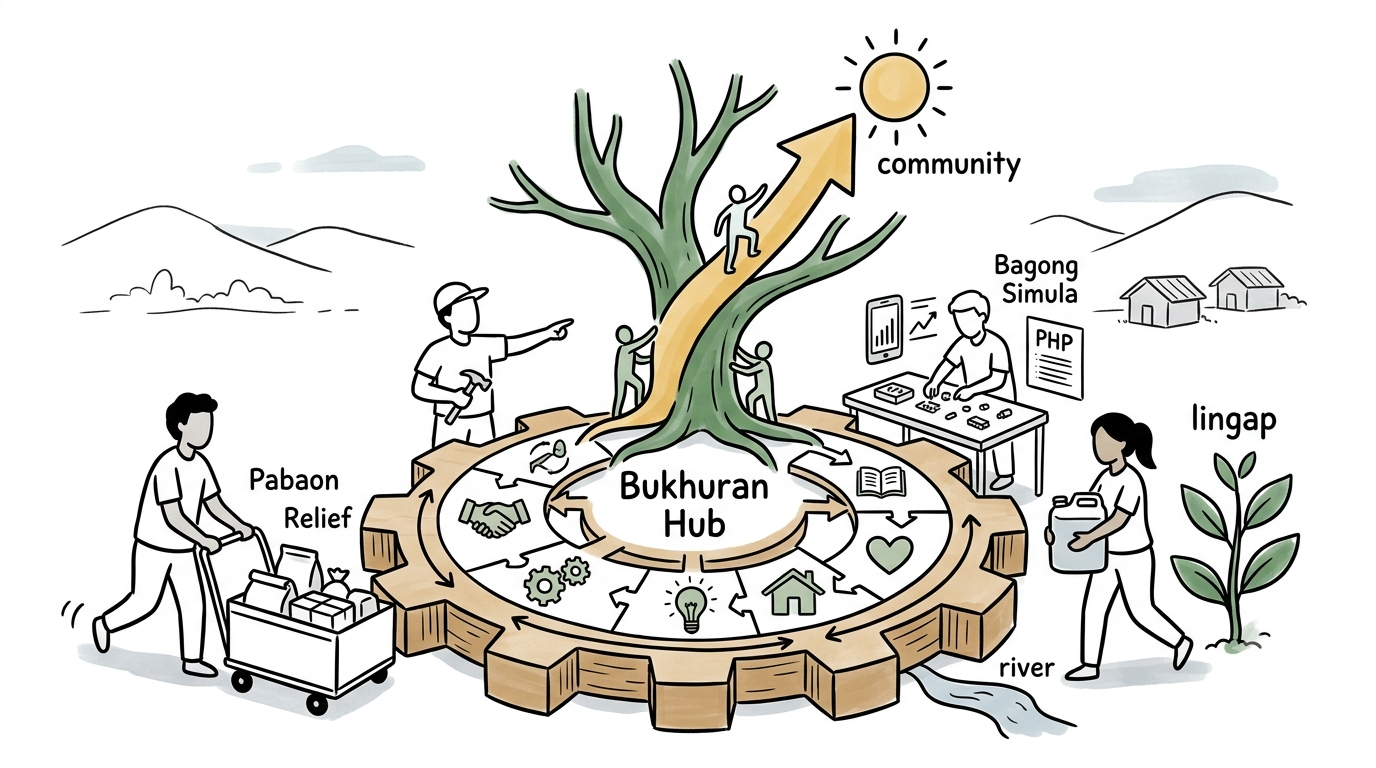
+-------------------------------------------------------------------+
|               INTEGRATED COMMUNITY PROGRAM MATRIX                 |
+-------------------------------------------------------------------+
|  PROGRAM              |  PRIMARY FOCUS AREA                       |
+-----------------------+-------------------------------------------+
|  BUKLURAN HUB         |  Resource Pooling & Livelihood Cycles    |
|  LINGAP KOMUNIDAD     |  Direct Humanitarian Aid & Health Outreach|
|  BAGONG SIMULA        |  Digital Readiness & Financial Literacy   |
|  KASANAYAN LEARNING   |  Practical & Technical Skills Training    |
|  PABAON PROGRAM       |  Educational Provisions for Children      |
|  PAMASKONG HANDOG     |  Seasonal Relief & Community Care         |
+-------------------------------------------------------------------+
When civil society organizations optimize their back-office procedures and administrative systems, the direct beneficiaries are the communities they serve:
- Strengthening Livelihood Programs: Through initiatives like the Bukluran Kasanayan Learning Program and Bagong Simula, BUKLURAN equips community members with practical skills, financial literacy, and digital readiness. By applying efficient workflow management internally, program coordinators can better manage training schedules, track participant progress, and connect families with sustainable economic opportunities.
- Streamlining Resource Distribution: Programs such as the Bukluran Hub rely on structured cycles for cooperative purchasing and distribution of essential household goods. Automating inventory tracking and communication tasks allows community managers to execute distribution cycles faster, reducing costs and passing savings directly to member households.
- Expanding Social Safety Nets: Direct humanitarian drives under Lingap Komunidad and educational assistance through the Pabaon Program require significant logistical coordination. Streamlined administrative tools enable volunteer teams to coordinate medical screenings, distribute health kits, and deliver educational supplies with greater agility and transparency.
Capacity building is not about adopting technology for its own sake; it is about building resilient, well-managed systems that allow non-profits to fulfill their promises to the community with dignity, consistency, and care.
Looking Ahead
As digital tools become more sophisticated and accessible, the non-profit sector stands at an important inflection point. Technology alone cannot solve systemic social challenges, end poverty, or build strong neighborhoods. Those outcomes require human compassion, sustained advocacy, community organization, and shared commitment.
However, when mission-driven organizations embrace continuous learning and thoughtful adaptation, they remove unnecessary operational friction. By demystifying tools like automated workflows and viewing them through a practical, ethical lens, civil society practitioners can protect their teams from administrative exhaustion. Responsive leadership means continually asking how we can refine our internal operations today so we can serve our communities more effectively tomorrow.
Join the Conversation
Every meaningful advancement in community service begins with reflection, shared knowledge, and constructive dialogue. As non-profits, public servants, and grassroots advocates navigate an evolving digital landscape, open exchanges about organizational strategy help everyone build stronger, more resilient systems.
How is your organization addressing administrative bottlenecks and exploring digital tools? What approaches have helped your team maintain a human-centered focus while improving operational efficiency?
We invite readers, non-profit professionals, community volunteers, and civic advocates to share their insights, reflect on their operational experiences, and join us in building a more collaborative, informed, and capable civil society.
AI for Everyday Automation: Practical Tools You Can Use This Week
July 14, 2026
Virtual
Organizational Development

This initiative was independently funded by the BUKLURAN Officers through personal contributions.
We gratefully acknowledge the groups and individuals who shared resources, services, venues, supplies, and other forms of community support.
• TechSoup
BUKLURAN remains open to partnerships, sponsorships, and collaborative initiatives that create meaningful community impact.
Whether through funding, in-kind support, volunteerism, or shared services, your organization can help strengthen programs that serve underserved communities.