Streamlining Behind-the-Scenes Operations to Elevate Community Impact
Discover how structured workflows and project management platforms enable mission-driven teams to execute seamless events with ease.
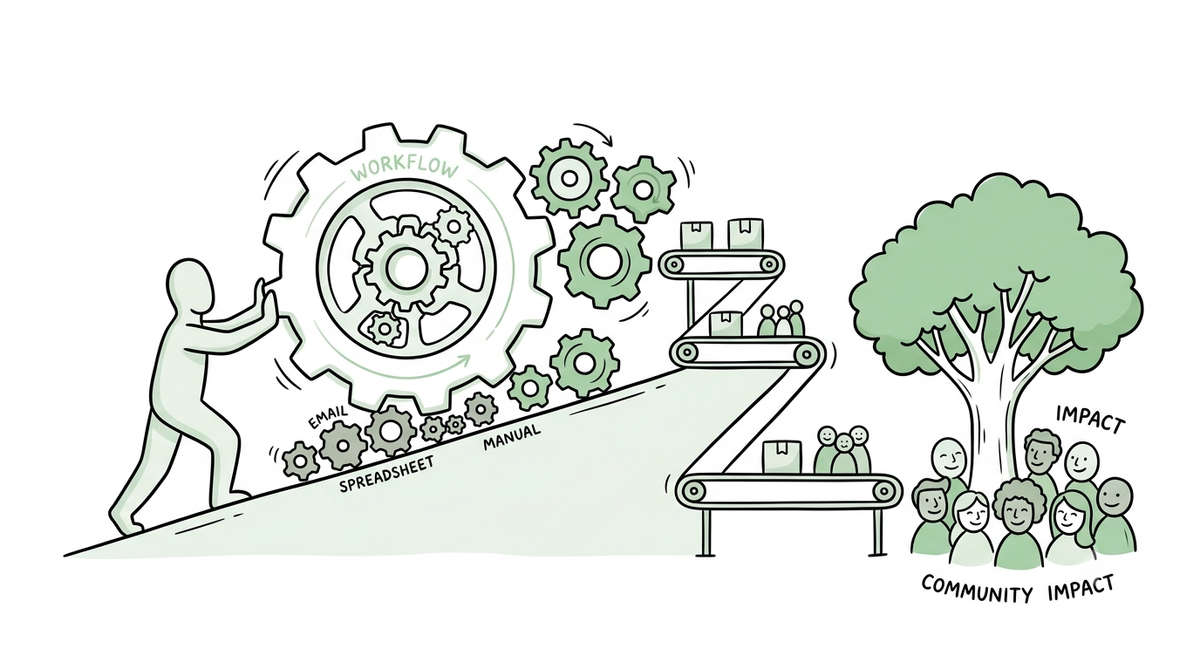
Large-scale events require tight coordination, clear timelines, and unified communication—demands that often stretch lean nonprofit teams to their limits. This article explores how adopting customizable project management workflows reduces operational drag, frees up critical bandwidth, and allows organizations to keep their core mission at the forefront. By shifting from scattered, manual tracking to centralized systems, public-service teams can execute complex initiatives with greater confidence and community impact.
Behind every successful community summit, annual fundraiser, or fall educational conference lies an intricate network of moving parts. Speakers must be coordinated, sponsors engaged, logistics mapped, and volunteers organized—all usually operating against tight deadlines and fixed budgets. For mission-driven teams, the challenge rarely stems from a lack of vision or dedication. Instead, it comes down to operational bandwidth. When small teams rely on fragmented email threads, scattered spreadsheets, and manual check-ins to handle complex execution, administrative overhead quickly swallows the time and energy that should be going toward community engagement.
Creating long-term community value depends not only on what an organization delivers, but on how sustainably it operates behind the scenes. When internal processes are clear and centralized, organizations gain the breathing room needed to adapt to changing local needs, foster stronger partnerships, and deliver higher-quality programs. Modernizing operational workflows isn't merely an administrative upgrade; it is a vital step toward build capacity and deepening real-world effectiveness.
Why This Topic Matters
Public service and civil society organizations often operate under significant resource constraints, with staff members balancing multiple roles at once. In this environment, organizing major events or multi-stakeholder projects can create operational bottlenecks. Without shared tracking systems, critical details fall through the cracks, teams suffer from communication silos, and burnout becomes a real risk.
When project execution relies on heavy manual tracking, several challenges surface:
- Fragmented Communication: Updates remain trapped in individual inboxes, leading to duplicated efforts or misaligned priorities across cross-functional teams and volunteers.
- Lack of Real-Time Visibility: Leadership and project owners struggle to get an accurate snapshot of progress, making it difficult to spot delays before they disrupt deadlines.
- Administrative Fatigue: Precious hours are spent chasing status updates and manually compiling reports rather than focusing on high-value community strategy.
To serve public interests effectively, organizations must treat operational structure as a core strategic asset. Standardizing workflows and leveraging modern collaboration platforms shifts organizational energy from managing chaos to driving purpose.
Event Objectives
To address these operational realities, TechSoup hosted a dedicated learning session focused on helping civil society organizations simplify complex execution through modern project management practices. The session brought together professionals seeking practical strategies to streamline their event workflows and organizational processes.
The primary goals of the learning session included:
- Centralizing Event Workflows: Demonstrating how lean teams can bring speakers, sponsors, logistics, and internal approvals into a single, unified view.
- Enhancing Team Alignment: Exploring methods to manage cross-functional staff, external vendors, and volunteers without overwhelming communication channels.
- Automating Repetitive Tasks: Illustrating how simple workflow automations reduce manual check-ins, routine follow-ups, and data entry errors.
- Improving Decision-Making with Real-Time Dashboards: Showing how visual progress tracking gives leaders immediate insight into event readiness and task status.
Key Insights and Takeaways
Managing a major initiative—such as a fall conference or a regional community forum—requires turning chaotic task lists into predictable, transparent systems. During the session, several core principles emerged for how public-benefit organizations can modernize their execution strategies using tools like monday.com.
1. Centralization Ends Information Silos
One of the largest hurdles in collaborative work is scattered information. When venue contracts live in one folder, speaker bios sit in an inbox, and sponsor commitments reside in a spreadsheet, miscommunication is almost inevitable. Centralizing tasks onto customizable visual boards creates a single source of truth. Every team member, regardless of their role, can instantly see what has been completed, what is currently in progress, and who owns each deliverable.
2. Automation Frees Up Critical Capacity
Manual follow-ups swallow valuable staff time. By setting up automated triggers—such as sending a notification when a contract status changes or generating a reminder when a deadline approaches—teams eliminate the friction of routine administrative chasing. Reducing manual work allows staff to redirect their energy toward building meaningful relationships with speakers, participants, and community stakeholders.
3. Visual Dashboards Enable Proactive Planning
Static lists make it difficult to evaluate overall progress or identify upcoming roadblocks. Visual management dashboards offer high-level visibility across multiple project tracks simultaneously. By tracking timelines, resource allocation, and pending approvals visually, project leaders can catch delays early, adjust workloads proactively, and ensure smooth execution from preparation to kickoff.
4. Flexible Workflows Support Diverse Stakeholders
Nonprofit work rarely involves just internal staff. Major events depend on volunteers, board members, external vendors, and partner organizations. Flexible project platforms allow organizations to create tailored views and access levels, ensuring external collaborators get the clear, focused information they need without getting lost in internal administrative details.
Event Snapshot
| Metric / Detail | Event Information |
| Event Title | Fall Conference Planning Made Simple: Project Management for Nonprofits with monday.com |
| Host Organization | TechSoup |
| Date | July 9, 2026 |
| Platform | Virtual (Cloud) |
| Focus Area | Organizational Development & Capacity Building |
The virtual session brought together nonprofit leaders, event coordinators, and administrative professionals looking to enhance their operational infrastructure. Through practical demonstrations, participants examined how flexible digital boards and automated workflows convert complex event preparation into structured, manageable steps.
From Learning to Community Impact
Building strong operational systems is directly tied to an organization's capacity to deliver public benefit. When civil society groups spend less time resolving administrative missteps, they can invest more energy into direct community engagement, thoughtful programming, and sustainable partnership building.
Within BUKLURAN’s wider framework of organizational development and capacity building, adopting efficient operational habits helps institutions stay resilient and responsive. Modernizing infrastructure is not about adopting technology for its own sake; it is about ensuring that public-service organizations remain accountable, transparent, and structurally capable of achieving their missions.
When a team executes a seamless, well-coordinated conference or workshop, the immediate beneficiary is the community itself. Participants experience better-organized discussions, partners build stronger working relationships, and the insights generated during the event reach a broader audience. Sound internal execution builds organizational credibility, strengthening the overall network of public-service initiatives.
Looking Ahead
In an era of evolving community needs and tight resources, ongoing organizational learning is essential. Adapting to modern management approaches allows nonprofits to move beyond reactive firefighting and embrace intentional, long-term planning. Operational agility ensures that organizations stay durable, capable of pivoting when challenges arise, and always ready to serve their stakeholders effectively.
Strengthening internal capacity is an ongoing journey. Every process refined, workflow automated, and communication channel simplified directly contributes to an organization’s long-term sustainability. By investing in clear management systems and practical digital tools, civil society institutions protect their most valuable resource—their people—ensuring that their mission remains front and center for years to come.
Join the Conversation
Every meaningful improvement in community work begins with reflection, shared experiences, and open dialogue. As organizations navigate shifting operational landscapes, learning how to streamline behind-the-scenes work remains a vital tool for long-term sustainability.
We invite nonprofit leaders, advocates, coordinators, and public-service professionals to share their perspectives: How is your team adapting its workflows to keep up with growing community demands? What operational strategies have helped keep your core mission front and center? Let’s continue the conversation, learn from one another, and build stronger, more resilient organizations together.
Fall Conference Planning Made Simple: Project Management for Nonprofits with monday.com
July 9, 2026
Virtual
Organizational Development & Capacity Building
This initiative was independently funded by the BUKLURAN Officers through personal contributions.
We gratefully acknowledge the groups and individuals who shared resources, services, venues, supplies, and other forms of community support.
• TechSoup
BUKLURAN remains open to partnerships, sponsorships, and collaborative initiatives that create meaningful community impact.
Whether through funding, in-kind support, volunteerism, or shared services, your organization can help strengthen programs that serve underserved communities.