Sulu Sea Gas Potential Triples: What the Halcon Upgrade Means for Philippine Energy Security
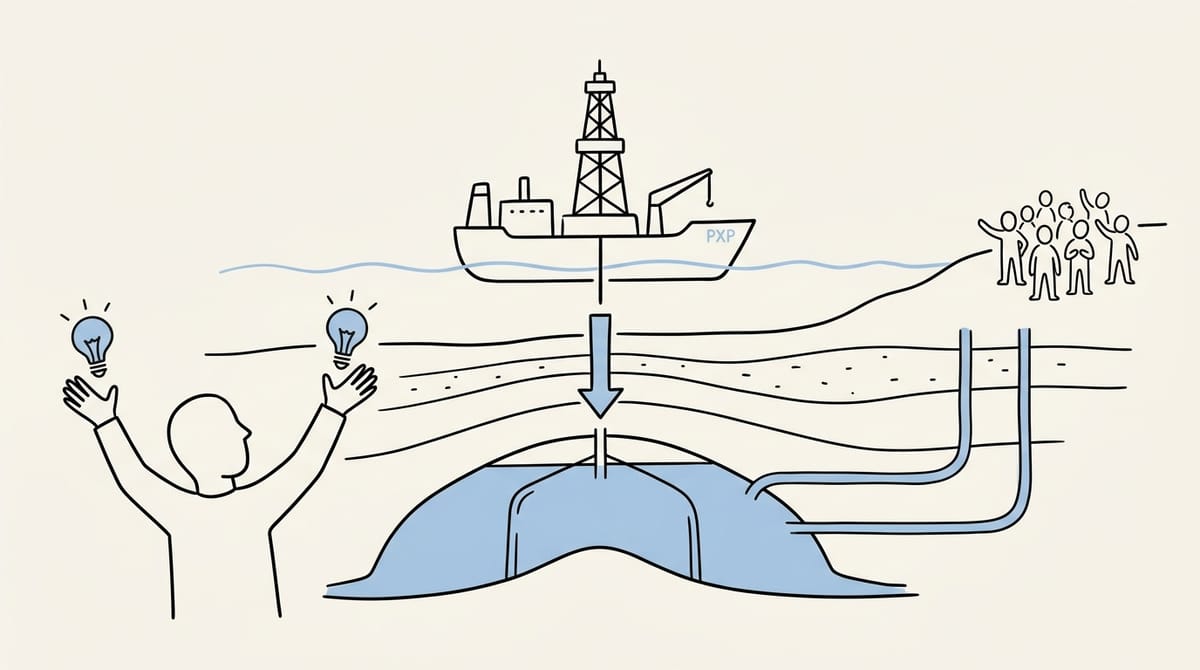
PXP Energy Corp. and project operator Tetragon Energy Ltd. announced a major resource upgrade for the Halcon prospect under Service Contract 80 in the Sulu Sea. Detailed evaluations tripled the prospective mid-case gas resource estimate from 2.6 trillion cubic feet (TCF) to 8.0 TCF. While this signals long-term potential for domestic energy independence, the findings remain unconfirmed until offshore exploration drilling takes place in the coming years.
Energy exploration operator Tetragon Energy Ltd. and partner PXP Energy Corp. disclosed a significant resource upgrade for the Halcon prospect in the Sulu Sea under Service Contract 80 (SC 80). Following detailed reviews of seismic data from the Department of Energy, the gross mid-case (P50) prospective resource estimate for recoverable gas jumped from 2.6 trillion cubic feet (TCF) to 8.0 TCF.
The geological chance of commercial success at the site also improved from 18 percent to 24 percent. While the announcement sent positive ripples through local financial markets, understanding what this means requires looking past corporate figures to examine the practical implications for electricity supply, household budgets, and national energy independence.
PXP, Partners See Bigger Gas Potential in Sulu Sea's Halcon Prospect
"This three-fold increase in our Mid Case (2U) prospective resource for a key prospect in our Philippines acreage highlights the true scale and opportunity we have in these exciting permits."
Why Energy Resources Matter to Every Household
In the Philippines, fuel supply directly influences daily living costs. A substantial portion of the country's electricity supply depends on natural gas and imported coal. When global fuel prices rise, power utilities pass those costs directly to consumers through generation charges on monthly electric bills.
The Malampaya gas field off Palawan has historically supplied a major portion of Luzon's electricity grid. However, as legacy domestic gas fields naturally deplete, the Philippines has increasingly relied on imported Liquefied Natural Gas (LNG) and coal. Finding new domestic gas deposits is vital for stabilizing power costs, supporting job growth, and ensuring that households and small businesses face fewer sudden rate spikes.
What the Headlines Don't Fully Explain
While an estimate of 8 trillion cubic feet is substantial—roughly equivalent to or larger than the original reserves found in Malampaya—several key factors define what this update actually means:
- These Are "Prospective" Resources, Not Confirmed Reserves: The 8 TCF figure is an estimate based on geological mapping and advanced 3D seismic data. No new gas has been physically extracted yet. Confirmation requires drilling deepwater exploratory wells into the ocean floor.
- Timeline to Actual Power Generation: Offshore energy development takes years. Advanced software reprocessing of 4,600 square kilometers of seismic data is expected to run through mid-2027. Only after securing international partners (farm-out deals) will physical exploratory drilling begin. If gas is verified, building offshore platforms and undersea pipelines to bring gas to power plants typically takes 5 to 10 years.
- Geological Similarities: The upward revision occurred because geologists compared the Sulu Sea formations to recent major deepwater gas discoveries made near Borneo in Malaysian and Indonesian waters. While encouraging, ocean geology can vary significantly across borders.
How Potential Offshore Gas Affects Ordinary Filipinos
If exploration drilling succeeds and leads to commercial production, the long-term impact on Philippine households could be meaningful:
- Power Bill Stability: Domestic natural gas reduces reliance on volatile global fuel imports. Over time, a secure local gas supply helps shield household electricity budgets from foreign supply shocks.
- Economic Opportunities in Southern Mindanao: SC 80 and SC 81 are jointly licensed by the national government and the Bangsamoro Autonomous Region in Muslim Mindanao (BARMM). Long-term energy projects bring regional infrastructure, local employment, and government royalties that can fund local public services.
- Grid Reliability: Natural gas serves as a reliable fuel source for grid stability, providing consistent baseload power alongside expanding renewable energy systems like solar and wind.
What Consumers and Communities Should Monitor
- Exploration Milestones: Watch for technical updates from the Department of Energy regarding seismic data completion (expected by mid-2027) and announcements of initial test drilling.
- Environmental and Marine Protection: Offshore drilling requires strict environmental compliance. Coastal and fishing communities will need transparent updates to ensure local marine ecosystems remain protected during deepwater operations.
- Energy Policy and Rates: Track energy policy discussions regarding how future domestic gas reserves will be integrated into the national grid to ensure savings are passed down to end-consumers.
Looking Ahead
The upgraded Halcon prospect in the Sulu Sea represents a promising step toward long-term energy security for the Philippines. However, prospective estimates are the starting point of a long process, not an immediate fix for today's electricity bills. Continued technical evaluation, international investment, and careful environmental stewardship will determine whether this potential converts into actual domestic energy.

Power Our Mission, Shape the Future
We empower single parents, PWDs, youths, seniors, and stay-at-home parents through digital livelihood.
Help us build resilient communities.
BUKLURAN remains open to partnerships, sponsorships, and collaborative initiatives that create meaningful community impact.
Whether through funding, in-kind support, volunteerism, or shared services, your organization can help strengthen programs that serve underserved communities.
Do you want to take part in our free livelihood programs, scholarship assistance, and community resource pooling initiatives? Membership is completely free.
Join BUKLURAN!
Register, volunteer, and become a member today.