The Electronic Wallet for Health: What Free Outpatient Medicines Mean for the Filipino Home
PhilHealth's Gamot program expands to 75 free medicines. Here is why this electronic wallet for health matters for your family's budget.
While PhilHealth’s expanded Gamot program brings critical financial relief by covering 75 types of outpatient medicines, long-term relief for Filipino families depends on fixing local health infrastructure and bureaucratic barriers.
Imagine sitting at the dining table on a payday evening. You have just accounted for the rice, the electricity bill, the children’s school allowance, and the jeepney fare for the coming two weeks. Then, you look at the remaining corner of the budget. It is the portion reserved for your mother’s maintenance pills for high blood pressure, or perhaps your husband’s daily metformin for diabetes. For millions of Filipino families, this is the moment where the budget breaks. You are forced to make a choice that no one should ever have to make: do we buy food for the week, or do we buy the capsules that keep our loved ones alive?
In the Philippines, healthcare has long been an outpatient emergency. While a hospital stay can trigger significant PhilHealth deductions, walking into a clinic, getting a prescription, and buying maintenance drugs at a local pharmacy has traditionally been a lonely, out-of-pocket battle. According to national health accounts, out-of-pocket spending still accounts for a massive chunk of how Filipinos pay for medicine, turning chronic illnesses like hypertension or asthma into a slow, grinding financial drain on the household.
The News at a Glance
A major shift is underway to address this specific vulnerability. The Philippine Health Insurance Corporation (PhilHealth) has expanded its Guaranteed and Accessible Medications for Outpatient Treatment—better known as the Gamot program. Initially covering just 21 basic medicines, the program now covers 75 types of outpatient medications.
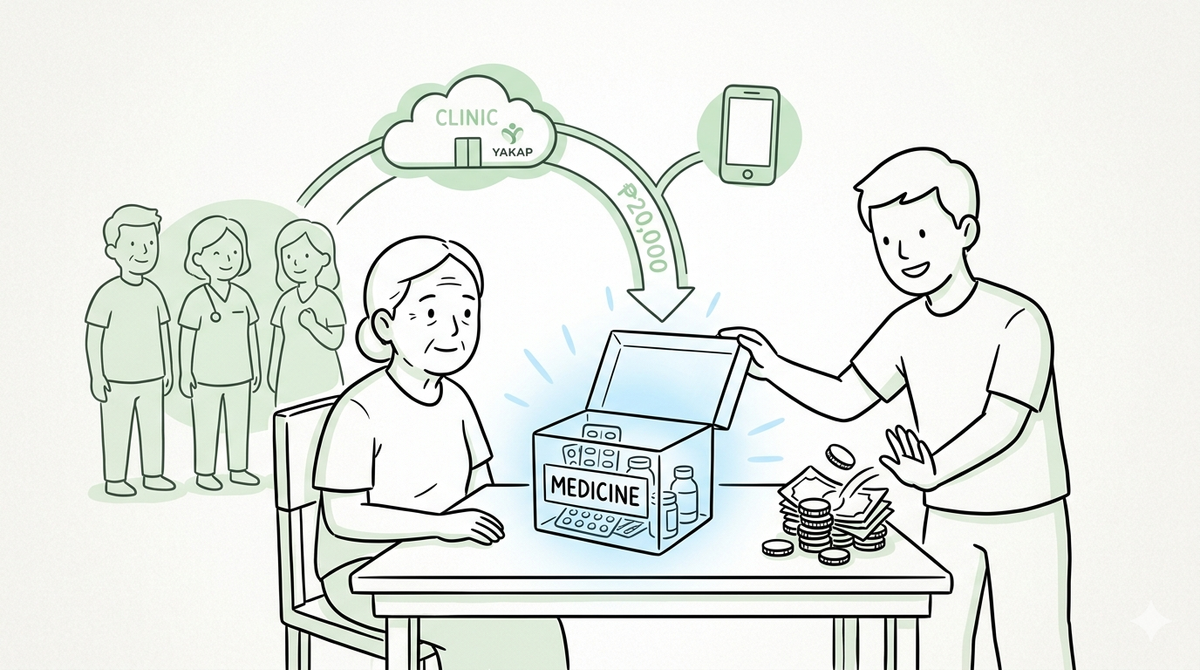
Even more significant than the expanded list is the financial ceiling: every qualified PhilHealth member now has access to up to P20,000 worth of free medicines annually. Following its initial launch, the program has expanded its rollout to areas like Quezon Province, marking a systemic push to move universal healthcare out of the big cities and directly into the provinces.
To access this benefit, the process has been anchored to primary care networks:
- Registration: Members must register under a certified "Yakap" (Yaman ng Kalusugan) clinic or primary care facility. This can be done via the eGovPH mobile application, the online PhilHealth member portal, or by visiting a local PhilHealth office.
- Consultation: Patients must see a PhilHealth-certified physician at these accredited centers to receive an official prescription.
- Dispensing: By presenting a valid government-issued ID and the prescription at an accredited partner pharmacy or clinic, the medicine is dispensed with zero out-of-pocket cost, deducted directly from the patient’s P20,000 annual limit.
The coverage spans a wide array of treatments, focusing heavily on the chronic conditions that drain family pockets: infections, asthma, chronic obstructive pulmonary disease (COPD), diabetes, high cholesterol, hypertension, heart conditions, and certain nervous system disorders.
Beyond the Headline: An "E-Wallet" for Health
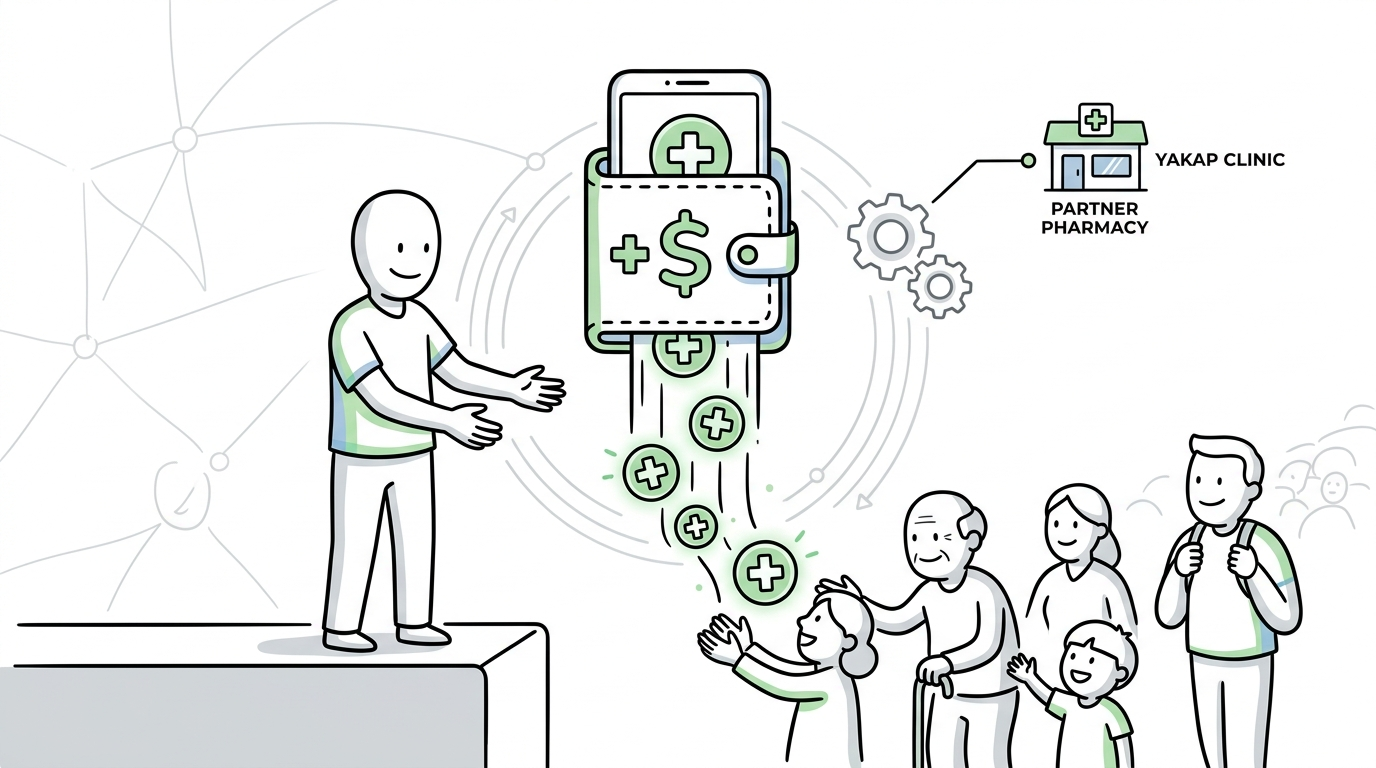
During the launch, health officials described the Gamot package as an "electronic wallet" for medicine. It is a helpful analogy, but it requires closer inspection. Having a loaded digital wallet is only useful if the store you are standing in actually has the goods on the shelf, and if the network connection is working.
For the average citizen, the true value of this program lies in the shift from reimbursement to point-of-service availability. Historically, public health benefits required patients to buy the medication first, collect a stack of official receipts, fill out complex forms, and wait months for a check that might only cover a fraction of what they spent. By transforming the benefit into a direct, pre-approved ceiling of P20,000, the barrier to entry is lowered significantly.
However, moving from policy to reality reveals several operational hurdles that everyday citizens must navigate:
- The Digital Divide: While registering through the eGovPH app sounds convenient on paper, it assumes a lot. It assumes the user has a smartphone, a stable internet connection, and the digital literacy to navigate government verification systems. For a senior citizen living alone in a rural barangay, this digital gatekeeping can feel like an invisible wall.
- The Gateway Infrastructure: You cannot simply walk into any commercial drugstore and ask for free medicine. The system depends entirely on the proximity of accredited Yakap clinics. If a family has to spend P300 on tricycle and bus fares just to visit an accredited doctor and pharmacy, the "free" aspect of the medicine begins to erode.
- The Supply Chain Challenge: Local health systems are notorious for stockouts. A prescription for a specific cardiovascular drug is useless if the accredited pharmacy's shelves are bare. The Department of Health (DOH) has emphasized that regional offices are working to secure sufficient supply, but local supply chain reliability remains the ultimate test of the program's success.
What This Means for the Filipino Home
To understand why this policy matters, one must look at the anatomy of a typical household budget. When an ordinary worker earns minimum wage, expenditures are tightly fixed. Food, rent, utilities, and education leave zero room for emergencies.
When a family member is diagnosed with a chronic condition like type 2 diabetes, the illness acts as a permanent, uncredited tax on the family. The patient often starts cutting doses—taking a pill every other day instead of daily, or splitting tablets in half to make the box last longer. This does not save money; it merely delays a more expensive, catastrophic medical emergency, such as a stroke or kidney failure, which can completely bankrupt a family.
By providing a P20,000 annual buffer specifically for outpatient medicines, the Gamot program essentially returns that money to the household budget. It means a mother can buy full-cream milk for her children instead of choosing between their nutrition and her husband's maintenance pills. It means a grandfather can maintain his heart medication consistently, preserving his quality of life and preventing avoidable hospitalizations.
The Community View
This systemic shift highlights exactly why local, community-based efforts matter. National policies create frameworks and allocate funds, but the actual delivery of care happens at the ground level. Whether it is navigating the eGovPH app, setting up local health desks, or ensuring that the most vulnerable residents in a community know that these free medicines exist, the success of universal health care relies on community awareness and local support networks. When local health volunteers and neighborhood organizations actively assist families in registering for their primary care clinics, they are bridging the gap between a distant government policy and a family's wellness.
A Long Road Ahead
The expansion of the PhilHealth Gamot program to 75 medicines is undeniably a step in the right direction. It shows an understanding that health security is not just about surviving a major operation in a hospital; it is about staying healthy and productive in our daily lives.
But as this program rolls out across more provinces, our role as citizens is to remain both informed and vigilant. We must look beyond the announcements and ask the practical questions: Are the medicines actually available in our local clinics? Is the registration process easy enough for our elders? Are the primary care networks reaching the farthest barangays?
True health security does not arrive when a press release is published, or when a ribbon is cut at a new provincial center. It arrives on the quiet evening when a worker looks at the family budget and realizes they no longer have to choose between their health and their survival.
Lahat tayo masaya kapag may bagong programang pangkalusugan ang gobyerno, pero alam mo ba kung paano ito totoong makakatulong sa bulsa ng pamilya mo? May bagong pinalawak na benepisyo ang PhilHealth kung saan maaari kang makakuha ng hanggang P20,000 halaga ng libreng gamot kada taon para sa high blood, diabetes, at hika. Paano nga ba ito mada-download at magagamit sa inyong lugar, at ano ang mga dapat abangan?
Power Our Mission, Shape the Future
We empower single parents, PWDs, youths, seniors, and stay-at-home parents through digital livelihood.
Help us build resilient communities.
BUKLURAN remains open to partnerships, sponsorships, and collaborative initiatives that create meaningful community impact.
Whether through funding, in-kind support, volunteerism, or shared services, your organization can help strengthen programs that serve underserved communities.
Do you want to take part in our free livelihood programs, scholarship assistance, and community resource pooling initiatives? Membership is completely free.
Join BUKLURAN!
Register, volunteer, and become a member today.