The Empty Horizon at Bajo de Masinloc: Why a Cleared Sea Matters at the Dinner Table
When barriers in the ocean come down, the impact ripples all the way to local markets. What does the latest sea update mean for us?
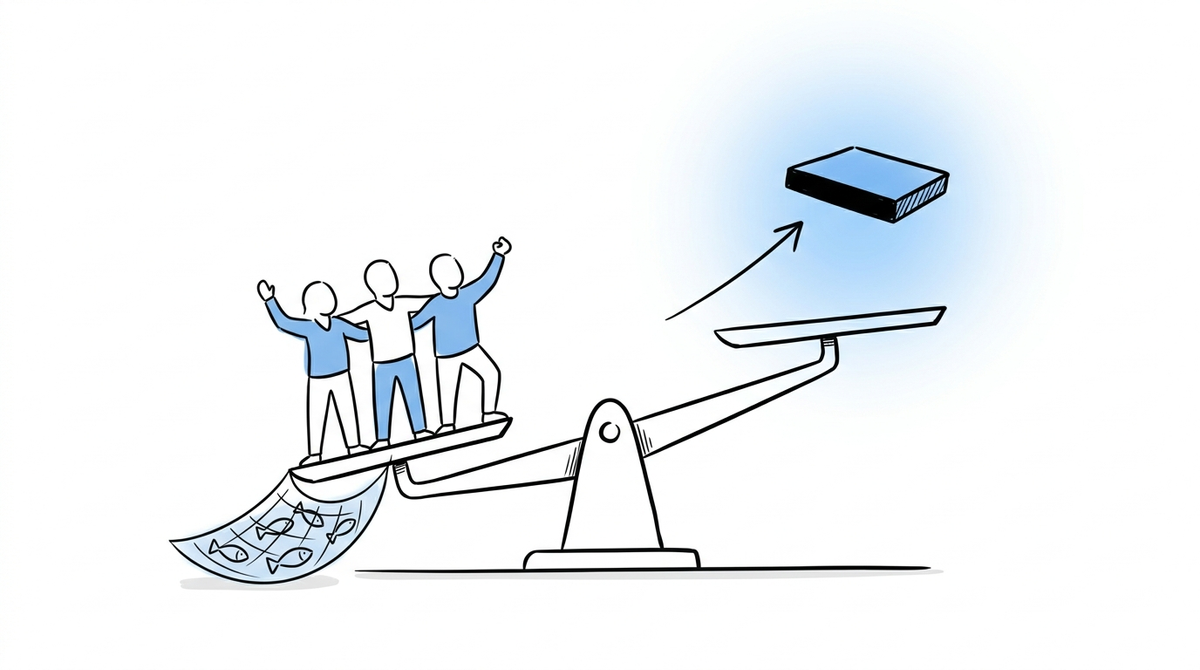
The removal of the floating platform at Bajo de Masinloc is more than a geopolitical headline; it is a vital step toward securing the livelihoods of Filipino fisherfolk and the nation's long-term food security.
The Price of Fish and the Distance of the Sea
Every morning in local wet markets across the Philippines, a familiar ritual plays out. Mothers carefully inspect the eyes and gills of galunggong (round scad) or tilapia, weighing the cost of a single kilo against a tight family budget. For the average household, fish is not a luxury; it is the baseline of daily sustenance. Yet, in recent years, buying fresh catch has increasingly felt like a financial strain.
When prices spike, we often blame the weather, transport costs, or fuel hikes. Seldom do we look out toward the open horizon, hundreds of kilometers away from our kitchen tables, to find the source of the squeeze.
But the reality of modern Filipino life is that our dinner tables are intimately connected to the deep blue waters of the West Philippine Sea. What happens out there—in the isolated, wind-swept expanses of places like Bajo de Masinloc (Scarborough Shoal)—directly shapes the choices available to a parent standing in a crowded market aisle in Manila, Pangasinan, or Laguna.
What Just Happened on the Water?
Recently, reports confirmed a significant physical shift at sea: a Chinese floating platform stationed at Bajo de Masinloc was successfully removed. To understand the gravity of this development, it helps to look past the dense language of international diplomacy.
For years, various structures, barriers, and foreign vessels have restricted access to traditional fishing grounds that rightfully belong to the Philippines under international law. These are areas that Filipino fishermen have navigated for generations, treating the waters not as a battleground, but as a shared workplace and a source of life.
The removal of the floating platform marks a quiet but monumental shift. It wasn't achieved through military force or aggressive posturing. Instead, it was the result of persistent, patient adherence to international law and legal diplomacy—a practice often called "lawfare." Nearly a decade after the historic 2016 arbitral ruling that affirmed the Philippines’ sovereign rights over its Exclusive Economic Zone (EEZ), this development stands as a physical confirmation that peaceful, lawful persistence can eventually clear the path.
Yet, for the busy citizen rushing to work or managing a household, a simple question remains: Why should an ordinary Filipino care about an empty patch of ocean?
What This Really Means for Everyday Life
When we hear phrases like "sovereign rights," "territorial claims," or "Exclusive Economic Zone," the issue can feel abstract, like a textbook lesson or a debate reserved for politicians and academics. But when translated into the language of everyday survival, sovereignty simply means the right to feed our own people using our own resources.
Bajo de Masinloc is a vital ecological sanctuary. Its coral reefs serve as a nursery for marine life, feeding fish populations that eventually migrate closer to our shorelines and into the nets of local fishing boats. When foreign entities place barriers or establish permanent structures in these areas, it does two things:
- It creates a physical wall: Local fishermen are cut off from safe, abundant waters, forcing them to fish in depleted areas closer to shore or risk long, dangerous journeys into deeper waters.
- It threatens our "Blue Economy": The blue economy refers to our marine resources—not just as a site for trade, but as an economic engine that supports millions of jobs in fishing, processing, logistics, and coastal commerce.
When a platform is removed, it is not just a victory for a map or a legal document. It represents the reopening of economic arteries. A cleared sea means that our small-scale municipal fishermen have a fairer chance to cast their nets without intimidation. It means a more stable supply of fish coming into our ports, which ultimately stabilizes prices in the neighborhood talipapa.
The Human Impact: Families Behind the Catch
To truly understand this development, we must look at the people who bear the brunt of maritime tensions: our coastal communities.
Consider a typical fishing family in Zambales. For them, the sea is an unpredictable workplace under the best of conditions. They contend with volatile weather, rising fuel prices, and the physical toll of days spent on open water. When foreign blockades or platforms are added to the equation, the psychological toll becomes immense. Parents wave goodbye to their sons and husbands, wondering not just if the weather will turn, but if they will encounter hostility on the water.
When access to traditional grounds is choked, the impact cascades through the entire community:
- Income Drops: Fishermen return with smaller catches, leading to smaller shares for the crew.
- Household Stress: Less income means families must make trade-offs—cutting back on nutritious food, delaying school fees, or borrowing money just to keep the lights on.
- Intergenerational Shift: As fishing becomes increasingly dangerous and financially unviable, the children of fisherfolk choose to leave the coast completely, abandoning a traditional livelihood and leaving our food supply even more vulnerable in the future.
The removal of the platform offers a breath of relief. It signals to these communities that they are not forgotten out on the margins of the archipelago. It validates the courage of generations of Filipinos who have relied on these waters. Documenting this endurance—as seen in recent cultural reflections like the documentary The Unsinkable Spirit—reminds us that our maritime defense is not just about ships and sailors; it is about the quiet resilience of ordinary citizens defending their way of life.
The Path Forward for Our Communities
While a cleared horizon at Bajo de Masinloc is a reason for quiet optimism, it is also a reminder of the long journey ahead. Securing our waters is a continuous process that relies heavily on community solidarity and consistent national focus.
This ongoing challenge reflects why community-based efforts around environmental stewardship, disaster preparedness, and sustainable livelihoods are so critical. When coastal municipalities are organized, informed, and economically supported, they become more resilient to external pressures. Protecting our seas requires us to ensure that the communities guarding our frontlines are strong from within.
Ultimately, the lesson of Bajo de Masinloc is that big, complex problems are interconnected with our smallest daily realities. We do not have to be international lawyers or naval strategists to appreciate the value of our seas. We simply need to look at our children’s plates and recognize that our future, our health, and our independence are deeply rooted in the very waters that surround us.
Closing Reflection
The ocean has a way of erasing footprints, but it remembers the vessels that cross it and the people who depend on it. The empty space left by the removed platform at Bajo de Masinloc is a quiet testament to what can be achieved when a nation relies on truth, patience, and international law.
The next time we sit down for a meal with our families, it is worth remembering that the simple act of sharing fish at the table is connected to a larger, shared national inheritance. It leaves us with a question to ponder: How can we, in our own small ways as consumers, neighbors, and citizens, better appreciate and support the hands that harvest our seas?
Lahat tayo masaya kapag may magandang balita tungkol sa ating mga karagatan, pero naisip mo ba kung ano ang kinalaman nito sa iyong hapag-kainan?
Ang pagkawala ng foreign floating platform sa Bajo de Masinloc ay hindi lang usaping politika—ito ay may direktang epekto sa presyo ng isda, sa kabuhayan ng ating mga mangingisda, at sa seguridad ng pagkain ng iyong pamilya.
Paano nga ba binabago ng mga kaganapan sa dagat ang buhay ng ordinaryong Pilipino?
Power Our Mission, Shape the Future
We empower single parents, PWDs, youths, seniors, and stay-at-home parents through digital livelihood.
Help us build resilient communities.
BUKLURAN remains open to partnerships, sponsorships, and collaborative initiatives that create meaningful community impact.
Whether through funding, in-kind support, volunteerism, or shared services, your organization can help strengthen programs that serve underserved communities.
Do you want to take part in our free livelihood programs, scholarship assistance, and community resource pooling initiatives? Membership is completely free.
Join BUKLURAN!
Register, volunteer, and become a member today.