The Face on the Screen: Why Smarter AI Requires Safer Neighborhoods
AI is making online scams look incredibly real. As regional leaders push for new digital rules, what does it mean for your safety?
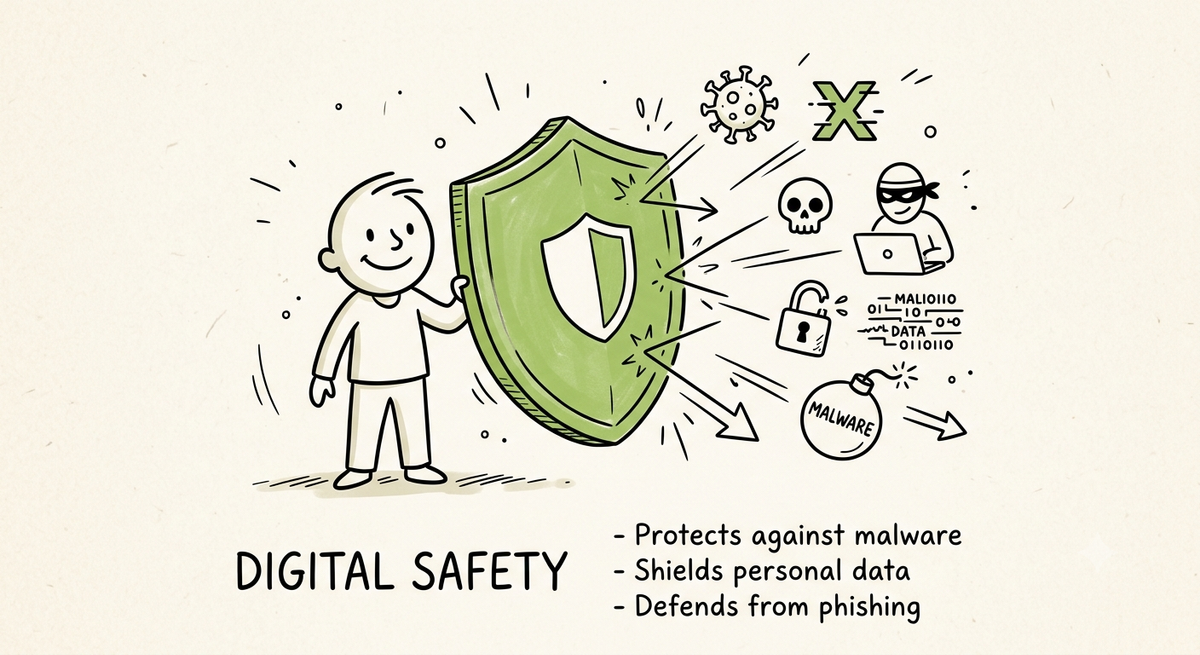
While regional leaders push for stronger AI governance across Asia-Pacific, the real defense against sophisticated cyber fraud starts with protecting the digital lives of ordinary Filipino families.
Imagine sitting at the kitchen table after a long day, scrolling through your phone, when a video pops up. It is a familiar face—perhaps a well-known local leader, a trusted celebrity, or even a distant relative working overseas. They are speaking directly to you, describing a life-changing investment opportunity or an urgent financial emergency. The voice sounds exactly right. The facial movements match perfectly. You feel a sudden surge of urgency, a desire to help or a fear of missing out.
But beneath the flawless digital surface, there is no human being at all. It is a fabricated digital clone, generated by an algorithm designed to separate hard-working Filipinos from their savings.
This is no longer a distant plot from a science fiction movie. It is a weekly reality for thousands of families navigating the modern digital landscape. As technology integrates deeper into our daily routines, the line between what is real and what is manufactured has blurred, turning our screens into potential minefields for fraud.
The View from the Top: What Happened in Bangkok?
Recently, the conversation surrounding these digital vulnerabilities reached the highest levels of regional policy. At the APEC Business Advisory Council (ABAC) meeting held in Thailand, corporate leaders and policymakers from 21 member economies gathered to debate the future of the region's digital economy. Among the delegates was newly appointed Philippine representative Kevin Tan, who brought the specific concerns of the domestic market to the international stage.
The council’s primary objective was clear: establish a unified front against the dark side of technological progress. The council formalized a series of policy recommendations focused heavily on tightening artificial intelligence (AI) governance and building stronger regional cooperation. Their goals sound institutional and massive:
- Synchronizing data legislation across international borders so cybercriminals cannot hide in legal blind spots.
- Establishing common digital standards to ensure that software developers build safety nets into AI tools before they are released to the public.
- Enhancing cross-border law enforcement collaboration to track down networks operating across multiple jurisdictions.
For the institutional observer, these milestones represent essential progress toward a mature digital economy. But for the ordinary citizen wondering how to protect their family's bank account, these grand declarations require translation. What do high-level international frameworks actually look like when they land on the streets of Manila, Cebu, or Davao?
Beyond the Jargon: The Changing Face of Cybercrime
To understand the urgency behind the ABAC recommendations, we have to look closely at how the nature of deception has evolved. In the early days of the internet, spotting a scam was relatively straightforward. You looked for broken English, poorly formatted emails, or suspicious web addresses that felt slightly off.
AI has completely dismantled those traditional red flags. Today, bad actors use advanced digital tools to execute crimes that are highly personalized, localized, and contextually convincing:
- Deepfakes and Synthetic Media: Criminals can now take a few seconds of audio or video from a public social media post and generate an entirely new video. These deepfakes are used to create false endorsements for fraudulent investment schemes or to impersonate loved ones trapped in imaginary crises.
- Hyper-Targeted Phishing: By analyzing publicly available data on social networks, AI systems can draft highly specific messages tailored to your actual employment, your hobbies, or your family structure, making the deceptive hook far harder to resist.
- Automated Investment Fraud: Scams that once required human handlers to text victims for days can now be managed by automated systems capable of talking to thousands of individuals simultaneously, scaling up the threat exponentially.
The core challenge is structural. A cybercriminal can sit in one country, host a fraudulent platform on a server in a second country, and target individuals living in a third. When a Filipino falls victim to an AI-driven investment scheme, local police often run into a wall because the digital trail quickly crosses national borders where they have no authority to investigate. This regulatory gap is precisely why international bodies are rushing to align their legal frameworks.
The Human Toll on the Household
When we discuss digital threats, it is easy to get lost in the financial statistics and technological acronyms. But the true impact of cybercrime is measured in human disruption, not data points.
Consider the vulnerable demographics within our communities. The elderly, who worked for decades to secure a modest retirement package, are frequently targeted by high-yield investment scams that mimic legitimate banking apps. Students, anxious to help their parents cover rising tuition costs, are lured by automated job scams promising quick returns for online tasks.
Furthermore, the threat extends to the millions of Overseas Filipino Workers (OFWs) separated from their households. When distance leaves communication heavily reliant on video calls and voice messages, the threat of an AI voice clone mimicking a child in distress isn't just a financial risk—it is a direct assault on the emotional bonds that hold long-distance families together.
When trust in digital systems breaks down, the economic consequences are severe. A micro-entrepreneur might hesitate to adopt digital payments out of fear, cutting their small business off from the broader digital marketplace. A family might avoid online banking entirely, missing out on the financial inclusion tools that facilitate long-term stability. The ultimate casualty of unmonitored AI abuse is public trust.
Moving Forward: The Real Defense is Local
The policy recommendations drafted in Thailand are necessary, but they are also slow-moving. Laws take time to pass, international treaties require years to negotiate, and technology moves faster than the fastest bureaucracy.
As the country seeks to modernize its national governance frameworks, the immediate shield against digital exploitation must be built closer to home. International coordination is only as effective as the grassroots digital literacy supporting it.
True safety requires a shift in how we interact with our screens. It means fostering environments where families discuss digital safety as naturally as they discuss locking the front door at night. It involves teaching communities to question the urgency of sudden financial requests, to double-check unexpected digital communications through secondary channels, and to cultivate a healthy skepticism that protects them without isolating them from the benefits of modern technology.
Technology will continue to advance, and the tools used by bad actors will inevitably become more sophisticated. But by anchoring our response in collective awareness, open family communication, and proactive digital literacy, we can ensure that our communities remain safe spaces, no matter how fast the world outside changes.
Paano kung ang mukha at boses ng anak o kamag-anak mo ay magamit sa online scam gamit ang AI?
Sa pagbilis ng teknolohiya, dumarami ang mga pekeng video at deepfakes na ginagamit ng mga cybercriminal para manloko. Habang nagpupulong ang mga lider sa Asya-Pasipiko para sa mas mahigpit na batas, ano nga ba ang magagawa natin para protektahan ang ating pamilya?

Power Our Mission, Shape the Future
We empower single parents, PWDs, youths, seniors, and stay-at-home parents through digital livelihood.
Help us build resilient communities.
BUKLURAN remains open to partnerships, sponsorships, and collaborative initiatives that create meaningful community impact.
Whether through funding, in-kind support, volunteerism, or shared services, your organization can help strengthen programs that serve underserved communities.
Do you want to take part in our free livelihood programs, scholarship assistance, and community resource pooling initiatives? Membership is completely free.
Join BUKLURAN!
Register, volunteer, and become a member today.