The Fragile Foundations Beneath Our Skyline
When a building falls, it isn't just concrete that breaks. It is the lives of workers, families, and communities left in the debris.
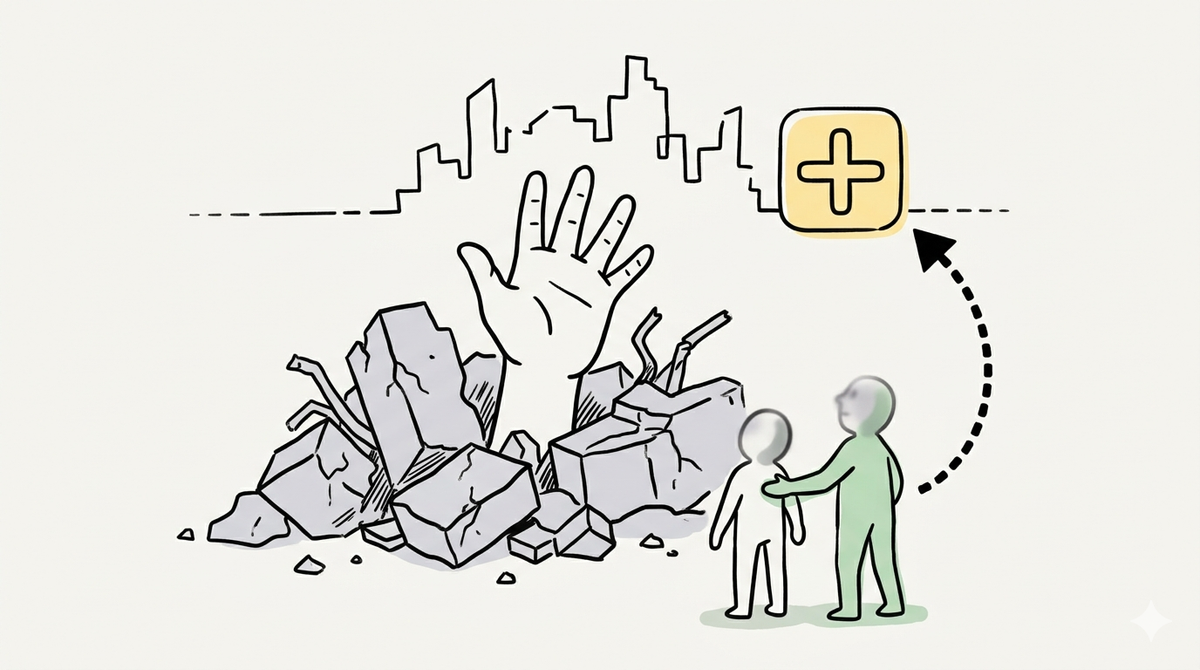
The tragic construction collapse in Angeles City highlights the urgent need to balance rapid infrastructure development with rigorous safety standards for the workers and communities involved.
Every morning across the Philippines, thousands of blue-collar workers wake up before dawn, slip into worn-out boots, and head to construction sites that promise to redefine our local landscape. We look at towering scaffolding and see signs of boom—new offices, modern residences, and commercial hubs that symbolize economic progress. For the ordinary passerby, these rising concrete structures represent the future. But for the families of the workers who build them, those scaffolds are a tightrope walk between a daily wage and an unforgiving hazard.
We often talk about infrastructure in terms of investment, floor areas, and architectural innovation. We celebrate when a local skyline expands because we are told it means more opportunities, higher real estate values, and modernized cities. Yet, the true substance of any community is not the height of its buildings, but the safety and dignity afforded to the human beings who put them together block by block. When those environments are compromised, the cost of our collective development is paid in human lives.
On May 24, 2026, an under-construction building in Angeles City, Pampanga, suddenly collapsed in the quiet hours of the early morning. The structure gave way while many of the construction laborers were sleeping on-site—a common practice for workers trying to save on commuting costs or working grueling, around-the-clock shifts. As days passed, search and retrieval operations continued through the debris. By the turn of June, local authorities confirmed that the death toll had risen to 12, with at least eight individuals still reported missing beneath the rubble.
For the general public, a tragedy like this flashes briefly on television screens or social media feeds as an unfortunate piece of regional news. It is discussed in terms of numbers, rescue timelines, and official structural investigations. But for the ordinary Filipino, the event is an urgent, sobering reminder of an uncomfortable reality: the rapid physical expansion of our cities often moves faster than the implementation of basic safeguards designed to protect human lives.
When we look beyond the immediate shock of the headlines, structural failures point to systemic lapses that affect everyday citizens. A building collapse is rarely an isolated accident; it is usually the final, visible manifestation of a long chain of invisible shortcuts. These shortcuts can range from sub-standard materials chosen to trim budgets, accelerated timelines that skip crucial curing periods for concrete, to a lack of rigorous, independent site inspections by regulatory bodies.
For an ordinary family, this matters because substandard construction practices do not just endanger the workers during the build phase—they present a lingering threat to the entire neighborhood. A building that fails under construction could just as easily have failed years later when filled with retail employees, office staff, or local residents. When commercial projects bypass rigorous oversight, every nearby home, adjacent road, and community space becomes part of an unconsented safety gamble. The families living in the shadow of major developments deserve the peace of mind that the structures next door are built on uncompromising integrity.
The human impact of this tragedy extends far beyond the physical perimeter of the rubble in Pampanga. Behind every casualty number is a household that has lost its primary anchor. Construction laborers are frequently the sole breadwinners for extended families, sending their weekly wages back to rural provinces to pay for a sibling’s tuition, an aging parent’s medicine, or a child’s daily meals.
When a worker does not return home from a shift, a family is instantly thrust into a state of profound vulnerability. They must navigate not only the immediate trauma of grief but also the sudden, terrifying loss of livelihood. The students whose educations were funded by those wages face interrupted futures; the households dependent on that income are left to rely on temporary relief or community charity. The true weight of a structural failure is borne by the women, children, and elderly relatives left behind, who must reconstruct their fractured lives without the people they loved and depended upon.
This heartbreaking situation reflects why community-based efforts around disaster preparedness and public safety matter so deeply. In times of sudden localized crises, the initial hours of response depend heavily on the resilience, coordination, and vigilance of the immediate community. Ensuring that local neighborhoods possess the awareness to demand accountability from nearby commercial developments can help prevent hazards from escalating into full-scale tragedies. True public safety begins when communities are empowered to look at development not with passive acceptance, but with an active commitment to mutual protection.
As the dust settles in Angeles City and the official investigations begin, our society faces a critical point of reflection. We must ask ourselves what kind of progress we are actually buying when we prioritize speed and profit over the well-being of the people doing the heavy lifting. A country cannot genuinely move forward if the foundations of its growth are built on precarious conditions.
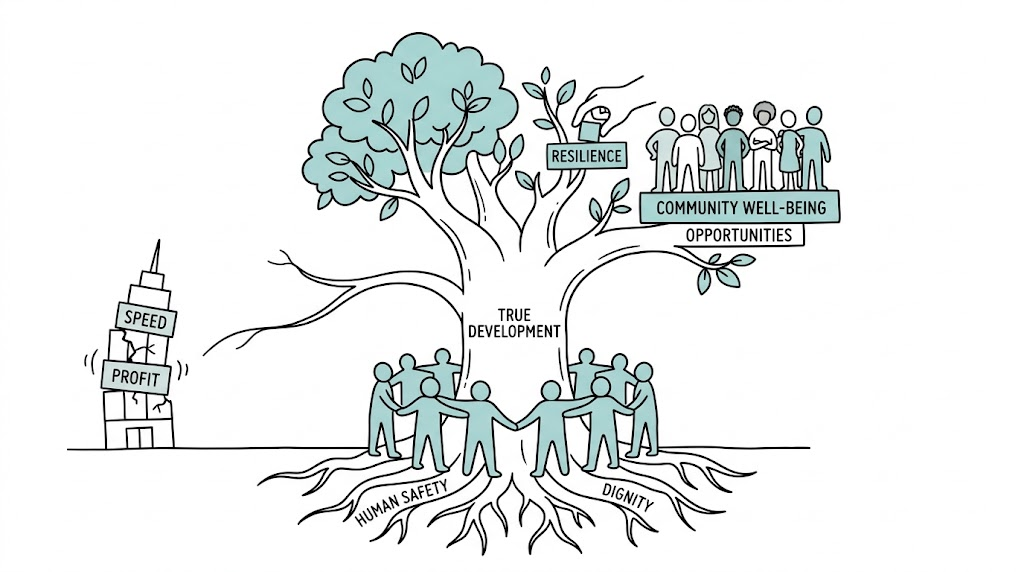
True development cannot be measured solely by the volume of concrete poured or the modern aesthetic of a new commercial zone. It must be measured by the safety of the weakest structure, the security of the lowest-paid worker, and the peace of mind shared by the surrounding neighborhood. As we look at the rising buildings in our own towns and cities, we should remember that the most critical asset of any nation is its people. Until we treat human safety as an unnegotiable foundation of progress, our grandest structures will remain fundamentally fragile.
Bakit nga ba sa kabila ng mga makabagong gusali at mabilis na pag-unlad ng ating mga lungsod, may mga buhay pa ring kailangang mabuwis sa mga construction site? Ang nagdaang trahedya sa Pampanga ay hindi lamang kuwento ng gumuhong semento—ito ay babala tungkol sa kaligtasan ng bawat manggagawa at ng komunidad na nakapaligid dito. Hanggang kailan natin titingnan ang pag-unlad nang hindi tinitiyak ang tibay ng ating pundasyon?

Power Our Mission, Shape the Future
We empower single parents, PWDs, youths, seniors, and stay-at-home parents through digital livelihood.
Help us build resilient communities.
BUKLURAN remains open to partnerships, sponsorships, and collaborative initiatives that create meaningful community impact.
Whether through funding, in-kind support, volunteerism, or shared services, your organization can help strengthen programs that serve underserved communities.
Do you want to take part in our free livelihood programs, scholarship assistance, and community resource pooling initiatives? Membership is completely free.
Join BUKLURAN!
Register, volunteer, and become a member today.