The Geopolitics of the Dinner Table: Why New International Alliances Matter at Home
Diplomats talk about trade treaties and regional security, but for regular Filipinos, global ties come down to the price of dinner.
While high-level geopolitical and economic ties with strategic partners like Vietnam dominate national headlines, their real value lies in how they safeguard the local livelihoods, supply chains, and food security of ordinary Filipino families.
When national headlines focus on high-level diplomacy, state visits, or bilateral frameworks, the reaction of an ordinary Filipino is often a mix of detachment and quiet exhaustion. We watch news broadcasts featuring state leaders shaking hands in ornate government halls, signing agreements filled with dense terms like "strategic partnerships," "maritime cooperation," and "supply chain resilience." For a working parent computing the cost of tomorrow’s school baon, or a tricycle driver waiting for passengers under a midday sun, these declarations can feel entirely separate from daily life. They sound like the exclusive language of politicians, diplomats, and international analysts—worlds away from the immediate concerns of paying rent, keeping the lights on, and ensuring there is enough food on the table.
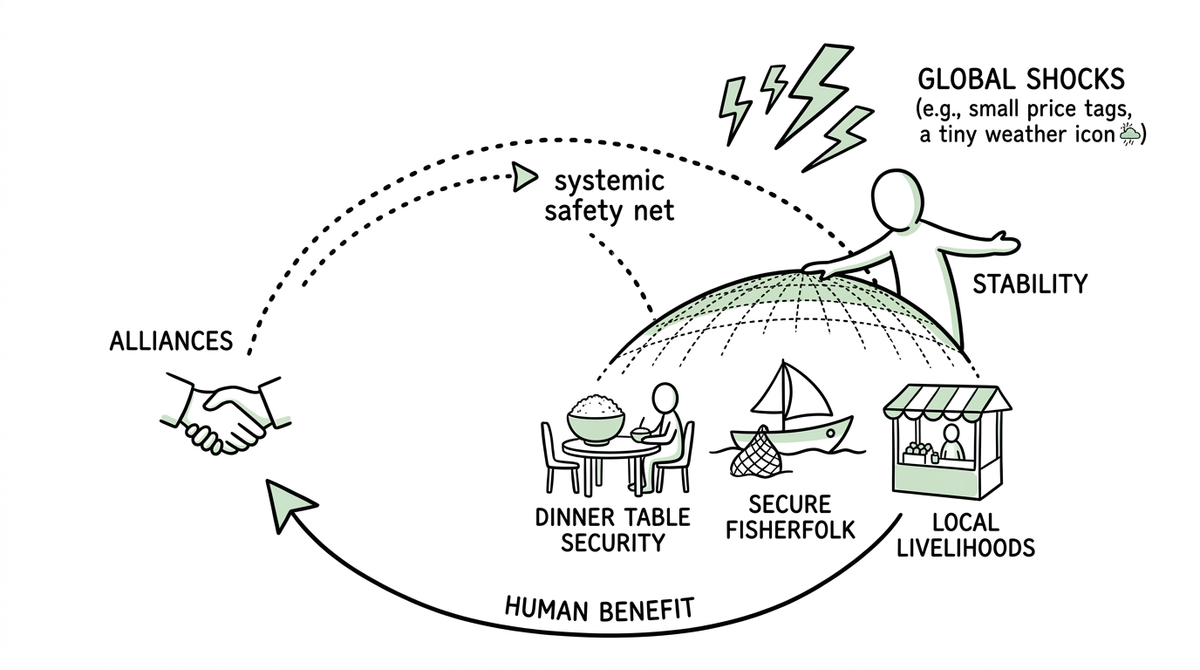
Yet, international relations are never truly distant. Every handshake between world leaders eventually sends a ripple down to local wet markets, public transport routes, and community retail hubs. The decisions made in regional summits dictate the availability of basic goods, the security of local jobs, and the stability of the entire economic system that families rely on every single day. When the Philippines strengthens its ties with neighboring nations, it isn’t just balancing regional politics; it is constructing an invisible safety net that directly impacts the price of a kilo of rice and the long-term survival of local neighborhoods.
The News Behind the Handshake
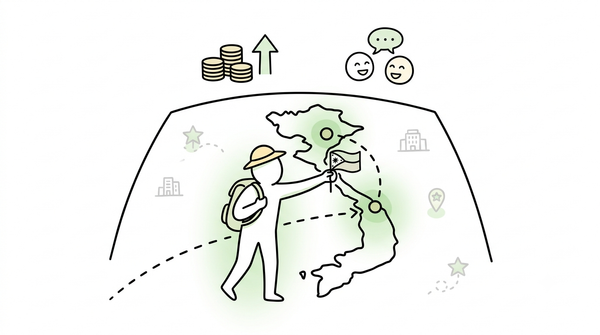
Recent diplomatic developments underscore this reality, particularly the ongoing push to transform the relationship between the Philippines and Vietnam into a premier strategic partnership within the Association of Southeast Asian Nations (ASEAN). Analysts look at these two countries and see a natural match: both are fast-growing economies, both occupy crucial geographic positions along major international shipping lanes, and both navigate identical pressures regarding territorial integrity and regional peace.
For the international community, a tighter bond between Manila and Hanoi is a calculated move to ensure regional balance. It is about creating a unified front in a volatile maritime space where billions of dollars in global commerce pass annually. Government communiqués focus heavily on defense cooperation, joint coast guard exercises, and mutual support in international forums.
But for the average citizen, the true substance of this strategic partnership is found not in military hardware or diplomatic protocols, but in the mundane, vital networks of trade and resource sharing. It is about establishing stable, predictable rules of engagement between two nations that directly feed and employ millions of primary workers. When looked at closely, international strategy is simply domestic survival writ large.
What This Really Means for Everyday Life
To truly understand why an ordinary Filipino should care about a strategic partnership with Vietnam, one must look directly at the humble dinner table. The Philippines is one of the world's top importers of rice, and Vietnam is consistently our primary supplier. When global supply chains break down—whether due to climate shocks, regional conflicts, or sudden export bans—the immediate consequence in our country is a spike in market prices that forces low-income families to reduce their portions.
A formal, deeper strategic relationship with a major agricultural exporter means predictability. It creates direct, institutional channels that prevent sudden trade disruptions, ensuring that even during global shortages, our food supply lines remain open. It transforms a volatile commercial transaction into a reliable neighborly agreement. When a government secures a stable supply corridor, it is effectively keeping market prices from swinging wildly out of control, directly preserving the purchasing power of an ordinary household's daily wage.
Beyond agriculture, these maritime alliances secure the very waters where hundreds of thousands of Filipino fisherfolk earn their bread. The South China Sea, which encompasses our West Philippine Sea, is not just a chessboard for superpowers; it is a workplace for traditional fishing communities. When neighboring littoral states like the Philippines and Vietnam establish clear channels for communication and cooperative frameworks, it reduces the risk of accidental confrontations at sea. For a small-scale fisherfolk family, a stable maritime policy means their breadwinners can go out to sea with a higher expectation of returning home safely with a decent catch, rather than facing harassment or unpredictable detention in disputed waters.
Furthermore, deep regional partnerships directly influence employment. As Southeast Asian economies integrate, businesses establish regional networks. A manufacturer in the Philippines relies on raw materials or electronic components from Vietnam, and vice versa. If these trade lanes are secure and unhindered by political friction, factories keep running, logistics companies keep moving, and local workers keep their jobs. A breakdown in regional stability, conversely, means delayed shipments, idle ports, and eventually, retrenchments at the local industrial estate.
The Human Impact on our Communities
When global systems fail, the burden does not fall evenly. It passes over large corporate conglomerates with deep financial reserves and lands squarely on the shoulders of the vulnerable: solo parents balancing multiple informal jobs, stay-at-home mothers trying to stretch a microscopic budget, senior citizens relying on modest allowances, and youth trying to break into a precarious job market.
Consider a stay-at-home mother in a suburban community who manages a tiny home-based food retail business or prepares snacks to sell to neighbors. Her thin profit margin depends entirely on the stable pricing of basic commodities like rice, cooking oil, and sugar. If regional trade routes are compromised or if relations with major exporters sour, the wholesale cost of her ingredients shoots up within forty-eight hours. She cannot easily raise her prices because her neighbors are also broke. Her small livelihood—the very thing that keeps her children nourished and in school—is directly tethered to the quiet competence of international trade arrangements.
Similarly, think of young workers or recent graduates trying to find stable work. An economy that is cut off from robust regional partnerships is an economy that shrinks inward. It attracts fewer investments, offers fewer diverse job opportunities, and forces more people into underemployment or hazardous informal work. When international agreements are executed effectively, they foster an environment of economic confidence. That confidence is what convinces a local distributor to expand their warehouse, a tech startup to hire more remote workers, or a transport company to add more routes. Strategic diplomacy, in its truest sense, is an investment in future local employment.
Connecting the Macro to the Grassroots
This unbreakable link between macro-level stability and grassroots security is precisely why community-based frameworks exist. The broader economic realities dictated by international trade agreements clarify why localized efforts around structured community programs are so vital for long-term community survival.
When global supply paths fluctuate, communities cannot simply wait for macro-economic adjustments to trickly down. This vulnerability reflects why community-based initiatives around structured resource pooling, like the BUKLURAN HUB Livelihood and Community Enterprise Program, are becoming essential mechanisms for ordinary families. By engaging in voluntary, cooperative sourcing and group buying of basic commodities within a localized system, community members can insulate themselves slightly from standard retail price hikes. When international factors alter the baseline cost of living, having an organized, non-profit community mechanism helps ensure that basic goods remain accessible at more manageable expense levels.
The same structural logic applies to education and digital readiness. International economic shifts demand a workforce that can adapt to changing regional industries. This evolving landscape underscores the relevance of grassroots educational interventions like the BUKLURAN Pabaon Program, which seeks to reduce the immediate financial barriers keeping children from elementary schooling. On the other hand, as regional markets become increasingly digitalized through trade partnerships, adult workers require localized access to modern knowledge systems. This ongoing shift demonstrates why targeted initiatives like the BUKLURAN Bagong Simula Program matter, providing accessible orientations on basic digital safety and everyday digital tools so that community members are not left behind by rapid economic transformation. Ultimately, what happens in a regional summit creates the conditions that local community frameworks must navigate every day.
A Thoughtful Reflection
Geopolitics is often taught as a history of treaties, boundaries, and state power. But a deeper, more human observation reveals that international relations are fundamentally about human security. Nations seek alliances because, in an interconnected world, no community can truly survive as an isolated island. The strength of our international partnerships determines how well we can weather global storms without forcing our most vulnerable citizens to bear the entire brunt of the impact.
The next time we see news of a diplomatic agreement or a strategic partnership with a neighbor like Vietnam, we should look past the formal suits and the prepared speeches. We must learn to read between the lines of those official documents, looking for the real-world implications that matter to our families. The true measure of any international alliance is not found in the prestige it brings to a capital city, but in the quiet confidence it gives to an ordinary parent standing in a local market, knowing that tomorrow’s meals are secure, the local economy is stable, and their community’s future remains intact.
Bakit nga ba dapat nating pakialaman ang mga balita tungkol sa kasunduan ng Pilipinas sa ibang bansa tulad ng Vietnam? Akala natin, usapang pampolitika lang ito na malayo sa ating buhay. Pero alam mo ba na ang pirmahan ng mga lider ay may direktang epekto sa presyo ng bigas sa palengke at sa kaligtasan ng ating mga lokal na trabaho?

Power Our Mission, Shape the Future
We empower single parents, PWDs, youths, seniors, and stay-at-home parents through digital livelihood.
Help us build resilient communities.
BUKLURAN remains open to partnerships, sponsorships, and collaborative initiatives that create meaningful community impact.
Whether through funding, in-kind support, volunteerism, or shared services, your organization can help strengthen programs that serve underserved communities.
Do you want to take part in our free livelihood programs, scholarship assistance, and community resource pooling initiatives? Membership is completely free.
Join BUKLURAN!
Register, volunteer, and become a member today.