The Heaviest Bag to Carry: What a School Tragedy Leaves Behind
After the headlines fade, families are left with an agonizing question: how do we send our children back to school with peace of mind?
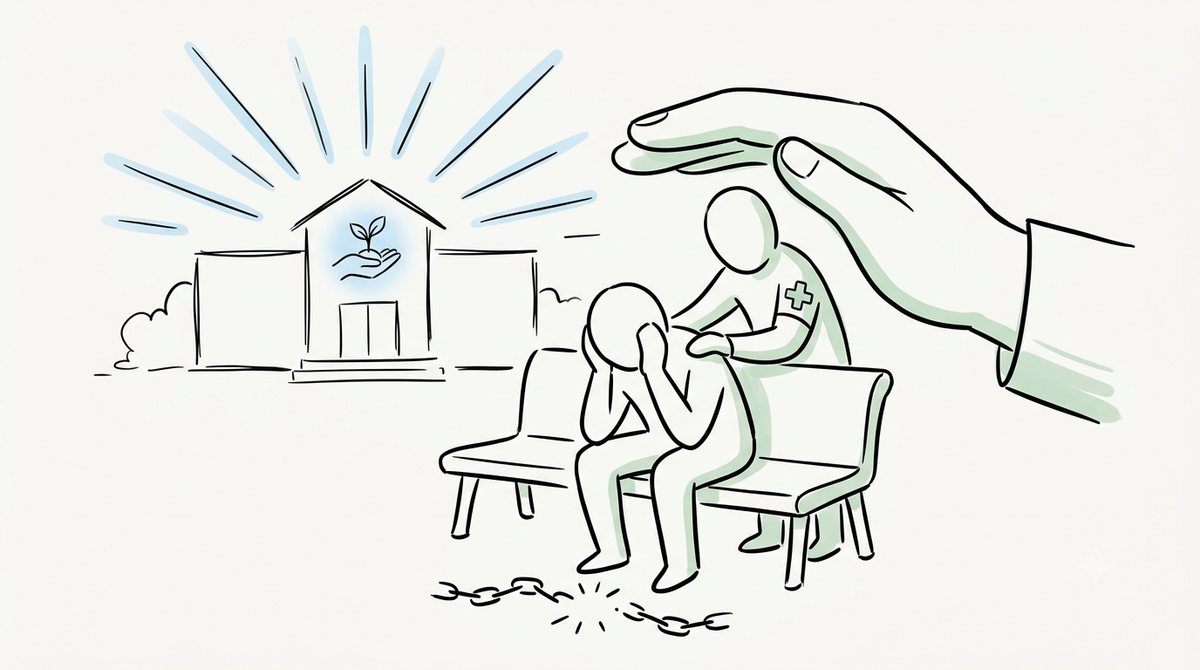
The tragic school shooting in Tacloban City exposes critical gaps in public safety, gun control, and mental health support, challenging the fundamental sense of security every Filipino family relies on.
Every morning across the Philippines, a familiar ritual unfolds. Parents press a few pesos of allowance into small palms, double-check that lunchboxes are sealed, and smooth down the collars of freshly ironed school uniforms. As the children walk out the door, there is an unspoken agreement between the home and the world outside: Once they cross the school gates, they are safe.
For generations, schools have been treated as sacred ground. They are the spaces where the future is built, far removed from the harsh anxieties of the adult world.
But that fundamental trust was shattered on a quiet day in Tacloban City. A place of learning suddenly became a scene of chaos, leaving three dead and eleven others wounded in a school shooting. For the families involved, life changed in a matter of seconds. For the rest of the country, it left a chilling realization hanging in the air: the dangers we often watch on foreign news broadcasts are no longer safely confined to distant shores. They are happening here.
The Broken Sanctuary: What Happened in Tacloban
To understand the weight of this tragedy, we must look plainly at the facts. In late June 2026, violence breached the campus walls of an educational institution in Tacloban City. The immediate toll of the attack is devastatingly clear: three individuals lost their lives, and eleven others are recovering from physical injuries.
Beyond the casualties, the event triggered an immediate mobilization of emergency services, law enforcement, and local government units. The investigation into the mechanics of the attack—how the perpetrator obtained a weapon, the response time of security personnel, and the breakdown of campus checkpoints—is ongoing.
Yet, while the legal and structural audits take place, the immediate focus shifts to a community in shock. A crisis of this magnitude tests the limits of local resources, demanding an immediate influx of medical, psychological, and social interventions to stabilize a traumatized student body and faculty.
What This Really Means: Beyond the Immediate Headlines
When a tragedy like this strikes, the initial public reaction is a mix of grief and fury. But once the police tape is cleared and the cameras leave, ordinary citizens are left to grapple with the deeper, systemic vulnerabilities that allowed the event to happen in the first place.
This is not just a story about a single security breach; it is an urgent wake-up call regarding several intersecting issues in Philippine society:
- The Availability of Firearms: For years, discussions around gun ownership and stricter regulations have been relegated to legislative backburners. A tragedy of this scale forces a difficult question into the open: how accessible are lethal weapons in our communities, and are our current laws robust enough to keep them out of the wrong hands?
- The Invisible Mental Health Crisis: Violence of this nature rarely happens in a vacuum. It is often the tragic conclusion of unaddressed trauma, isolation, or severe psychological distress. In a country where mental health services are frequently underfunded, inaccessible, or stigmatized, the lack of early intervention tools can have catastrophic consequences.
- The Illusion of Campus Security: Many schools rely on a single guard at the gate with a logbook and a metal detector wand. This tragedy reveals that our current definition of "school safety" may be superficial, failing to account for determined or internal threats.
The Human Impact: The Ripples of Collective Trauma
Data can measure the number of casualties, but it cannot quantify the weight of a parent’s anxiety. The true impact of the Tacloban shooting is measured in the quiet, agonizing shifts in daily life for ordinary Filipinos.
For the Families and Survivors
For the parents of the victims, the grief is an unimaginable, permanent fixture. But for the survivors—the eleven wounded and the hundreds who witnessed the attack—the trauma is a long-term medical and psychological battle.
“Trauma alters how a child views the world. When a place associated with growth and friendship becomes associated with survival, the psychological recovery can take years.”
Students may experience hypervigilance, severe anxiety, and depression. The simple act of sitting in a classroom or hearing a loud, sudden noise can trigger flashbacks.
For Parents Nationwide
The anxiety caused by this event is not geographically isolated to Eastern Visayas. Parents in Manila, Cebu, Davao, and small rural municipalities are watching the news and feeling a cold knot of worry. When the baseline safety of a school is called into question, parents are forced to carry an emotional burden every time they wave goodbye to their children in the morning.
For Educators and School Staff
Teachers are trained to cultivate minds, manage classrooms, and inspire young learners. They are not combatants or security experts. Yet, incidents like this place an unfair, terrifying expectation on educators to become the first and last line of defense for their students during a violent crisis.
The Role of Community-Led Resilience
When institutional safety nets falter, the immediate burden of recovery invariably falls upon the community itself. Experiences from crises worldwide show that top-down policies take time to implement, but grassroots solidarity happens instantly.
This tragic event underscores why neighborhood-level awareness, active parent-teacher associations, and localized psychosocial support networks are indispensable. True safety is not just built through higher concrete walls or more security guards; it is fostered when communities create environments where individuals feel seen, heard, and supported long before they reach a breaking point.
While broader policy debates on gun control and national security will take months to unfold in legislative halls, local neighborhoods must look inward to strengthen the social fabric that keeps children safe, identifying signs of distress and vulnerability within their own borders.
Reclaiming the Safe Spaces
We cannot afford to treat the Tacloban school shooting as an isolated anomaly or a temporary headline. To do so would be an insult to the lives lost and a disservice to the millions of children who depend on adults to secure their environment.
True safety requires a collective refusal to accept violence as an inevitability of modern life. It demands that we advocate for meaningful mental health resources in our schools, demand stricter enforcement of firearm regulations, and actively participate in creating supportive, observant communities.
As we look toward the future, the ultimate goal must be to ensure that the only things our children ever have to carry to school are their books, their dreams, and the unshakeable certainty that they will come home safe.
Paano kung ang paaralan na inaasahan nating pinakaligtas na lugar para sa ating mga anak, biglang mabalot ng takot at karahasan?
Ang naganap na trahedya sa Tacloban City ay hindi lang kuwento ng isang komunidad—ito ay babala sa buong bansa tungkol sa kaligtasan ng ating kabataan, mental health, at ang dahan-dahang pagkawala ng kapayapaan sa ating mga eskwelahan. Bakit nga ba tayo umabot sa ganito?
Power Our Mission, Shape the Future
We empower single parents, PWDs, youths, seniors, and stay-at-home parents through digital livelihood.
Help us build resilient communities.
BUKLURAN remains open to partnerships, sponsorships, and collaborative initiatives that create meaningful community impact.
Whether through funding, in-kind support, volunteerism, or shared services, your organization can help strengthen programs that serve underserved communities.
Do you want to take part in our free livelihood programs, scholarship assistance, and community resource pooling initiatives? Membership is completely free.
Join BUKLURAN!
Register, volunteer, and become a member today.